Category: Wildlife and Nature


Hamdi Khalif - Play England's avatarLove Outdoor Play

130510. Zoe Slade - Empty Classroom Day posterGuest post by Zoë Slade.

On Friday 5 July 2013 schools all over the country will be learning outside for Empty Classroom Day.

Empty Classroom Day is a day to celebrate all the learning that takes place outside the classroom and to encourage even more outdoor learning. The day was created by schools and organisations at London Sustainable Schools Forum and the idea is simple: One class, outdoors, for one lesson on one day.

Last year, despite the rain, over one hundred schools took part with activities ranging from planting wildflowers, bug hunting and pond-dipping to inspiring class visits to the great outdoors. The first Empty Classroom Day was a success showing that learning outside can be fun, memorable and healthy. This year lots of schools have signed up to say that one class will be learning outside for one lesson on Friday 5 July, some schools are doing even…

View original post 252 more words

HowardJones's avatarOuse Washes: The Heart of the Fens

Heritage Lottery FundA couple of weeks ago saw the launch of a remarkable new book about the history of the Fens.

Ian Rotherham, the author of ‘The Lost Fens’ is a writer, broadcaster and Professor of environmental geography and reader in tourism and environmental change at Sheffield Hallam University.

Lost_Fens-300x300
The Lost fens, by Ian Rotherham. Source: http://www.environmentalhistories.net/?p=697
Ian_Rotherham_web2_0
Ian Rotherham

The Lost Fens is about the history of the cultural landscape of the Fen area. It tells the story of the most dramatic ecological destruction in our history. Around 8,000 sq km of wetland present in the 1600s was almost entirely obliterated by 1900. The book draws together the story of a lost ecology, of changing landscapes, lost people, lost cultures and ways of life, and lost wildlife.

The story of these lost Fens is, in Rotherham’s words “the greatest single ecological catastrophe that ever occurred in England”.

Indeed, so thoroughly…

View original post 169 more words

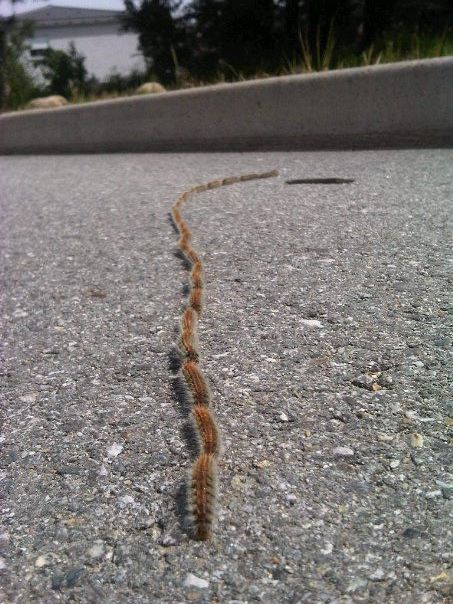
PicPost: Caterpillar Track

IMG_5527We had a very enjoyable walk around one of our local ‘haunts’ on Sunday – Sheringham Park, in north Norfolk. I think we can honestly say that we’ve visited this beautiful landscape in all weathers – I recall the children sledging down some of the steep slopes in the snow and also the time we took some visiting friends there in the pouring rain!  Fortunately the sun was shining and there wasn’t a cloud in the sky on this latest visit.

The Park surrounds Sheringham Hall (privately occupied), but Sheringham Park is in the care of the National Trust and is open for visitors. The Park was designed by the famous Landscape Gardener, Humphry Repton, who presented his proposals in July 1812 in the form of one of his ‘Red Books’ – he showed ‘before and after’ fold – out images to illustrate the differences his design proposals would make. He described Sheringham as his ‘favourite child in Norfolk’ and he is buried in Aylsham Church, about 15 miles to the south. At the time he was in his later years and his star was on the wane, but this Park is described by some as his most successful landscape design. Abbot and Charlotte Upcher bought the Estate in 1811, and successive generations of the Upcher family did much to develop it, as well as the Hall and the park, and also built a school.

The landscape has been moulded to make the most of the natural hills and vales (formed by glacial gravels). Many of the trees are now of a very mature age and there is some evidence of felling or ‘natural topple over’ as they near the end of their normal lifespans. The Trust has done much new planting and maintains the ‘wilderness’ feel of some areas, along with mature woodland with glades and pools, surrounding heathlands (with interesting views towards the restored North Norfolk Railway, the coast and North Sea), plus all the elements of the romantic landscape around the House and its setting.

The woodlands also contain a large variety of rhododendrons and azaleas. In the early 20th century Henry Morris Upcher obtained rhododendron seeds of various types from plantsman ‘Chinese’ Wilson. Many other species of tree and shrub are represented in the park, including fifteen kinds of magnolia, maples, acers,styrax, Eucryphia, Davidia involucrata and a fine example of the ‘Snowdrop Tree’,  Halesia. Several outlook towers and viewpoints provide good views over the park and of the nearby coast and surrounding countryside. Recently a new ‘Bower Garden’ has been created which provides a wonderful den building area, enclosed seating area and widllife pond which had many tadpoles, pond skaters and the like on our visit.

If you visit you’ll also have the benefit of an interesting exhibition about Repton and the development of the estate, a number of marked walks plus all the usual National Trust attractions – I particularly enjoyed some Stem Ginger Ice Cream!

Old School Gardener

If you’ve enjoyed reading this post and others on this blog, why not comment and also join some other people and sign up for automatic updates via email (see side bar, above right ) or through an RSS feed (see top of page)?

PicPost: Buginham Palace

‘This is BUGINGHAM PALACE, the bug hotel we have in the garden here at the Guildhall. It’s a des-res for insects, and one of our ’50 things to do before you’re 11 3/4′. We made it from old tiles, bamboo, and bricks.’

Lavenham Guildhall, National Trust

Watch 62 Years of Global Warming in 13 Seconds

drought-header

‘From our friends at NASA comes this amazing 13-second animation that depicts how temperatures around the globe have warmed since 1950. You’ll note an acceleration of the temperature trend in the late 1970s as greenhouse gas emissions from energy production increased worldwide and clean air laws reduced emissions of pollutants that had a cooling effect on the climate, and thus were masking some of the global warming signal.

The data come from NASA’s Goddard Institute for Space Studies in New York (GISS), which monitors global surface temperatures. As NASA notes, “All 10 of the warmest years in the GISS analysis have occurred since 1998, continuing a trend of temperatures well above the mid-20th century average.” ‘

Source: http://www.climatecentral.org via Will Giles of the Exotic Garden, Norwich

Old School Gardener

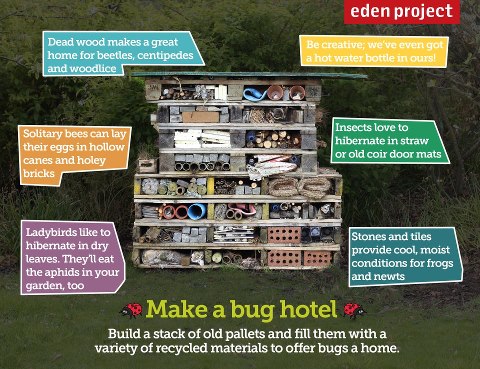
Make your own bug hotel

Courtesy of The Eden Project

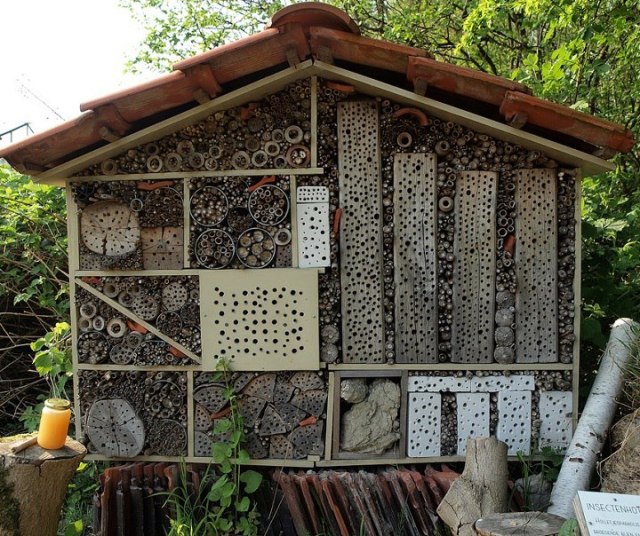
PicPost: Claridge's

See more insect hotels here

Next post will give you a guide to making your own bug hotel

Old School Gardener

Finding Nature

Nature Connectedness Research Blog by Prof. Miles Richardson

Norfolk Green Care Network

Connecting People with Nature

Discover WordPress

A daily selection of the best content published on WordPress, collected for you by humans who love to read.

Susan Rushton

Celebrating gardens, photography and a creative life

Unlocking Landscapes

Writing, photography and more by Daniel Greenwood

Alphabet Ravine

Lydia Rae Bush Poetry

TIME GENTS

Australian Pub Project, Established 2013

Vanha Talo Suomi

The Journey from Finnish Rintamamiestalo to Arboretum & Gardens

Marigolds and Gin

Because even in chaos, there’s always gin and a good story …

Bits & Tidbits

RANDOM BITS & MORE TIDBITS

Rambling in the Garden

.....and nurturing my soul

The Interpretation Game

Cultural Heritage and the Digital Economy

pbmGarden

Sense of place, purpose, rejuvenation and joy

SISSINGHURST GARDEN

Notes from the Gardeners...

Deep Green Permaculture

Connecting People to Nature, Empowering People to Live Sustainably

BloominBootiful

A girl and her garden :)