
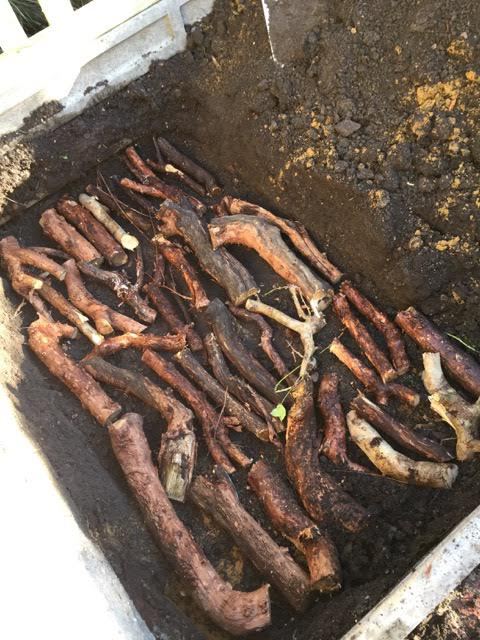
Hugelkultur is a permaculture technique that is usually used to create a raised bed on a flat piece of land by covering the area with logs.
Source: My Hugelkultur Experiment
Hugelkultur is a permaculture technique that is usually used to create a raised bed on a flat piece of land by covering the area with logs.
Source: My Hugelkultur Experiment

By Alice Marks
 Skimming the eye across the colourful chart of the Sustainable Development Goals (SDGs), it is easy to spot a couple which are intrinsically and directly linked to agriculture, but a closer look reveals that they are in fact all linked to agriculture. A healthy global agricultural sector underpins and supports so many aims of the SDGs that its development will be important for their overall success. As sustainable agriculture is essential for sustainable food systems and livelihoods, here is a breakdown of how agriculture, farming and nutrition fit into the first 7 goals
1. No Poverty
Over 70% of the world’s poorest people live in rural areas, and rely heavily on agriculture for their survival and livelihoods. According to the World Bank, evidence shows that GDP growth generated in agriculture has large benefits for the poor, and is at least twice as effective in reducing poverty…
View original post 958 more words
 Image by Ventrilock from freedigitalphotos.net
As 2016 begins many international development issues are threatening to intensify – the crisis in Syria and the thousands of people now refugees, the growing global power of ISIS, and the World Bank’s recently released flagship report, Global Economic Prospects, which predicts a “perfect storm” of financial turmoil coupled with slowing of growth in emerging markets this year. A recent article named the 10 news stories most likely to dominate the news this year as being:
And while news organisations are looking ahead to the events that will shape the world in 2016, others are focused on how we can prevent and solve some of these global development…
View original post 491 more words
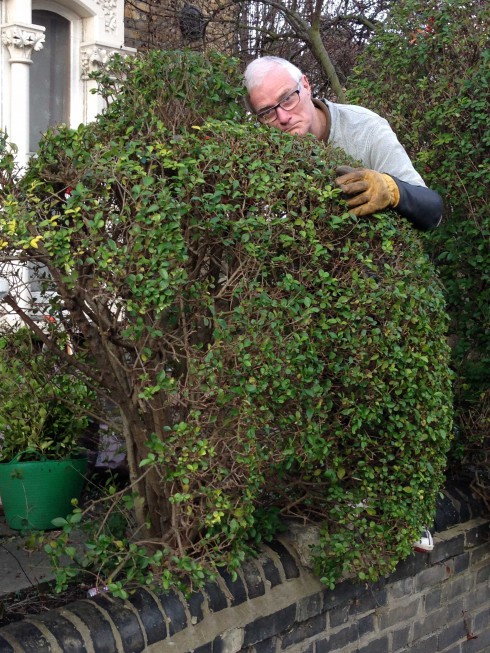 Here’s Tim. Topiary Tim. He’s looking a bit sad. One of our elephants has had to go.
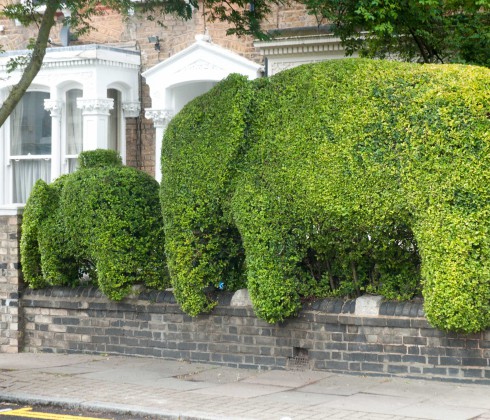 Up until the end of last year, all was looking well in the herd. But then, fairly swiftly, telltale signs of honey fungus were spotted. There was dieback on the trunk and ears of the baby elephant.
At first we were in a state of denial. Maybe somebody had poured some nasty chemicals on the ground or perhaps wandered past with a flame thrower? But who were we kidding. We dug up roots of the wilting/dead trunk and ears, and our worst suspicions were confirmed. White fungus was clearly visible between the bark and wood.
Unfortunately, there is no cure for Honey Fungus. On the RHS website it says, ‘the only effective remedy is to excavate and destroy, by burning or landfill, all of the infected root and stump material. This will destroy the food base…
View original post 276 more words
 Making small changes can have a big impact so this January do away with impossible-to-keep resolutions and do something that can make the planet greener, help local or distant communities and save you money. Make the change for over 66 days and, according to Lally et al (2010), it could become a new habit.
World leaders agreed the Paris Climate Deal in December, but tackling climate change will take all our efforts, not just politicians and big business. The transport sector in the EU is responsible for about one fifth of greenhouse gas emissions so help reduce this by taking public transport, combining trips and flying less (somewhat easier now with the rise of video/conference calls). The energy sector is responsible for almost 30% of emissions and so being more energy efficient is an important goal across industry and society. Learn how to make your…
View original post 578 more words
One of the nice things about having your own kitchen garden is the Gardener’s Tax. You probably haven’t heard it called that, but you know what I mean – the little tasty treats you ‘skim’ off the harvest, before it makes it into the kitchen 🙂 One of the plants I keep meaning to add…

The silver-leaved tree fern is New Zealand’s national plant. The undersides of the leaves really glow in low light and in the past they were used by Maoris to light pathways at night.
via Lighting the Way — The Enduring Gardener


But it is in the North Atlantic that the influences of human-forced climate change upon the weather are starting grow most starkly clear. There the impact of El Nino is far less obvious. During a typical strong El Nino year, storms tend to form more-so over Iceland. And we’ve seen that. But in the past, El Nino years have also tended to bring colder weather to Scandinavia as the Northern Hemisphere Jet Stream strengthened and locked cold air into the higher Latitudes. However, this year, as in recent years, the Barents Sea has been freakishly warm. This region, which during the 20th Century featured much more sea ice than today, is now mostly ice free. And this broad section of open water vents heat into the atmosphere, warming Scandinavia and providing a weakness in the Jet Stream for warm air invasions of the Arctic.
“Today The New York Times is…
View original post 152 more words
Nigel Boldero aka 'Old School Gardener'
 | Nigel Boldero on Fighting to Reduce Climate Cha… |
 | Anonymous on Fighting to Reduce Climate Cha… |
| Anonymous on PicPost: Carrot, my foot! |
| 18 Surprising Hydran… on Plantax 16: Hydrangea the wate… | |
| Nigel Boldero on Poppyland: A Victorian romance… |
| Anonymous on Poppyland: A Victorian romance… |
| Anonymous on Plants to die for… |
 | Isabella Childress on PicPost: Forest, but not as we… |
 | Happiness Factor on Is child-friendly planning a l… |
 | zidane on Top Tip: On a Pedestal- make m… |





Nature Connectedness Research Blog by Prof. Miles Richardson
Connecting People with Nature
A daily selection of the best content published on WordPress, collected for you by humans who love to read.
Celebrating gardens, photography and a creative life
Writing, photography and more by Daniel Greenwood
Lydia Rae Bush Poetry
Australian Pub Project, Established 2013
The Journey from Finnish Rintamamiestalo to Arboretum & Gardens
Because even in chaos, there’s always gin and a good story …
RANDOM BITS & MORE TIDBITS
.....and nurturing my soul
Cultural Heritage and the Digital Economy
Sense of place, purpose, rejuvenation and joy
Notes from the Gardeners...
Connecting People to Nature, Empowering People to Live Sustainably
A girl and her garden :)


 Old School Garden