Category: This and that


Hellebore- pic by Ann Stochaj

Hellebore- pic by Ann Stochaj

canwefeedtheworld's avatarOne Billion Hungry: Can We Feed the World?

ID-100128334 Photo by phanlop88

Digital technology is likely to continue to be a major driver of development and industry in Africa. The capabilities of local entrepreneurs, start-ups and businesses to provide services such as technical assistance and finance are growing significantly due to greater access to mobile and internet technology. As such digital solutions are likely to make a huge contribution to addressing local concerns, connecting people in remote areas and to reaching greater numbers of people than more traditional development initiatives. Such technologies are already transforming the way in which smallholder farmers work and interact. Here we discuss five ways in which digital technology can play a part in transforming agriculture in Africa.

  • Extension services

Accessing information on farming practices, crop diseases, pest control and land management can be made easier for rural farmers through mobile technology. At present there is a large gap between extension services provided and farmers…

View original post 750 more words

Municipal Dreams's avatarMunicipal Dreams

In this guest post, Dr Ruth Cherrington brings her story of the Canley Estate in Coventry up-to-date, following earlier posts on the origins of the Estate and the growth of its community.  Ruth runs the Club Historians website and is the author of Not Just Beer and Bingo: a Social History of Working Men’s Clubs. You can follow Ruth on Twitter at @CHistorians.

Introduction

At the end of the previous posting, we left Canley residents busy shaping their community and social spaces.

It’s hard to pinpoint when exactly it started but some streets began to look unsightly from the early 1960s. Rather than growing flowers in the front gardens some tenants instead piled up rubbish and discarded furniture. There were instances of anti-social behaviour, though that term was not used back then: ‘problem family’ was the expression used instead. Canley residents would have been quick to name the streets that…

View original post 2,089 more words

canwefeedtheworld's avatarOne Billion Hungry: Can We Feed the World?

By Alice Marks

13950908853_b4cba2cd9e_o Using drones for agriculture. Credit: Lima Pix (Flickr)

According to experts at the recent World Economic Forum in Davos, we are sitting on the edge of the Fourth Industrial Revolution. This revolution builds on the third, which was the digital revolution, and is predicted to blur the lines between the physical and digital world through innovations such as artificial intelligence, 3-D printing, nanotechnology, and the use of Big Data, which will integrate digital technologies into daily lives ever more closely. It is predicted to be exponentially fast and far reaching in its scope and impact, transforming entire production, governance and management systems in an unprecedented way. Whether this will mean “promise or peril” for humanity will likely only be clear with the benefit of hindsight, but optimists hope that it offers the opportunities to improve lives and help to eradicate poverty through improved connectivity and…

View original post 593 more words

canwefeedtheworld's avatarOne Billion Hungry: Can We Feed the World?

By Katrin Glatzel

Alvise Forcellini 2006 urbanisation blog Credit: Alvise Forcellini, 2006

“How to feed our cities? Agriculture and rural areas in an era of urbanisation” – that was the theme of the Global Forum for Food and Agriculture, or for short, the GFFA, hosted in Berlin in mid-January. With Habitat III taking place in October in Quito, Ecuador, urbanisation features on top of the agenda of many meetings and conferences in 2016 including the Chicago Council on Global Affairs’ annual flagship report and the Committee on World Food Security (CFS). These forums are important as they draw attention to what urbanisation will mean for rural areas, the agriculture sector and those millions of smallholder farmers, upon which urban areas rely for their food supply. This is particularly important in a developing country context.

Urban and rural transformation

According to UN figures, in 1950 only about a third of the world’s population…

View original post 719 more words

Picture by Pockets1 on Flick

Picture by Pockets1 on Flick

Tim Gill's avatarRethinking Childhood

I am on record as saying that I am no parenting guru, and that there are too many people trying to tell parents how to do their job. So why did I recently agree to give FQ magazine – “the essential dad mag” according to its website – my six top parenting tips? (And no, it wasn’t because they paid me!)

The thread that links all my work is that children want and need to expand their horizons: to have everyday experiences of freedom, adventure, exploration and responsibility as they grow up. It is the core of my vision of what a good childhood looks and feels like.


Most of my work to achieve that vision focuses not on parents, but on all the other people and institutions that influence children’s lives: schools, educators, residents, voluntary organisations, play and leisure services, charities, regulators, designers, planners, campaigners, local and national…

View original post 704 more words

saltofportugal's avatarSalt of Portugal

OLYMPUS DIGITAL CAMERA

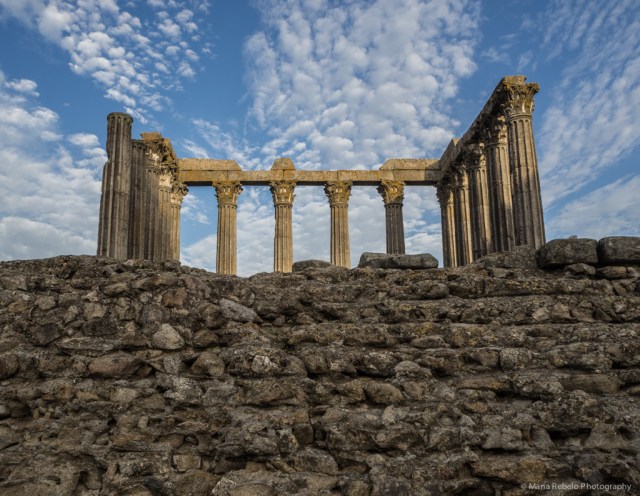
If you’re traveling in Alentejo, follow the advice of ancient travelers and spend some time in Évora. The city is included in the Antonine itinerary and is mentioned in Pliny the Elder’s Natural History as Ebora Cerealis in reference to the surrounding fields of cereals.

Évora was occupied by Celts, Gauls, Phoenicians, and Persians. But it was Quintus Sertorius, the general who conquered the city in 80 B.C., that gave Évora its architectural jewel: a Roman temple with elegant corinthian columns. Known as the temple of Diana, it is more likely to have been dedicated to Jupiter.

There’s much to see in Evora: a beautiful basilica, elegant university buildings, and peaceful convents. And the food and wine are great everywhere.  You can choose a restaurant blindfolded and have a wonderful meal. If Pliny was writing today, he might call the city Ebora Delicia.

View original post

Finding Nature

Nature Connectedness Research Blog by Prof. Miles Richardson

Norfolk Green Care Network

Connecting People with Nature

Discover WordPress

A daily selection of the best content published on WordPress, collected for you by humans who love to read.

Susan Rushton

Celebrating gardens, photography and a creative life

Unlocking Landscapes

Writing, photography and more by Daniel Greenwood

Alphabet Ravine

Lydia Rae Bush Poetry

TIME GENTS

Australian Pub Project, Established 2013

Vanha Talo Suomi

The Journey from Finnish Rintamamiestalo to Arboretum & Gardens

Marigolds and Gin

Because even in chaos, there’s always gin and a good story …

Bits & Tidbits

RANDOM BITS & MORE TIDBITS

Rambling in the Garden

.....and nurturing my soul

The Interpretation Game

Cultural Heritage and the Digital Economy

pbmGarden

Sense of place, purpose, rejuvenation and joy

SISSINGHURST GARDEN

Notes from the Gardeners...

Deep Green Permaculture

Connecting People to Nature, Empowering People to Live Sustainably

BloominBootiful

A girl and her garden :)