August brings not just the Susans, but also Joe – as in Joe Pye Weed (Eutrochium). Note that Joe Pye Weeds used to be Eupatoriums, but now thanks to the ever-busy taxonomists they are Eutrochiums. This is arguably an improvement since Eutrochium is one syllable shorter. (I’ve written my Senator demanding passage of a bill barring […]

Category: This and that
Guest Post by Maria Cannon, from Dallas, Texas, who believes we’re never too young to dedicate ourselves to a hobby. Her hobbies–like gardening–played a major role in maintaining her physical and mental health.
Gardening is a great way to spend time outdoors, get more fresh food into your diet, and transform your yard into something beautiful. But there’s one big benefit of starting a backyard garden that doesn’t get as much attention: It’s great for your mental health. Don’t believe us? Here are seven incredible things a garden can do for your mental wellbeing.
1. It Relieves Stress
A 2010 study found that 30 minutes of gardening reduced levels of the hormone cortisol, too much of which is linked to chronic stress, poor memory function, and weakened immune systems, among other health problems. Gardening outside not only had a greater effect on participants’ cortisol levels than 30 minutes of leisure reading, but the effects lasted long after leaving the garden.
2. It Eases Mental Fatigue
When your to-do list has you feeling mentally exhausted, a stroll through the garden might be the remedy you need. Time in nature has been shown to ease the mental fatigue that leaves you irritable, inattentive, and forgetful. A few minutes spent weeding or cutting flower blooms lightens the demand on your mind — a welcome break from busy work and home environments where you must tend to several things at once. After a period of quiet contemplation, you’ll enjoy a less stressed, more focused mind.
3. It Combats Depression and Anxiety
There’s a reason horticultural therapy is quickly gaining popularity. Gardening is becoming respected as an effective way to combat mood disorders like depression and anxiety. Time spent outdoors is linked to better emotional regulation and less ruminating, or dwelling on negative thoughts and feelings.Gardening also helps you meet the weekly recommended amount of moderate physical activity, another important tool in managing mood disorders.
4. It Helps Attention Deficits
Just 20 minutes spent in nature can improve concentration in children with ADHD, according to research from the University of Illinois at Urbana-Champaign. In fact, a short nature work improved children’s performance on concentration tests as well as or better than ADHD medication. And the concentration benefits of nature aren’t limited to children with ADHD: Adults with ADHD see improvements in concentration and impulse control after time outdoors, too.
5. It Strengthens Memory
That 20 minutes of nature can improve your short-term memory, too. Researchers at the University of Michigan found people perform 20 percent better on memory tests after spending time in natural setting over an urban one. This science has been applied to memory care facilities serving patients with Alzheimer’s disease and dementia, where you can often find memory gardens designed to benefit sufferers’ memory function, cognitive ability, and stress levels.
6. It Improves Self-Esteem
Gardening can also improve your self-esteem — an important benefit for people with depression struggling to love themselves. Just one session in the garden has been shown to measurably improve self-esteem, with participants reporting less tension and better self-perception after tending to a garden.
7. It Makes You Feel Alive
At this point, it may sound like gardening is a miracle drug. And it just might be: One of the most stunning findings about gardening and mental health is that gardening increases vitality. People report feeling more energized, inspired, and motivated after spending time in nature, but those same benefits were lacking for activities that don’t involve green space.
With all these amazing benefits, there’s no reason not to make gardening part of your life. After all, what’s more important than protecting your mental health? For people currently experiencing mental illness, gardening can lessen symptoms and serve as a healthy coping strategy. Not only can it help sufferers fight their illness, but it serves as a positive, productive alternative to unhealthy coping mechanisms like drug or alcohol abuse. For people without a history of mental illness, gardening is a wonderful way to preserve and improve your mental well-being for the long-term. And who doesn’t want that?
Top image via Unsplash
Author: Maria (HobbyJr.org)

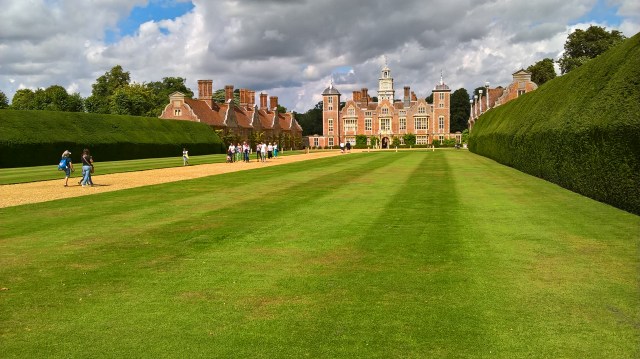
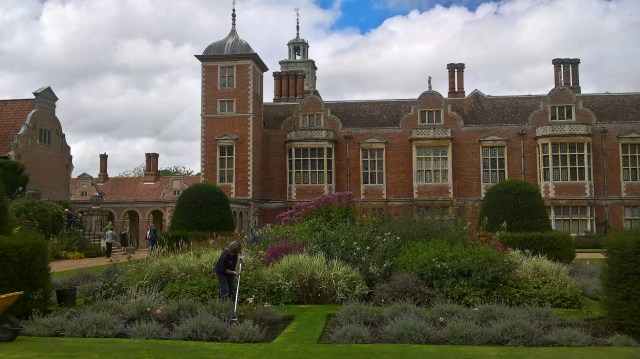
A small group of volunteers were in on this week’s trip to Blickling. We began the day weeding around the glorious herbaceous border that abuts the parterre on two sides.
A couple picked their way through the dense planting whilst the rest of us hoed, raked and removed the grass and other seedlings that had taken a grip amongst the gravel paths. Though the path was a bit wet in places- not helped by some blocked drains- it was generally a satisfying task, even though it took some deft fingertip sorting of the small tufts of grass from amongst the muddy shingle.
During the morning the sound of chain saws was a constant background hum. I discovered that a large oak tree just over from where we were, was in the course of being felled. Apparently ultra sound testing had confirmed internal rot, that visual observation of a tilting trunk had suggested earlier. Work on the massive tree had begun a few days before, and I learned that during this a bees nest had been disturbed and that several people had been stung by the angry bees; Assistant Head Gardener Steve included. Having been chased to the bothy in the process, Steve was attacked again by the waiting bees as he re-emerged! A brief chat with him on our way to lunch confirmed that he wasn’t feeling too bad after his ordeal. I was pleased to hear that the felled timber is to be used to create some raised beds (probably along with a whole lot else) in the Walled Garden. You can get an idea of the scale of the tree in the picture below, alongside which I’ve included a couple of shots from the double borders.
After lunch in the Walled Garden bothy, new volunteer Tim and I gathered up some onions and put them in the glasshouse for drying, and then harvested some runner beans; Project Manager Steve offered some of these to us (a nice treat for the evening meal at home, as my own plants hadn’t been yielding many), and I finished the day by carrying over the rest to the restaurant for their use. It really is impressive how much produce is now finding it’s way into the meals prepared in the on site restaurant.
On my way back to the car I stopped off at the beginning of some of the estate walks, where a new sign had been installed that uses laser cut etching onto the surface of bare wood (see pictures below). This looks very attractive and is being considered as the way we might present the written information on each of the Trees in the gardens that will form the new Tree Trail I’ve been working on. My only concerns are that the lettering might, over time, lose it’s legibility and the surface of the bare oak plaque used for the signs might also crack with weathering. We shall no doubt look into this further to arrive at a final solution by next Spring.
Further Information:
Blickling Hall website
Blickling Hall Facebook page
A 360 degree tour of Blickling Hall
Old School Gardener
Save
“Among those who understand the systemic nature of our problems, the controlled crash option is the subject of what may be the most interesting and important conversation that’s taking place on the planet just now. But only informed people who have gotten over denial and self-delusion are part of it.”
via When and How Will Growth Cease? — GarryRogers Nature Conservation
The light changes in August, and so does the feel of the garden. The days have begun to shorten and the sun is lower in the sky. The light still brings heat, but there is a softening, especially in late afternoon.
Some of Britain’s rarest butterflies are booming at National Trust sites, a new report has found. The study, led by charity Butterfly Conservation, revealed that rare species like Marsh Fritillary are bucking nationwide declines, with these ‘habitat specialist’ butterflies seeing their numbers grow by a tenth at National Trust sites since 1992. It follows decades […]
Three Reasons to Garden with Your Children: It’s so important to spend time outside in the garden with your children. Whether it’s structured time or exploring on their own, your child will find ways to connect with nature. 1.Physical exercise: Getting outside means your child will be enjoying the fresh air and have plenty of…
via Three Reasons to Garden with your Children — That Bloomin’ Garden
I’ve always been fascinated by the Home Front, the enlistment of every man, woman and child in the British Isles in an effort to beat Hitler through food rationing, making do and mending, salvage, growing your own and basically making the most of scarce resources with elbow grease and endless ingenuity. I’ve just read Eggs…
via How well would we cope with rationing? — The Unconventional Gardener
Pollinators love Mexican Sunflower (Tithonia rotundifolia).
via If You Plant Just One Annual for Pollinators … — gardeninacity


An early start at Blickling this week, and the first hour was spent harvesting some second early potatoes; variety ‘Nicola’. I don’t know these but have been told they are pretty tasty…’Charlotte’ is my favourite and I’ve just harvested a good crop in Old School Garden (I gather our neighbours enjoyed them too while we were away in Australia).