Category: This and that


gressenhallfw's avatarGressenhall Farm and Workhouse

 Over the winter months, the volunteers and the Skills for the Future Library and Archive trainee have been keeping warm by re-organising the newly decorated library at Gressenhall Farm and Workhouse Museum.

The library was originally started in 1976 as a resource to help staff identify objects and object histories donated to the Museum of Rural Life and the library now has a dedicated space in which researchers can have access to these resources.

Library

Some of the items available include:

  • Farm documents including diaries, horse remedy notebooks, stud books, invoices from Norfolk farms; books, journals and magazines relating to farming and livestock


  •  Manuals for engines and farm machinery, Government publications and posters concerning agriculture, health, war and education, retail and agricultural show catalogues


  • Photographs, objects, books and printed documents relating to Agricultural Unions and George Edwards


  • Educational books and objects used in Norfolk schools, class photographs and…

View original post 205 more words

deltagardener's avatarThat Bloomin' Garden

Its such a fun time of year when you can walk outside to your backyard and harvest food from your garden. Nothing says fresh like that. I have been growing some different tomatoes this year. I am able to harvest tomatoes everyday since they are in a  greenhouse and ripening sooner than those outside.

Yellow Pear & Golden Rave

 The yellow pear tomato is one of my favourites. It isn’t as acidic as some and a great snack while in the garden. The two larger yellow Roma tomatoes on the bottom of this photo are Golden Rave. They are a couple of inches in size, great for snacking or in salads.

Brandywine

 My favourite red tomato is the Brandywine, an heirloom tomato with fruit weighing about 1/2 pound. This is the perfect tomato for fresh eating. It tastes like it has been roasted already with its deep flavour. I will…

View original post 176 more words

National Gardening Week  - Seed Giveaway

It’s National Gardening Week next month and we’re celebrating by giving away 10,000 packets of wildflower seeds – let’s get Britain sowing! http://nationalgardeningweek.org.uk/

Apple Ipad 4 MD512 64GB iPad with Retina Display and Wi-Fi (4th Gen, Black)Paper is not dead…

A little light video offering, courtesy of Eric, a friend of mine. Enjoy :0)

Picture

New Website on Dereham and local museum

Here’s a new website designed by Sue Walker White for the Dereham Antiquarian Society and Bishop Bonners’ Cottage Museum, in Dereham, Norfolk.

Shine On Award

Shining-StarMy blog has been named for a ‘Shine On’ award by

Aristonorganic

“This award is for the blogs that shine, make you feel good and are inspiring to the reader.”

Thanks for this award!

I’m pleased to nominate the followings blogs for a “Shine On” award:

Pay them a visit and be inspired!

Old School Gardener

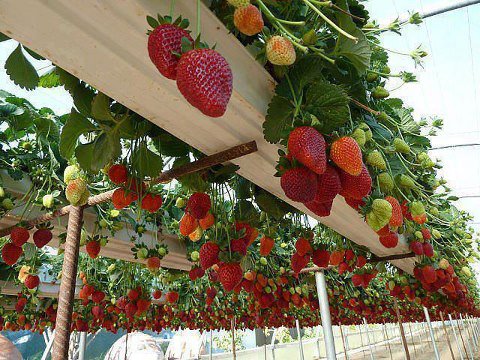
PicPost: Fruitful pergola...

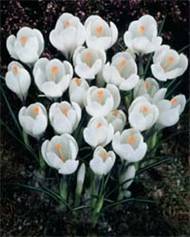
Crocus 'Jeanne d'Arc'

Crocus ‘Jeanne d’Arc’

In the wild, Crocus vernus begins to flower as the snow melts in the mountains of Europe. It is native to the Mediterranean from the Pyrenees in the west to the Ukraine in the east, and south as far as Sicily and the Balkans. This spicy herald of spring has a history dating back thousands of years.

Crocus (plural: crocuses, croci) is part of the Iris family and consists of around 90 species. They are perennials, growing from corms. Cultivated mainly for their flowers which appear in autumn, winter, or spring, Crocuses are also cultivated and harvested for Saffron– the spice obtained from the flower’s anthers. This practice was first documented in the Mediterranean, notably on the island of Crete.  Saffron’s bitter taste and hay-like fragrance is complimented by its rich golden-yellow hue, used to colour food and textiles.It has been  traded and used for over four thousand years. Iran now accounts for approximately 90 percent of the world production of Saffron. Because each flower’s anthers need to be collected by hand and there are only a few per flower, Saffron is the most expensive spice in the world.

The name Crocus is derived from the Greek (krokos), which in turn is probably derived from a Semitic or Sanskrit word, which mean saffron or saffron yellow. Over the years the classification of Crocus species has been revised several times, the division of the many species challenging botanists because of the range of characteristics that are available for scrutiny. Some of the species are:

C. aureus = goldencrocus

C. biflorus = two – flowered – the ‘Scotch Crocus’

C. chrysanthus = golden – flowered

C. minimus = smallest

C. nudiflorus = naked flowered

C. ochroleucus = yellowish – white

C. sativus = The Saffron Crocus

C. sieberi = after Sieber, a botanist

C. susianus = from Susa, Persia

C. vernus = spring flowering- the Dutch or Spring Crocuses are derived from this species

C. versicolour = changing or varied colour

The first crocus seen in the Netherlands, where crocus species are not native, were from corms brought back in the 1560s from Constantinople by the Holy Roman Emperor’s ambassador who sent a few corms to the botanical garden in Leiden. By 1620, new garden varieties had been developed. Some species, known as “autumn crocus”, flower in late summer and autumn, often before their leaves appear. They should not be confused with Colchicum, a different genus of autumn – flowering plants.
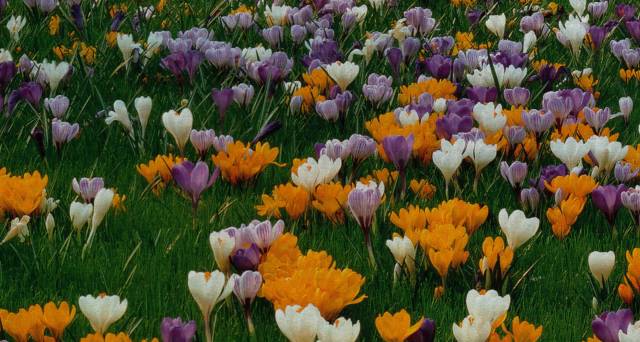
crocus carpetAt the Royal Botanical Gardens, Kew, in 1987, Reader’s Digest sponsored the planting of 1.6 million corms of cultivated Dutch crocus for their 50th anniversary. A further 750,000 corms of C. vernus ‘Jeanne d’Arc’ and C. vernus ‘Purpureus grandiflorus’ have been planted since – a visit to Kew to see this ‘Crocus Carpet’ is a must.

Sources and further information:

Wikipedia

The Alpine House – information

National Crocus collection – Wisley

A crocus planter

Crocus carpet at Kew

Saffron

Pacific Bulb Society

Old School Gardener

If you’ve enjoyed reading this post and others on this blog, why not comment and join others by signing up for automatic updates via email (see side bar, above right ) or through an RSS feed (see top of page)?

Finding Nature

Nature Connectedness Research Blog by Prof. Miles Richardson

Norfolk Green Care Network

Connecting People with Nature

Discover WordPress

A daily selection of the best content published on WordPress, collected for you by humans who love to read.

Susan Rushton

Celebrating gardens, photography and a creative life

Unlocking Landscapes

Writing, photography and more by Daniel Greenwood

Alphabet Ravine

Lydia Rae Bush Poetry

TIME GENTS

Australian Pub Project, Established 2013

Vanha Talo Suomi

The Journey from Finnish Rintamamiestalo to Arboretum & Gardens

Marigolds and Gin

Because even in chaos, there’s always gin and a good story …

Bits & Tidbits

RANDOM BITS & MORE TIDBITS

Rambling in the Garden

.....and nurturing my soul

The Interpretation Game

Cultural Heritage and the Digital Economy

pbmGarden

Sense of place, purpose, rejuvenation and joy

SISSINGHURST GARDEN

Notes from the Gardeners...

Deep Green Permaculture

Connecting People to Nature, Empowering People to Live Sustainably

BloominBootiful

A girl and her garden :)