Category: This and that


Jardin's avatarJardin

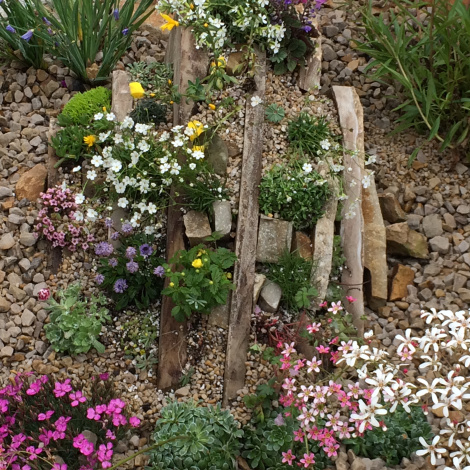
Creating an impact in a space only 2m by 3m is a difficult task, but there is much to hold the attention in these six little “postcard gardens”.
Bloom 2014 053

It’s Bloom time in Dublin – Dublin’s Garden and Food festival. The large crowds hurtle towards the Floral marquee, the Show Gardens and artisan food stalls, but many pause on their exit to appreciate the ideas being showcased by the various Societies who have built these postage stamp gardens.

President of Ireland Michael D Higgins and his wife Sabina took care to visit small as well as large exhibits. President of Ireland Michael D Higgins and his wife Sabina took care to visit small as well as large exhibits.

Irish people are well known for their “gift of the gab”, enhanced by kissing the Blarney Stone, and Blarney Castle and Gardens, Co Cork, presented us with  “thumbnail imagery” of what awaits the visitor to Blarney, in a representation of a Celtic Cross with Irish Ogham alphabet.199
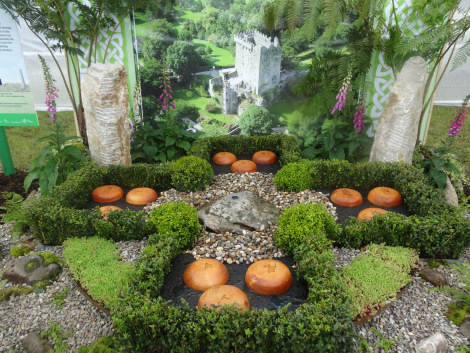
The Community Garden Network showcased their…

View original post 205 more words

canwefeedtheworld's avatarOne Billion Hungry: Can We Feed the World?

ID-100131830Smallholder farmers produce the bulk of the world’s food with only minimal resources such as land and water. In fact small-scale food producers farm less than one quarter of the world’s farmland, a proportion that is declining. A new GRAIN report, Hungry for Land, investigates whether the shrinking size of land under small-scale farming poses a potential threat to the global production of food. The conclusion was clear, “we need to urgently put land back in the hands of small farmers and make the struggle for agrarian reform central to the fight for better food systems”.

As a multitude of media articles tells us land is a hot commodity, one that is fought over and one that increasingly small-scale farmers are being evicted from. Be it for large-scale oil palm plantations, the creation of protected areas or the discovery of oil, insecure systems of land tenure and opaque policy…

View original post 648 more words

A. Saab's avatar2me4art

DSC_0018 2

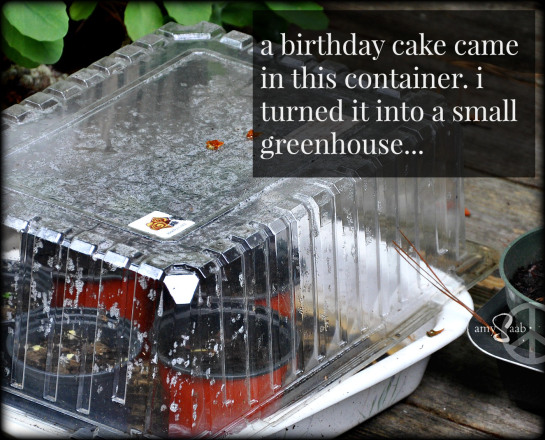
pretty cool, huh?

View original post

Jardin's avatarJardin

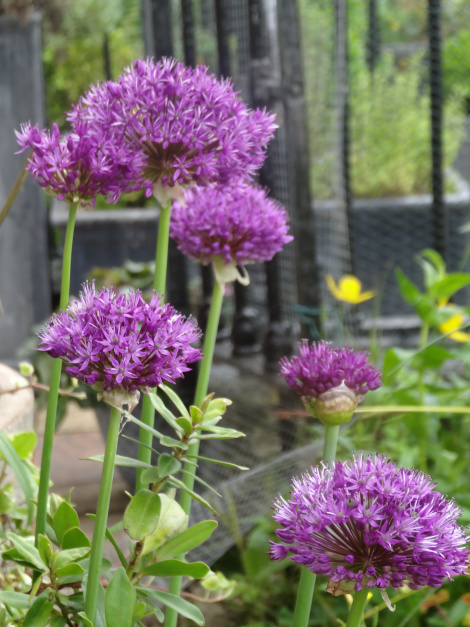
At this time of year, I love to see the purple heads of Alliums introducing some fizz to the borders whilst we wait for the drama of perennials to come.Their tall heads sway in the breeze but remain remarkably upright adding much needed height.

 229

The Allium family encompasses the edible shallots and onions (Allium cepa), garlic (Allium sativum) and chives (Allium schoenoprasum).

The edible herb : Chives. Allium schoenoprasum The edible herb : Chives.
Allium schoenoprasum

But the Alliums we plant in our flower borders are often referred to as “ornamental onions”. They are easy to grow bulbs, planted deeply in the autumn in well-drained soil; they do not require much space, their heads rising up on strong stems, ‘scapes’, held aloft above the emerging perennials. They are drought-tolerant and come in a range of sizes and shades – purple, white, blue (Allium caeruleum) and yellow (Allium moly).

They are often the mainstay in early summer Show…

View original post 169 more words

Municipal Dreams's avatarMunicipal Dreams

Council housing transformed Bristol between the wars.  Some 15,000 council homes were built, principally in nine new suburban estates.  Forty per cent of new homes in the city in this period were council homes.  Designed according to the finest planning principles of the day, they represented not just new buildings but radically altered lives.

Woodcote Road, Hillfields Park, c1930 © Paul Townsend and made available under the Creative Commons licence Woodcote Road, Hillfields Park, c1930 © Paul Townsend and made available under a Creative Commons licence

Despite these later efforts, Bristol had come slowly to the necessity of council housing.  Before 1914, the Corporation had built just 72 tenement homes – and these mainly to replace homes demolished in road improvement schemes.  Constructed in Fox Road, Chapel Street, Braggs Lane, Millpond Avenue and Fishponds Road, the only survivors of this period are tenements in Mina Road, St Werburghs. (1)

Mina Road tenements Mina Road tenements, built 1906

But even before 1914, a wind of change was apparent.  Though a proposal to build a…

View original post 1,604 more words

8 Things to consider before you install renewables

Gary's own solar panels

Click on the title for an article with some useful advice if you’re thinking of installing ways to provide your own energy.

Old School Gardener

Jardin's avatarJardin

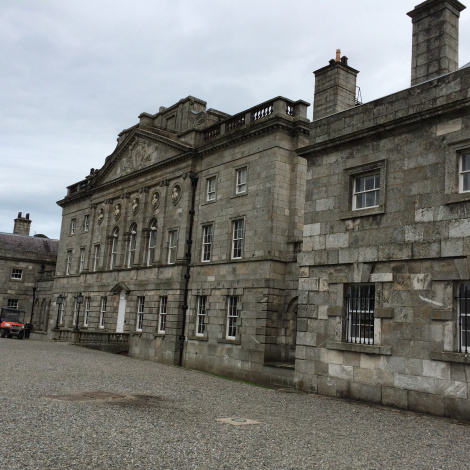
The winding drive, down an avenue of beech trees to the front of the house, belies the formality of the garden, not yet visible, at the rear.

Photos from Iphone May 2014 248

The picturesque drive arrives at a formal, almost austere, front façade. And contrast is, for me, the key characteristic of the gardens at Powerscourt Estate, named by “National Geographic” as  number 3 in its Top Ten Gardens of the World.

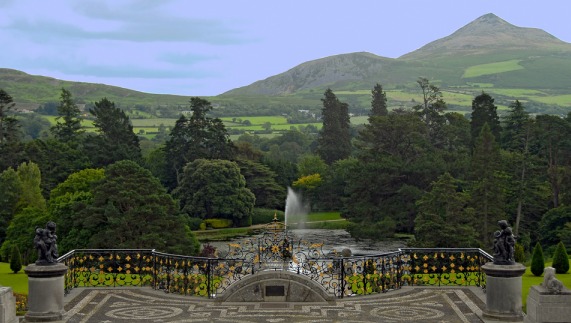
The Powerscourt Estate is nestled in the Wicklow Mountains, an easy drive from Dublin, in an area of breathtaking natural beauty. And it is this contrast, which is particularly interesting at Powerscourt – the formal green symmetrical amphitheatre laid out below,with its terraces, statues and grottoes, wrestling for attention with the natural backdrop of the fields and the Sugarloaf mountain beyond.

april 2014 078

And I think it does pull it off – the monolithic statues managing to frame the distant view and mirrored by the…

View original post 554 more words

PicPost: Stop Monkeying Around!

The Monkey Orchid

‘A number of images depicting a flower with the face of a monkey are currently circulating via social media posts and the blogosphere. Many commentators have suggested that the images have been “photoshopped”.

However, the images are genuine and depict a real flower. The botanical name of (one of) the pictured orchids (top right) is Dracula gigas. Another orchid species, Dracula simia, also has flowers that resemble monkey faces. The name pays homage to the “monkey” resemblance (simia) as well as to a resemblance to the flowing cape and long fangs of the Dracula character in popular fiction.

These orchid species grow in their natural state in Colombian, Ecuadorian and Peruvian forests at high elevations are thus not often encountered by people in the wild. However, collectors have cultivated the plants elsewhere.’ (extract from hoaxslayer.com)

Old School Gardener

Finding Nature

Nature Connectedness Research Blog by Prof. Miles Richardson

Norfolk Green Care Network

Connecting People with Nature

Discover WordPress

A daily selection of the best content published on WordPress, collected for you by humans who love to read.

Susan Rushton

Celebrating gardens, photography and a creative life

Unlocking Landscapes

Writing, photography and more by Daniel Greenwood

Alphabet Ravine

Lydia Rae Bush Poetry

TIME GENTS

Australian Pub Project, Established 2013

Vanha Talo Suomi

The Journey from Finnish Rintamamiestalo to Arboretum & Gardens

Marigolds and Gin

Because even in chaos, there’s always gin and a good story …

Bits & Tidbits

RANDOM BITS & MORE TIDBITS

Rambling in the Garden

.....and nurturing my soul

The Interpretation Game

Cultural Heritage and the Digital Economy

pbmGarden

Sense of place, purpose, rejuvenation and joy

SISSINGHURST GARDEN

Notes from the Gardeners...

Deep Green Permaculture

Connecting People to Nature, Empowering People to Live Sustainably

BloominBootiful

A girl and her garden :)