Category: This and that


Specifier Review's avatarArchitecture, Design & Innovation

Leading masonry products manufacturer, Lignacite, has launched the world’s first carbon negative building block. Named ‘The Carbon Buster’, the new building block from Lignacite is a British innovation, which has been developed by the company in partnership with Carbon8 Aggregates, using their award winning Accelerated Carbonation Technology.

lig1

The Carbon Buster incorporates more than 50% recycled aggregates and combines this with Carbon8’s carbonated aggregates derived from by-products from waste to energy plants. The result is a high performing masonry product, and the first ever building block, which has captured more carbon dioxide than is emitted during its manufacture; 14kg CO2 per tonne to be exact.

Carbon8’s Technical Director, Dr Paula Carey, explains: “On the back of research carried out at The University of Greenwich’s School of Science, Carbon8 identified an end use for thermal residues from waste to energy plants. By mixing the residue…

View original post 472 more words

shinealightproject's avatarShine A Light

This week we have a guest blog from Collections Development Assistant Wayne Holland who shines a light on Norwich manufacturers Laurence and Scott and a HUGE motor that we recently moved into the Norfolk Collections Centre

By Wayne Holland

100 years ago going to work in Norwich for the vast majority of people meant making something. Perhaps you worked in Colman’s mustard factory or brewed beer in one of the big breweries, perhaps you made shoes, wove silk or worked in the printing or engineering industries. Now in the 21st century the percentage of Norwich workers employed in manufacturing is just 8%.

Images of Norwich in the 19th century and the first half of the 20th century contain a feature of the landscape long since extinguished from the skyline….. chimneys, evidence of the cities industrial past.

Jarrolds printing factory in 1951, notice how many chimneys there are in the background. Jarrolds printing factory in 1951, notice how many chimneys there are in the background.

View original post 805 more words

GarryRogers's avatarGarryRogers Nature Conservation

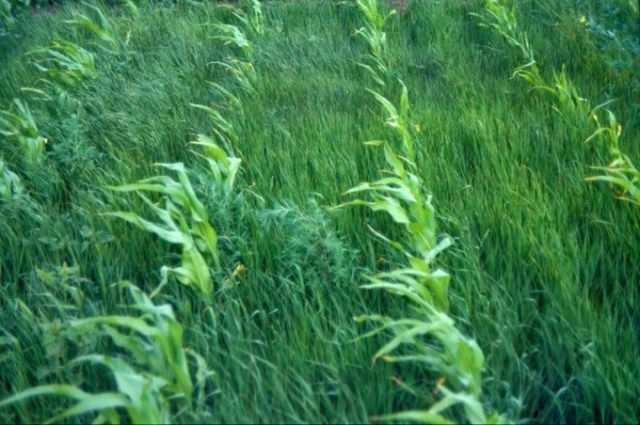
There are also some other important points to consider regarding farm cost savings and higher production yields with mycorrhizae. The University of Wisconsin made a study of the effects of Mycorrhizal Applications Inc’s product called MycoApply on potato yields, profit and another extremely interesting thing about the application of phosphorus in the field. It was found that where conventional grown potatoes needed 120 lbs of phosphorus added per acre, under the mycorhizal applications to the potato fields, only 30 lbs was needed. Hence less phosphorus and more efficient mycorrhizal nutrient competition and uptake means less fertilizers. There was also an added bonus of more yield of potatoes per acre and profit by the usage of mycorrhizae into the soils. So drought tolerance, superior nutrient uptake which negated tons of fertilizers on industrial site, 200% increase in water hydration which made plants drought resistant and the added plus of less weeds…

View original post 43 more words

Municipal Dreams's avatarMunicipal Dreams

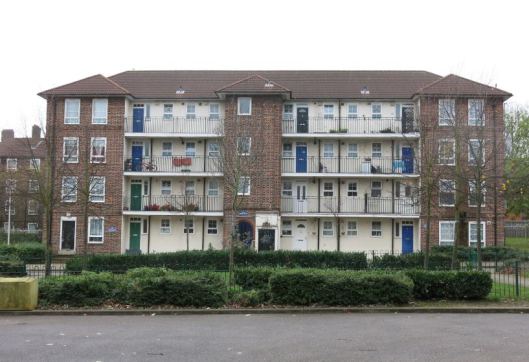
We left the Honor Oak Estate last week, perhaps as oppressed by the inequality and constraints that have marked the lives of our poorer citizens as by Nazi bombs.  1945 brought the defeat of Hitler; the struggle to achieve decent conditions for all our people would be longer-fought.  In this and for the new generation of planners, the Estate would feature as a warning of what to avoid.  The ‘neighbourhood units’ and ‘mixed developments’ favoured – in principle rather better than in practice – in the post-war years were a conscious reaction to the design failings of interwar council estates, of which Honor Oak was taken to be a prime example. (1)

Barville Close Barville Close

The General Election of 1945 saw a Labour landslide and a shift, it seems, in the politics and identity of the Estate too: ‘After the war we all went voting for Labour’, largely, as remembered, through the…

View original post 1,505 more words

Hi Walter,
I had a quick look at the Melianthus this lunchtime and as you can see it does look a bit of a windswept tangle! But you can also see…a flower spike! So it looks like my leaving the leaves on was worth it… we shall see!

Blickling Hall, under some recent snow

Blickling Hall, under some recent snow

Old School Garden

31st January 2015

To Walter Degrasse

Dear Walter,

Well the New Year came, and it heralded a new gardening energy for me after a few months of relative sloth!

I’ve begun my volunteering at Blickling Hall and as you might have read this is proving to be very interesting and satisfying, including meeting a host of other volunteers and helping to begin the regeneration of the two acre walled garden.

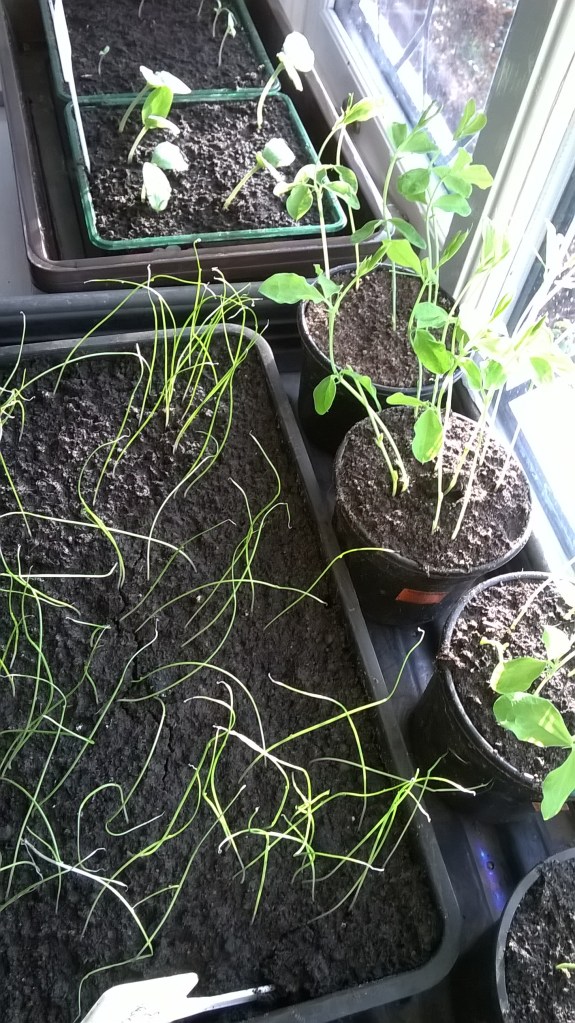
At home it’s been a few weeks of planning (seed checking, organising and buying), thinking a bit more about the wildlife pond I’m going to install here at Old School Garden and getting a few things under way, like chitting the potatoes (‘Foremost’ as first earlies and ‘Charlotte’ as second earlies), sowing  the first leeks, some bush tomatoes, cucumbers and sweet peas, all with the aid of some heated propagators. They’re now doing nicely and in the next week or two I’ll pot these up and bring them on in my makeshift greenhouse (our lounge!). It’ll soon be time to get the next lot of seeds underway.

WP_20150130_09_05_31_Pro

Seed potatoes being ‘chitted’ on the windowsill

I haven’t been up to much outside- and the mole hills continue to appear! I think I’ll venture out in the next few weeks and continue the tidying up before things really get going. Oh, by the way, I’m persevering with the Melianthus as I believe if I leave the foliage on (despite the plant looking a bit straggly now) I might get some flowers in the next few weeks- there are some already forming on a plant I’ve seen at Blickling.

WP_20150130_09_08_58_Pro

First signs of growth for the new season…

I’ve completed my review of the grounds and gardens at the local primary school and hope that this will help them get to grips with their open spaces and get the most from them, especially educational and play value and for improving the diversity of wildlife. I’m also still working on the Management Plan for the local churchyard – the base plan is in place and I now need to research some details on establishing much of the space as a wild flower meadow. My latest garden design course is due to begin in Reepham in just over a week’s time- hopefully there’ll be enough takers to let it run.

I guess that’s about all the news this month old friend. I hope you’re keeping well and warm in this spell of cold weather, though thankfully we seem to have missed the dramatic snowfalls in New England (well, at least for now).

all the best,

Old School Gardener

Jardin's avatarJardin

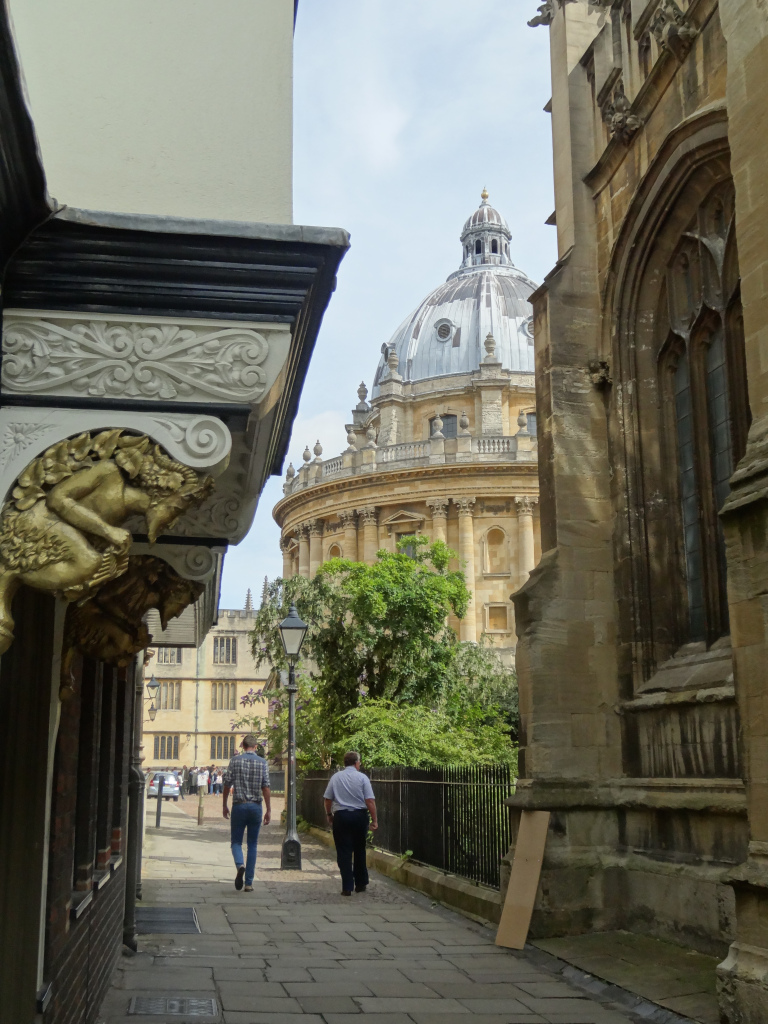
As if a visit to Oxford, “city of dreaming spires”, isn’t reward enough, a day spent at the University of Oxford’s Botanic Garden (OBGHA) is an absolute delight.

Oxford, "city of dreaming spires". Oxford, “city of dreaming spires”.

Botanic gardens have an important role to play in plant conservation, with research, development, seed banks and education, contributing to preserving plant diversity. About 100,000 plants, more than a third of the world’s plant species, are facing extinction in the wild and Botanic Gardens worldwide have an important role to play in their preservation.

The role of Botanic Gardens in Plant Conservation.

So it is an added bonus when they are aesthetically pleasing as well.
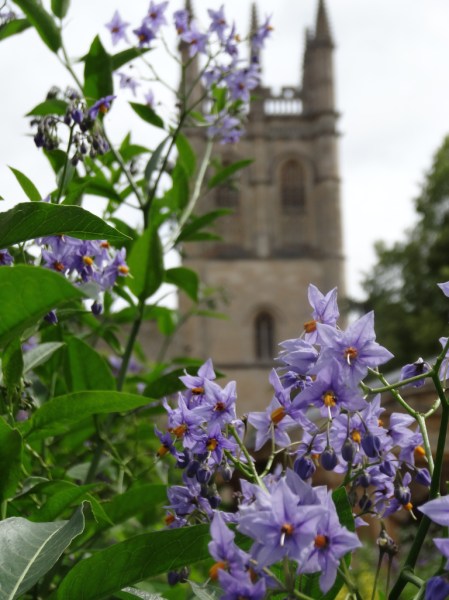
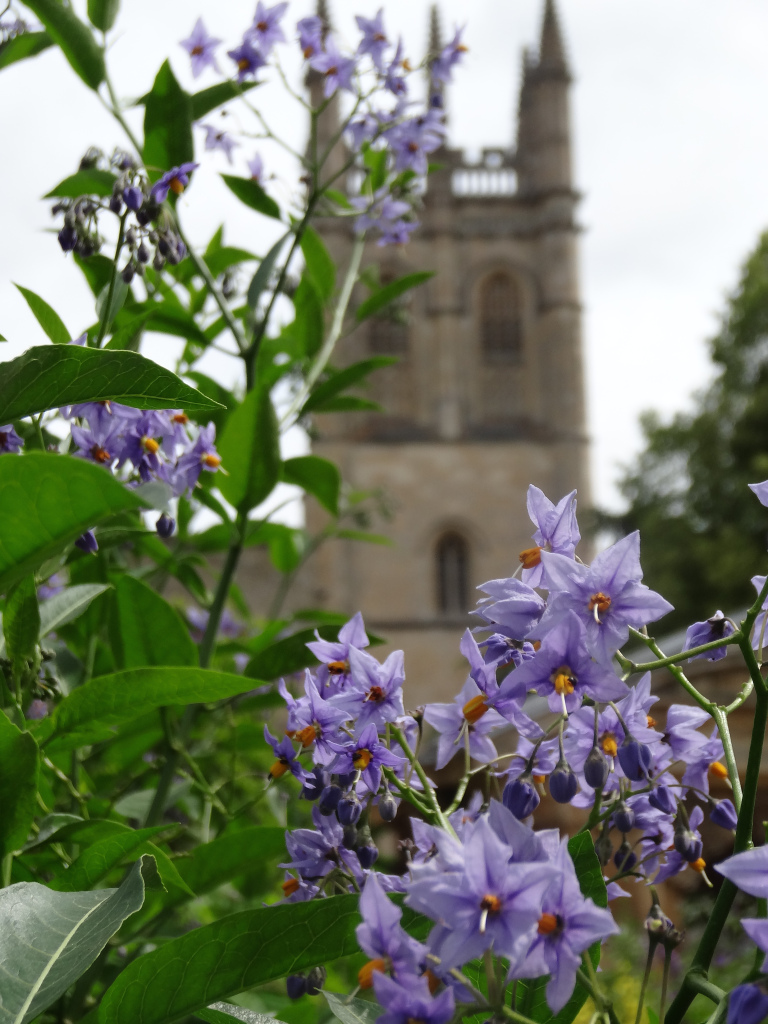
Solanum crispum 'Glasnevin" Solanum crispum ‘Glasnevin’ at the Botanic Garden, Oxford.

At Oxford, the Gardens are divided into the Lower Garden and the Walled Garden as well as seven glasshouses packed with treasures – 1200 different species from around the globe.

Exploring the glasshouses, Oxford Exploring the glasshouses, Oxford

Inside…

View original post 250 more words

gressenhallfw's avatarGressenhall Farm and Workhouse

Picture 017 (2)

Over the last nine months I have done many things that makes the answer to the question ‘how was work today?’ sound very interesting. I have fork-lifted a mammoth tusk. I have frozen an Anglo Saxon manikin. I have cleaned a Bishop’s Throne and written a trail about dragons.

The weird and wonderful has become the everyday so perhaps I should spell out what I do here over in the Norfolk Collections Centre and why I think it is important. My job title is Collections Management trainee, and although you may think that it’s not hard to manage a load of inanimate objects, it is harder than it sounds.

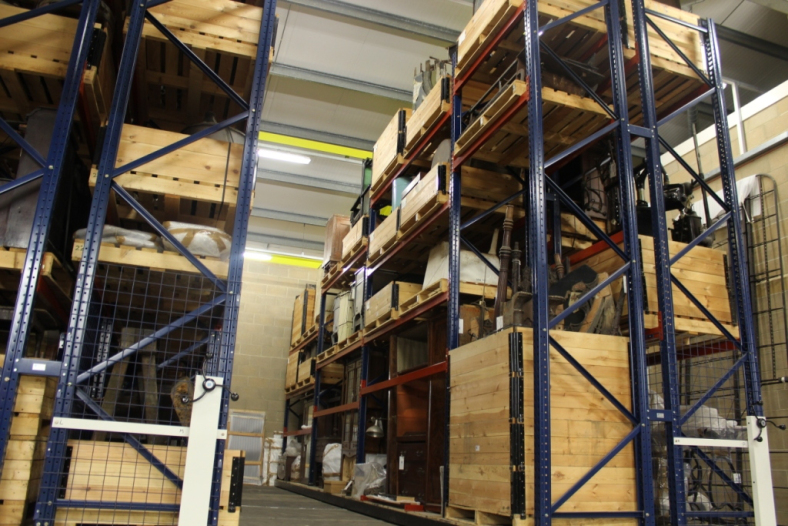
The weird and wonderful normally appears at the beginning of the week when reaching up and lifting down some of the mystery pallets off the racking. In fact that is the most exciting time, when we are about to look at…

View original post 375 more words

Finding Nature

Nature Connectedness Research Blog by Prof. Miles Richardson

Norfolk Green Care Network

Connecting People with Nature

Discover WordPress

A daily selection of the best content published on WordPress, collected for you by humans who love to read.

Susan Rushton

Celebrating gardens, photography and a creative life

Unlocking Landscapes

Writing, photography and more by Daniel Greenwood

Alphabet Ravine

Lydia Rae Bush Poetry

TIME GENTS

Australian Pub Project, Established 2013

Vanha Talo Suomi

The Journey from Finnish Rintamamiestalo to Arboretum & Gardens

Marigolds and Gin

Because even in chaos, there’s always gin and a good story …

Bits & Tidbits

RANDOM BITS & MORE TIDBITS

Rambling in the Garden

.....and nurturing my soul

The Interpretation Game

Cultural Heritage and the Digital Economy

pbmGarden

Sense of place, purpose, rejuvenation and joy

SISSINGHURST GARDEN

Notes from the Gardeners...

Deep Green Permaculture

Connecting People to Nature, Empowering People to Live Sustainably

BloominBootiful

A girl and her garden :)