Category: This and that


canwefeedtheworld's avatarOne Billion Hungry: Can We Feed the World?

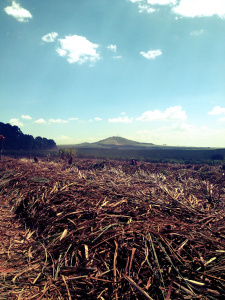
IMG_1498The Budongo Forest Landscape, in western Uganda, has, in the recent past, seen a marked change in the land cover, predominantly from forest to sugarcane. The expansion of sugarcane has resulted in large areas of forest and bushland being converted to agriculture in the last 10 to 15 years, decreasing connectivity between forest patches. Kinyara Sugar Works Ltd (KSWL), established in the 1960s and rehabilitated in the 1980s, has grown rapidly in the past couple of decades – sugarcane fields now covering some 28,500ha. Until now their growth strategy appears to have been expansion at all costs, largely through the development of their outgrowers scheme. Today there are about 6,000 outgrowers who provide 60% of the company’s capacity. At present they are no longer taking on new outgrowers, due to capacity having been reached at the mill and their future growth plans focus far more on intensification and outgrower…

View original post 959 more words

Municipal Dreams's avatarMunicipal Dreams

Carlisle claimed to have built more council housing for its size than any town in England in the interwar period.  This was an anti-Socialist council, committed (in its own words) to ‘careful housekeeping’ but also to ‘good and progressive government for the city’.  That, in this period, meant building housing and the Council took pride in the quality as well as the quantity of the houses it built. (1)

Ferguson Road, Longsowerby Ferguson Road, Longsowerby

Before 1914, the Corporation had built just 40 council homes – tenements provided in connection with a 1900 clearance scheme.  In 1917, it committed to constructing 600 for immediate needs and planned another 1500 for those living in unfit housing.  The scale of need was unquestionable – almost 15 per cent of the city’s homes were back-to-back; over 10 per cent were one- or two-room tenements. (2)

When that survey of housing need took place, Carlisle’s population included…

View original post 1,393 more words

As promised, here is a selection of pictures from a three day trip to the Czech capital last week.

This slideshow requires JavaScript.


WP_20150224_17_13_25_ProOld School Garden

26th February 2015

To Walter Degrasse

Dear Walter,

A month of ‘not much’ I’m afraid!

I’ve started to clear the pile of bonfire cinders, ash and other ‘soil’ to make way for the new pond, hard graft spreading the soil around the borders (especially around the fruit bushes), but I’m starting to make an impact. I was also pleased to accept my neighbour’s offer of some large flints (removed from a raised bed wall they have altered).

I’ve bought in a few bags of good manure and started putting this around the fruit, so hopefully, if everything works (especially the weather and pollination), we should have a good harvest.

The general tidying up that’s a typical task at this time of year has continued; raking leaves and other litter off of the borders, weeding and tickling over the soil surface. This was especially rewarding this week, as I came across a flash of metal whilst turning over the herb bed; yes, to my (and Deborah’s) delight it was my wedding ring, lost about 18 months ago! It just shows you that I didn’t get round to dealing with this area last year! I’ve also commenced the pruning of various shrubs and grasses, including fixing some support wires for climbing roses. It’s always great to see the new growth buds appearing.

Seed sowing has continued, and I had delivery of an interesting selection from the RHS Members’ seed scheme, so some have gone into the fridge for some ‘stratification’ (a period of cold to help break dormancy). Unfortunately I was a little too eager to move my cucumber seedlings on, and once in the greenhouse they suffered ‘damping off’ and had to be dumped- a new set awaits sowing.

Elsewhere, I’m on a two week break from gardening at Blickling Hall, but it seems that the walled garden is coming on well; manure has been dug in and the delivery of path edging and the refurbished greenhouse is awaited. I popped over to Gressenhall earlier in the week, too, not for gardening, but to commence a new ‘creative writing’ course- hopefully it’ll improve my blog (and letter) writing skills! The gardens there looked pretty good, but I shall combine my future course sessions with some gardening to get the gardens ready for the Museum opening in early March.

Deborah and I visited Prague last week for three days, and whilst there wasn’t much of gardening interest, it was an amazing experience; one that touched many emotions and which involved 24 miles of walking over two days! I’ll post soem pictures from this trip in a day or two.

We’re also contemplating some alterations to the house, including some energy conservation measures, so it may be that the garden will be rather more neglected than usual.

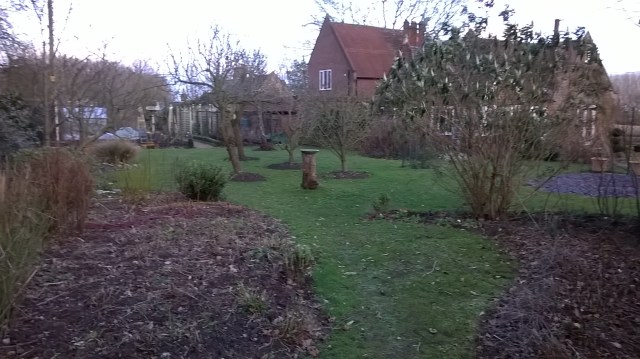
Getting there- view across the Old School Garden orchard

Getting there- view across the Old School Garden orchard

I  hope that you and Lise are keeping well as the winter slips away and spring is approaching.

 All the best for now,

Old School Gardener

Municipal Dreams's avatarMunicipal Dreams

Imagine knocking down some old Nash Regency terraces to build council houses.  If that idea fills you with horror, you should probably stop reading now.  If, on the other hand, it might capture a democratic moment, a time when we wanted to build houses for the people and cared less about the interests of the few, read on.

Derwent: Davies and Arnold, Zone C

This was the vision of Eric Cook in 1944.  Cook, a left-wing journalist, was the vice-chair of St Pancras Borough Labour Party.  (Elected to the Council in 1945, he died aged only 42 just three years later.) Admittedly, his idea had had some help from the Luftwaffe but the buildings were poorly built (‘by Regency jerry-builders’, he said) and thought at the time to be beyond repair.  Modern bulldozers, he went on, could easily create ‘one of the finest building sites in all Britain…the ideal site for…

View original post 1,500 more words

wellywoman's avatarwellywoman

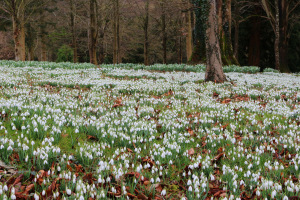
A sea of snowdrops at Colesbourne Park A sea of snowdrops at Colesbourne Park

If the answer to the title of this post is yes then you probably won’t want to continue reading. I know, I know, you can’t get stirred for galanthomania at this time of year. But lets face it, flowery delights in February are a little thin on the ground, we’ve all had enough of winter and are a bit desperate to see some signs of life in the garden. That’s not to take anything away from the beauty of snowdrops but I do think they owe a certain degree of their popularity to the fact that they bloom so early in the year and there is little else to compete for our attention. For a period of about four weeks from mid-February to mid-March gardens with collections of snowdrops are at their peak and it’s hard to not be blown away by the spectacular sight of carpets of…

View original post 836 more words

gardeninacity's avatargardeninacity

Is gardening a crusade or a hobby? This question occurred to me after reading a New York Times article about a symposium featuring Douglas Tallamy, Chair of Entomology and Wildlife Ecology at the University of Delaware. Tallamy is also the author of “Bringing Nature Home”, in which he argues for the environmental importance of using native plants in home landscapes.

Yellow Coneflower and Wild Bergamot Yellow Coneflower and Wild Bergamot

In his presentation, Tallamy maintains that gardens should not be judged on beauty alone: Gardens should, among other things, help sustain the diversity of life.

Tallamy’s argument is all about insects. His research shows that native plants support way more insects than exotics. To give just one example, native oaks support 537 species of caterpillar, as opposed to a Japanese elm (Zelkova serrata), which supports none. This is because most insects are specialists able to digest the foliage of only a very limited…

View original post 392 more words

canwefeedtheworld's avatarOne Billion Hungry: Can We Feed the World?

By Stephanie Brittain

Food insecurity and malnutrition can be ended sustainably within a generation, it is said. However, with one in eight people in the world today still undernourished and approximately two billion suffering from micronutrient deficiencies, the challenge is immense.

Further, the world’s population is expected to reach 9 billion by 2050 and at the current rate of development, the number of people at risk of hunger in the developing world will grow from 881 million in 2005 to more than a billion people by 2050.

78 percent of the world’s poor live in rural areas, and agriculture remains fundamental for their economic growth and for food security for our expanding global population. Further, agricultural development is found to be about two to four times more effective in raising incomes among the poorest than growth in other sectors.

Conflict impedes agricultural development

Credit: UN/Tobin Jones 2013 Credit: UN/Tobin Jones…

View original post 724 more words

Municipal Dreams's avatarMunicipal Dreams

The alleged English antipathy to multi-storey living (the Scots are different) is well attested but Liverpool – in this and much else – is an exception.  Its Corporation embraced tenements for practical reasons, as we shall see, but also as a conscious mark of the city’s urbanity and global status.  In so doing, it created some of the most striking council housing of the interwar period though sadly very little of it remains.

Gerard Gardens Gerard Gardens

The immediate context for the drive to inner-city multi-storey accommodation was a scale of slum housing unparalleled in the country.  In 1919, 11,000 Liverpool families were living in one room – over 6 per cent of the city’s population.  The Medical Officer of Health estimated 8000 new homes were needed and Liverpool – a pioneer in municipal housing – acted quickly to build the new cottage estates that the Tudor Walters Report recommended and Christopher…

View original post 2,244 more words

outofmyshed's avatarOut of my shed

Elephants

Tim Bushe is well known and very much admired in our our neighbourhood as he created this fantastic herd of elephants from a troublesome corner hedge a few years ago. No longer can unwholesome acts be carried out behind dense cover of privet and the area now boasts a wonderful piece of much-loved public art.

Now such artistry (and good deeds) have not gone unnoticed and Tim has been espied on The Great British Garden Revival on the BBC as well as The One Show and has featured in various articles in the local and national press.

Photo by Andrew Meredith

Currently, his work is on display in a window at Selfridges in Oxford Street as part of their ‘Bright Old Things’ exhibition featuring 16 ‘individuals who’ve embraced a new vocation later in life’. Tim is still working full time as an architect, but having studied sculpture earlier in his career, creates marvellous pieces of…

View original post 74 more words

Finding Nature

Nature Connectedness Research Blog by Prof. Miles Richardson

Norfolk Green Care Network

Connecting People with Nature

Discover WordPress

A daily selection of the best content published on WordPress, collected for you by humans who love to read.

Susan Rushton

Celebrating gardens, photography and a creative life

Unlocking Landscapes

Writing, photography and more by Daniel Greenwood

Alphabet Ravine

Lydia Rae Bush Poetry

TIME GENTS

Australian Pub Project, Established 2013

Vanha Talo Suomi

The Journey from Finnish Rintamamiestalo to Arboretum & Gardens

Marigolds and Gin

Because even in chaos, there’s always gin and a good story …

Bits & Tidbits

RANDOM BITS & MORE TIDBITS

Rambling in the Garden

.....and nurturing my soul

The Interpretation Game

Cultural Heritage and the Digital Economy

pbmGarden

Sense of place, purpose, rejuvenation and joy

SISSINGHURST GARDEN

Notes from the Gardeners...

Deep Green Permaculture

Connecting People to Nature, Empowering People to Live Sustainably

BloominBootiful

A girl and her garden :)