

I recently created this video showing some of the work I’ve done. I hope you enjoy it. 🙂
Category: This and that
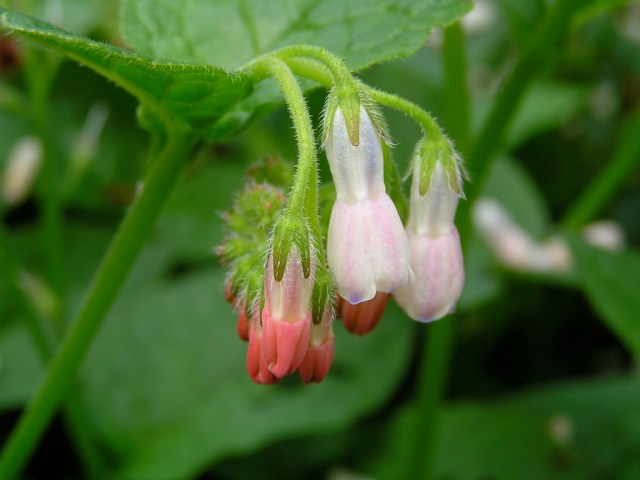
Symphytum grandiflora ‘Hidcote Pink’
1. Mahonia aquifolium- yellow flowers in February and May
2. Symphytum grandiflora ‘Hidcote Pink’- pink flowers in March and April
3. Iris foetidissima ‘Variegata’- scarlet berries from September until November
4. Geranium x oxonianum ‘Wargrave Pink’- pink flowers from May to September
5. Dryopteris filix-mas- a deciduous fern
6. Euphorbia amygdaloides var. robbiae- green cymes in March and April
7. Luzula nivea (Snowy Woodrush)- evergreen and good ground cover with white flowers in mid summer

Iris foetidissima fruits

Mahonia aquifolium

Luzula nivea
Old School Gardener
The Lily pond, Cawston Park, Norfolk on a 5 mile walk this afternoon.


 Click for better quality.
A visitor to New Zealand can’t help noticing how many native ferns there are and how large they can get. It’s not an exaggeration to say that some grow as tall as trees, and people even refer to them as tree ferns. I photographed the ones in today’s picture, which were perhaps two or three times my height, in the shade of the forest at the Parry Kauri Park in Warkworth*, in the northern part of the North Island, on the afternoon of February 6. Kiwis (as the inhabitants of New Zealand are known) will recognize that as Waitangi Day, the national holiday, and in fact earlier in the day our hosts had taken us to attend the festivities at Waitangi itself.
—
* New Zealand English generally drops an r that closes a syllable or that’s part of a syllable-final consonant cluster, so
View original post 34 more words

The purpose of plants is to make more plants. That is all they want to do. Gardeners sometimes frustrate, sometimes tolerate this will to reproduce.
 Photo from http://www.TimberPress.com.
Some plants are particularly successful in this endeavor. Oftentimes gardeners consider such plants mildly criminal. How often have we heard the word “thug” used in the context of the garden, as if Monardas were members of the Blackstone Rangers? (Confession: I have used this adjective on plants a few times myself.)
Plantiful, by Kristin Green, suggests a different point of view. She lays out how gardeners can collaborate with the botanical drive to reproduce. This collaboration enables gardeners to create large, bountiful gardens at a greatly reduced cost.
 Kristin Green. Photo from http://www.timberpress.com.
Green practices what she preaches. She works as a professional gardener at Blithewold Mansion, a non-profit, public garden in Rhode Island.
The book is divided in three parts –…
View original post 389 more words
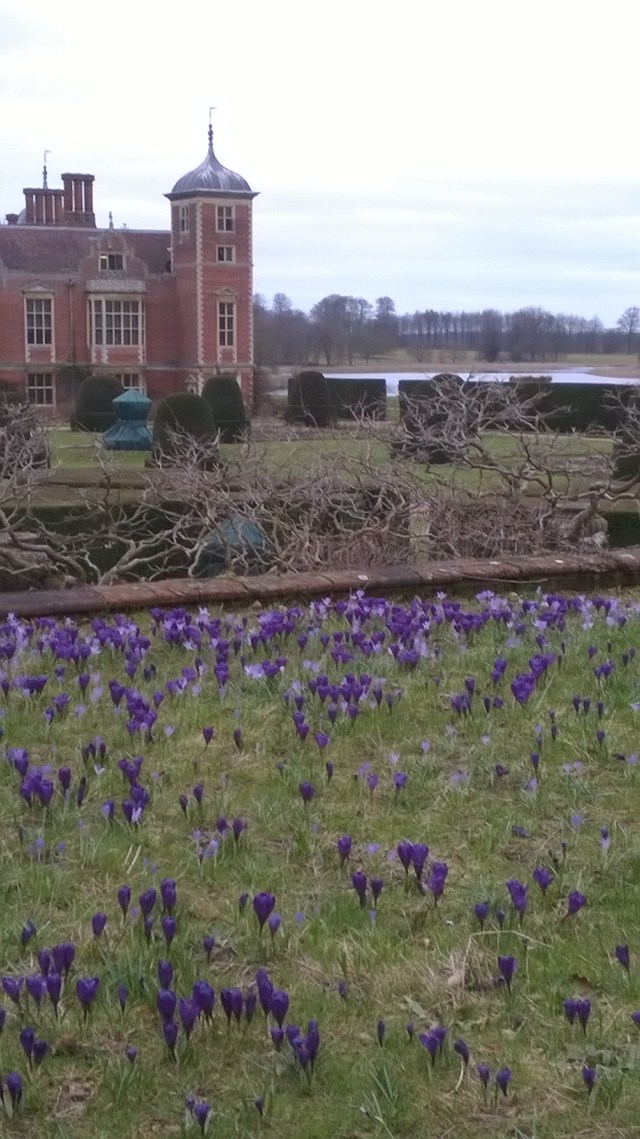
Picture by Gail Cuthbert at Anglesey Abbey, Cambs.
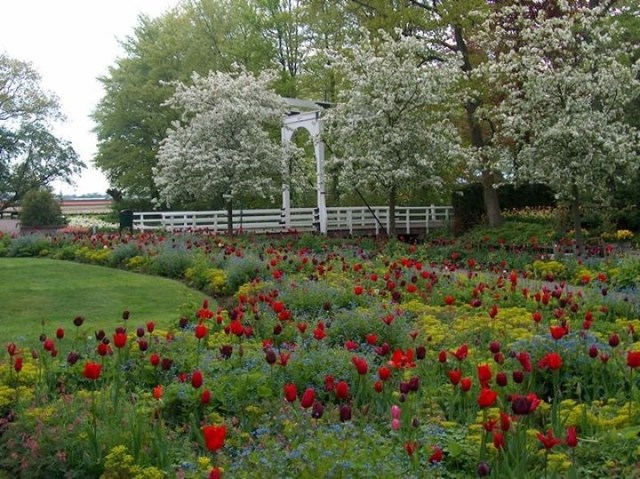
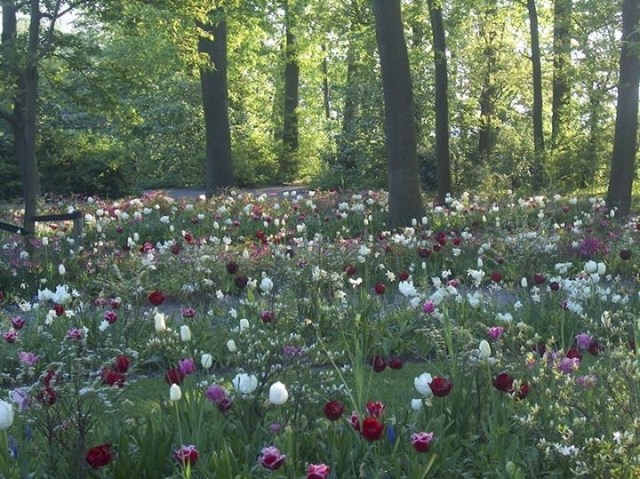
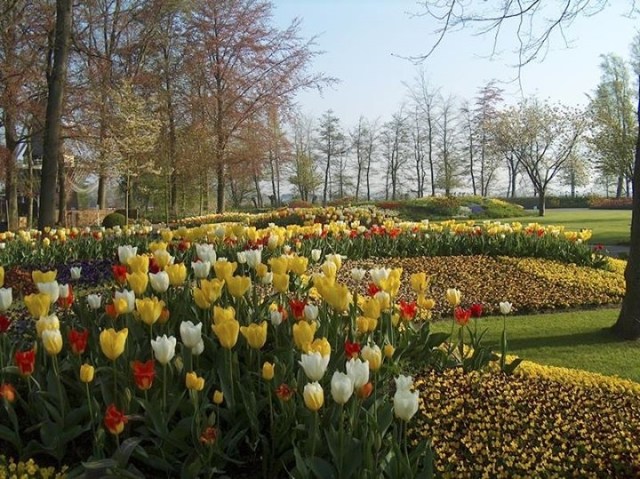
Pictures of Keukenhof, Holland via RHSI

Street play initiatives can make a real difference to the lives of thousands of children and families across an urban area. This was the key message of the first ever area-wide study of a street play programme, which I carried out for Hackney Council. My evaluation – launched by the London Borough last Friday – also revealed that schemes have caused minimal levels of traffic disruption, and have faced very little local opposition.

View original post 842 more words

When we opened our garden last August under the auspices of the National Garden Scheme and appeared in its famous Yellow Book we included in our details that we welcomed children. We were aware that few gardens make this obvious so we decided to reverse the trend. We made a few quiz sheets available for them to encourage them to look closely. They were very popular and most youngsters had a go. Some were very determined to find everything on the sheets. Great fun!
One quiz sheet featured our little collection of “green men” which we have scattered around the garden, some of which are hard to find.
The other invited our children visitors to seek out the large variteies of wildlife homes, shelters and nesting places.
I thought you might like to see the photos of the green men and our wildlife features. Amongst the green men is a…
View original post 98 more words


 Old School Garden