Category: Soils and soil improvement


Trefoil - good for under sowing sweet corn and will fix nitrogen in the soil

Trefoil – good for under sowing sweet corn and will fix nitrogen in the soil

My first article in this series covered the 7 reasons to use green manures – any plants that are grown to benefit the soil. Today I’ll cover where and when to use them.

Vegetable Garden

Green manures can be grown as a ‘catch crop’ – something to fill a gap in the growing plan for any particular border, bed or growing area. For example, after lifting potatoes don’t leave the soil bare but pop in something like Grazing Rye or Winter Tares which can be sown quite late and will keep the soil covered in the winter months.

You can also sow fast growing green manures in areas where you plan to plant frost tender crops such as courgettes or runner beans, while you’re waiting for the weather to warm up. Some green manures will germinate in early spring and will keep the ground free of weeds. A few weeks before you’re ready to put in your frost tender plants dig in the green manure (leaves and roots) and this will be a good source of organic matter for greedy, moisture-loving crops like runner beans. However, don’t do this if you’re planning to sow any small seeded crops like carrots or parsnips as the green manure will inhibit seed germination.

Where you have a tall growing crop such as sweetcorn, you can sow a green manure between the plants to help reduce weed problems. A low growing plant such as Trefoil will keep the ground covered and this can be left to grow over winter once the sweetcorn has been harvested.

If you know your soil has been ‘over worked’ by previous gardeners (say in an allotment) and little bulky organic material has been added, it’s a good idea to grow a green manure in the first season.

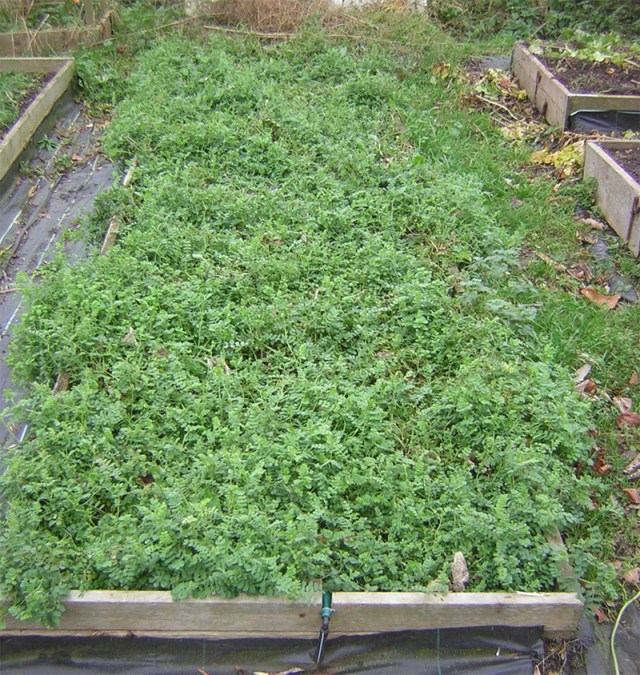
Tares

Tares – great for releasing nitrogen quickly in the spring after digging in

Ornamental Garden

A fast maturing green manure can be used to fill bare patches as spring flowers die down but before summer bedding can be planted. Green manures can also be used to revitalise tired soils where old shrubs or roses have been removed and a new planting scheme is planned. The area can be left to recuperate under a green manure for a few months or a year. Attractive green manures can be used to fill gaps around summer bedding or other plants – a low growing variety will help to smother weeds and retain moisture.

Fruit garden

Blackcurrants are ‘greedy feeders’ and can benefit from a green manure which helps to take nitrogen from the air and fixes this in the soil for plants to use. A green manure such as Tares can be grown around the fruit bushes after fruiting and then incorporated into the soil just before the next growing season – just hoeing off the tops in the spring and leaving these to decompose on the surface should do the job.

Winter – hardy green manures can be grown around the bases of fruit trees in the autumn. Helping to keep down weeds these can be cut down and left to decompose in the spring which will once again provide a valuable source of organic material for the tree. A long-term green manure, such as Clover, could also be grown around the tree – this will provide weed cover and also be a rich haven for pest – eating wildlife.

Hungarian Grazing Rye - the best gareen manure for soil improvement, especially on clay soils

Hungarian Grazing Rye – the best green manure for soil improvement, especially on clay soils

My next ‘Green Gold’ article will give some examples of different green manures and their strengths and weaknesses.

Source: ‘Green Manures’- Garden Organic Guide. September 2010

Other articles in this series: Green Gold- 7 reasons to use green manures

Old School Gardener

If you’ve enjoyed reading this post and others on this blog, why not comment and join others by signing up for automatic updates via email (see side bar, above right ) or through an RSS feed (see top of page)?

PicPost: Inter-esting Compost

My previous articles and pictures on projects in the garden using wooden pallets or other recycled wood have featured some wonderful ideas. I’ve been amazed by the response and the articles seem to have also stimulated projects, not only in my own gardening activities, but for other gardeners, some of whom have sent me pictures of their creations. So here is the latest batch of Pallet Projects for you to look at, think about and maybe emulate!

Keep your ideas and pictures coming in!

A play teepee made out of natural wood and recycled pallets

A play teepee made out of natural wood and recycled pallets


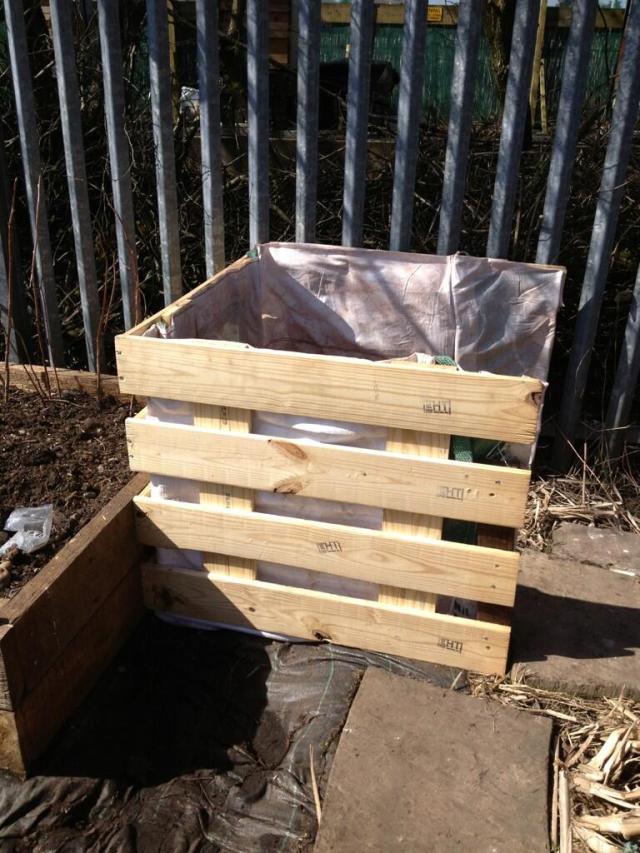
A compost bin made out of pallets by Katherine Jacobs. The front fits snuggly into the sides and is removable. Kathereien isn't sure abotu the bag- itm was suggested as a way of keeping the compost warm and preventing 'too much' air getting in- I'm not convinced its a benefit.

A compost bin made out of pallets by Katherine Jacobs. The front fits snuggly into the sides and is removable. Katherine isn’t sure about the bag- it was suggested as a way of keeping the compost warm and preventing ‘too much’ air getting in- I’m not convinced its a benefit.

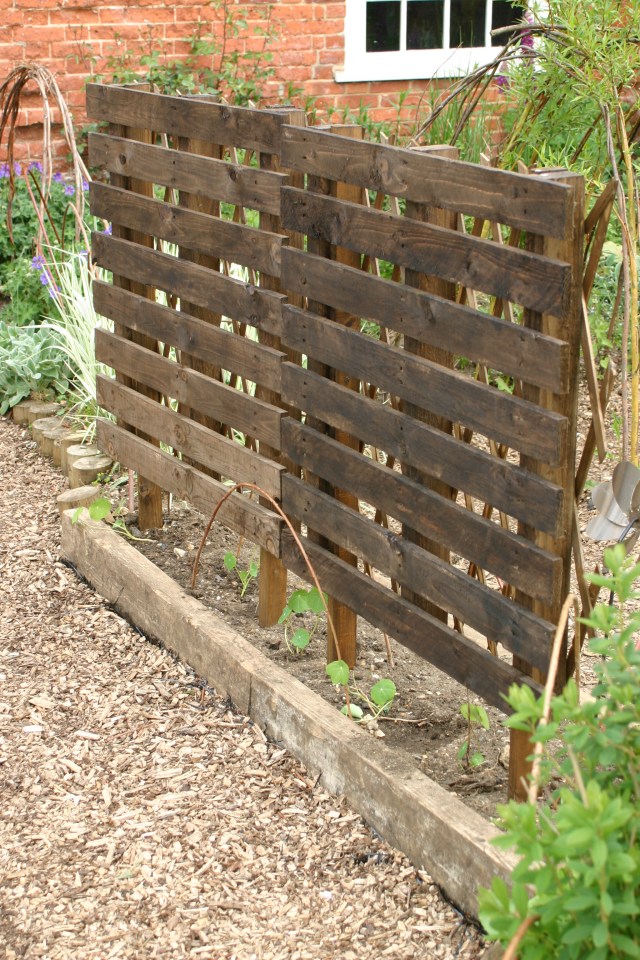
My own attempt at a Trellis screen made from two pallets fixed to posts in a public garden for under fives. The screen has diamond trellis fitted to the back, has been stained and will have climbing Nasturtums growing up it.

My own attempt at a Trellis screen made from two pallets fixed to posts in a public garden for under fives. The screen has diamond trellis fitted to the back, has been stained and will have climbing Nasturtums growing up it.


Other articles about using pallets in the garden:

Polished Primary Pallet Planters

Pallets Plus –  more examples of recycled wood in the garden

Pallet Power- the sequel

Pallet Power

Raised beds on the cheap

Old School Gardener

If you’ve enjoyed reading this post and others on this blog, why not comment and join others by signing up for automatic updates via email (see side bar, above right ) or through an RSS feed (see top of page)?


Phacelia tanacetifolia, a  'green manure' that's good to look at and attractive to beneficial insects.

Phacelia tanacetifolia, a ‘green manure’ that’s good to look at and attractive to beneficial insects.

I’ve just been reading about green manures, from a small prize I won at my induction training as a ‘Master Composter’. The prize is a slim booklet produced by Garden Organic and it focuses on the use of green or ‘living’ manure in the garden. So, what is a green manure?

‘a plant which is grown to benefit the soil, not, as some might suppose, under-ripe animal dung!’

I’ve had a couple of tries with green manure (mainly because I like the flowers of Phacelia), but have not been totally convinced of its value – it’s hard to check what benefits it brings unless you conduct some sort of rigourous trial, of course. Anyway, this booklet is giving me the confidence to do more and so I thought I’d share its contents with you in a short series of ‘bite sized’ articles over the next few weeks.

Apparently green manures have been used by farmers for centuries to improve their land and gardeners have begun to realise their value too. Seed companies have begun to stock green manure seeds in packets sized for the average garden. They are most often used in the vegetable plot, but can also be used in other areas. In later articles I’ll cover where and when to use them; some of the plants and their benefits; how to choose and grow the right plants and what to do when you’re ready to use them. Today I’m focusing on seven reasons why to use green manure.

1.To feed the soil – green manure crops ‘mop up’ and hold onto soil nutrients and some deep-rooted types can actually gather nutrients from depths that other plants cannot access. By absorbing nutrients the roots prevent it being washed down into sub soil. Once green manures are turned into the soil the nutrients are ready to be taken up by the next crop.

2. To protect and improve soil structure – green manures help to protect the soil surface from the effects of heavy rain (mainly soil compaction and surface ‘panning’). This is a benefit for both clay and sand – dominated soils where organic matter reduces compaction in the former and helps water and nutrient retention in the latter.

3. To stimulate soil micro organisms – when dug in green manures feed and stimulate microscopic creatures that in the process of decomposing this organic matter boost soil health, which in turn helps to develop strong plants.

4. To prevent weed invasion – nature abhors a vacuum/ bare soil – as soon as plants are removed new ones will try to move in and these can often be weeds. Green manures tend to germinate quickly so can be a quick way of covering bare soil and smothering young weed seedlings, also eliminating the need for constant hoeing to remove the weeds.

5. To control pests – some beneficial crittters (like frogs and beetles) love the shady, damp ground under a green manure. Some green manures can be planted to distract flying insects away from crops you want to protect; e.g. underplanting Brassicas with Trefoil disguises the outline of the crop and seems to deter cabbage root fly. Likewise a small patch of Phacelia tanacetifolia or Clover, if allowed to flower, will attract insects that prey on many garden pests.

6. To improve the look of the garden – a green manure or ‘cover crop’ will not ony help to prevent weeds but can look attractive of itself. Some also help to fix nitrogen in the soil which will help plant growth.

7. To ‘rest’ your soil – after a period of intensive cultivation, soil can benefit from lying fallow for a season. Most usual in the vegetable garden, it’s a technique that can be useful in the ornamental garden especially where a new border is to be planted up.

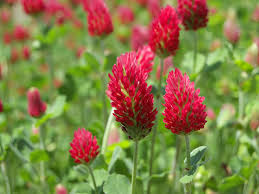
Crimson Clover - another green manure that looks good and helps to 'fix' ntrogen in the soil

Crimson Clover – another green manure that looks good and helps to ‘fix’ ntrogen in the soil

So, on paper the case for using green manures is a strong one. My kitchen garden is currently straining under the weight of the many different crops I have growing in every available patch of soil (and some containers too). But in a month or two, once some crops have been harvested, and where I haven’t planned for any new crops, I’m going to put in a green manure. In next week’s article I’ll cover just where and when to use these valuable plants.

Source: ‘Green Manures’- Garden Organic Guide. September 2010

Old School Gardener

If you’ve enjoyed reading this post and others on this blog, why not comment and join others by signing up for automatic updates via email (see side bar, above right ) or through an RSS feed (see top of page)?

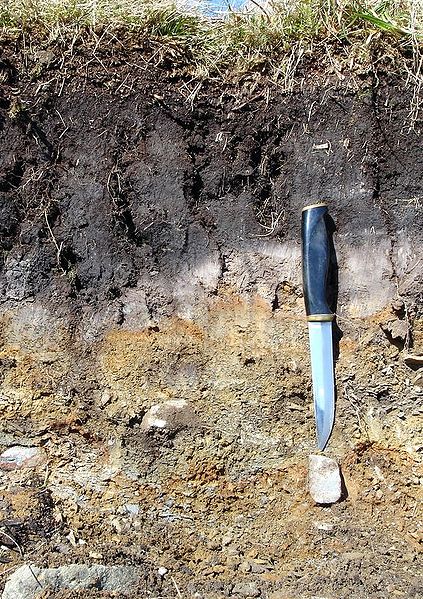
A profile of a typical 'podzol' showing the grey layer of leached out minerals below the dark top level of soil
A profile of a typical ‘podzol’ showing the grey layer of leached out minerals below the dark top level of soil

This week, ‘Gardener’s Question Time’ features soil. A Mr. T. Breck asks:

‘What is a soil pan? I think I may have one in my sandy soil here in south west Norfolk, as my plants don’t seem to be growing very well. Can I do anything to get rid of this?’

Well Mr. Breck, it does sound as though you may have a soil pan. This occurs when certain soil minerals are washed down through the soil by rain lodging some way below the surface. It does often happen in sandy soil containing a high proportion of iron. Over a period of time the minerals weld together to form a hard layer impervious to water. This layer restricts the downward spread of plant roots, so that poor growth results. In former heathland or coniferous forest areas (which is broadly speaking what much of south west Norfolk used to be) these soils may be termed ‘podzols’.

A similar situation can happen if a rotary cultivator is used regularly and its tines  are set at the same depth on each occasion – the action of the tiller blades causes soil compaction at that depth. You can avoid creating this pan by varying the depth of the rotivation.

To remove a pan it’s a case of digging deep and using a pick or fork to break up the welded layer of minerals and incorporating as much organic material (leaf mould, compost, manure) with the replaced topsoil.

More difficult hardpans may be further improved through the action of both adjusting the soil pH with lime if the soil is acidic, and with the addition of gypsum. This combination can help loosen clay particles bound into a hardpan by the actions of hard salts such as iron, calcium carbonate and sodium, by promoting their mobility. It is likely that mechanical removal of the soil pan and some changes to the soil structure as suggested above will be the most successful strategy, rather than relying on just one approach.

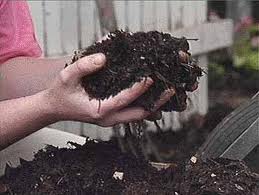
Adding home made compost or other organic matter to your soil will improve its structure and nutrient levels

Adding home made compost or other organic matter to your soil will improve its structure and nutrient levels

Whilst we are talking about soil it is perhaps worth just noting what soil actually is. It is made up of many different ingredients including varying proportions of clay, silt and sand. A soil containing a high proportion of clay is considered to be heavy and, whilst rich in nutrients, is often difficult to cultivate, especially when wet. Sandy soils, on the other hand, are light and easy to work, even after rain.

The soil here in the Old School Garden is a sandy loam and is a joy to cultivate, though I do have to add organic material to improve its moisture retention and nutrient levels. So, decomposing plant remains (or other organic material) is another important ingredient of soil as are air and water. Microbes by the million are also present and these and other organisms like earth worms are doing the job of breaking organic material down and  processing this into soil.

Links:

Improving soil by adding organic matter

The importance of organic matter

Compost – 10 things you wanted to know, but were afraid to ask…

Old School Gardener

If you’ve enjoyed reading this post and others on this blog, why not comment and also join some other people and sign up for automatic updates via email (see side bar, above right ) or through an RSS feed (see top of page)?

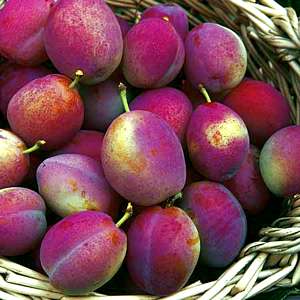
plum

‘We have two plum trees that both blossom, but a lot of the fruit drop before they are fully formed – why is this?’

So ask a Mr. and Mrs. Howard Hughes from Surbiton, Surrey.

Well, the likely reason is a lack of calcium, as this is vital when the stones are being formed. Many sandy soils are low in Calcium, so if you have this sort of soil, this might explain the problem. If there is insufficient Calcium to go round, some fruit will drop off before they have fully formed. To remedy this try a dressing of Lime over the whole area during the winter and then in the spring a mulch around the trees with well-rotted manure or compost should also help.

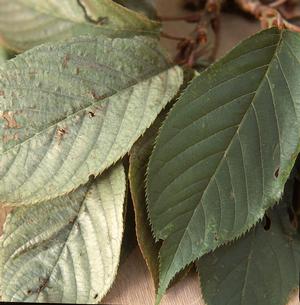
Whilst we’re dealing with plums another problem you might come across is the leaves developing a silvery sheen and the tree looking sick. This is most probably a sign of ‘silver leaf’ – a disease which requires all of the infected and dead wood to be burned before the middle of July. If you accidentally cut into healthy wood, cover the cut with a wound sealant.  To improve the general health of the tree apply a general fertiliser such as Fish, Blood and Bone in February /March.

Silver Leaf- infected leaves (left) compared to healthy

Silver Leaf- infected leaves (left) compared to healthy

Old School Gardener

If you’ve enjoyed reading this post and others on this blog, why not comment and also join some other people and sign up for automatic updates via email (see side bar, above right ) or through an RSS feed (see top of page)?

PicPost: Bin Laden

Decorated Compost Bin Competition
Winners Announced!!

compostAs this week is ‘International Compost Awareness Week’ I thought I’d do a little piece about the basics of composting. Hope you enjoy it and look at your own composting efforts!

1. What is compost?

Compost  is organic matter that has been decomposed and recycled as a fertiliser and/or soil improver (it’s not the same as the bags of stuff you buy from the garden centre).

2. How does the composting process work?

There are 3 stages to the composting process:

Degradation microbes feed off the various chemicals in organic waste (mainly carbon and nitrogen) – the abundance of these chemicals mean the microbes multiply rapidly, generating heat and so rasing the temperature of the decomposing material;. a new set of microbes that operate at a higher temperature take over the process.

Conversion as the temperature in the waste material starts to drop as microbial activity declines,  microorganisms that operate at lower temperatures take over and complete the decomposition process.

Maturation – microbial activity decreases and the material cools down, providing the ideal conditions for earthworms, insects and mites to complete the process. chemical reactions make the material more stable and suitable for use with plants in the garden.

Compost can be made in as little as six to eight weeks, or, more usually, it can take a year or more. In general, the more effort you put in, the quicker you will get compost.
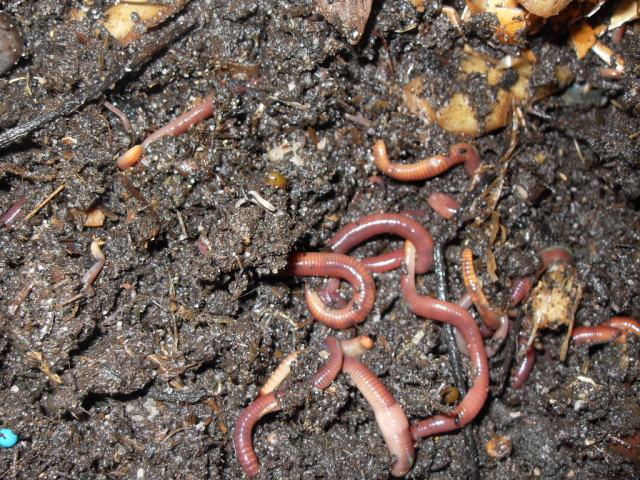
worms at work in compost-making

worms at work in compost-making

3. What is needed to make compost?

Composting organisms require four equally important things to work effectively:

  • Carbon — for energy; the microbial oxidation of carbon produces the heat, if included at suggested levels
    • High carbon materials tend to be brown and dry.
  • Nitrogen — to grow and reproduce more organisms to oxidize the carbon.
    • High nitrogen materials tend to be green (or colorful, such as fruits and vegetables) and wet.
  • Oxygen — for oxidizing the carbon, the aerobic decomposition process.
  • Water — in the right amounts to maintain activity without causing anaerobic conditions (this is the other sort of decomposition that is slower and operates in leaf mould).

Certain ratios of these materials will provide beneficial bacteria with the nutrients to work at a rate that will heat up the pile. As a general rule you should have a 50/50 mix of ‘browns’ and ‘greens’. 

4. What is compost used for?

Compost can be rich in nutrients and is added to soil, supplying these as well as humus – a fine-textured material that improves soil strucure. It provides a rich growing medium, or a porous, absorbent material that holds moisture and soluble minerals, providing the support and nutrients in which plants can flourish, although it is rarely used alone, being primarily mixed with soil,sand, grit, bark chips and other materials to produce loam, the very best of growing mediums. Compost can be tilled directly into the soil or growing medium to boost the level of organic matter and the overall fertility of the soil. Compost that is ready to be used as an additive is dark brown or even black with an earthy smell.

Soil improving with compost

Soil improving with compost

5. How old is the practice of composting?

Composting as a recognized practice dates to at least the early Roman Empire, since Pliny the Elder (AD 23-79). Traditionally, composting involved piling organic materials until the next planting season, at which time the materials would have decayed enough to be ready for use in the soil. The advantage of this method is that little working time or effort is required from the composter and it fits in naturally with agricultural practices in temperate climates. Disadvantages (from the modern perspective) are that space is used for a whole year, some nutrients might be leached due to exposure to rainfall, and disease-producing organisms and insects may not be adequately controlled.

6. I’ve heard that human urine is beneficial to compost making – is this true?

Human urine can be put onto compost (and it can be added directly to the garden as a fertiliser!). Adding urine to compost usually will increase temperatures (it is an ‘activator’) and therefore increase its ability to destroy pathogens and unwanted seeds. You can also compost:

  • Anything that was once living, but some items are best avoided (see next question)
  • For best results, use a mixture of types of ingredient. Remember the rough guide is to use equal amounts by volume of ‘greens’ and ‘browns’.
  • Some things, like grass mowings and soft young weeds, rot quickly. They work as ‘activators’, getting the composting started, but on their own will decay to a smelly mess.
  • Older and tougher plant material is slower to rot but gives body to the finished compost – and usually makes up the bulk of a compost heap. Woody items decay very slowly; they are best chopped or shredded first, where appropriate.
kitchen waste into the compost bin

kitchen waste into the compost bin

7. What can’t  I compost?

Basically, don’t compost things that will attract vermin, plus one or two other things that contain potentially harmful materials:

  • Meat

  • Fish

  • Cooked food

  • Coal & coke ash

  • Cat litter

  • Dog faeces

  • Disposable nappies

Compost bin - wooden with slatted, removable front for easy access

Compost bin – wooden with slatted, removable front for easy access

8. What sorts of composting are there?

There are basically two types of composting – hot and cool. If you generate a lot of waste material and quite often you can actively manage (turn) your compost pile to replenish the oxygen within it and so achieve high temperatures and rapid decomposition – ‘hot’ composting. If you produce less waste , less frequently then you are more likely to have a ‘cool’ composting system that doesn;t require as much turning, generates less heat and will take longer to decompose.

There are different scales of composting from large centralised sites through community schemes where local people collect green waste and compost it centrally to home and school – based composting using a range of different types of bin – old pallets used to construct a slatted wooden box, plastic bins, wormeries and so on. There’s a bin and system to suit most situations, so if you live in a flat and only have a balcony you can even compost on a small scale here.

9. Why should I compost?

As landfill space declines (and the cost of dumping into landfill for hard – pressed councils and taxpayers increases), worldwide interest in recycling by means of composting is growing, since composting is a process for converting decomposable organic materials into useful stable products. Apart from reducing landfill and greenhouse gases, composting provides a wonderful material for improving your garden or other growing areas.

Plastic Dalek compost bin

Plastic Dalek compost bin

10. How can I start to compost?

You can make compost simply by adding compostable items to a compost heap when you feel like it. It will all rot eventually but may take a long time, may not produce a very pleasant end product, and could smell.

With a little extra attention – taking the ‘COOL HEAP’ route – you could improve things dramatically.

If you want to produce more compost in a short time, and are able to put more effort into it, follow the ‘HOT HEAP’ route.

So, why not create a compost heap, or if you want a neater solution make or buy a compost bin – there are various models on the market and in England you can get a discounted deal on some plastic bins. Think about the best site for your bin – and Get composting!

Sources and Links:

Wikipedia

Garden Organic

homecompsoting.org.uk

recycle now- composting

Royal Horticulural Sociaety- composting

Reducing wastelines and making earth – article about master composter training in Norfolk

Decorate your compost bin competition and other Compost Awareness Week events

Old School Gardener

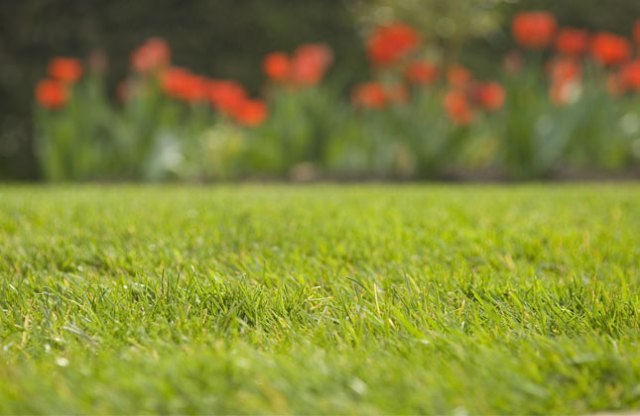
lawn - credit RHS

I thought I’d offer to (try to) answer any gardening queries you have as a regular blog feature on Old School Garden. In the comments on my recent review of the blog, several people mentioned the value of the gardening tips I include in some of my posts, so I thought I’d try out something a bit more focused and regular – a sort of ‘Gardeners’ Question Time’ (or GQT for the initiated!).

I was prompted to do this by a book I came across the other day, whilst rummaging in my local charity shop (a great place to pick up gardening books, I find). Though about 20 years old it still seems to ‘pack a punch’ so I’m going to use it to kick off the GQT series! It’s called ‘1000 Handy Gardening Hints’ and covers a wide range of topics, so hopefully it should be useful to someone out there in blogland!

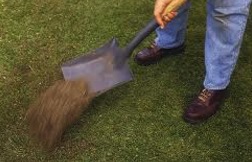
topdressThe first question, as you can see, concerns lawns and ‘top dressing’. Here’s my take on what the ‘Handy Hints’ book says, plus a few thoughts of my own:

Top dressing usually means applying a fertiliser, particularly a nitrogenous one, to the surface of soil bearing a crop, usually in concentrations of about 18 grams per square metre. In lawn management top-dressing means the application of suitable ‘bulky material’ to the surface of the lawn at the rate of 1 – 3.5 kg per square metre. The material should  ideally be a made up or ready-made compost (of 6 parts medium grade, lime free sand to 1 part granulated peat or other organic material and 3 parts topsoil). This should be well worked into the lawn by means of a drag brush or ‘lute’ to make the surface smooth.

I remember my Dad (who was the Green Warden at our local Lawn Bowls Club around 50 years ago)  spiking the grass surface before hand to provide some holes into which the top-dressing could be brushed (I also remember helping him to do this as an enthusiastic youngster!). Whilst this fed the grass it also helped to improve aeration and drainage. Top dressing can also help to even out dips in the surface. If you want to get the ‘Bowling Green ‘ effect, now is the ideal time to be applying top-dressing to your lawn!

Here’s a video that you might find helpful.

And you can find out how to make your lawn care more sustainable at Wild About Gardens

So that’s the first session of ‘GQT’ – what did you think?

I’ll try out a regular weekly session, so if you have any questions you’d liked answered then email me and I’ll do my best to feature your question and hopefully provide an answer!

My email address: nbold@btinternet.com, and put ‘GQT question’ in the subject line, please.

Old School Gardener
If you’ve enjoyed reading this post and others on this blog, why not comment and also join some other people and sign up for automatic updates via email (see side bar, above right ) or through an RSS feed (see top of page)?

I’ve come across a few other pallet construction ideas for you – do you have any plans of your own? I’d love to hear from you and see your pictures!

Pallet planter – useful for displaying plants for sale?

Compost bin lined with old builders bag by Liz Ackerly (and hubby)

Compost bin lined with old builders bag by Liz Ackerly (and hubby)

Read about one person’s experience in making a vertical pallet planter

Old School Gardener

Finding Nature

Nature Connectedness Research Blog by Prof. Miles Richardson

Norfolk Green Care Network

Connecting People with Nature

Discover WordPress

A daily selection of the best content published on WordPress, collected for you by humans who love to read.

Susan Rushton

Celebrating gardens, photography and a creative life

Unlocking Landscapes

Writing, photography and more by Daniel Greenwood

Alphabet Ravine

Lydia Rae Bush Poetry

TIME GENTS

Australian Pub Project, Established 2013

Vanha Talo Suomi

The Journey from Finnish Rintamamiestalo to Arboretum & Gardens

Marigolds and Gin

Because even in chaos, there’s always gin and a good story …

Bits & Tidbits

RANDOM BITS & MORE TIDBITS

Rambling in the Garden

.....and nurturing my soul

The Interpretation Game

Cultural Heritage and the Digital Economy

pbmGarden

Sense of place, purpose, rejuvenation and joy

SISSINGHURST GARDEN

Notes from the Gardeners...

Deep Green Permaculture

Connecting People to Nature, Empowering People to Live Sustainably

BloominBootiful

A girl and her garden :)