Category: Soils and soil improvement


The glorious Passion Flower

The glorious Passion Flower

Today’s question concern climbers that won’t flower, specifically Passion flowers and Wisteria. Jimmy Jones of Brighton asks:

‘I’ve a problem with two of my climbers. I have a Passion Flower growing over my front door which grows very vigourously, but produces no flowers or fruit. Likewise I bought a Wisteria a good few years ago and it did not grow for a long time. I fed it and recently it has begun to grow, but still has not flowered. Can you help please?’

The Passion Flower (Passiflora) needs one thing above all else- sunshine. So a south facing wall is really the only place where it will succeed in most parts of the U.K.- it must be open to the sun all day. If your location is right the other issue might be an over rich soil- this can produce a mass of foliage and stems at the expense of flowers, so if you’ve been feeding it perhaps lay off for a while and then make sure you use a feed rich in potassium (e.g.dilute tomato feed), which will encourage flowering.

As for the Wisteria, this is one of those plants that takes a fair while to come into flower. to make the wait even more agonising, it often grows very little in its first year or two. Help to induce flowering by shortening any unwanted long stems in July or August, cutting them back to about 30 cms or to 5 or 6 buds, and prune again in January, shortening all side shoots back to two or three buds, so concentrating the plant’s energy into a limited number of flowering buds. Again, an occasional feed with diluted tomato feed (or another feed rich in potassium) can also coax flowers from reluctant plants.

My own experience from transplanting a Wisteria seedling to my arbour in my Kitchen Garden, is that it’s taken a good five years for it to flower in any profusion, but I think the mild winter and warmish spring have also played a part- below are some pictures of how it looks today. I’m gradually training it over the top and sides of the arbour. You might also find  this article about using climbers in the garden useful.

Coincidentally my younger daughter (who lives in a basement apartment in the outskirts of Lisbon,Portugal), has just bought a Wisteria to go alongside a very successful Trachelospermum jasminoides she and her husband planted about 3 years ago (I’m told the fragrance just now is wonderful). I’ve suggested they train it along wires fixed to the walls of their patio garden and as it’s in a container to give it a fortnightly feed of tomato food to encourage flowering. Fingers crossed!

If you have any questions you’d liked answered then email me and I’ll do my best to feature your question and hopefully provide an answer!

My email address: nbold@btinternet.com, and put ‘GQT question’ in the subject line, please.

Old School Gardener

If you’ve enjoyed reading this post and others on this blog, why not comment and also join some other people and sign up for automatic updates via email (see side bar, above right ) or through an RSS feed (see top of page)?

Gardening-Boots2Two new rounds of my courses on Garden Design and Grow Your Own Food for Beginners start soon, and I’m also offering a new, one day course on Wildlife Gardening. I ran the last Garden Design course earlier this year and had great feedback on it (I even had a thank you present from the students!). All the courses feature a lot of group discussion and some practical tasks as well as useful tips and tricks to help particpants apply what they learn to their own plots.

The Garden Design course takes students through a customised design process, prompting a fresh look at participants’ own gardens, giving them the opportunity to develop their own ideas in a systematic way and benefitting from ideas generated in the whole group. I support participants to draw up their own scale plan design for their garden and supply plenty of useful background information and links to helpful web sources as well as the opportunity to borrow from my own garden book library. The course can also feature a visit to a well known garden to look at design ideas in practice.

The ‘GYO’ course is aimed at food-growing beginners or novices and gets off to a flying start with making paper pots and sowing broad bean seeds. It also prompts students to look at what they want to eat/grow and how they might do this most effectively in their own plots – this can include growing in containers for those with little or no garden.The course includes a visit to Old School Garden to look at my own approach to food growing, and covers topics like soils and soil improvement, growing under glass, encouraging beneficial wildlife into your garden and how to effectively control pests and diseases.

Narrow beds in the Kitchen Garden at Old School GardenNarrow beds in the Kitchen Garden at Old School Garden

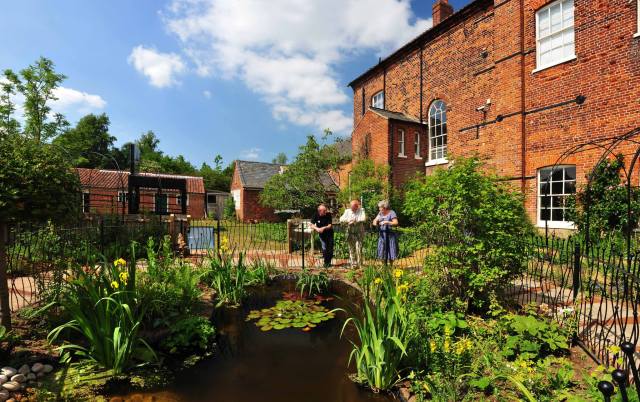
The one day Wildlife Gardening course, taking place at Gressenhall Farm and Workhouse Museum, makes use of the Wildlife Garden at the Museum and includes some practical work to help develop the wildlife -friendly features there as well as helping participants to focus on their own gardens and gardening practices. The aim is for them to develop  their own action plans for the future.

The Wild life Garden at Gressenhall Farm and Museum

The Wild life Garden at Gressenhall Farm and Museum

The courses are fast filling up but there are some places still available if you’re quick!

They are running as follows:

Garden Design–  6 Monday evenings, 7pm-9pm at Reepham High School & College, commencing on 12th May.

Grow Your Own Food for Beginners – 6 Wednesday evenings, 7pm-9pm at Reepham High School and College, commencing 14th May.

Get more details and how to enrol at www.reephamlearningcommunity.co.uk

Wildlife Gardening- Sunday 18th May, 10am-4pm at Gressenhall Farm and Workhouse Museum, near Dereham.

For more information on this and other short courses at the Museum see www.museums.norfolk.gov.uk

Old School Gardener

gressenhallfw's avatarGressenhall Farm and Workhouse

As with all my blogs, I like to talk about machinery and equipment. So this one is going to be no exception, in this edition I am going to talk about the plough and ploughing.

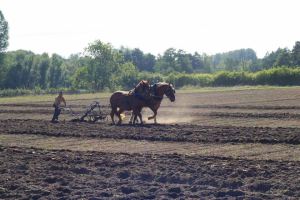
Richard Ploughing Richard Ploughing

Ploughing is a type of cultivation and the purpose of ploughing is to turn over the top layer of soil bring all the fresh nutrients to the surface. As the ground is being turned over it is also burying all the weeds, remains of last years crop, allowing them all to break down under the surface. Once ploughed, you normally leave the ground for a couple of days to dry, and then you can harrow the ground to produce a finer seed bed.

Ground diagram Ground diagram

The first ever ploughs used to be human powered, but once animals started to be used, this became a lot easier and efficient. The first animals that used…

View original post 387 more words

Bob Flowerdew- Compost King

Bob Flowerdew- Compost King

Think of compost as a must have rather than a waste product. This was the key message in organic grower and gardening celebrity, Bob Flowerdew’s talk to Norfolk Master Composters last night.

In a lively session peppered with amusing anecdotes and startling ‘factoids’, Bob enthused the audience with his knowledge of how plants respond to home-made compost and all the other DIY concoctions he uses in his own garden in South Norfolk. Including improving the flavour of home grown food, he said.

He isn’t one for feeding his open ground plants with anything much more than his home made compost, but swears by a combination of ‘teas’ to keep his container grown specimens in top condition – diluted liquid feeds of Comfrey, Borage, Stinging Nettles and compost all feature in a cycle of feeding during the growing season. And he reckons that apart from benefitting the overall strength and productivity of his pot plantings, they help to prevent diseases and pests by coating the leaves.

How compost tea as a plant feed makes a difference - Basil seedlings
How compost tea as a plant feed makes a difference – Basil seedlings

Bob’s basic thesis is that all plants expect compost- left to nature animal droppings and decaying organic material would provide them with all that they need to survive (along with sun, water and CO2 of course). By making our own compost and adding this to the ‘designed’ planting that is a garden, we are mimicking nature. And apart from the nutrients this rich mix can give, it also contains millions of micro organisms that are constantly in search of food and will themselves help to keep bacterial and fungal infections down- naturally.

Lovely stuff- and it makes such a difference to plant strength, health and productivity

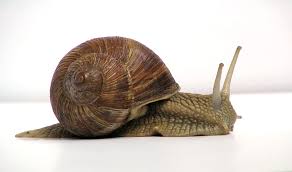
And encouraging wildlife into our gardens not only for the role many can play in removing harmful pests, but in the droppings they leave on the ground (and maybe less usefully, our cars) is also a way of boosting the natural ingredients that plants need to thrive as well as survive. He is also a big fan of snails (but not slugs). Grazing in the main on algae, these critters get an overly negative press, he reckons. Their droppings are another fantastic addition to soils (like worm casts), and maybe we should even ‘farm’ them in a mini ‘Snailcatraz’ just to provide this material!

Bob also estimates that a Blue Tit can deposit 6lbs of droppings in a season- just one of his mind-boggling figures.

Snail Farming?
Snail Farming?

He is a great advocate of putting pretty much anything organic into his own compost heap (which he visits and cossets every day)- old clothing (cotton,wool and other natural fibres only of course), citrus peel (despite recommendations from some authorities to keep this out), wood and even ferrous metals- all will rot down in time he says, and add a wealth of nutrients back to your soil.

His zeal for the home-made stuff is matched by his dislike of pretty much any commercially manufactured composts. Most seed composts are not much good he says and likewise potting composts lack the oomph that can be had from your own material. And some commercial composts that use municipal – processed organic waste should be carefully inspected, he says, as he’s worried about what can get through the filtering processes. He cites an example of a lump of concrete in a bag he’d bought and is worried about small batteries that might leak mercury. Based on trials of his own versus the commercial compost rivals, his own seems to win every time.

I was particularly struck by his tip about how he sows and grows in pots using a layering of his own compost in the bottom 75% of a pot, topping off with a seed compost, in which he sows his seed- the plant, once germinated, is then able to seek out the richer mix of nutrients lower down. Commercial seed composts are generally low in nutrients as if they were richer this might prevent the germination of smaller seeds. Home-made (but sieved) compost can be used to sow and grow the larger, more robust seeds like melons, cucumbers and so on.

Bob is a self-confessed ‘compostaholic’, seeking out anything that can be added to his heap.

Along with human and animal hair and fur- and the contents of the vacuum cleaner bag – he sings the praises of bird feathers as a powerful source of nitrogen and therefore a wonderful activator in a compost heap (along with his own urine of course). And after several experiments he’s found that it’s OK to add bones to the heap as these too will rot down- but only if they’re ‘green’ and not cooked. The latter tend to splinter and will not easily rot down.

He also now looks on weeding as an exercise in gathering compost material – certainly a positive spin to what many see as an onerous task!

Pretty much any food scraps can be added to a compost heap

Again, perhaps controversially, he says putting food scraps, including meat and fish, on the heap is OK. These are often advised against because of the risk of attracting rats.

‘It’s likely that there is a rat somewhere within 15 feet of where we are sitting now’

he said last night, indicating that they are already around in the nooks and crannies of buildings as well as in the open. So, we don’t need to attract them , he says, as they are already there! But he does urge putting out poisoned bait alongside compost heaps that contain such material as a precaution.

The meeting also heard from David Hawkyard, County Coordinator of Master Composter, about the continued funding of the Norfolk Master Composter scheme for at least another year and plans to raise its profile to encourage more Norfolk households to compost at home. A wonderful ‘Compost Bin’ Cake – complete with very realistic apple cores and smiling worms – rounded off an enjoyable and thought- provoking evening.

NOTE TO SELF- get out and turn the compost heap!

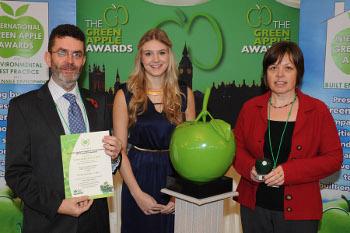
Norfolk Master Composters won a Green Apple Award

Useful links:

Norfolk Master Composter Facebook Page

Garden Organic composting advice

Old School Gardener

fred streeter

‘The soil,is a wonderful thing….treat it like a good old friend…give it the sort of nourishment it really appreciates…keep it in good heart – and it will reward you by growing almost anything your heart desires.’

Fred Streeter, the ‘Radio Gardener’

Old School Gardener

Ten Facts About Earthworms

Ten facts about earthworms

An enjoyable read! Click on the link above.

Old School Gardener

7 Ways to Save Our Soil

‘It takes as much as 500 years for topsoil to grow by 2cm so we need to grow our soils through innovative management techniques….’

Interesting article focused on agriculture, but with useful ideas for the home grower. By Louise Payton, Policy Officer at the Soil Association.

Old School Gardener

Gold for Norfolk Master Composters

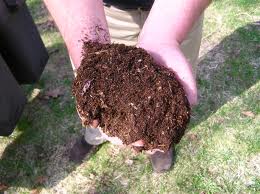
Adding home made compost or other organic matter to your soil will improve its structure and nutrient levels

‘Getting their hands dirty – and encouraging others to do the same – has paid off handsomely for Norfolk’s Master Composters who have won a national golden Green Apple Award for helping to stop thousands of tonnes of waste from being landfilled in Norfolk….’

Ashley Braun's avatarLife Periodic

“When the weather is bad and no other work can be done, clear out manure for the compost heap,” recommends Roman statesman Marcus Porcious Cato, better known as Cato the Elder. In his writings De Agricultura, he shares the secrets to running a successful farm-business in the ancient Roman Empire.

In this work, Cato, who lived between 234 and 149 B.C., provides us with an early how-to guide for enriching the soil through the practice of composting.

The Dirt on Dirt (and Compost)

Compost is not actually soil itself, but the dark, crumbly result of a controlled process of breaking down animal and vegetable matter. The resulting product is fairly stable, no longer decomposing at the previously speedy rate, and is full of nutrients (especially nitrogen and carbon) and minerals in forms ready for hungry plants to absorb.

But composting isn’t just any old rot, full of stink…

View original post 938 more words

Winter Tares- good at protecting the soil, smothering weeds and maintaining nitrogen in the soil, once dug in. Picture from Garden Organic

At one of my recent ‘Grow Your Own’ classes, one of the participants raised an interesting question about Green Manures (GM’s).

He wondered if it was actually worth growing green manures as additional sources of nutrients. He reasoned that as they use up nutrients from the ground there isn’t any real gain in the nutrients avialable to follow on crops. Like me, he had also heard that legumes, (peas and beans) do fix nitrogen from the air and therefore their roots are a source of additional supplies of this if dug into the soil. And he also mentioned that deeper rooting plants like Comfrey tap into nutrients that wouldn’t otherwise be available to plants with shallower roots, so making these available via their leaves once composted, and also from a  ‘tea’ made from these and applied as a liquid feed. So is this all correct?

I decided to contact my colleagues at Garden Organic and ask for their advice on all  this and got a very interesting reply from Francis, their Horticultural Research Manager:

Green manures and nitrogen

Legumes, when the temperature is warm enough and they have the right bacteria, will fix the nitrogen they need from the atmosphere. It is very true, and seldom appreciated, that if a legume crop (eg beans) is harvested then most of this nitrogen is taken away and not left in the soil. However, if the legume is grown as a green manure and dug in whole (usually in an immature state) rather than being harvested then there will certainly be a net benefit; nitrogen fixation (directly or indirectly via animal manures) is the main source of nitrogen for agriculture and horticulture in the absence of artificial fertilisers.

Non leguminous plants can only take up nitrogen from the soil as inorganic ions (ammonium but mainly nitrate). The latter is very soluble in water and so easily washed out by the rain and so lost from the soil, contaminating drinking water and rivers etc. A lot of work was done (some by Garden Organic) to demonstrate that one of the best ways of preventing this was by growing winter green manures such as rye. When this is dug in the nitrogen they have taken up is mineralised to be made use of by following vegetable crops.

Green manures and other nutrients

Other nutrients (especially the metals such as K, Mg etc) are more tightly held on the surface of the soil particles and so are not easily leached so it is true that green manures are less important for keeping them in the soil. However, some do have specific effects (eg buckwheat can help mobilise phosphorus and chicory is deep rooting and so is a source of trace elements from the subsoil that may have been depleted nearer the surface). All green manures will add organic matter to the soil which helps with structure and also stimulates microbial activity, important for general nutrient cycling.”

So, the net result is that there are several good reasons for using GM’s over the winter, including maintaining nitrogen where this would leach away from unprotected soil, weed reduction, protecting soil structure, and the addition of organic matter to help moisture retention and soil structure. However, the legume contribution to soil fertility (assuming you grow these to produce food), is of questionable value if left in the soil and dug in. Better to add animal manure or your own compost to boost nitrogen levels.

Comfrey- reaches the nutrients other plants cannot reach...and you can out them into your soil via a (smelly) tea made from their leaves
Comfrey- reaches the nutrients other plants cannot reach…and you can out them into your soil via a (smelly) tea made from their leaves

Further information:

Garden Organic and Cotswold Seeds have produced a useful advice booklet on soil improvement. It’s available as a pdf to download for free at  ‘Sort out your Soil’

Linked articles:

Green Gold – 7 reasons for using green manures

Green Gold: Where and when to use Green Manures

Green Gold: Making the most of green manures

Green Gold: 12 plants for soil improvement

Old School Gardener

Finding Nature

Nature Connectedness Research Blog by Prof. Miles Richardson

Norfolk Green Care Network

Connecting People with Nature

Discover WordPress

A daily selection of the best content published on WordPress, collected for you by humans who love to read.

Susan Rushton

Celebrating gardens, photography and a creative life

Unlocking Landscapes

Writing, photography and more by Daniel Greenwood

Alphabet Ravine

Lydia Rae Bush Poetry

TIME GENTS

Australian Pub Project, Established 2013

Vanha Talo Suomi

The Journey from Finnish Rintamamiestalo to Arboretum & Gardens

Marigolds and Gin

Because even in chaos, there’s always gin and a good story …

Bits & Tidbits

RANDOM BITS & MORE TIDBITS

Rambling in the Garden

.....and nurturing my soul

The Interpretation Game

Cultural Heritage and the Digital Economy

pbmGarden

Sense of place, purpose, rejuvenation and joy

SISSINGHURST GARDEN

Notes from the Gardeners...

Deep Green Permaculture

Connecting People to Nature, Empowering People to Live Sustainably

BloominBootiful

A girl and her garden :)