Category: Historic landscapes


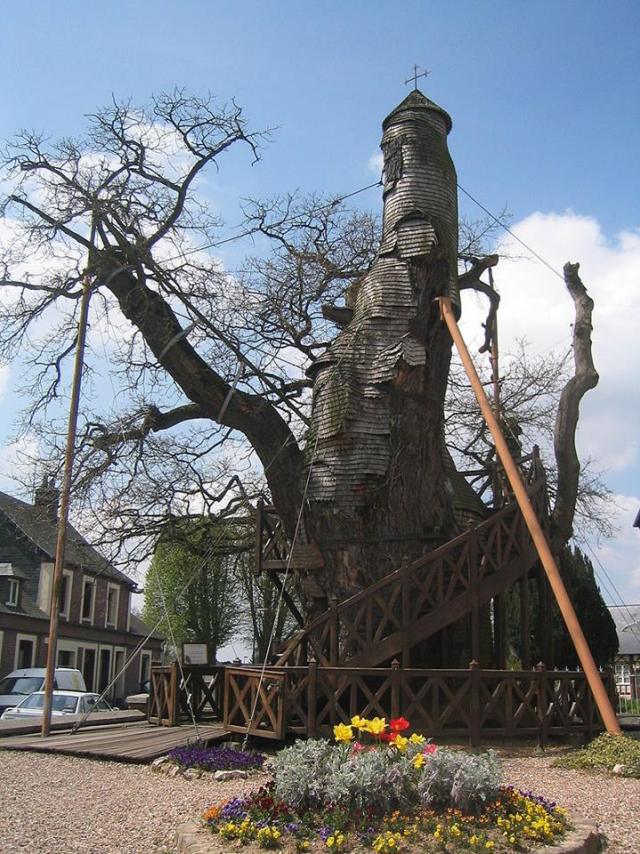
Oak chapel at Allouville Bellefosse, via The Woodland Trust

Oak chapel at Allouville Bellefosse, via woodland Trust

WP_20140827_006

Having been over to Gressenhall Farm and Workhouse Museum today to do some gardening, I couldn’t resist snapping the front border, which was my first design and create project there a few years ago. The combination of grasses, shrubs and annuals was looking great in the sun, so here’s a sample. Sorry to show off!

Old School Gardener

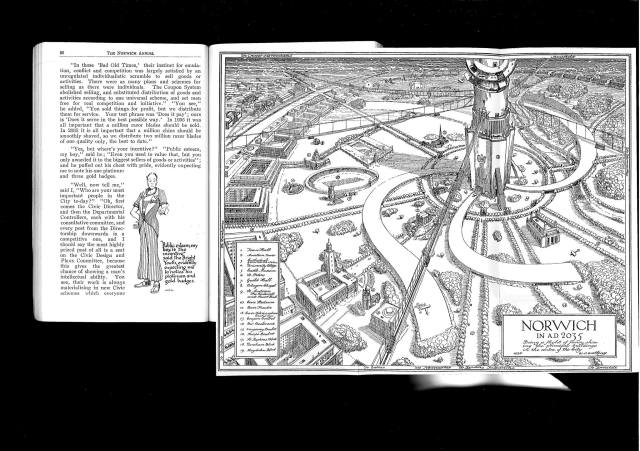
norwich 2035

This wonderful illustration and story titled ‘Norwich AD 2035 (A Prophetic Fantasy)’ written and illustrated by Mr W. T. Watling, an art master at the City of Norwich school has been unearthed by Norfolk Record Office.

The text describes a man taking a drug and finding himself transported to Norwich 100 years in the future! If you look closely, you can spot some notable Norwich landmarks in the futuristic landscape. The story was first published in ‘The Norwich Annual’ in 1935.

Old Schoool Gardener

IMG_9516‘Awe-inspiring Anglo-Saxon royal burial site’ is how the National Trust describes Sutton Hoo. I can’t argue with that. I think this must have been my third visit to the site of one of the most important archaeological excavations in Britain. The visit began with the beautifully laid out and richly furnished exhibition building, complete with exquisite reproduction Anglo-Saxon jewelry and a concise, but gripping story of Anglo-Saxon Britain and the discovery of the site in the 1930’s. We went from there (following a light lunch) to explore the mounds which covered burial ships and other graves…..

As the National Trust continues….

‘This hauntingly beautiful 255 acre estate, with far-reaching views over the river Deben, is home to one of the greatest archaeological discoveries of all time.

Walk around the ancient burial mounds and discover the incredible story of the ship burial of an Anglo-Saxon king and his treasured possessions.

Come face to face with your ancestors and explore our award-winning exhibition, the full-size reconstruction of the burial chamber, stunning replica treasures and original finds from one of the mounds, including a prince’s sword.

Look inside the Edwardian house or enjoy the beautiful seasonal colours on our estate walks.’

We did look inside the reopened house of the land owner (Mrs. Pretty) who commissioned the 1930’s ‘dig’ – a welcome addition to the route and which provided another dimension to the visit; complete with live 1930’s piano music being played  (and requests too).

Further information;

National Trust website

Wikipedia

Old School Gardener

WP_20140807_003

Orfordness Lighthouse- Felicity, Deborah and Nick

Here’s the first article of two covering two very enjoyable days out whilst on holiday with some good friends recently.

Orford Ness is a huge shingle spit, linked to the mainland at Aldeburgh and stretching along the coast to Orford and down to North Wier Point, opposite Shingle Street. It is divided from the mainland by the river alde (Ore off Orford), and was formed by longshore drift along the coast. The material of the spit comes from places further north. Near the middle point of its length, at the foreland point or ‘Ness’, lies the Orfordness Lighhouse.

Orford Ness is an internationally important site for nature conservation. It contains a significant portion of the European reserve of vegetated shingle habitat, which is internationally scarce, highly fragile and very easily damaged.

The peninsula was formerly administered by the Ministry of Defence, which conducted secret military tests during both world wars and during the ‘Cold War’. These included bomb testing, the development of Radar and Atomic weapons testing.

We had a wonderfully sunny day for our ferry crossing and walk around the site, which shows a curious mix of natural beauty and interest with man -made stuctures and debris, much of which has been left in situ. The volunteer guides were very friendly and informative. After returning to the mainland and following a super pub lunch, we explored the river by boat and saw several groups of sea birds, including Avocet, Oyster Catcher, Tern and Sea gulls.

This slideshow requires JavaScript.

Further information:

National Trust website

Wikipedia


Municipal Dreams's avatarMunicipal Dreams

As we saw in last week’s post, Hull had acted energetically in building homes and clearing slums after the First World War but the impact of a second would require it to redouble its efforts.  New estates were built on its northern fringes which made the original North Hull Estate seem rather old-fashioned – a good or bad thing according to taste.

Certainly, the Estate was ageing and subject, in recent decades, to the difficult transitions that have affected much of our council housing.  This, and a conjuncture of the ambitions of politicians national and local, would combine to make the Estate the nation’s first Housing Action Trust in 1991.

King Edward Street and Prospect Street in the centre of Hull King Edward Street and Prospect Street during the Blitz

The strategically vital city of Hull suffered more damage from German bombing than any other in the UK except for London – over 1000 hours of raids destroyed 5300 homes outright and damaged almost 115,000. In fact, it was…

View original post 1,690 more words

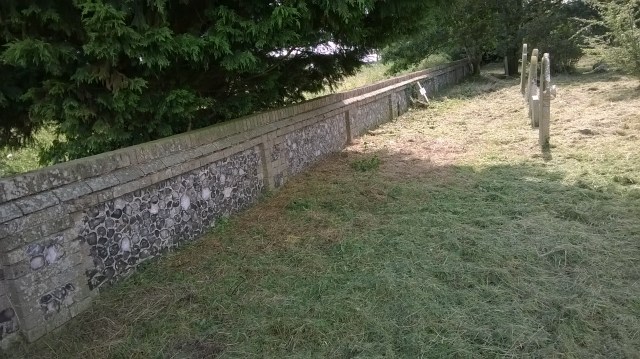
Some of the volunteers who helped to t idy up the Church Yard on Saturday

Some of the volunteers who helped to tidy up the Church Yard on Saturday

I’ve written before about our local church, St. Peter’s, Haveringland, or ‘The Church in the Fields’. On Saturday I helped tidy up the church yard, which doesn’t have any regular care or attention, particularly since services here now occur only once a month. 

About twenty willing volunteers strimmed (or ‘Whipper – snipped‘ as I believe it’s called in Australia!), raked, weeded and (my own contribution) removed ivy from the church yard walls. In about two hours I managed to clear one wall (see picture below); fortunately there’s only one more that needs the same attention – I will return to finish it soon.

The wall cleaned of its Ivy- and, inadvertently a mouse nest too...

The wall cleaned of its Ivy- and, inadvertently a mouse nest too…

Some years ago an enthusiastic parishioner planted a number of Yews and other conifers around the church yard, and I remember at the time this caused a bit of controversy, as some people (my wife and I included) thought a ‘softer’, more naturalistic  approach to the planting (with wild flowers etc.) might be more appropriate. Well, I must say, 10 plus years on and these trees do add some interest to the church yard and were probably a realistic planting option, giving some shelter to the space and taking into account the limited community/church interest in looking after the area since.

On Saturday I was approached by the (relatively new) local priest who asked if I’d be interested in producing a Management Plan for the church yard. He suggested mown paths through wild flower areas and access to some of the more recent graves, based on a mix of twice yearly maintenance input from contractors, along with periodic voluntary effort like the session on Saturday. I was pleased to hear of his ideas and obvious commitment to keeping the place in good shape and so I agreed to help.

So, watch this space as this new project unfolds and I get to research and develop planting ideas around wild flower meadows (and maybe a couple of areas of self -reliant shrubs and perennials?).

I’d be pleased to hear from anyone with experience or knowledge on this subject – especially with regards to church yards!

Old School Gardener

shinealightproject's avatarShine A Light

By Wayne Holland

A few weeks ago we were happy to report that our finely carved oak statue Samson had left Norfolk Collections Centre to undergo conservation work. This blog charts the 357 year history of Samson.

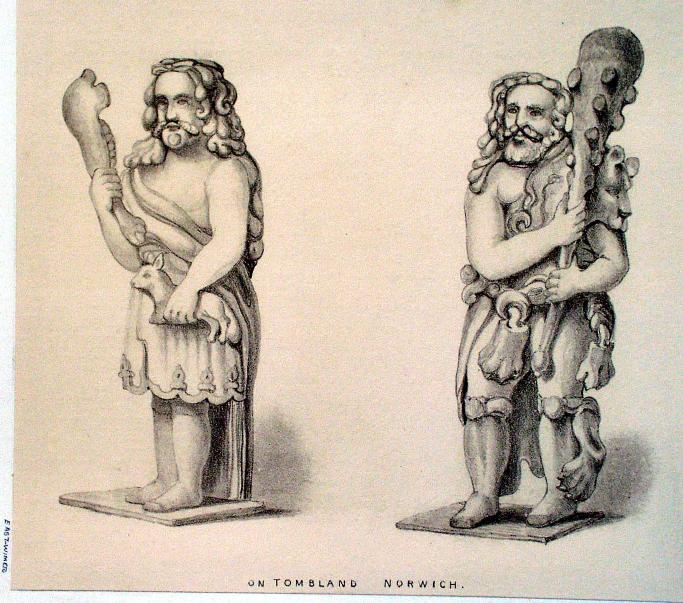
Two of Norwich’s most famous characters are these two oak carved statues of Samson and Hercules.

Image 9 Samson (left) is holding a small fox in his left hand and the jawbone of an ass in his right held up to his shoulder, he has a moustache and long flowing hair. Hercules (right) is standing holding a large club to his right shoulder, he has a moustache and long flowing hair.

The older of the two, Samson, is 357 years old! For the first time in his life he has left Norfolk, for the bright lights of London to undergo conservation work.

Find out more from our conservation department blog

For most of their lives…

View original post 1,125 more words

abbyousewashes's avatarOuse Washes: The Heart of the Fens

Logos

Opportunities to view the 45 minute film called “Rich soil, rich heritage” all about the district and how it has been shaped by the many different people who have come here over the past 350 years.

Leaflet HLF

Enjoy!

View original post

UK_Thetford_(Norfolk)_(SideA)A Norfolk community designs a show garden for the Hampton Court Flower Show. Click here to get the video.

Old School Gardener


Finding Nature

Nature Connectedness Research Blog by Prof. Miles Richardson

Norfolk Green Care Network

Connecting People with Nature

Discover WordPress

A daily selection of the best content published on WordPress, collected for you by humans who love to read.

Susan Rushton

Celebrating gardens, photography and a creative life

Unlocking Landscapes

Writing, photography and more by Daniel Greenwood

Alphabet Ravine

Lydia Rae Bush Poetry

TIME GENTS

Australian Pub Project, Established 2013

Vanha Talo Suomi

The Journey from Finnish Rintamamiestalo to Arboretum & Gardens

Marigolds and Gin

Because even in chaos, there’s always gin and a good story …

Bits & Tidbits

RANDOM BITS & MORE TIDBITS

Rambling in the Garden

.....and nurturing my soul

The Interpretation Game

Cultural Heritage and the Digital Economy

pbmGarden

Sense of place, purpose, rejuvenation and joy

SISSINGHURST GARDEN

Notes from the Gardeners...

Deep Green Permaculture

Connecting People to Nature, Empowering People to Live Sustainably

BloominBootiful

A girl and her garden :)