
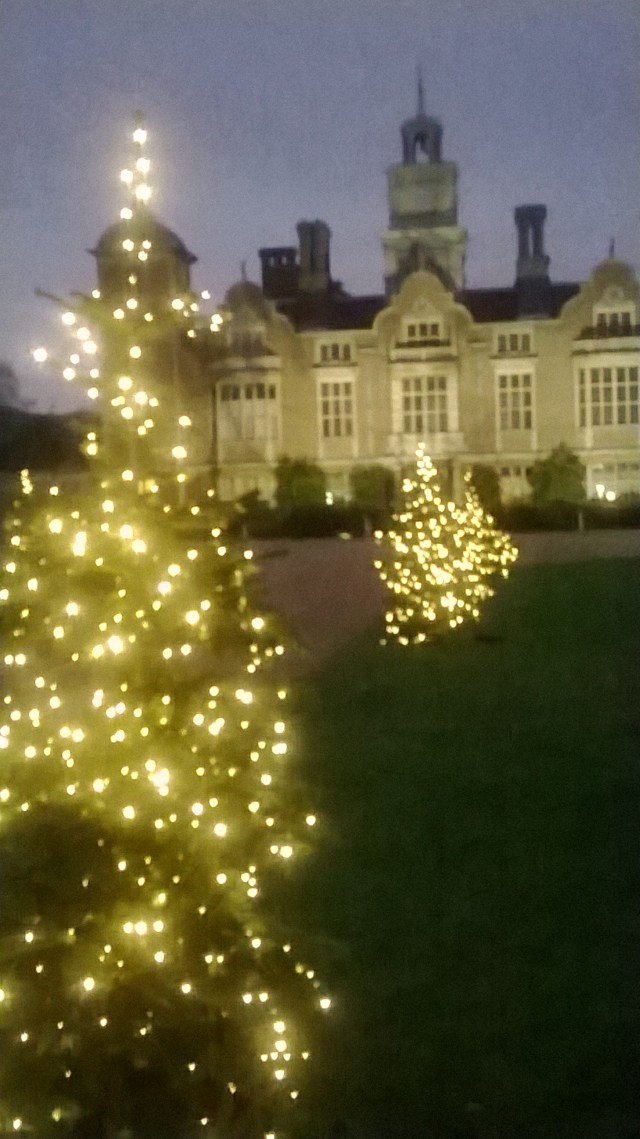
Category: Heritage Gardens & gardening
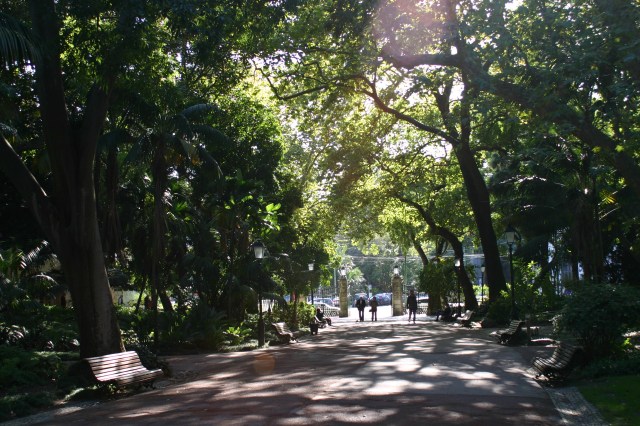
I wrote an earlier article about the ‘Star Garden’ (Jardim da Estrela) in Lisbon, singing its praises as a wonderful example of a classic public park/ gardens and how it has maintained an important role in the life of the capital. On a recent trip I managed to weave in an early Autumn visit, something I haven’t done before.
It was even better than in the Spring – luxuriant foliage was everywhere, people were out and about enjoying the space and the low autumn sunshine provided some wonderful lighting effects. I was particularly taken this time with the little ‘public library’ housed in a picturesque kiosk in the centre of the gardens. Obviously popular with a set of older men, who here, as in other parts of the gardens, were reading or playing cards- one suspects that they are regulars.
This seems to be a wonderful amenity and an idea that’s worth a try in UK parks and gardens! (or are there some examples already out there that I’m not aware of?)

Library in the Garden- brilliant!

Cafes too

Books and Mags to loan on the spot
I also mentioned in my previous article the various statues in the gardens and how these were placed here after the formation of the Portuguese Republic in the early 20th century. I made a point in this visit to seek some more of them out, as I had not noticed them before, hiding, as they seem to be, under trees or in mature shrubbery.


My visit felt rather like meeting up with an old friend, someone I hadn’t seen for some time. I was able to easily recollect their more important physical features and personaility traits, but was also drawn to some new features or angles on them. My ‘new look’ at Estrela was repaid not only with the uncovering of more statues, but also with some superb scenes of dappled sunlight (including the dramatic back lighting of large exotic leaves), superb ‘Dragon’ and other trees, a fantastic decorative ceiling on the bandstand roof, lively play area, late summer blooms of Hibiscus and unusual tree conservation measures (filling in a hole in a trunk with brickwork!)
I wonder what the place must be like high summer when various events inlcuding live Jazz add yet another dimension to this magical place? Another visit beckons…..


The splendid ceiling of the bandstand in Estrela Gardens, Lisbon- a highlight of a recent visit
Related article: Portuguese Gardens: Estrela Garden, Lisbon
Old School Gardener

The view to the River Tagus from the front of the Necessidades Palace in Lisbon
On our recent 15 mile trek across western Lisbon, we took in a park that is not often mentioned in tourist trails- that of the Necessidades Palace. The palace itself is a grand looking affair, now the country’s Foreign Office, so not open to the public. The view from outside is good in all directions- one way you look out across the River and the ‘Golden Gate- look alike’ bridge; turn round and you have the splendid pink and cream stone facade of the palace and ornamental fountains. The park is tucked round the back and has the air of somewhere that’s been a little forgotten of late.
Here’s what Wikipedia has to say about the Palace, a very important site in portuguese history:
‘Formerly a convent… it was built in the 18th century, by order of King John V, in gratitude for prayers answered by Our Lady of Needs, whose first devotional chapel stood on this site…The palace became the residence of the kings of the Braganza dynasty… Ferdinand of Saxe Coburg and Gotha, husband of Maria II, lived in this palace until his death, amassing a large collection of art, which would be dispersed after his death. The palace then underwent several renovations to accommodate the taste of the various monarchs who lived there, the most recent of which was carried out at the beginning of the twentieth century by Carlos I….
…The palace was the scene of memorable events in Portuguese history, some momentous, some tragic, some slightly ridiculous. One famous example: the king Pedro V had installed in the front door of the palace a slot through which his subjects could, if they wished to, leave messages and complaints for the attention of the sovereign. The last significant event at the palace, which would also be the epilogue of the monarchy, was the joint funeral of King Carlos and his son, Prince Luis Filipe, on 8 February 1908, after their assassination by radical republicans…’
The palace was shelled during the republican revolution in 1910 and subsequently most of its art and other treasures were moved to the Ajuda Palace (which we had visited a day or two before).
Today’s park (or ‘tapada’), evolved from a private hunting ground for the Kings of Portugal and it retains the feel of a semi wild place, but with areas of more defined botanical or garden interest. As you progress up the hill from the entrance next to the Palace you alternate between enclosed, wooded areas and open grassy plains. About half way up the scene turns into a more formal park setting with a a terrace sitting alongside a grand, glass-domed estufa (greenhouse) currently undergoing renovation. Looking rather like an enclosed amphitheatre, this space must have once been the setting for a theatrical display of a different kind- tiered ranks of exotic plants. How grand it must have looked. I hope that it will be fully restored and will no doubt be a gem of a place that will raise the profile of the park more generally.
Paths weave upward above the terrace, the otherwise peaceful setting being regularly interrupted by the sound of aircraft coming in to land at the City’s airport. Another grand building sits atop the park, set off by a fine fountain. This gives way to a wilder area with a round building that looks as though it may have been a windmill at one time. There are some superb areas of Agaves and other dramatic plants. The overall impression, though, is one of a parkland that must be great for a summer picnic, rather than a space where growing and showing interesting plants is the dominant activity. Apart from the domed glass house that is.
A place where once glorious scenes are slowly being reclaimed from the passage of time and nature’s path.

The front of the Palalce…


Entering the park…

Great place for a picnic…

The domed Glasshouse…

under renovation..

Imagine this crammed full of exotic plants….

open grass areas…

wooded glades..

Terrace…


True love…


Agaves…

Faded splendour…

?Windmill…
Old School Gardener
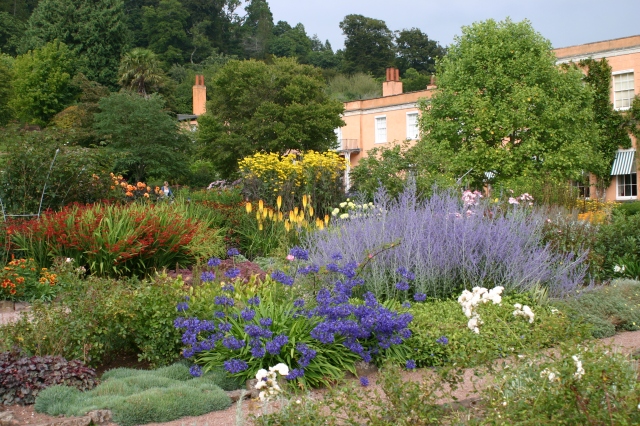
Our last, late summer visit to a west country garden, Killerton, did not disappoint. We enjoyed a very informative tour in a golf buggy and strolled around the grounds on a sunny afternoon. Lying just outside Exeter, Killerton is a massive estate and we had a little trouble actually finding the entrance (road signs and sat nav conspired against us!). Nevertheless we had a warm welcome.
Killerton is notable as the ‘home given away’. It’s last private owner, Sir Richard Acland did just this with the whole estate of over 2,500 hectares (including 20 farms and 200-plus cottages), one of the largest acquired by the National Trust. Acland held a strong belief in the common ownership of land and was a founder member of the British Common Wealth Party, formed in 1942 to oppose the wartime coalition and to advocate a co-operative form of socialism, in contrast to the state-led approach of the Labour Party. However, the group never achieved an electoral break through and Acland joined the Labour Party in 1945. He was also one of the founders of the Campaign for Nuclear Disarmament (CND).
The original gardens at Killerton were designed in the late 18th century by John Veitch, one of the leading landscape designers of the time. It features rhododendrons, magnolias, herbaceous borders and rare trees surrounded by rolling Devon countryside. Many of the trees and the views of the surrounding countryside are very impressive – here are some pictures.


The grounds also house – typically for the 19th century – an Ice House and a curious Summer House which is of a rather gothic design and features a strange assortment of decorative materials – including animal bones, hides and fir cones! Here’s a second set of pictures.

To the Summer House…


Hides….

Bones…

Wooden slices floor…

Cones above…

Stained glass window in the Summer House

Into the Ice House…
However, the ‘parterres’ or mixed herbaceous borders, full of late summer colour when we visited, stand out as my most significant memory of Killerton. These were designed by the late 19th century gardener, garden writer and designer William Robinson. They have some classic plant combinations and bold drifts, typical of the mixed herbaceous borders coming into vogue around this time, and which have been influential in English garden design up to the present day. This area features a central path and secondary paths with Coade stone urns as focal points. The layout of the borders is perhaps curious given Robinson’s advocacy of ‘wild gardens’ – a more naturalistic approach to garden design. But even these semi formal designs, with their ‘loose planting’, were seen as revolutionary. Apparently, Killerton’s head gardener at the time said:
‘it of course spoilt the park, starting as it does and ending nowhere, I got into bad odour condemning it’.
Robinson’s ideas about ‘wild gardening’ spurred the movement that evolved into the English cottage garden, a parallel to the search for honest simplicity and vernacular style of the British Arts and Crafts movement. Robinson is credited as an early practitioner of the mixed herbaceous border of hardy perennial plants, a ‘naturalistic’ look in stark contrast to the high Victorian ‘pattern garden’ of planted-out bedding schemes. Here is a gallery that, hopefully captures the best of these glorious borders.


Further information:
National Trust website
William Robinson- Wikipedia
Old School Gardener

Maze Gardens at Ruspoli Castle Northern Lazio, Italy

- Royal arms on a superb tapestry hung in the ‘waiting room’ to the royal family’s quarters.
Just before visitng the Ajuda Botanical Garden in Lisbon, we took a tour of the nearby Ajuda Palace, once the home of the Portuguese Royal Family and resplendent with rich decor, furniture, tapestries and other curiosities. A particular novelty was the indoor ‘Winter Garden’ which is a high ceilinged room hung with plants, glass grapes that catch the light, a small fountain complete with its own ‘menagerie’ and splendid bird cages. And gold is everywhere. One can imagine how this room would have been a delight in the colder months with its visual interest and birdsong.
Otherwise known as the ‘Marble Room’, this space is a good example of how controlling nature and bringing it into the house became popular in the 19th century. The walls and ceiling are lined with alabaster, the gift of the Viceroy of Egypt. This rather grand space was nonetheless intended for leisure and relaxation- a place for princely birthday parties and royal dinners on a table set around the Carrara marble fountain.


Old School Gardener
Garden Museum: Visits Programme 2014

New programme just announced!
-
Suffolk Study Day with Tom Hoblyn – Re-Scheduled for Spring 2014
-
A Garden of Surprises at Burghley House, 12/03/14
-
Design Study Day with Cleve West, 07/04/14
-
Syde and Frampton Manor Gardens and Pan Global Plants, 25/06/14
-
Longstock Park Water Garden & Houghton Lodge, Hants, 14/05/14
-
Walking London Squares with Todd-Longstaffe-Gowan, 22/05/14
-
Traditional Splendour in Cambridgeshire gardens, 05/06/14
-
The Old Rectory with Dan Pearson and Rockcliffe House, Glouc,02/07/14
Old School Gardener

- Tiered Box hedging in the lower garden
My recent trip to Lisbon, Portugal, was very much a ‘Garden Fest’ (even though it was really about seeing our Daughter and Son-in-law who live there). I seem to have found several more superb gardens and parks to add to those old favourites covered in earlier articles in the category ‘Portuguese Gardens’. The Jardim Botânico d’Ajuda (Ajuda Botanical Garden) was the first we visited, after an interesting tour of the nearby Royal Palace of Ajuda – richly decorated and with some ‘garden’ interest of its own- (more on that in a later article!).
History
The Ajuda Botanical Garden was a real find. The first and oldest botanical garden in Portugal, it is also without doubt one of the most beautiful I’ve visited in Lisbon. It was created in the 18th century for the Portuguese royal family.When the earthquake of 1755 hit Lisbon, the royal family was living in the palace of Belém (just down the hill next to the River Tagus), and which sustained relatively little damage. However, fearing more tremors, they camped in tents outside the palace for some time, and later, as the king refused to live in a brick building, the Marquis of Pombal (a powerful statesman who led the reconstruction efforts after the earthquake), had a wooden residence built for the royal family furtehr up the valley side. However (and how unlucky must the King have felt), a fire destroyed this building in 1791. So it was later replaced with the Palace of Ajuda.
In 1765, the King ordered naturalist Domingos Vandelli to create a botanical garden near the, then wooden, residence of the royal family. The king wanted to create a garden for his grandchildren, where they could play and learn about horticulture. Vandelli constructed the garden over the course of the following three years with the help of Júlio Mattiazi, who was master gardener of Europe’s oldest botanical garden in Padua, Italy.
About 25 years later Domingos Vandelli was appointed director of the Royal Botanic Gardens and in this position he collected some 5.000 different plant seeds from all over the world. During the 18th until the late 20th century, the garden was maintained by a number of different institutions, and more often than not it was neglected. In 1993, with the support of funds from the EU and the Lisbon Tourist Association, a reconstruction effort started, and the garden regained its earlier glory in 1997.
 Entrance to the Garden
  The Baroque staircase beyond formal Box hedging
  closer…
  and close
  Fruit!
  The Ajuda Palace beyond the garden
  Views from the upper garden..
  The April 25th Bridge in the distance over the River Tagus
Entrance to the Garden
The Baroque staircase beyond formal Box hedging
closer…
and close
Fruit!
The Ajuda Palace beyond the garden
Views from the upper garden..
The April 25th Bridge in the distance over the River Tagus
The Design
The garden is designed in Baroque style with a strict geometric layout and decorated with monuments. Occupying some 3.5 hectares on the side of the river valley, the garden is divided into two terraces connected with each other by a monumental Baroque staircase, the Escadaria Central.
The lower, bottom terrace, has an Italianesque layout with a geometric pattern of paths and long hedges of boxwood arranged around flower beds. Plenty of tall trees provide some welcome shade. At the center of the lower level stands a monumental fountain, the Fonte das Quarenta Bicas (Fountain of the Forty Spouts). The 18th century fountain actually has 41 water spouts, disguised as serpents, fish, sea horses. Other statues of frogs, shells and ducks decorate the fountain that is placed at the center of a large basin with water plants.
 That Fountain…
That Fountain…
At the western end of the lower level there are some exotic plants as well as a small rock garden, but the most interesting exotic plants are housed on the upper level where there are some remarkable specimens, most notably a 400 year old dragon tree and an equally large Schotia Afra. There is also a fair number of smaller plants such as the colorful Tecoma Capensis and the Japanese Camellia.
 The Dragon Tree…
  A study in support!
 Beds for exotic specimen plants
  The huge Schotia afra
  How does this tree survive?
 Cactus
  Roots!
  Kalenchoe beharensis ‘Drake’
  Scilla maderensis
The Dragon Tree…
A study in support!
Beds for exotic specimen plants
The huge Schotia afra
How does this tree survive?
Cactus
Roots!
Kalenchoe beharensis ‘Drake’
Scilla maderensis
As a bonus, there are not just plants in the botanical gardens; plenty of peacocks strut around the gardens, doing their best to ignore the visitors!
I also had a pleasant time chatting to one of the gardeners, who was setting out leaf cuttings in one of the large glasshouses, this one devoted to a wide ranging collection of succulents, many beautifully arranged in naturalistic table top settings. This gardener was hugely complimentary of Kew Gardens, where she had worked and was, she said, trying to recreate something of that wonderful exotic collection here. She was doing a grand job, and I told her so.
 In the glasshouse…
  Beautiful succulents skillfully arranged


 Leaf cuttings being prepared
In the glasshouse…
Beautiful succulents skillfully arranged
Leaf cuttings being prepared
Look out for the next instalment in this latest ‘Gardens Tour of Lisbon’!
Source: A View on Cities
Related articles:
Oranges and Azulejos: Portuguese Heritage Gardens
PicPost: Great Garden @ Pena Palace Park
PicPost: Great Garden @ Praça do Império Garden, Belem, Portugal
PicPost: Great Garden @ Buddha Eden, Portugal
Portuguese Gardens: Tropical Botanical Gardens, Belem
Portuguese Gardens: Estrela Garden, Lisbon
Old School Gardener

Sorry to disappoint if you think this is going to be about the famous ‘red light district’ of Amsterdam. It’s not. I’m just back from a weekend celebration with my wife, Deborah who had an ‘important birthday’ on Saturday.
It was a great visit, the highlight meeting up with 10 friends and relations in a cosy but wonderful restaurant complete with birthday cake and fireworks! I wasn’t expecting either the time or opportunity to take some serious photographs while there, but I was pleasantly surprised, so I’ll share a few of the better ones (taken on my phone camera) over the next week or two.
Saturday morning in the city was sunny so we managed a delightful wander through the canal – ringed old city and came across a wonderful little oasis called the ‘Begijnhof’. ‘Beguines’ were pious single catholic women who wanted to do good works, like nuns, but did not want to live in a convent and therefore had not taken all of the nun’s vows. Here’s what Wikipedia has to say:
‘The Begijnhof is the only inner court in Amsterdam which was founded during the Middle Ages, and therefore lies within the Singel — the innermost canal of Amsterdam’s circular canal system. The Begijnhof is at medieval street level, which means a meter below the rest of the old city center.
It is unclear when exactly the Begijnhof (Beguines’ court) was founded. In 1346, the beguines still lived in a house (a document of that time mentioned one beghynhuys). A courtyard was only first mentioned in 1389, probably after the religious status of the city rose due to the Amsterdam Eucharistic Miracle of 1345.
Originally the Begijnhof was entirely encircled by water …. The back facades were therefore water-locked….The Begijnhof differs from the usual Amsterdam patricians’ court in that this old people’s home was not founded by private persons. It bore closer resemblance to a convent, although the beguines enjoyed greater freedom than nuns in a convent. While beguines took a vow of chastity, and while they considered themselves obliged to attend Holy Mass every day and pray various official prayers, they were free to leave the court at any time in order to get married….
The most famous beguine in the Begijnhof’s history is sister Cornelia Arens, who died on 14 October 1654…. Rather than be laid to rest in the Chapel, which she considered “desecrated” by Presbyterians, she chose to be buried in the gutter of the court. Legend has it that contrary to her wish, she was in fact buried in the Chapel, but her coffin was found in the adjoining gutter the following day. This happened two more times, until she was at last laid to rest in the gutter. Another version of the legend is that her soul found no peace and roamed the court at night until she was buried in the gutter…..
On 23 May 1971, the last beguine died at the age of 84. “Sister Antonia” ……………… She was buried in the Sisters’ Grave in the St. Barbara’s Roman Catholic Cemetery in Amsterdam on 26 May of the same year…
Until its renovation in 1979, the court had 140 dwellings — some 110 of them consisting of a single room, and about 25 comprising two. The occupants likewise numbered 140. The renovations enlarged the houses to two or three rooms. Since that time, the number of female inhabitants has been an unvaried 105.’
Here is my take on the Begijnhof, where a combination of small domestic gardens, splendid architecture and a unifying lozenge – shaped green created a real Autumn Jewel on our visit to this beautiful city.

Plan

Sunlit houses

A worthy

Tall and thin

Autumn colour

Another worthy

Gardens

Tablets in the walls

Green – left

Green- right

gardens

And another worthy

Window statement

Translation: ‘The most high God hath wrought signs and wonders toward me.’

The ‘Wooden House’- one of the oldest

English Church

Gardens
Old School Gardener
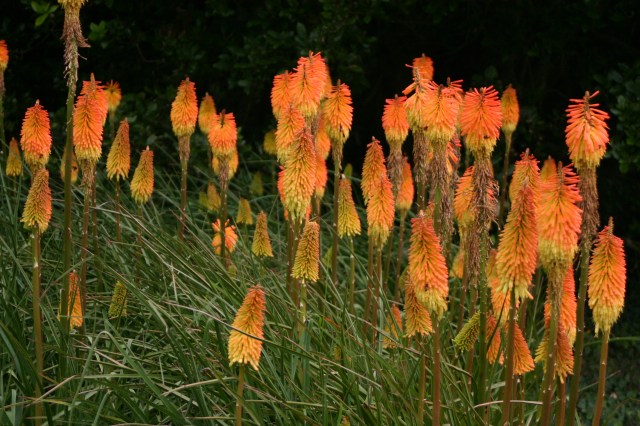 Quite a contrast with the previous Cornish garden visit to Glendurgan, Trelissick (yes another ‘tre’) was all about late summer colour. A mixture of woodland planting and smaller borders and walled gardens full of herbaceous perennials (including some beautiful exotics), this is another wonderful coastal garden in the damp and mild south west, between Falmouth and Truro.

This ‘Technicolour’ treat was a wonderful last garden visit on our summer trip to Cornwall, though we managed one more garden (Devonian this time) before heading back home. Here are some close-ups of the variety of blooms on show when we visited Trelissick towards the end of August.


I was most impressed with the overflowing border nestling towards the bottom of the grass – lined valley close to the entrance. A billowing display of colourful masses of flowers and foliage, the Cotinus coggygria (I think it might have been the variety ‘Grace’) looking especially vivid as a low sun caught its large leaves of reds – purples. Here is a gallery to show you what I mean.


The Fal valley with smaller creeks and inlets branching off on either side is reached via wooded slopes with oaks and beeches overhanging the mudflats of the tidal creeks. The King Harry Ferry below Trelissick is the only connection across the water to the Roseland peninsular on the other side of the estuary.
In about 1750 a modest two-storey villa was built at Trelissick on the foundations of an earlier building. This house was remodelled in 1825 by Peter Frederick Robinson who added the columned portico which rises to the height of the south front. Robinson’s patron was Thomas Daniell whose father had bought the estate in 1800 with the fortune he inherited from tin-mining interests. Thomas Daniell planted much of the woodland along the shores of the estuary and the carriage drives he laid out in the park are now shady woodland walks. Between 1844 and 1913 the estate was owned by the Gilbert family who made great improvements to the grounds. They planted ornamental woodlands and some of the huge holm oaks and conifers in the garden. The wonderful garden seen today was largely created by Mr and Mrs Ronald Copeland after Mrs Copeland inherited Trelissick in 1937.
This has been in the ownership of the National Trust since 1955 when it was donated by Ida Copeland following the death of her son Geoffrey. Many of the species that flourish in the mild Cornish air, including the rhododendrons and azaleas (such a feature of the garden, but not in bloom when we visited), were planted by the Copelands including hydrangeas and camellias, flowering cherries, and exotics such as the Ginkgo and various species of palm. They also ensured that the blossoms they nurtured had a wider, if unknowing audience. Ronald Copeland was chairman and later managing director of his family’s business, the Spode china factory, and flowers grown at Trelissick were used as models for those painted on the pottery produced at the works.
The garden is noted for its rare shrubs (it holds the national collections of Photinias and Azaras) and features a large park, woodland walks, views over the Fal estuary and Falmouth – there are ‘peep hole’ glimpses of water punching through the sloping woodland canopy that surrounds the extensive park path system. After a pleasant afternoon break in the courtyard restaurant (though we were joined by some cream tea loving wasps) we took a leisurely drive onward to re-enter Devon on our way back to East Anglia.
Here are some images of this wider, parkland setting, which,along with the rest of the place, is kept in tip-top condition, a credit to the garden team.




 Old School Garden