Category: Heritage Gardens & gardening


gardeninacity's avatargardeninacity

We visited the Portland Japanese Garden as part of the 2014 Garden Bloggers Fling. I wouldn’t put Japanese gardens at the top of my list of favorite gardening styles. However, I’m very glad I was able to spend some time in this tranquil place.

Trees of the Pacific Northwest tower over the entrance to the Portland Japanese Garden. Trees of the Pacific Northwest tower over the entrance to the Portland Japanese Garden.

The Portland Japanese Garden is actually five different gardens on 5.5 acres surrounded by protected woods. While the gardens are traditional, trees native to the Pacific Northwest are also included so as to blend in with the natural surroundings. This creates a larger sense of scale than is generally found in this type of garden.

2014-07-12 12.19.18

The five gardens are the Flat Garden, the Strolling Pond Garden, the Natural Garden, and the Tea Garden. Throughout, stone and water matter just as much as the plants.

The Strolling Pond and Natural Gardens were the ones I…

View original post 210 more words

Natalia Maks's avatarNatalia Maks

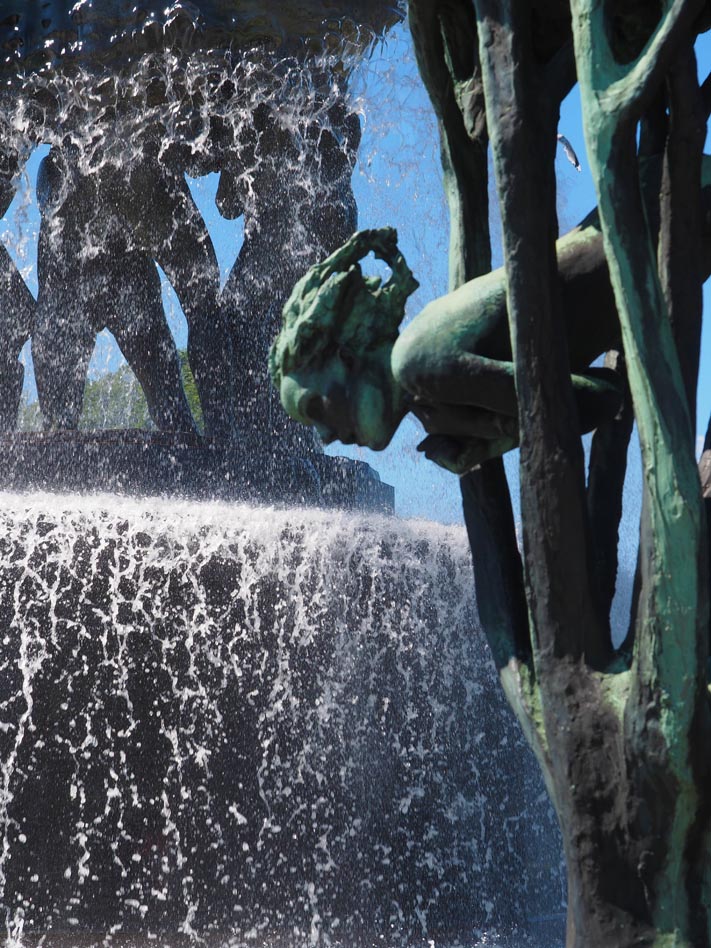
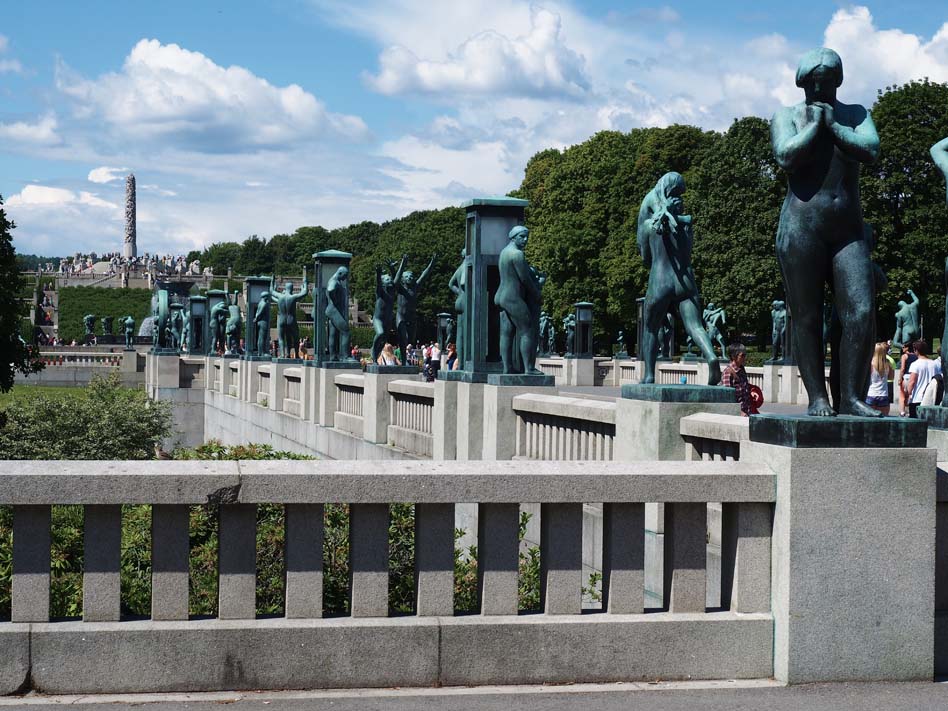
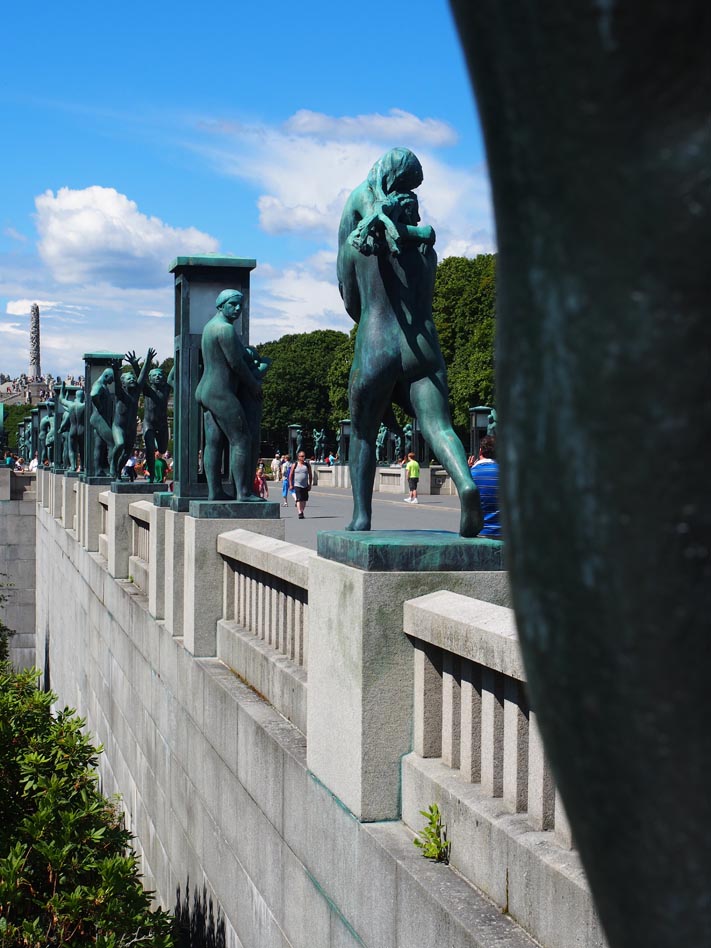
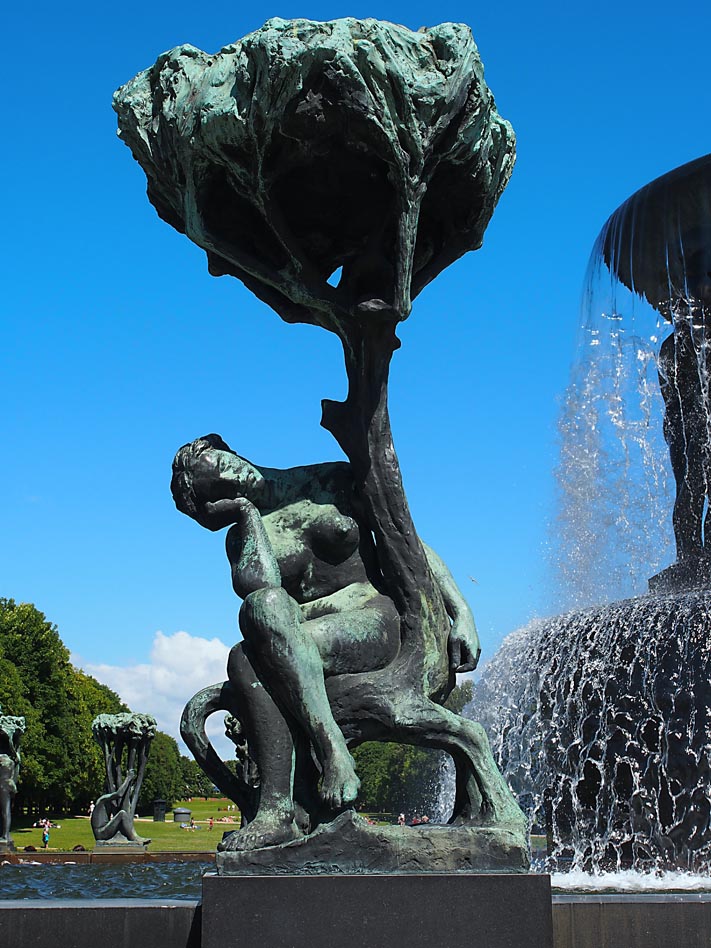
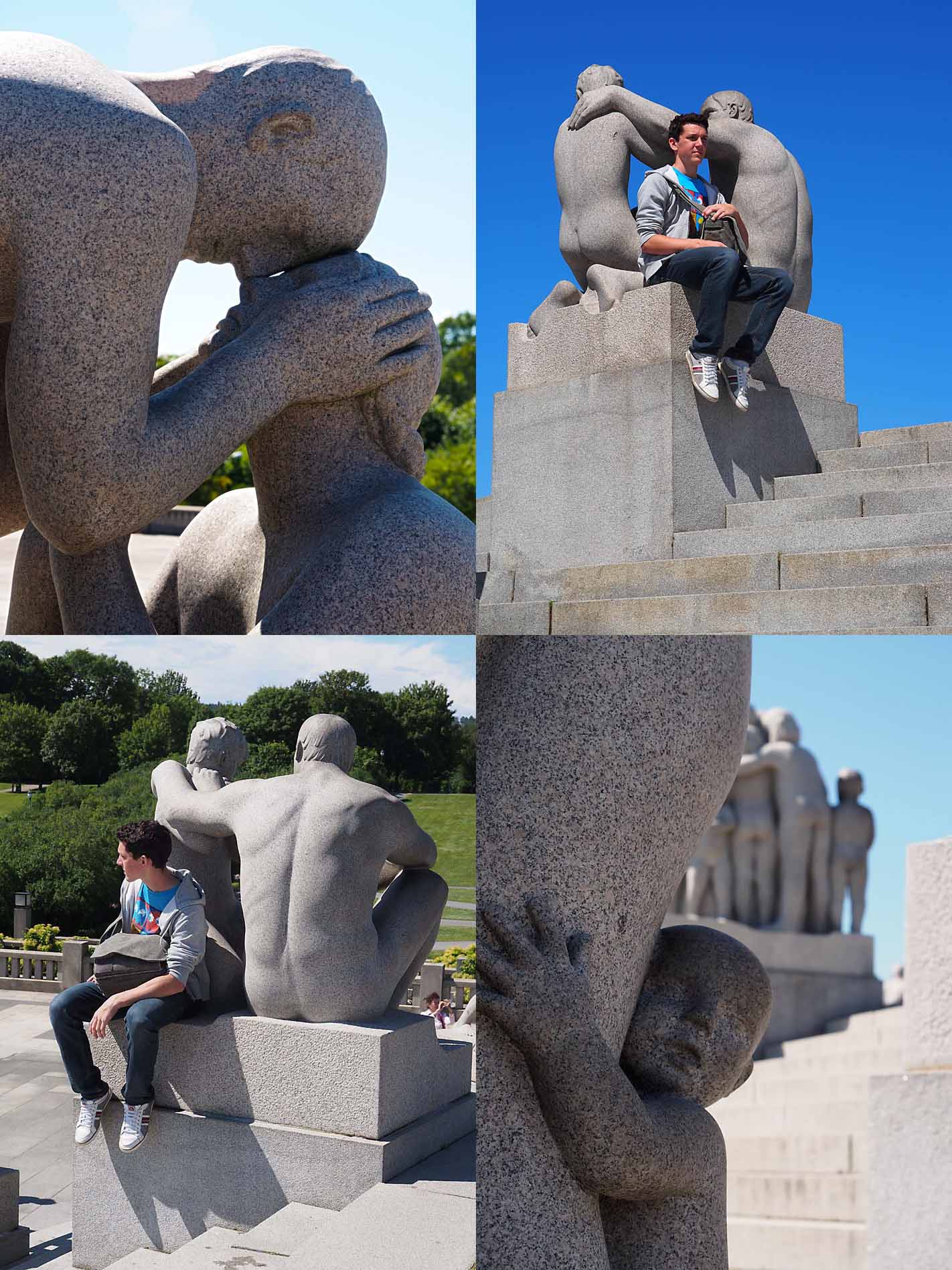
I visited the Vigeland Park last summer. It is the world’s largest sculpture park made by a single artist, and is one of Norway’s most popular tourist attractions.

The unique sculpture park is Gustav Vigeland’s lifework with more than 200 sculptures in bronze, granite and wrought iron. Vigeland was also in charge of the design and architectural layout of the park. The Vigeland Park was mainly completed between 1939 and 1949.
OLYMPUS DIGITAL CAMERA

OLYMPUS DIGITAL CAMERAOLYMPUS DIGITAL CAMERAOLYMPUS DIGITAL CAMERAOLYMPUS DIGITAL CAMERAOLYMPUS DIGITAL CAMERAOLYMPUS DIGITAL CAMERAOLYMPUS DIGITAL CAMERAOLYMPUS DIGITAL CAMERAOLYMPUS DIGITAL CAMERAOLYMPUS DIGITAL CAMERAOLYMPUS DIGITAL CAMERAOLYMPUS DIGITAL CAMERA

View original post

IMG_0323

By now we had settled into our week-long home in the mountains of Andalucia. We were even getting used to driving on the ‘wrong side’ of the road.

Today’s trip was to be our furthest afield, taking a couple of hours by motorway. It is a place I’ve wanted to visit for some time, principally because of the Mezquita (the former mosque) now the city’s  Cathedral- Cordoba.

Having found some parking we made our way into the city, even going past one of the old gates in the city walls, which said ‘you’ve arrived’. We stumbled upon a horse show in the buildings originally used to train up horses for the Spanish Royal family. After winding our way through the narrow streets we came out onto the banks of the River Guadalquivir and the stately old bridge which arrives at the edge of the Mezquita and other notable buildings. Later in the day we had a delightful ‘mooch’ around the old jewish quarter of the city and even found a couple of stylish patios (courtyards) which whetted my appetite for the spring festival that celebrates these – that will have to wait for another visit…..

This slideshow requires JavaScript.

Andalucia.com describes the City:

‘Cordoba was founded by the Romans and due to its strategic importance as the highest navigable point of the Guadalquivir River, it became a port city of great importance, used for shipping Spanish olive oil, wine and wheat back to Ancient Rome. The Romans built the mighty bridge crossing the river, now called “El Puente Romano”. But Cordoba’s hour of greatest glory was when it became the capital of the Moorish kingdom of El-Andalus, and this was when work began on the Great Mosque, or “Mezquita”, which – after several centuries of additions and enlargements – became one of the largest in all of Islam.

When the city was reconquered by the Christians in 1236, the new rulers of the city were so awed by its beauty that they left it standing, building their cathedral in the midst of its rows of arches and columns, and creating the extraordinary church-mosque we see today.

As well as the unique mosque-cathedral, Cordoba’s treasures include the Alcazar, or Fortress, built by the Christians in 1328; the Calahorra Fort, originally built by the Arabs, which guards the Roman Bridge, on the far side of the river from the Mezquita, and the ancient Jewish Synagogue, now a museum. Cordoba’s medieval quarter, once the home of the Jewish community, is called “La Judería” (The Jewry), a labyrinth of winding, narrow streets, shady flower-filled courtyards and picturesque squares such as La Plaza del Potro. In early May, homeowners proudly festoon their patios with flowers to compete for the city’s “most beautiful courtyard” contest.’

 The Mezquita was undoubtedly the highlight of the day, its sheer size (both outside and in) taking my breath away. The inside was a fascinating and beautiful mix of Islamic and Christian symbols and art. The contrast between the relatively simple Islamic decoration and the gold-leaf splendour of the cathedral created within it was startling; and also evidence of the rather brutal way in which the Catholic church muscled in and sought to out do the evidence of Islam. This even extends into the large paved space outside- the original mosque wash basins set into the surface have been filled in and orange trees now fill them with their roots. It was the simpler, but exquisite architecture of the mosque that somehow left the most powerful impression on me, and which also probably appealed more to my own artistic taste…


This slideshow requires JavaScript.

After this we took a tour around the royal palace (the Alcázar de los Reyes Cristianos), that sits nearby and is one of Cordoba’s major landmarks. Originally built in the 8th century as a caliphate residence, this complex of buildings and gardens reached major significance during the Middle Ages, when the Catholic Monarchs Ferdinand and Isabella lived there.

The Alcázar is a composition of massive fortress and royal palace and has some impressive water gardens; complete with statuary, topiarised Box and Yew, a series of arched fountains reminiscent of the Generalife in Granada, and some curious red flowers. I think they were some sort of Celosia but were quite tall and showing distinct evidence of fasciation– when a fault in the growing tip of the plant causes the stems and the flowers to flatten and become fan-like. Apparently some varieties of Celosia are raised especially for their dependably fasciated flower heads, for which they are called “cockscomb” …

This slideshow requires JavaScript.

Rather numbed by the day’s series of wonderful sights, we made our way back along the motorway and mountain tracks and once more to another late night supper by the pool. Could we manage any more beauty on this scale?

Old School Gardener

greenbenchramblings's avatargreenbenchramblings

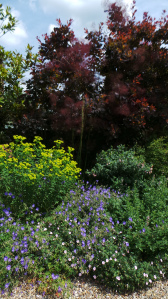
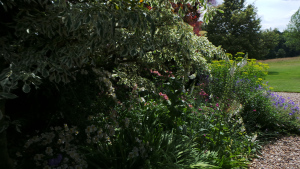
As promised for the third in my week’s posts celebrating my 500th post we go down to Hertfordshire to explore Tom Stuart-Smith’s garden designs at his own home and the home of his sister. The family home at Serge Hill is surrounded by mature planting. The new gardens  designed by T S-S are within its grounds. When these gardens open they are very popular with thousands of visitors making an appearance. It looks very busy and taking photos is difficult as the gardens are only open for one day each year as part of the National Garden Scheme, so people find it in the famous Yellow Book. The friendly herd of Guernsey calves greeted every visitor. We wandered through the gardens around the house which had been there a long time but the influence of T S-S can be seen.

2014 06 22_0703-1 2014 06 22_0671-12014 06 22_0668-1 2014 06 22_0599-12014 06 22_0600-1   2014 06 22_0604-12014 06 22_0601-12014 06 22_0609-12014 06 22_0614-12014 06 22_0612-12014 06 22_0611-12014 06 22_0610-1

In the gardens at Tom’s and his…

View original post 203 more words

I’ve been writing about my recent trip to Andalucia, and in my last post covered the day we spent in Granada and especially the palaces of the Generalife and Alhambra. One of the powerful impressions of this visit was how water can be used to enhance a particular feeling or ambience of a space, so I took a couple of short videos to demonstrate this. The first is from the Generalife and is of a series of fountains in a fairly narrow court or garden. The feeling I get is of an active space, one which you’re encouraged to move through, onwards to the palace…. would you agree?

The second sound is of the Patio of the Myrtles in the Alhambra’s Nasrid Palace; a  simpler, larger space where the barest burble of water adds to the restful atmosphere, and as I said in my previous post, the space is almost like an ‘outdoor cathedral’ in the way that sound is softened… enjoy…

Old School Gardener

Victoria_park_fountain_1Victoria Park in Tower Hamlets, London, has beaten off stiff competition to be crowned the nation’s favourite park in this year’s prestigious People’s Choice Award, with a record breaking 32,694 votes being cast.
In second place was Mote Park, in Maidstone, Kent and in third place was Margam Park, in Neath, South Wales.

In the vote, organised by the Green Flag Award Scheme, which presents Green Flag status to the best open spaces in the country, Victoria Park came out on top against a staggering 1,482 parks and green spaces in the annual poll. The park has won the Green Flag Award on four occasions.

Victoria Park, now a two time winner of the People’s Choice Award, and also runner up in 2013, is London’s oldest and most important historic parks, visited by millions of Londoners for nearly 170 years.

The park is the largest in Tower Hamlets at 86.18 hectares in area and has one of the highest visitor numbers of all the London parks with around 12 million visits per year.

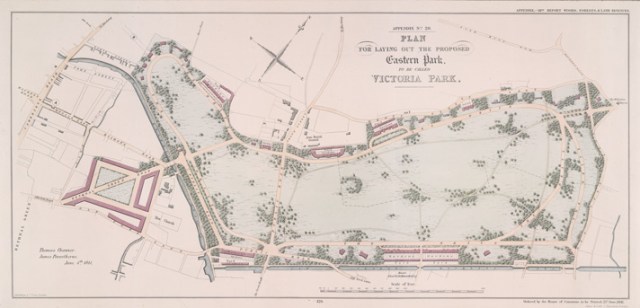
The Park proposed in 1841

The Park proposed in 1841

Wikipedia offers some interesting facts on the Park’s history….

The original Park was laid out by notable London planner and architect Sir James Pennethorne between 1842 and 1846. The land had originally been parkland, associated with the Bishop’s Palace, but by the mid-1800s had been spoiled by the extraction of gravel, and clay for bricks. It was opened to the public in 1845.he Bridge Association can be seen inside these alcoves. A Lido opened in 1936 and reopened in 1952 following damage during the Second World War; it was closed in 1986 and demolished in 1990. The bathing pond, unused for bathing since the 1930s, is now popular with anglers.

In the latter half of the 19th Century, Victoria Park became an essential amenity for the working classes of the East End. For some East End children in the 1880s, this may have been the only large stretch of uninterrupted greenery they ever encountered. Victoria Park’s reputation as the ‘People’s Park’ grew as it became a centre for political meetings and rallies of all types. Although any one could set up their own soapbox, the biggest crowds were usually drawn to ‘star’ socialist speakers such as William Morris and Annie Besant.

 This description by J. H. Rosney, correspondent for Harper’s Magazine (February 1888) evokes a scene:

‘On the big central lawn are scattered numerous groups, some of which are very closely packed. Almost all the religious sects of England and all the political and social parties are preaching their ideas and disputing […]

On this lawn the listener, as his fancy prompts him, may assist on Malthusianism, atheism, agnosticism, secularism, Calvinism, socialism, anarchism, Salvationism, Darwinism, and even, in exceptional cases, Swedenborgianism and Mormonism.  I once heard there a prophet, a man who professed to be inspired by the Holy Ghost; but this prophet ended by being locked up in an asylum, where he will have to convert the doctor before he can recover his liberty.’

The tradition of public speaking in the park continued until well after the Second World War, and was still later reflected in politically oriented rock concerts. And it is still not uncommon for marches or demonstrations to begin or end in Victoria Park. On 26th June 2014, a campaign to revive the Speakers’ Corner at Victoria Park was launched and a campaign to recreate the well-known tradition of free speech and debate in Hyde Park in East London’s Victoria Park was launched earlier this year.

VictoriaParkStitch2Mayor of Tower Hamlets, Lutfur Rahman, said:

“I am delighted Victoria Park has reclaimed its title as the UK’s best loved open space. It is our flagship park and a fantastic asset which is enjoyed by thousands of visitors and residents alike.”
Councillor Shafiqul Haque, cabinet member for culture, added: “The council works hard to ensure all parks and open spaces are maintained to an excellent standard and the borough has six Green Flag Award winning parks to be proud of. I would like to congratulate the parks team for their dedication and commitment as our parks provide essential recreation, play and leisure facilities.”

The park draws in more than 275,000 visitors a year to enjoy festivals and events which attract international superstars and boasts of a year round community programme. Facilities at the park include children’s play areas, boat hire, both summer and winter football pitches, cricket practice nets, bowling greens and tennis courts, as well as several sports clubs.

Three and a half billion visits are made to parks every year across the UK and they are vital part of communities. The Green Flag Award is a way that the public can be assured they are visiting a clean and well managed green space.

Victoria_Park_London,_West_Lake_Panorama_2013

The People’s Choice Top 10 and votes cast were:

1. Victoria Park  (London Borough of Tower Hamlets,England) 13212
2. Mote Park (Maidstone Borough Council, England) 3689
3. Margam Park (Port Talbot County Borough Council, Wales) 3640
4. Cassiobury Park (Watford Borough Council, England) 1695
5. Kings Park (Bassetlaw District Council, England) 1627
6. Whiteknights (University of Reading, England) 1565
7. Bute Park (The City of Cardiff Council, Wales) 687
8. Clissold Park (London Borough of Hackney, England) 642
9. Valentines Park (Vision Redbridge Culture and Leisure Ltd, England) 618
10. Millennium Country Park (Marston Vale Trust, England) 464

Old School Gardener

IMG_9860I mentioned my trip to Bury St. Edmunds a couple of days ago. On the afternoon of that trip we visited a new garden to us, Wyken Hall, just a few miles north east of the town. This is my sort of garden.

After a very good lunch in the on site restaurant, we had a stroll in the sun. An Elisabethan Farmhouse forms the centre point of the range of gardens which include a number of small, but beautifully designed ‘outdoor rooms’ (the veranda,  pictured above, is furnished with 5 original mississippi rocking chairs), as well as a large, well stocked kitchen garden and several herbaceous borders, some cleverly colour-  themed. I particualrly enjoyed the pond with its elevated deck, a beech maze and the Silver Birch glade. The site is also home  to a working vineyard and  is well worth a visit (RHS members free, others £4, open from 2pm most days).

This slideshow requires JavaScript.

Old School Gardener

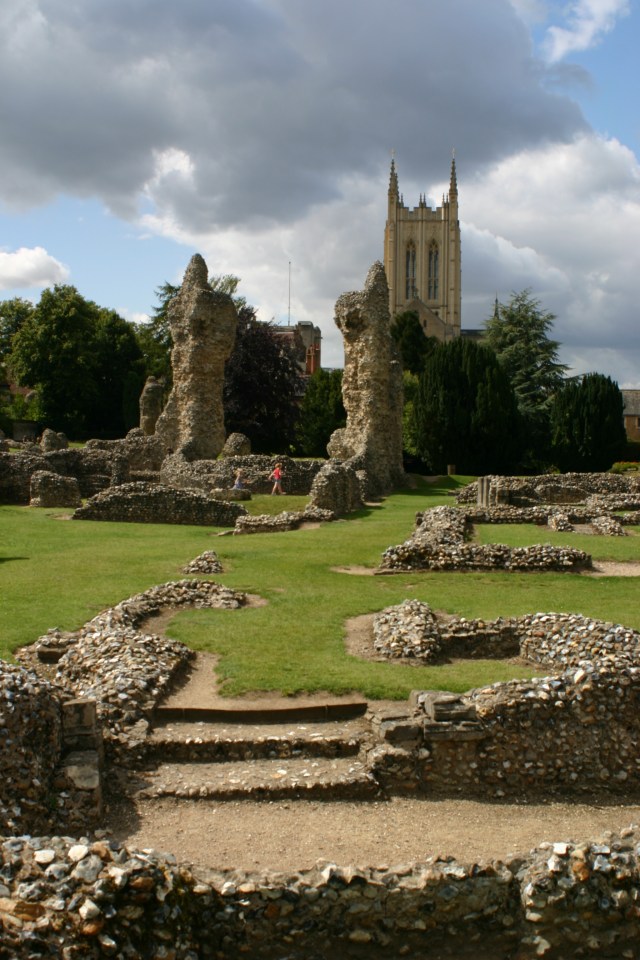
IMG_9810I’ve mentioned Abbey Gardens before, in the context of my role as a Green Flag Award judge. That time- spring last year- the place was looking great in its colourful bedding of bulbs and other spring flowers. I visited it again recently and the formal beds were once again looking superb; bright, clever combinations of flowers provided the sort of formal scheme once extensively used in public gardens and parks around the U.K. However, it’s very labour and resource intensive and has therefore been replaced by lower cost alternatives in many places, but it’s still good to see it done well. And here it IS done very well.

This slideshow requires JavaScript.

Apart from the borders there are other interesting attractions in the gardens, which also house the ruins of the abbey, and it has great views to the Cathedral with its ‘millenium tower’. And while we were there we had a wider walk around this lovely town with its extensive floral displays.

Old School Gardener

green flag stratfordI’m one of 700 volunteer judges for the ‘Green Flag’ Award scheme in the U.K. This involves inspecting parks and open spaces, meeting staff and volunteers and looking at Management Plans and other documents, with the aim of assessing each space against eight strict criteria, including horticultural standards, cleanliness, sustainability and community involvement.

The winners for this year have recently been announced and more parks and green spaces than ever will be flying the Green Flag Award in 2014/15. In total, 1482 parks, cemeteries, universities, shopping centres and community gardens have met the high standard needed to receive the Award.

Among this year’s recipients of the Award are, for the first time, Queen Elizabeth Olympic Park in east London (picture above) and Eaton Park in Norwich. I was a judge for Elmhurst Park in Woodbridge, Suffolk, which has won an award for several years.

Green Flag Award scheme manager Paul Todd said:

‘It’s another record-breaking year for the scheme. This is something well worth celebrating and testament to the efforts of the thousands of men and women, supported by some amazing volunteers, who work tirelessly to maintain the high standards demanded by the Green Flag Award. ‘The parks sector is facing some tough challenges so it is heartening to see that they are committed to maintaining and improving standards. We know how passionate people are about our parks and green spaces and the recent Heritage Lottery Fund report, State of UK Public Parks, highlighted the need for everyone to work together to ensure they are maintained for future generations.’

A full list of the award winning spaces can  be found here.

flag

Old School Gardener

Finding Nature

Nature Connectedness Research Blog by Prof. Miles Richardson

Norfolk Green Care Network

Connecting People with Nature

Discover WordPress

A daily selection of the best content published on WordPress, collected for you by humans who love to read.

Susan Rushton

Celebrating gardens, photography and a creative life

Unlocking Landscapes

Writing, photography and more by Daniel Greenwood

Alphabet Ravine

Lydia Rae Bush Poetry

TIME GENTS

Australian Pub Project, Established 2013

Vanha Talo Suomi

The Journey from Finnish Rintamamiestalo to Arboretum & Gardens

Marigolds and Gin

Because even in chaos, there’s always gin and a good story …

Bits & Tidbits

RANDOM BITS & MORE TIDBITS

Rambling in the Garden

.....and nurturing my soul

The Interpretation Game

Cultural Heritage and the Digital Economy

pbmGarden

Sense of place, purpose, rejuvenation and joy

SISSINGHURST GARDEN

Notes from the Gardeners...

Deep Green Permaculture

Connecting People to Nature, Empowering People to Live Sustainably

BloominBootiful

A girl and her garden :)