Category: Grow your own food


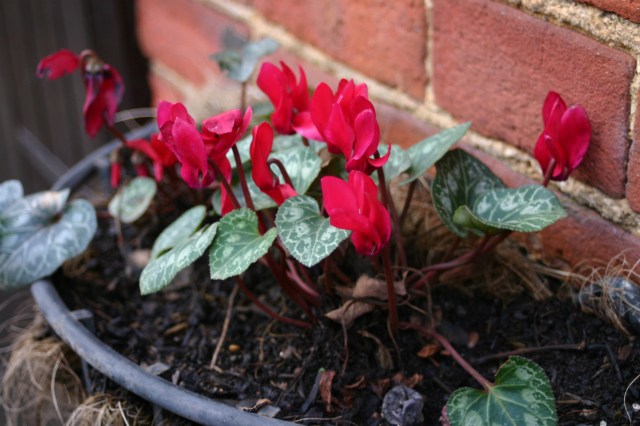
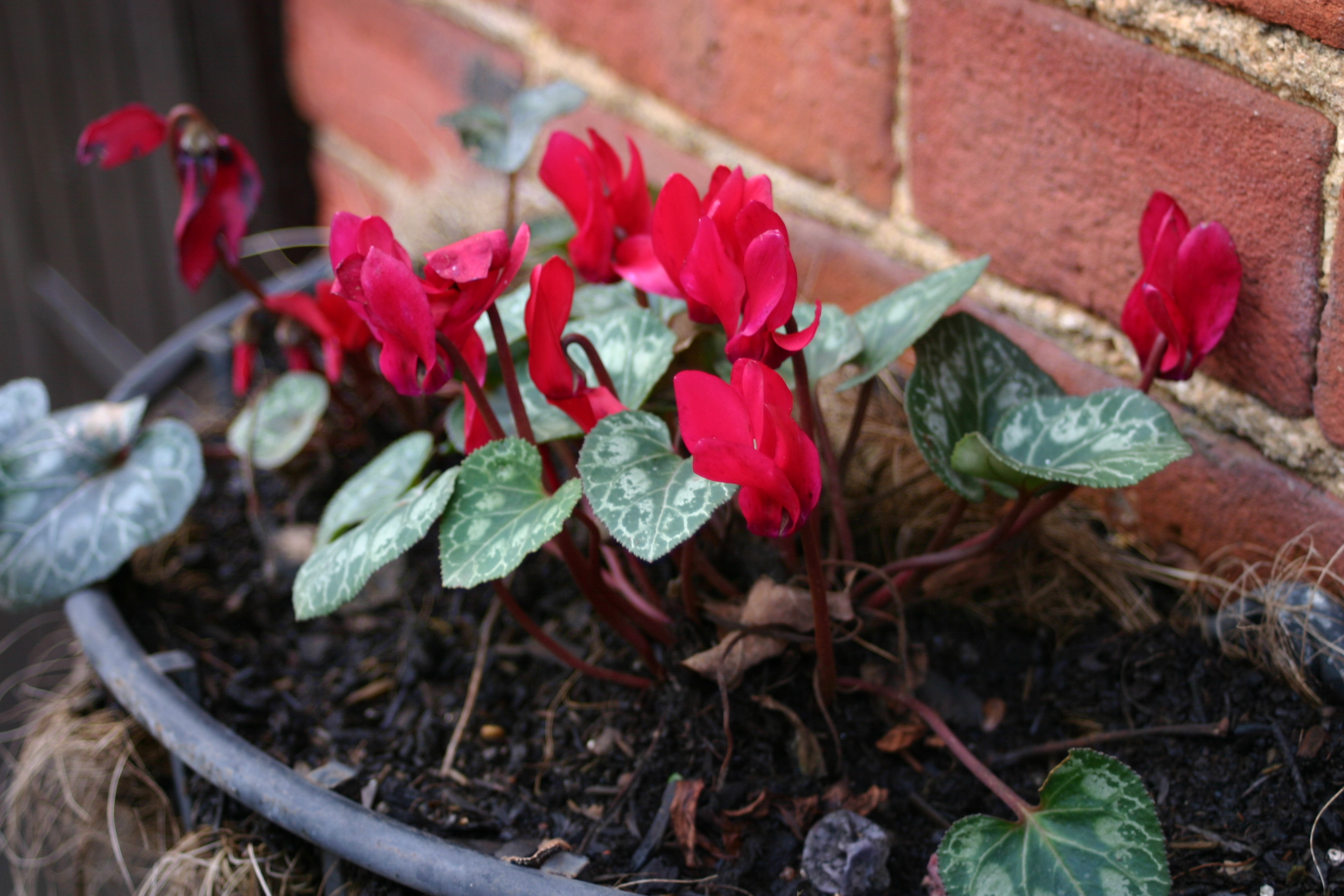
Cyclamen still looking good in the courtyard

To: Walter De Grasse – 30th January 2014

Dear Walter,

Is it too late to wish you Happy New Year?! I hope that you have a great year, especially in your wonderful garden. It seems ages since I last wrote to you, probably because we’ve had all the activity that comes with Christmas and New Year and then gradually getting back into the rhythm of something approaching a normal routine! It’s been an interesting couple of weeks here at Old School Garden, though I must admit that only in the last week have I begun (sometimes with muscles and bones screaming ‘don’t do it!’), to get back into the garden for an hour or two each day (well some days).

Seeds sorted- I'v e been through my supply and filed them in date order for sowing
Seeds sorted- I’ve been through my supply and filed them in date order for sowing

I’ve managed to finally collect the last of the leaves (mostly Oak, that seem to be the last to fall), pruned the Grapevine and Apple Trees and continued to tidy up dead and untidy foliage as new growth starts to emerge. I also sowed my first seeds the other day; a mixture of early veg (Calabrese and Leeks) with some annuals and perennials. It was quite pleasing to review my seed purchases alongside spare seed from earlier years and to start to place the packets in my seed box in date order for sowing. I’m fully expecting  my dining room to soon be full of seedlings in the process of growing on prior to putting outside in the cold frame or greenhouse (or even under cloches/fleece). I’ve purchased some rather more exotic annuals and perennials this year as well as ordering some ‘heritage’ varieties of vegetable from the Garden Organic Heritage Seed Library. Oh, and I mustn’t forget my Christmas gift of some carrot seeds called ‘Nigel’!

Greek Squashes grown last year- a 'heritage' variety, more of which I plan to grow this year
Greek Squashes grown last year- a ‘heritage’ variety, I’m planning to grow more ‘heritage veg’ this year

I’ll tell you more about these different plants as they get growing, but I’m excited about the greater diversity of food and flowers I’ll be growing this year. I should by now have done plan for the kitchen garden, but haven’t managed this, partly because I’m a little stumped as to how to do it now that I’m aiming to grow a wider range of smaller quantities in successional sowings and mixing in more ornamentals too. I must devote a few hours to thinking this one through – I’ll put the final version in a post soon – hopefully!

Though I know that you’ve been more affected by me by the wave of storms and flooding we’ve been having in the UK, but even with this, the lack of any really cold spell makes me wonder if we’re going to get a ‘real winter’ this year! As testimony to the mild weather I’m amazed at how the Melianthus is still putting on new foliage and plants like the Scabious and Fuchsia I have in the courtyard are still flowering!

I’ll be putting in a few more hours outside as the days continue to lengthen, including finishing off pruning the roses and moving and dividing some herbaceous plants I didn’t get round to in the Autumn. Well I say that, but I may have to curtail my own gardening time in the next few months as I’ve taken on some new teaching work at a local high school (working with Foundation skills students to develop their school garden and especially food growing). I’m off there later today to work with two groups, focusing on what they’d like to grow in their plots, which we can hopefully get into soon and begin the work of preparing the ground etc. The School Garden is a potentially wonderful resource, with two large greenhouses with electrically operated vents and water supplies, lots of tools and equipment and a south-facing aspect with what seems to be good soil- once the weeds have been cleared and its been turned over and fed of course!

I’m also hoping to repeat my Garden Design and Grow Your Own Food courses for adults (assuming we get the numbers required). These are due to kick off next week, and it looks hopeful that they’ll run.

I’m also carrying on with supporting the local Primary school in its ‘Learning Outside the Classroom’. In fact as I write this the School is being inspected for its latest accreditation on it’s outdoor work, hopefully an addition to its ‘level 5’ achievement in the RHS Campaign for School Gardening. I’ll be getting over to the School after half term to help them get seed sowing underway and hopefully getting the youngest children involved through use of the ‘pallet planters’ we built last year, plus a mini greenhouse for propagation, all of which can be placed near to their classrooms.

I guess that my support for individual households in food growing may also pick up soon, as I’ve promised help to  three of the students on the first ‘GYO’ course that ran in Foulsham last Autumn. Sadly the ‘Master Gardener’ programme in Norfolk is about to be reduced due to the ending of some grant funding, but I’m likely to continue to be involved in the Breckland area, where the local Council is supporting the work.

No doubt you’re well ahead in your plot? I’d love to hear what you’re up to and your plans for the year. I’m contemplating repeating our opening of Old School Garden to the public once more, as this was such an enjoyable day and one which raised funds to support worthy local projects – most of which involve gardening. Maybe you and Ferdy would like to join us – it’ll probably be in late June/early July? Well, I’ll sign off for now, wishing you and her well and looking forward to hearing from you.

all the best,

Old Schoool Gardener

PicPost: Sherry Amour

Grapevines in Jerez, Spain

gooseberry

‘Now I am in the garden at the back…- a very preserve of butterflies, as I remember it, with a high fence and a gate and padlock; where the fruit clusters on the trees, riper and richer than fruit has ever been since, in any other garden, and where my mother gathers some in a basket, while I stand by, bolting furtive gooseberries, and trying to look unmoved.’

Charles Dickens – David Copperfield 1850

Old School Gardener

An inspiring movie about how to create food growing areas using recycled bottles, buckets and other containers.

Old School Gardener

PicPost: Foodscape

A community growing area in Geneva, Switzerland, where individual plot holders trade food crops….

Old School Gardener

canwefeedtheworld's avatarOne Billion Hungry: Can We Feed the World?

ID-100133984A recent Montpellier Panel Briefing Paper, Innovation for Sustainable Intensification in Africa, highlights the need for change in the way we innovate and do research if we are to increase food production while protecting natural resources (in other words sustainable intensification). Added to this need for change is the increasing focus of donors and civil society to measure success as the level of impact. International aid has come under criticism for failing to ensure long-term impact of research investments.

In a new report by Joanna Kane-Potaka of the International Crops Research Institute for the Semi-Arid Tropics (ICRISAT) entitled The Story Behind the Success, 10 case studies are presented, which exemplify how research for development (R4D) can be translated into real results and uptake by people on the ground.  Some broad lessons from the case studies were the need for monitoring and evaluation to feed back into the uptake…

View original post 702 more words

PicPost: More Greens Dear?

Bravo S.BIAGGI/sculptural landscapes! Called “Future Feast,” this table is the designer’s symbol of hope, and is resting on local reclaimed redwood legs, using the technology of green roofs for its’ living surface: http://bit.ly/1cumYGk

Via Urban Gardens. Photo by Saxon Holt Photography.

Old School Gardener

Square Foot Gardening

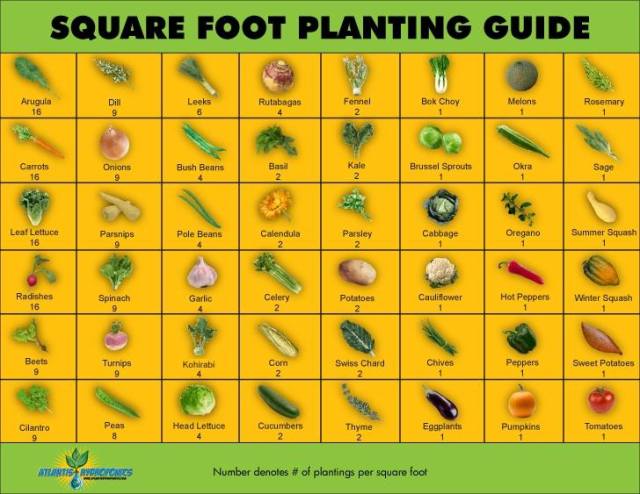
Get planning your veggy plot for 2014!

Here’s a handy guide to the numbers of food plants to grow per square foot. This is a useful technique for small food gardens or containers but can also be used in larger plots to ensure a mixture of veg in smaller quantities, so avoiding gluts.

Old School Gardener

I recently attended a lecture by Sir Gordon Conway, the gist of which I hope to reflect on and share soon- its all about ‘sustainable intensification’ of food growing as the way forward to tackle global hunger…fascinating projects and innovations from around the world point the way. Here’s an article that captures the approach.

canwefeedtheworld's avatarOne Billion Hungry: Can We Feed the World?

ID-10088298Professor Sir Gordon Conway and Katy Wilson highlight the need for innovative solutions to food insecurity

Article originally appeared on The Economist Insights

With global population expected to reach 9.6 billion by 2050 the world faces unprecedented demands on its resources – not least water, biodiversity and land. Add to this the likely impact of climate change, and the challenge of feeding a world where some 870 million people are already chronically hungry appears a difficult one.

Governments, NGOs, academia and the private sector are searching for long-term sustainable solutions to global food insecurity and future resource scarcity.  One solution, first proposed by Jules Pretty in the 1990s, and backed by the Montpellier Panel, a high-level group of European and African experts in the fields of agriculture, trade, policy, and global development, is sustainable intensification. At its heart sustainable intensification is about producing more food, more efficiently.

Achieving global…

View original post 640 more words

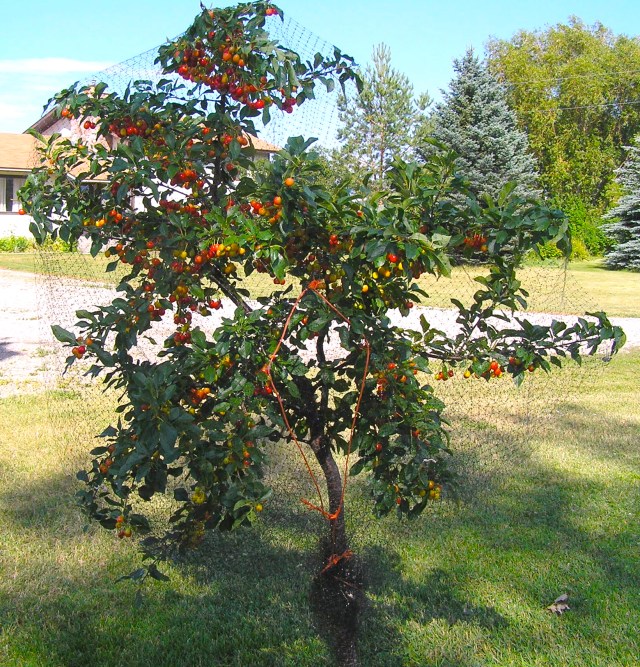
Cherry on the treeHere’s the final article by one of the participants in a ‘Grow Your Own Food’ course I ran recently in Foulsham, Norfolk. I’m planning to run another course starting in February (Tuesday mornings for 6 weeks) as well as another one focused on helping participants use design to reshape their own gardens (Monday evenings at Reepham, Norfolk). More details can be found at www.reephamlearningcommunity.co.uk

Cherry Trees

Guest article by Ann Blezard

Choose a sunny spot for your tree (approx. 6 hours direct sunlight a day). Acid cherries will tolerate some shade. Cherries grow particularly well in southern and central England.

Cherries will grow well in almost any kind of soil, but avoid soil that stays soggy for extended periods. Spreading a layer of mulch over the soil around your tree will help it grow better.

Some cherry trees cannot pollinate themselves and will need pollination partners. Others are self- fertile.

It is preferable to grow cherries from a rootstock as it can take 10 years or more to obtain the first fruits from a cherry grown from seed.

Cherries are now available as a dwarf rootstock, growing to approx. 10ft, instead of the usual 40ft, allowing you to cover the tree with bird netting to protect your crop.

Cherry trees should be planted between November and March.  Mulch in late February with well-rotted organic matter.  Keep trees well watered during the early stages of fruit development. Apply potash if fruiting is poor.

Cherry trees flower early in the year, the flowers will need protecting from frost. Cover with horticultural fleece if frost is predicted,  however  remove during the day to allow access to pollinating insects.

Sweet cherries will fruit on one-year old and older wood. Formative pruning takes place in spring as the buds begin to open. Established trees are pruned from late July to the end of August.

Cherries are not totally disease free. Sweet cherries are susceptible to a disease called brown rot.  This can be prevented by pruning in between branches to allow good air flow, be scrupulous about cleaning up blossoms, fruit and leaves that might have been affected. Sulfur is an organic method for brown rot. Spray when the flower buds are pink, when the flowers are open, when the petals fall and once again about 14 days later.

Cherries can also be affected by Silver Leaf, a fungal disease of the wood and leaves, causing a silvering of the leaves and death of the branch. The fungus produces most of its infectious spores in autumn and winter. Prune susceptible plants in summer when not only are there fewer spores, but pruning wounds, the main point of entry for the spores, heal more quickly.

Cherry blackfly is an aphid that sucks sap from the foliage of fruiting cherries during spring and early summer. Attract  natural predators like blue tits or use soap based sprays before the leaves curl.  Cherry blackfly will not affect fruiting, but looks unsightly

Cherries will shed fruit that they do not have the resources to bear, known as cherry fruit drop or cherry run off. Pruning trees to give an open canopy, maximising light to the leaves and increasing the photosynthetic rate is likely to minimise the fruit drop. Thinning the cherries is also an option, creating a balance between the supporting leaf and the fruit, thus increasing fruit retention.

The Evans Cherry variety showing ripening fruit

Examples of cherry varieties are:-

Sweet Cherry- ‘Stella’ : Black, large , rich, high quality fruits, regular heavy crops; self-fertile. Late season; harvest  in July.

 Acid Cherry- ‘Morello’: Self-fertile , dark red fruits, excellent for preserves and tarts. Attractive blossom, heavy crops, late season; harvest  July and early August.

SWEET CHERRY COBBLER

(Serves 8)

Ingredients

350g Caster Sugar

45g Butter, melted

125g Plain Flour

¼ tsp Salt

1 tsp Baking Powder

120ml Milk

1 tbsp Cornflour

225ml Boiling Water

500g Fresh Cherries, stones removed (frozen cherries may be used)

 Method

Preheat oven 180 deg C/Gas 4

1) Mix 150g sugar, butter, flour, salt, baking powder and milk together. Place cherries in bottom of 23cm square tin. Spread topping over cherries.

2) In small bowl combine 200g sugar and cornflour, stir in boiling water, pour mixture over topping.

3) Bake for 45 minutes, serve warm with vanilla ice cream.

Bing cherries- the most widely grown variety of sweet cherry in the U.S.A.

Bing cherries- the most widely grown variety of sweet cherry in the U.S.A.

Finding Nature

Nature Connectedness Research Blog by Prof. Miles Richardson

Norfolk Green Care Network

Connecting People with Nature

Discover WordPress

A daily selection of the best content published on WordPress, collected for you by humans who love to read.

Susan Rushton

Celebrating gardens, photography and a creative life

Unlocking Landscapes

Writing, photography and more by Daniel Greenwood

Alphabet Ravine

Lydia Rae Bush Poetry

TIME GENTS

Australian Pub Project, Established 2013

Vanha Talo Suomi

The Journey from Finnish Rintamamiestalo to Arboretum & Gardens

Marigolds and Gin

Because even in chaos, there’s always gin and a good story …

Bits & Tidbits

RANDOM BITS & MORE TIDBITS

Rambling in the Garden

.....and nurturing my soul

The Interpretation Game

Cultural Heritage and the Digital Economy

pbmGarden

Sense of place, purpose, rejuvenation and joy

SISSINGHURST GARDEN

Notes from the Gardeners...

Deep Green Permaculture

Connecting People to Nature, Empowering People to Live Sustainably

BloominBootiful

A girl and her garden :)