Category: Grow your own food


The blckbirds nesting among the vine in the Courtyard Garden at Old School Garden- picture by Gabbie Joyce and Paul Hill

The blackbirds nesting among the vine in the Courtyard Garden at Old School Garden- picture by Gabbie Joyce and Paul Young

To Walter Degrasse

Dear Walter,

It’s coming to the end of one of the driest and hottest July’s we’ve had in nearly 10 years. Today looks like it will be the hottest of the year to date – somewhere in the upper 20s if not low 30s Celsius in our corner of England (and higher elsewhere)! Having spent a couple of hours this morning planting out the last of my summer annuals, thinning and transplanting wallflowers and planting some leeks, I’ve escaped the worst of the heat and come inside to drop you a line!

As you can imagine, the last few weeks have been very busy on several gardening fronts. I guess the most significant event was our first garden opening last week, which I’ve done a separate article about. This was great fun and I was very pleased with the way the garden looked and the many positive comments from the 70+ visitors. We raised over £300 too which will be going to three local ‘good causes’.

One of these is ‘Master Gardener’, where I continue to offer my voluntary advice and help to those starting  to grow their own food. Gabbie, the local co-ordinator, has come up with the idea of using the money we raised as a special fund to be tapped into by Norfolk Master Gardeners to purchase small items to help their households, groups and other new growers- I’ll tell you more about this in due course. I’ve attended a few events recently and had fun talking with a range of people about their food growing experiences and maybe even helped to recruit a few new households. The latest event was the ‘Destination Aylsham’ Fun Day yesterday, which I helped out at with fellow Master Composter Sally Wilson- Town and co-ordinator David Hawkyard. Well over 70 people came over to discuss composting and ‘growing your own’, though my period at the stall seemed to coincide with the quieter, ‘wind down’ phase towards the end. Still,  no matter, we seem to have promoted composting and food growing to a few more people – and I managed to sell some plants and produce too!

I’ve done my last session this academic year at Cawston Primary School, where we had great fun harvesting potatoes, broad beans and a few onions. In truth, with the exception of the Broad Beans, these were harvested a little too soon, because this was the last opportunity for the children to garden before their holidays which begin on Thursday. Still, the potatoes were of a good size and a reasonable quantity and will be used in the school kitchen this week along with the beans and some of my donated home grown produce (we’ve had some enormous Calabrese and Cauliflowers lately). The children also continued to dig out the old compost bins so that we can make a new start there in the Autumn. However, it’s disappointing that we’ve not been able to keep on top of the weeding in the bog garden around  the wildlife pond (which is also looking extremely dry), as many weeds have now set seed, so that will be an added problem for us in the Autumn, when  hopefully the soil will be damper and weeding easier. However, the Outdoor Learning Co-ordinator , Sharon, tells me that the pond has been a real winner with the children and has yielded examples of a wide range of insect and other wildlife.

The gardens at Gressenhall Farm and Workhouse Museum are struggling in the sun and heat, but the planting and care taken earlier in the year by myself and other volunteer gardeners seem to be paying off. The rambling rose ‘Rambling Rector’ in the Wildife Garden looks particularly splendid as it covers the arbour and adjoining wall, where I and my friend Steve spent an hour or two pruning and tying in last autumn.


At home, Old School Garden is also struggling in the heat, and evening watering sessions of hand held spray and sprinkler have lasted a good few hours in recent weeks – and still many new plantings are wilting! Anyway, the long borders are looking great, though with a few gaps after shearing back the oriental poppies. I’m hoping that my strategically placed pots of tender perennials and plantings of annuals will soon plug these and the overall show will reach a crescendo in a few weeks time. The kitchen garden has proved to be very productive to date, though we  continue to get problems with pests such as pigeons and to a lesser extent blackbirds and aphids. I’ve noticed a few Cabbage White butterflies recently, but hopefully with my planting of Nasturtiums and netting of my Brassicas, we’ll not be too badly affected by their hungry green caterpillars! So far we’ve had crops of :

  • Potatoes – though I had to lift many of these a bit early as blight had started to affect them

  • Calabrese  -huge heads from the F1 variety ‘Beaumont’

  • Cauiliflowers- though a few heads were ‘blown’ as we couldn’t keep up with the supply!

  • Mange Tout – despite early pigeon attacks!

  • Celery – too much to cope with!

  • Carrots – a reasonable first crop though many were twisted and misshapen, possibly a combination of too rich and stony soil

  • Lettucs – a few varieties from the garden have tasted good along with some ‘cut and come again’ varieties in pots.

  • Tomatoes – just a few of the smaller, golden variety to date, but plenty on the plants in the greenhouse, ready for swelling and ripening.

  • Courgettes – the start of what promises to be a bumper year, especially as my friend Steve has given me four ‘Patty Pan’ plants to go with the two green varieties he’d already supplied!

  • Strawberries-  you remember I’d started the process of relocating the strawberry bed? Well the new plants seem to have taken well, though, as youd’ expect I didn’t let them flower or fruit this first year, but the old plants I left hoping for ‘one more year’ of fruit were a disaster. Very few fruits and what there were the blackbirds, slugs and mould seem to have taken. So for the first time in many years I actually bought two punnets of strawberries!

  • Raspberries – these are coming on well and we’ve enjoyed a few days supply so far, though the pigeons, despite my various ‘bird scarers’, seem to be enjoying themselves and breaking off the fruiting stems as they use them like ladder to go up and down the canes!

  • Garlic – most now harvested but some along with the onions are just drying  out before storing

  • Broad Beans – a good crop of a rosy pink variety, though when cooked their attractive colour seems to turn a rather dull grey, but they taste just fine!

  • Gooseberries- first bush harvested , two red varieties to come this weekend

  • Blackcurrants- two bushes harvested and a lot frozen, with one more to come shortly

Later today, I’ll be sowing some further crops of Lettuce, Mange Tout, Carrots and Cabbage as well as some Pansies I got from the Royal Norfolk Show and which  should provide us with some autumn and winter colour. That’s if it is not too hot of course.

Well, old friend, I see that it’s about time for lunch, so I’ll close for now and wish you and your good wifeFerdy’ well. By the way, would she mind terribly if I called her by her second name, which I find so much more attractive? Lise seems to capture her elegant beauty a lot more than that  nickname she got all those years ago at University! We’re looking forward to seeing you both here at Old School Garden in a week or two’s time – hopefully the garden will still look good and the weather will mean we can enjoy some warm summer evenings on the terrace with some good food, and even better wine!

all the best

Old School Gardener

Other posts in this series:

Dear Walter…. letter from Old School Garden 21st June 2013

Dear Walter….letter from Old School Garden, 20th May 2013

Dear Walter….letter from Old School Garden, 18th April May 2013

Dear Walter….letter from Old School Garden, 11th March 2013

Dear Walter… letter from Old School Garden: 15th February 2013

If you’ve enjoyed reading this post and others on this blog, why not comment and join others by signing up for automatic updates via email (see side bar, above right ) or through an RSS feed (see top of page)?

'Friend or foe?'

‘Friend or foe?’

‘Prevention is better than cure’ applies to many situations in  life and controlling the pests and diseases in your garden is one of them.

As part of the ‘Master Composter’ project providing advice to families and groups about using green waste to make compost and enrich their soil, I’ve recently been sent a useful factsheet about organic pest and disease control. And pest control – specifically pigeons and blackbirds – is presently keeping me well exercised in the garden! More positively, I don’t seem to have had much of a problem with either slugs and snails, aphids or caterpillars – so far. A harsh winter and dry spell may be part of the answer. Anyway, I thought I’d share the basics of this factsheet with you (plus a few thoughts of my own).

Here are 7 tips for effective action to prevent your crops and plants being trashed by those not – so – welcome forces of nature!

1. Healthy soil

Too much fertiliser and your plants will be soft and sappy – providing a lovely lunch for pests and encouraging you to spray to deal with them. Not good practice. Better to feed your soil with a ‘wholefood’ diet of garden compost and leaf mould rather than those ‘fast food’ fertilisers designed to feed the plant and not the soil.

2. Resistant plants

Choose varieties of plant that can withstand the attack of pests and disease; e.g. blight resistant potatoes such as ‘Remarka’ and Sarpo’ and root aphid resistant lettuces like ‘Milan’.

Leaf mould - a great way to improve your soil

Leaf mould – a great way to improve your soil

3. Rotate your crops

Focusing on the veggy garden, crop rotation is an essential technique to build soil fertility and controlling the build up of pests and diseases.  Divide your veg into at least four groups (those in the same or similar families and having similar feeding habits) that stay together each year, but move onto another part of the garden  every spring.

4. Barriers and scarers

Keeping pests out of your crops and off your choice plants is probably the most effective way of reducing if not preventing damage. There is a range of different barriers and scarers suited to different types of crop or plant:

  • Fine mesh netting  – works well for carrot root fly and pea moth as well as pretty well most pests that attack cabbages (flea beetles, cabbage white butterfly, leaf weevils, birds and white fly).
  • Other Netting – useful for preventing birds eating/ damaging fruit and vegetables, but remember it should be tightly drawn to the ground to avoid any gaps – my own experience is that pigeons and blackbirds are past masters at finding the smallest of holes and working their way in! Netting can also prevent cabbage white butterflies from laying their eggs on Brassicas, but the gauge of the net needs to be fine enough to stop them. Also, having used hard plastic mesh netting for a while, I’d suggest investing in those made of softer, string -like material (nylon?), as this will drape more easily over crops.
  • Cabbage collars  – a collar of carpet underlay around the neck of  a young cabbage will prevent cabbage root fly from laying its eggs at the base of the cabbage.
  • Bottle cloches – made out of plastic bottles (tops and bottoms cut off) and placed over newly planted vegetables will prevent them being eaten by slugs or anything else that takes a fancy to them.
  • Small gauge chicken wire – always useful, this can be placed over newly sown peas to stop them being eaten by mice while germinating or being scratched up by cats. Wrapped around flowering bulbs, it can prevent them being dug up by squirrels.
  • Bird scarers – a ‘humming line’ (sometimes called buzzwire) criss – crossed over veg and which vibrates in the slightest of breezes will help scare off birds. You can come up with any number of other devices that use the wind to create noises or flashes of light and colour that will put off the birds, but move them around, as birds get used to things being in the same place and will eventually ignore them. I’ve just bought (for the princely sum of £2.50) a colourful windmill that I’ve stuck atop a cane and put over a spot where pigeons come to pinch my raspberries – we’ll see how effective that is! Another method is to tie up old CDs/DVDs to lines between canes to let them flash and move in the breeze. I’ve also seen some pretty realistic models of Owls and other birds of prey and a host of other devices that you can set up to ward off other birds – I’m not sure if they are effective, though.
A beer trap will entice slugs

A beer trap will entice slugs

5. Traps

Beers traps for slugs do work. Codling and Plum moth traps hung from apple trees and other ‘sticky’ traps can also be effective, using  a pheromone stuck to a sticky base which attracts male insects and gets them stuck in the glue. Greasebands painted around the trunks of apple trees in autumn will prevent the wingless female winter moth from climbing up the tree to mate. Sticky glue is also useful for glasshouse staging if you have a problem with ants. Sticky yellow bits of card hung up in greenhouses can help reduce the white fly population.

6. Beneficial bugs

These are your best friends when it comes to controlling pests in your garden. Planting simple annuals among the veg (e.g. Marigolds, Californian poppies), will attract  a wealth of beneficial insects  like ladybirds and hoverflies which will gobble up your aphids. I’ve put some marigolds alongside my tomatoes in the greenhouse for this reason and also planted Nasturtiums which can attract cabbage white butterflies as a diversion away from my Brassicas.You can also plant a few native shrubs and herbaceous perennials (e.g. hazel and hardy geraniums), create a pond, leave a small pile of logs in the corner of the garden or create a ‘bug hotel’  and feed the birds throughout the winter. There are other ‘biological controls’  that you can buy to deal w ith specific problems- little packets of some of the bugs for use in the greenhouse as well as nematodes that can attack some of the more troublesome pests.  Any or all of these will keep enough wildlife in your garden to eat literally thousands of pests and their eggs!

'Bishybarnabee' - or a ladybird- will eat loads of aphids at one sitting

‘Bishybarnabee’ – or a ladybird- will eat loads of aphids at one sitting

7. Keep it clean

Think ‘clean cut’. If you’re removing a dead or diseased branch from a tree (e.g one with coral spot), make sure you cut into healthy wood and always wash your tools in boiling water or wipe them with surgical spirit afterwards. Scrub out pots and give your greenhouse a good scrub every winter to get rid of over wintering pests. Maximise air circulation by correct pruning of plants and leaving  just a little more space between plants will help control fungal diseases, though his needs to be balanced of course against closer planting to keep weeds under control! Controlling powdery mildew in Roses is something that benefits from greater air circulation, for instance. Finally, and most importantly, be vigilant and check your plants regularly so that any pests and diseases don’t get a foothold. For example, start checking the centre of any Gooseberry bushes in April for Sawfly eggs and larvae. Also be wary of accepting gifts of onion and cabbage plants, as they may well carry onion white rot or clubroot respectively!

So, not a spray in sight – rather planning, forethought, observation and simple control measures can help you beat those garden pests and diseases!

Source: Master Composter Manual Factsheet 4, Jojo Norris, Garden Organic 2013

Old School Gardener

If you’ve enjoyed reading this post and others on this blog, why not comment and join others by signing up for automatic updates via email (see side bar, above right ) or through an RSS feed (see top of page)?

redcurrantsIt’s the time of year to harvest red currants around here and this week’s question comes from Frew T. Bunn of Oldham:

‘Our red currant bushes always lose their leaf colour in July or August, but the ribs of the leaves always stay green – are they suffering from some sort of disease?’

By the summer months red currant bushes are starting to lose their lustre, but the fact that the leaf ribs of yours remain green suggests a shortage of Magnesium, one of the ‘trace elements’ of importance to plant health. Commercial ‘Epsom Salts’ applied in the spring at around 65 grammes per square metre should improve matters, so try this next year.

My blackcurrants look like they'll give a good crop again this year

My blackcurrants look like they’ll give a good crop again this year

On the subject of currants, my black currants are dripping off the three bushes I have here in Old School Garden, and the family of blackbirds nesting in the courtyard is relieving us of some – literally pecking them through the netting of my too – small fruit cage!

Have you ever thought of growing white currants?

They are apparently not difficult to grow and seem to have returned to favour in recent years. Like red currants (and black currants) they fruit on old wood. ‘White Versailles’ is a popular and reliable early variety, the first white currant to crop. It produces a heavy crop of large, shiny, soft pale yellow/white berries in long heavy trusses during mid-late summer. The fruit is deliciously sweet, not as acidic as red currant, so is great for eating fresh or using for a wide range of culinary purposes. White Versailles has a vigorous, upright bushy growth habit with attractive arching canes and serrated three lobed pale green leaves. It is a very reliable cropper year after year, is self fertile so you only have to grow one bush if you want to – eventual height and spread: 1.5m (5ft).

I’m thinking that I might reorganise my bush fruit cage and substitute one of the three blackcurrant bushes with a white currant, just to get a bit more variety and perhaps less of a storage problem, with the glut of black currants we’ve had in the last couple of years!

'White Versailles' - I thinki I'll try to get hold of one of these to replace one of the blackcurrant bushes

‘White Versailles’

Old School Gardener

If you’ve enjoyed reading this post and others on this blog, why not comment and join others by signing up for automatic updates via email (see side bar, above right ) or through an RSS feed (see top of page)?

PicPost: Vine View

palletsSince sharing pictures and ideas for making garden things from pallets or other recycled wood, I’ve come across a super Facebook site ‘1001 pallets’ – take a look and you won’t be disappointed! For now here are a few more cunning ideas for projects from pallets – just click on the images for links to tutorials or instructions.

Do you have any of your own pallet projects to share?

Links:

1001 pallets

How to tell if a pallet is safe for reuse

Other articles about using pallets in the garden:

Pallet Projects – more creative ideas

Polished Primary Pallet Planters

Pallets Plus –  more examples of recycled wood in the garden

Pallet Power- the sequel

Pallet Power

Raised beds on the cheap

Old School Gardener

If you’ve enjoyed reading this post and others on this blog, why not comment and join others by signing up for automatic updates via email (see side bar, above right ) or through an RSS feed (see top of page)?

Learning Gateway

I’m involved in this exciting new learning opportunity in a local Norfolk village, offering courses in growing food and garden design.

If you’re around come along and see me:)

Lupins are useful green manures in light acid soils

Lupins are useful green manures in light acid soils

I’ve written a couple of articles about green manures and today I thought I’d set out a handy guide to some of the commonest types and their pros and cons.

When choosing a green manure it’s important to check:

  • Your soil – some green manures prefer heavy soil, and others lighter soil, some alkaline, some need more acidic conditions.
  • Hardiness of the green manure – not all green manures are winter hardy.
  • Growing period– choose a green manure that will fit in with what you want to grow next. it must be able to germinate and mature to fit in with your growing plans.
  • Crop rotation– choose a green manure that is compatible with your crop rotation. For example Mustard is a Brassica so should be moved around in rotation with that sort of crop. Most of the others listed below are Legumes (peas/beans), but Buckwheat, Phacelia and Hungarian Grazing Rye can be used more flexibly as they aren’t members of one of the main vegetable groups.
  • Sowing time– success depends on sowing the green manure at the right time.
  • Following crop – some green manures, once turned into the soil, can inhibit seed germination for following crops. Avoid growing green manures in areas where you’ll be sowing crops with small seeds like carrots.
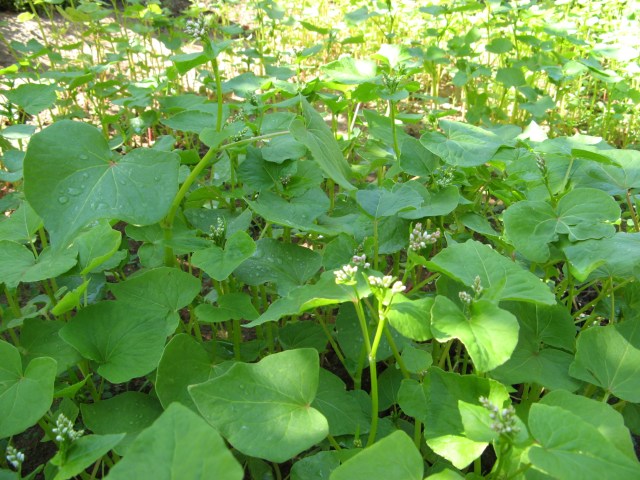
Buckwheat has flowers that are attractive to beneficial insects

Buckwheat has flowers that are attractive to beneficial insects

Sow green manures from spring to autumn depending on the variety, and sow broadcast if they are small, or in rows if larger. Rake the ground to a fine level tilth – prepare a good seed bed as you would for other crops. Leave the green manure to grow until three or four weeks before you want the ground for something else, or until the green manure approaches maturity, whichever comes sooner. Green manures vary in their time to reach maturity; e.g. Mustard goes over rapidly as it flowers, so it’s best dug in once the first flower buds show. Other annuals can be dug in at or just before flowering. Clovers and other perennials can be cut down after six months or so to encourage re – growth.

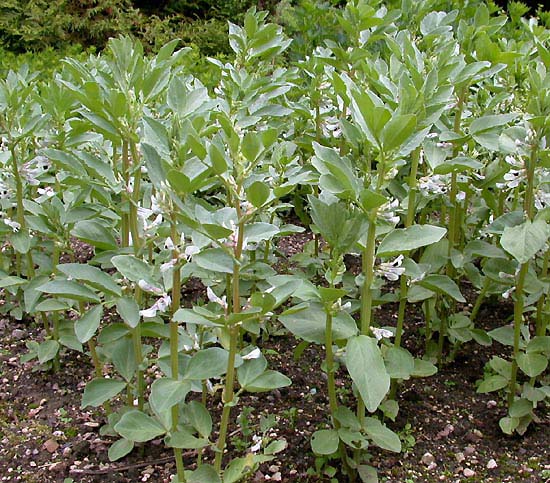
Field Beans prefer heavy soils and can be over wintered

Field Beans prefer heavy soils and can be over wintered

What to plant?

Alfalfa Sow April – July. Grows 1 year plus. Avoid acid and wet soils. Nitrogen fixer*. Deep rooting and can be grown for several years, using cut foliage as a mulch.

Buckwheat – Sow April – August. Grows 1-3 months. Thrives on poor soils. Not a nitrogen fixer. Attractive pink flowers attractive to beneficial insects.

Crimson Clover – Sow March- August. Grows for 2-3 months, may over winter. Prefers lighter soils. Nitrogen fixer. Dramatic crimson flowers, attractive to bees.

Essex Red Clover – Sow April – August. Grows 3 – 18 months. Sow in good loam. Nitrogen fixer.

Fenugreek – Sow March – August.  Grows 2-3 months. Well drained soil. Unlikely to fix Nitrogen in the Uk due to lack of suitable bacteria.

Field Beans – Sow September – November. Grows over winter. Prefers heavy soil. Nitrogen fixer. Sow alternate rows with grazing rye to improve weed control.

Hungarian Grazing Rye – Sow August – November. Grows over winter. Likes most soils. Not a Nitrogen fixer. The best for soil improvement, especially on clay soils – but will inhibit small seed germination after digging in.

Lupin – Sow March – June. Grows 2-4 months. Light, acid soils. nitrogen fixer.

Mustard – Sow March – mid September. Grows 1-2 months. Prefers fertile soil. Not a Nitrogen fixer.

Phacelia – Sow March – mid September. Grows 1-3 months, may over winter. Most soil types. Not a Nitrogen fixer. Scented lavender flowers attract bees and beneficial insects.

Winter Tares – Sow either March – May or July – September. Grows 2-3 months, over winter. Avoid acid and dry soils. Nitrogen fixer, and this is quickly available to new plants after digging in.

Trefoil – Sow March – August. Grows 3 months+ . Will stand light dry soils, preferably not acid. Nitrogen fixer. Good for under sowing, e.g. with Sweet Corn.

*Some plants have the ability to gather Nitrogen from the air and ‘fix’ this in nodules on their roots- this supply of Nitrogen is very beneficial to the plants following on.

Mustard is a Brassica and grows very fast, but doesn't do well in very dry weather

Mustard is a Brassica and grows very fast, but doesn’t do well in very dry weather

My final ‘Green Gold’ article will give some tips on making the most of these valuable plants.

Source: ‘Green Manures’- Garden Organic Guide. September 2010

Other articles in this series:

Green Gold- 7 reasons to use green manures

Green Gold: Where and when to use Green Manures

Old School Gardener

If you’ve enjoyed reading this post and others on this blog, why not comment and join others by signing up for automatic updates via email (see side bar, above right ) or through an RSS feed (see top of page)?

IMG_6053” ‘T was a hot afternoon, the last day of June and the sun was a demon….”

Remember the tune? I’ll give you the title and artist at the end of this article….

Well Sunday afternoon was certainly hot (the hottest day of the year so far) and whilst some may have headed for the beach, hundreds found their way to Gressenhall Farm & Workhouse Museum, Norfolk.

One of the Museum’s ‘Days with a difference’, the event saw a range of stalls selling, advising and demonstrating garden – related topics. I was there for the afternoon as a Master Gardener, offering advice on growing your own food, composting and just enjoying a chat or two with some seasoned garden folk. I particularly liked the ornamental ironwork display with some large pieces that would look good as eye catchers in the garden. And there was a very interesting vegetable stall selling plug plants of some unusual varieties – if I had more space in my kitchen garden I’d have bought some! Here’s a gallery of some of the stalls and their offerings.

And the gardens at the museum (you may recall that I’m a volunteer gardener here), also drew many positive comments and questions about the plans looking good at present – especially the ranks of Salvia sylvestris ‘Mainacht’ fronted by a low hedge of Lavandula angustifolia ‘Little Lady’ just coming into flower. The other gardens also looked good – the ‘Rambling Rector’ rose a colleague and I carefully pruned and tied in earlier in the year is particularly floriferous , tumbling over the metal arbour in the Wildlife Garden as well as draping one of the museum’s walls. Anmd the veg in cherry tree Cottage is starting to fill up the beds well. The Cafe Garden, looked after by volunteer Sue, is superb this year with a varied display of shrubs and perennials witha good mixtures of height, form and colour. Here are some pictures of some of the gardens and the newly reopenend ‘Seed Merchant’s Shop’ on the day.

…and the song?  ‘Summer (the first time)’ by Bobby Goldsboro (1973) – a classic summer song!

Relive it here:

Old School Gardener

If you’ve enjoyed reading this post and others on this blog, why not comment and join others by signing up for automatic updates via email (see side bar, above right ) or through an RSS feed (see top of page)?
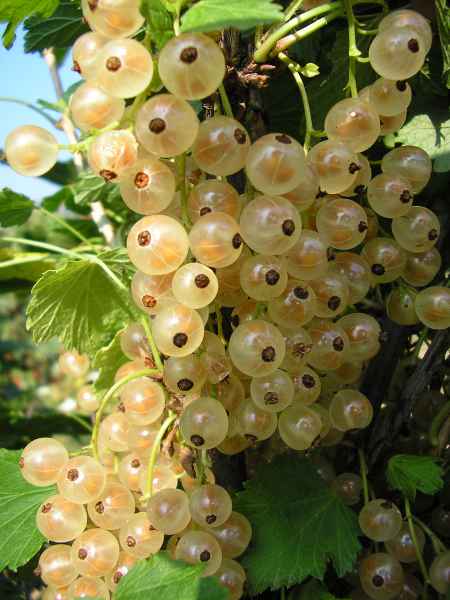
PicPost: Veggy Heaven

from Gardenphotos.com, via Growveg

IMG_6025

‘Iron Man’ Gorilla outside the County Council tent- one of many hand painted gorillas that have just been put on display around Norwich in aid of a local children’s charity.

Yesterday I spent an enjoyable day at the Royal Norfolk Show, the County’s long established ‘agriculture plus’ event that has its own show ground at Easton near Norwich. My main reason for being there was to help man the ‘Master Gardener’ and ‘Master Composter’ stand, offering information and advice about growing food at home and, of course, how to compost effectively.

Before this afternoon stint I was able to stroll around, camera in hand, and soak up the atmosphere on this first of the two day show. Over both days the organisers are expecting around 90,000 people to attend, and they are aiming to ‘break even’ financially. It’s interesting that the show has managed to survive the tough financial times as some other county shows have folded completely due to dwindling attendances, not moving with the times or a lack of facilities to cope with poor weather. No signs of that at Easton, where there was a busy, joyful atmosphere, especially as the weather (until the very end of the afternoon) was warm and sunny.


As expected the crowds were a curious mix of ‘old and new’, or perhaps more accurately, different social groups  – the well dressed ‘County Setters’ in their blazers, shirts and ties, flowery hats and summer dresses (most involved in farming in some way), alongside groups of school children and more casually dressed families, teenagers and older couples. A microcosm of the local community in what remains predominantly a rural, agricultural County. Of course an agricultural show wouldn’t be the same without the ranks of huge and intricate machinery, some old, some brand spanking new as well as age-old crafts like horse shoeing and sheep shearing – including an impressive display by the Gressenhall Fam Manager, Richard Dalton, using a set of 100 hundred year old hand cranked clippers!


It’s always impressive to see some of the ‘beasts’ entered for the various cattle, horse, pigs and other animal competitions and the efforts put into their grooming and presentation for the judges. On the horticultural front there was an impressive floral display in one marquee, including some delightful orchids, chrysanthemums and looser mixed arrangements of garden plants nicely in flower and leaf. There were also some amazing floristry displays and the usual competitions for different types of home grown fruit and veg- some impressive Gooseberries caught my eye in particular. I managed to come away from the Norwich and Norfolk Horticultrual Society ‘plant tombola’ with a hand full of very nice seed packets, so I now have a supply of purple Pansies, Amaranthus, Morning Glory and Carrots to add to my seed bank!


And the varieties of food on offer reinforced the summery feel too – tumblers full of freshly cut fruit, strawberries and cream and of course ice cream a plenty. And not wasting food was one of the key messages of the Norfolk Waste Reduction Team’s display, which also hosted the Master Composter/Gardener stalls, along with some fascinating crabs illustrating the work of the Fisheries Conservation Agency. This was a great draw for the children who continually asked ‘which one is the most dangerous?’- in truth none of them really, as despite their fierce looking claws, the staff were able to pick them up to show the to the crowds without any apparent fear – or nipping!


My afternoon was spent talking to show goers about growing their own food and composting. I had some very interesting chats including a teacher from a local High School who teaches horticulture there and sounds to have a splendid school garden, several couples about starting or improving their compost, helping children to make paper pots and sow seeds to take home (along with all the other ‘trophies’ they collected from the stalls at the show), and other show goers clearly just enjoying growing their own food and with whom I shared tales of the late spring, compared potato growth rates and discussed rhubarb diseases.  The next door County Council tent with which we were associated also put on a splendid carousel of displays and activities (including live music) illustrating the array of ways in which the Council serves Norfolk – in fact it (and we) were so good that the whole stand won the Show’s top prize for ‘trade’ stands, so congratulations all round!

So, as you can tell, I had both a very pleasant day out – and one that boosted my energy, interest and optimism for gardening!

Old School Gardener

If you’ve enjoyed reading this post and others on this blog, why not comment and join others by signing up for automatic updates via email (see side bar, above right ) or through an RSS feed (see top of page)?

Finding Nature

Nature Connectedness Research Blog by Prof. Miles Richardson

Norfolk Green Care Network

Connecting People with Nature

Discover WordPress

A daily selection of the best content published on WordPress, collected for you by humans who love to read.

Susan Rushton

Celebrating gardens, photography and a creative life

Unlocking Landscapes

Writing, photography and more by Daniel Greenwood

Alphabet Ravine

Lydia Rae Bush Poetry

TIME GENTS

Australian Pub Project, Established 2013

Vanha Talo Suomi

The Journey from Finnish Rintamamiestalo to Arboretum & Gardens

Marigolds and Gin

Because even in chaos, there’s always gin and a good story …

Bits & Tidbits

RANDOM BITS & MORE TIDBITS

Rambling in the Garden

.....and nurturing my soul

The Interpretation Game

Cultural Heritage and the Digital Economy

pbmGarden

Sense of place, purpose, rejuvenation and joy

SISSINGHURST GARDEN

Notes from the Gardeners...

Deep Green Permaculture

Connecting People to Nature, Empowering People to Live Sustainably

BloominBootiful

A girl and her garden :)