
 To Walter Degrasse

30th September 2013
Dear Walter,
September has been a month of relative quiet in Old School Garden. Summer has tipped into Autumn and the garden hasn’t needed (?wishful thinking) full throttle attention. The odd weed pulled up, flowers dead headed or staked, hedges trimmed, grass mown (less frequently and less closely). A typical September then, apart from the relatively cold spell we had earlier on which sent me to the wood shed and led to lighting of fires – albeit only once or twice. Still I resisted the temptation to switch on the central heating! Since then we seem to have had something of a mini ‘Indian summer’.
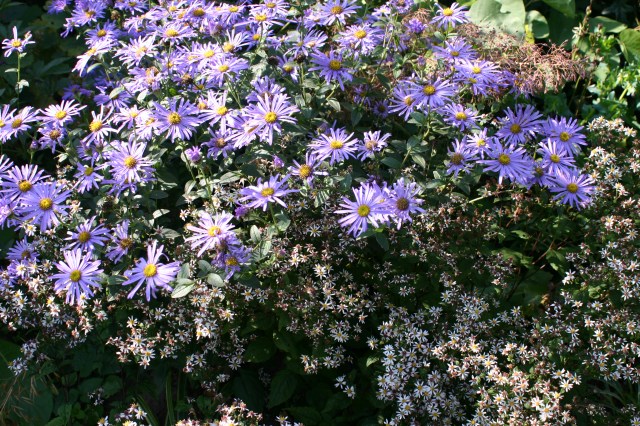
I’ve been pleasantly surprised at how some annuals I planted earlier on have at last come good – Cleome, Cosmos, Nicotiana and Tithonia in particular. A slow start, but they seem to have gone for a sprint finish so to speak! They are looking very good alongside some other late summer perennial colours – Asters, Sedums and Aconitum. And I’m pleased to say that last year’s sowings of Phalaris (‘Chinese Lanterns’) have now turned into beefier plants, just starting to show off their wonderful papery orange ‘lanterns’.
 Cosmos, Asters, Achillea, Helianthemum
  Aster,Echinops,Macleaya
  Cosmos and Asters
  Aconitum and Lavatera
  Verbena bonariensis and Nicotiana
  Fremontodendron
  Gleditsia tricanthos
  Cercis ‘Forest Pansy’, Echinops and Stipa gigantea
  Phalaris
  Actea simplex
  Cotoneaster
  Calamagrostis x acutiflora ‘Karl Foerster’
  Crab apple’ Red Sentinel’
  Sedum matrona
  Scabious ‘Vibtant Violet’
  Seed heads of Clematis tangutica
  One of the mixed borders
  Echeveria backed by Melianthus
Cosmos, Asters, Achillea, Helianthemum
Aster,Echinops,Macleaya
Cosmos and Asters
Aconitum and Lavatera
Verbena bonariensis and Nicotiana
Fremontodendron
Gleditsia tricanthos
Cercis ‘Forest Pansy’, Echinops and Stipa gigantea
Phalaris
Actea simplex
Cotoneaster
Calamagrostis x acutiflora ‘Karl Foerster’
Crab apple’ Red Sentinel’
Sedum matrona
Scabious ‘Vibtant Violet’
Seed heads of Clematis tangutica
One of the mixed borders
Echeveria backed by Melianthus
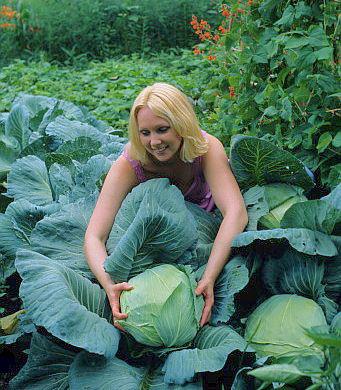
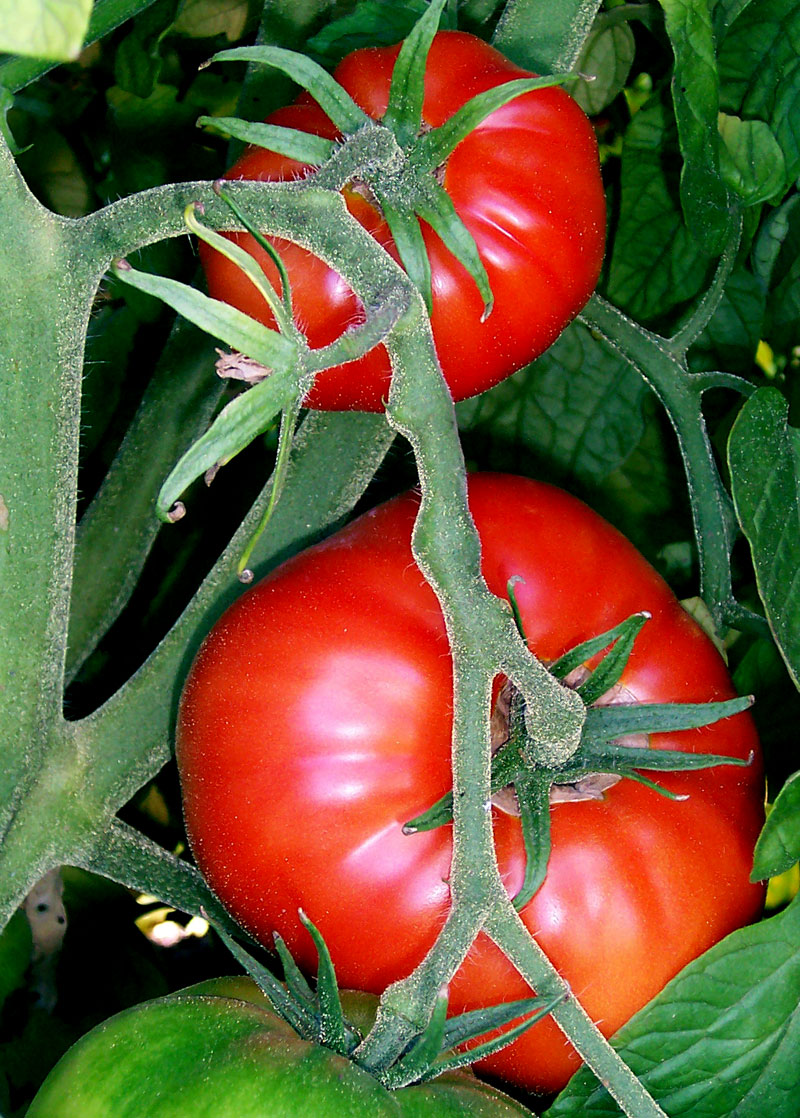
I’ve continued to harvest various fruit and veg – Chard is now reaching maturity, Tomatoes, Lettuces and Cucumbers have done really well, and some late sowings of Carrots and Mangetout are looking promising. You may recall that I sowed three seeds of ‘Greek Squash’ sent to me by the Garden Organic Heritage Seed Library – two of these have gone on to produce four or five good-sized squashes, which are now hardening off in the autumn sunshine. Oh, and remember my caterpillar disaster with the Calabrese and Broccoli plants last month? Well, I’ve cleared the bed, and managed to get hold of some young plants of Chinese Broccoli and Spinach, so along with some of my own Red Cabbage seedlings we now have that area once more in production – hopefully they’ll all put on good growth before the onset of winter.
The first windfall apples have been falling in some strong breezes recently. We’ve been collecting some of these as well as early pickings directly from the trees, and very tasty they are too! I can see that the next couple of weeks will be consumed with apple harvesting, and that of course raises the question of where to store them! Our larder could soon be a lot fuller.
 The Kitchen Garden
  Rainbow Chard
  Runner beans ‘Lady Di’
  Sunflowers- this monster grew to about 15 feet (5 metres) tall!
  Sun flowers bowing to the inevitable
  Greek Squash
  Windfalls a plenty- if we beat the birds and wasps!
  Chilli peppers
  Marigolds and Chard
The Kitchen Garden
Rainbow Chard
Runner beans ‘Lady Di’
Sunflowers- this monster grew to about 15 feet (5 metres) tall!
Sun flowers bowing to the inevitable
Greek Squash
Windfalls a plenty- if we beat the birds and wasps!
Chilli peppers
Marigolds and Chard
Further afield in my gardening life, I’m pleased to say that the six week Garden Design course I put on last year is once again up and running, with 8 enthusiastic students with a wide range of garden sizes and ideas that I hope to help them develop in the coming weeks. I’ve also planned a one day workshop at nearby Gressenhall Farm and Workhouse where I hope to show people how to get more from their garden through using some of the key elements of garden design. It will also be fun using the gardens at the Museum to illustrate some of these, as i designed some and help to maintain them as a volunteer. As I speak I’m hopeful, too, that the six week beginners course on ‘Growing Your Own’ at nearby Foulsham, will also be viable, but we’ll have to wait and see on that one.
I’ve also started back with my support of gardening and ‘learning outside the classroom’ at the local primary school. I’ve been encouraged by the way the school – and particularly their LOTC Coordinator, is building on the progress we made last year. Over the first half term I’m taking a series of small groups from most classes through some of the basics such as introducing different types of tool and how to use them safely; the importance of clearing and preparing the soil during the autumn; harvesting some of the produce we planted last season (there are some seriously impressive carrots that seem to have thrived on neglect!); gathering different types of seed for next year; how different plants propagate themselves and sowing broad beans, garlic and onions as well as some green manures. The School is also carrying out an international project on composting and organic gardening to which I’m contributing. So a busy half term! It’s always great working with such enthusiastic youngsters, reawakening my own sense of wonder at nature as they dig over the soil and are delighted to discover worms, grubs and creepy crawlies!
On Saturday I went to Garden Organic’s HQ at Ryton, near Coventry, for their annual conference for Master Gardeners and Composters. Around 30 of my colleagues from Norfolk went along and were joined by over 200 other Master Gardeners and Composters from a number of other areas around the country. It was a very interesting and inspiring day. I attended some workshops on community composting, reaching ‘hard to reach’ communities and ‘love your bugs’- all about the goodies and baddies in the garden. Most inspiring was a talk by veteran naturalist Chris Baines, looking at ‘The Nature of the Future’. I’ll do a fuller article on this event later in the week, but here are a couple of pics from the ‘Naturalistic’ area of the gardens, which looked wonderful – as did the many other different gardens which demonstrate a range of gardening techniques and planting arrangements.


So, old friend, that just about brings you up to date for the last few weeks in my gardening life at Old School Garden and beyond. A mellow and measured time when its been possible to enjoy the late summer colour and reap the fruits (and veg) of my labours earlier in the year! No doubt you’re well ahead of me with your autumn garden jobs, but in case you’re not and need some ideas, I’ll be posting my regular monthly item on tasks in the garden for the new month tomorrow, so I hope that proves useful. Happy Gardening!
Old School Gardener
If you’ve enjoyed reading this post and others on this blog, why not comment and join others by signing up for automatic updates via email (see side bar, above right ) or through an RSS feed (see top of page)?














 Old School Garden