Category: Great Gardens


WP_20160224_15_46_02_Pro

En route to West Devon recently we had time for a brief afternoon stop at this wonderful National Trust property just outside Tiverton.

The house was built by Sir John Heathcoat Amory, the grandson of John Heathcoat, creator of the mechanised bobbin lace making machine and owner of a lace factory in Tiverton.

This slideshow requires JavaScript.

The foundation stone was laid in 1869, but it was not until 1873 that the elaborate interior designs were completed. William Burges, designer of Knightshayes, had a rocky relationship with the family and was fired half way through the project, leaving his imaginative vision incomplete.

Burges was replaced by another reputable designer, John Dibblee Crace, who turned out to be another ill-fated choice. Much of Crace’s work was covered up by the family, but later restored by the Trust.

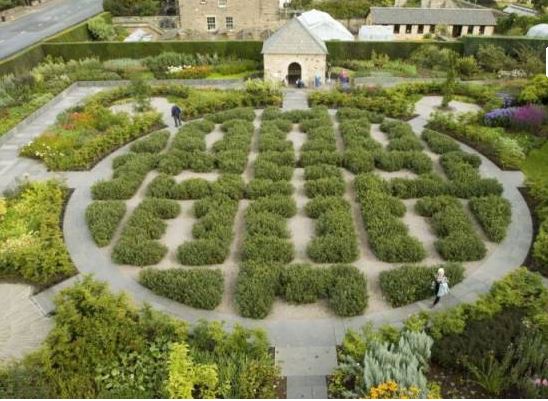
We only had time to see the ‘Gothic Revival’ house and its colourful interiors (the Trust has imaginatively opened up some of the unrestored rooms too)  and quick tour of the formal gardens. These were originally designed by Edward Kemp (1817-1891), a reputable landscape gardener, but it fell into decline by the 1920s. Rescued by Sir John and Lady Heathcoat Amory, after the Second World War, the garden became one of the finest in England, winning the highest horticultural awards, with more than 1,200 species unique to Knightshayes. This garden has a very strong structure created by extensive Yew hedging and some amusing topiary animals scampering along the tops!

The restored Walled Garden was also an interesting spot, with its steeply sloping site being used to grow vines the ‘French Way’.

This slideshow requires JavaScript.

Knightshayes is certainly worth another, longer visit, when we can also explore the woodland garden… on the way out we stopped at a new ‘natural play’ site which cleverly uses three huge toppled oak trees to create a series of walkways, swing points, tunnels and other features.

Further information: Knightshayes National Trust website

Old School Gardener

The Royal Botanic Gardens, Edinburgh saw an impressive increase in visitors last year.

The Royal Botanic Gardens, Edinburgh saw an impressive increase in visitors last year.

By Elizabeth Henry (from Horticulure Week 7th March 2016)

‘Visitors continue to flock to gardens around the country, according to figures released today by the Association of Leading Visitor Attractions (ALVA).

Among them, the Royal Botanic Gardens, Edinburgh saw a 10 per cent increase to 889,420, adding to a 19 per cent rise in 2014. RBGE credited their Lights programme in the winter months for the increase.

The Eden Project saw an 11 per cent increase to 960,029 visitors, compared to a 1 per cent increase in 2014.

All four RHS gardens had record visitor numbers in 2015, with RHS Garden Hyde Hall in particular up 12.1 per cent to 242,520 visitors. Rosemoor visitor numbers were up by 9.5 per cent, Wisley by 6.1 per cent and Harlow Carr by 5 per cent.

Kew Gardens saw a more modest increase of 3.5 per cent, but Wakehurst Place, which Kew leases from the National Trust, saw visitor figures climb by 14.9 per cent – a strong turnaround from 2014 when the introduction of carparking fees saw a 29 per cent fall in visitor numbers.

Many National Trust properties held steady or saw more modest gains. Standouts include a 15.2 per cent increase in numbers at Bodnant Garden in Wales, 10.3 per cent at Lanhydrock and 17 per cent at Mount Stewart in Northern Ireland.

The UK as a whole saw a 3.2 per cent increase in visitor numbers, while Scottish attractions proved particularly popular, gaining 5.48 per cent overall.

Chester Zoo was the most visited paid-for attraction in England outside London, mainly as a result of the opening ‘Islands’ in June – a recreation of the tropical environments of six South East Asian islands.

The British Museum continued to be the most popular visitor attraction overall for the ninth year running. But visits to many London attractions plummeted following the Paris attacks in November.

Bernard Donoghue, Director of ALVA, commented:

“2015 continued to be a record year mainly due to our members continuing to show how diverse the UK is to both domestic and overseas visitors….The current weakness of the pound to the dollar and Euro is making the UK a more affordable destination and 2016 is on target to be another memorable year for ALVA members.” ‘

image1My friends Jen and Dave paid a visit to the wonderful gardens at Nymans in Sussex, recently. Jen says:

‘On a cold (4 degrees),damp and very grey day we went to Nymans, a National Trust property, for a long muddy walk in their woods.
The gardens are well known for several different types of snowdrops but it was the variety of winter colour which shone through. The C
amellias have been coming out early and there were even a couple of Rhododendrons in flower.’

Thanks for the pictures, Jen!

Old School Gardener


WP_20151007_15_37_25_ProI finally got round to visiting a place I’d wanted to see for some time- Voewood, an arts and crafts masterpiece in north Norfolk.

Taking advantage of the ‘Invitation to View’ scheme we set off on a rather wet and windy day a week or two ago to High Kelling, near Holt.

Our tour of this private house was full of surprises and curiosities. Owned by a rare books and art dealer Simon Finch (who now lives in one of the coach houses) it has been decorated over the years in a very individual style with plenty of personal mementoes and artworks, many hailing from the 1960’s and 70’s. The house with its fourteen bedrooms can be hired out and it also acts as a centre piece for an arts festival.

This slideshow requires JavaScript.

The house was designed (1903-5) by Edward S. Prior. Voewood is perhaps one of the greatest achievements of house design of the Arts and Crafts movement. More than almost any other building of the period the house fulfils the ideals for architecture developed by William Ruskin and William Morris.  In the designing and building of Voewood many of Prior’s philosophical ideas found physical expression.

Its design and construction were characterised by the use of radical planning and forms, innovative technologies, such as the use of reinforced concrete, extensive external decoration, a distinct building philosophy involving craftsmanship and the use of quality local materials and the integration of the building and its interiors with the garden and its surroundings.

The house is based on a butterfly plan. The three storey central portion of the house is flanked by splayed two-storey wings. The plan enabled Prior to maximise views out and to give the best orientation to a range of rooms. He could also relate the external spaces to the internal areas. The area contained within the splay faced the gardens, with the northern of the wings acting as the entrance, with a two storey porch and daylight basement. This wing also contained the library and billiard room at ground floor level. The wing opposite contained the kitchen and service accommodation together with the dining room. The fruit and vegetable garden lay adjacent. The entrance, through oak doors, leads into a six-sided hall up a straight flight of Hoptonwood stone stairs into an octagonal lobby.

Though never lived in by its original owners (there seem to be various theories as to why, including its proximity to a then T.B. hospital), the house was turned into an old people’s home and has also been a hotel. And despite some alterations (e.g. the closing in of two flanking loggias), it has retained most of its original features. I was especially impressed by the construction which used concrete formwork on a (then) extensive scale, resulting in nicely rounded corners to walls and window openings and some chunky concrete beams which provide an interesting, simple decorative feature to many ceilings. However, I was a little disappointed with the window and other ironmongery which, in contrast to many other houses of this style and period (see, for example my recent post on Goddards, York), was rather plain. Perhaps this is further evidence of the alterations carried out in the 1930’s.

Though visiting on a damp October afternoon when there was not much floral interest to be seen, the gardens still managed to impress. The main layout from the back of the house appears to follow its original stepped, symmetrical design, whereas the former kitchen garden to the side has been skillfully turned over to a rather more ornamental layout, though retaining many good examples of wall-trained fruit.

This slideshow requires JavaScript.

The original gardens were of great renown and highly regarded. Voewood was perhaps Prior’s greatest garden design. Garden making was a preoccupation of his middle period. Terraces extend from the wings of the house and end in steps leading down to the garden level. The garden is also reached from the terrace by a double flight of steps leading to two stone paths, separated by a water feature in the form of a stepped stone tank containing water-lilies, iris and forget-me-not. The central feature of the garden is a large basin. Pergolas with masonry walls lead east and west.

The garden at Voewood (then called Home Place) was admired by Gertrude Jekyll and Sir Lawrence Weaver, who described and illustrated it in their book Gardens for Small Country Houses;

“The stepped scheme at Home Place, Holt, designed by Professor E.S. Prior will be a counsel of perfection to most people”.

Further information: Voewood website

Old School Gardener


WP_20150911_14_11_48_ProSo, we were on our way home from Northumberland and stopped off for a lunchtime visit to Goddards, a National Trust property on the outskirts of York.

This one time home of Noel Goddard Terry, owner of the famous chocolate-making firm Terry’s of York was designed by architect Walter Brierley in the Arts and Crafts style and is complemented by four acres of gardens, designed by George Dillistone.

The house has selected rooms displayed to give glimpses into the family home and workings of a chocolate factory. You’ve probably heard of (if not eaten) a Terry’s Chocolate Orange (traditional for a British Christmas!), but did you know there was also once a Chocolate Apple?!

This slideshow requires JavaScript.

The garden includes yew-hedged garden rooms, a bowling green, wilderness gardens and plants for every season; it is also an oasis for wildlife.

On our visit we met an enthusiastic Garden Volunteer, whose role was to engage visitors among other things. The gardens were delightful, and obviously a lot of work is going into bringing them back to their Arts and Crafts roots. I particularly loved the classic terrace overlooking the garden, with its wicker chairs ready for a Sunday afternoon doze in the sun. Oh, and we had a lovely lunch in a traditonal style restaurant in the house too.

Further Information: National Trust website

Old School Gardener


WP_20150909_12_43_35_ProFollowing our ‘Hebridean Hop’ we went on to stay for a week in Northumberland with 6 old friends, in a house we’d been to before (we rent out a house for a week in different locations every year – this was our sixth consecutive holiday together). It is usually a stay involving (too) much food, drink as well as trips to interesting places and walks on beaches and in the countryside.

On one of the days we travelled south towards Morpeth to a National Trust property I’d wanted to visit for some time- in fact the last time we were here, but for a mistake in reading the road signs, we would have visited then. Anyway, despite a couple of wrong turns this time (including using Satnav) we eventually made it.

Wallington Hall was gifted by Sir Charles Philips Trevelyan, Socialist MP and ‘illogical Englishman’. The Hall features huge pre-Raphaelite paintings around the Central Hall, beautiful furniture, treasured collections and quirky curiosities; and it was great seeing volunteers baking in the kitchens (free samples) and on hand to explain things. I also loved seeing some old letters and newspapers out on display- these added a real sense of time and place to the house. There was also a well crafted exhibition in one room on utopias. My own contribution to the personal ‘visions’ wall?- ‘Globalisation= collective responsibility’

This slideshow requires JavaScript.

The 13,000-acre estate was too big to explore in one day, but we made sure to see the hidden walled garden, nestled in the woods.  It was beloved by Lady Mary Trevelyan and remains a beautiful haven whatever the season.  Entering through Neptune’s Gate, you sweep down a stone staircase, by the Mary Pool and soak up the tranquil atmosphere; this is special place for our friends John and Ann, who, along with Richard and Ann, were with us on the day.

This slideshow requires JavaScript.

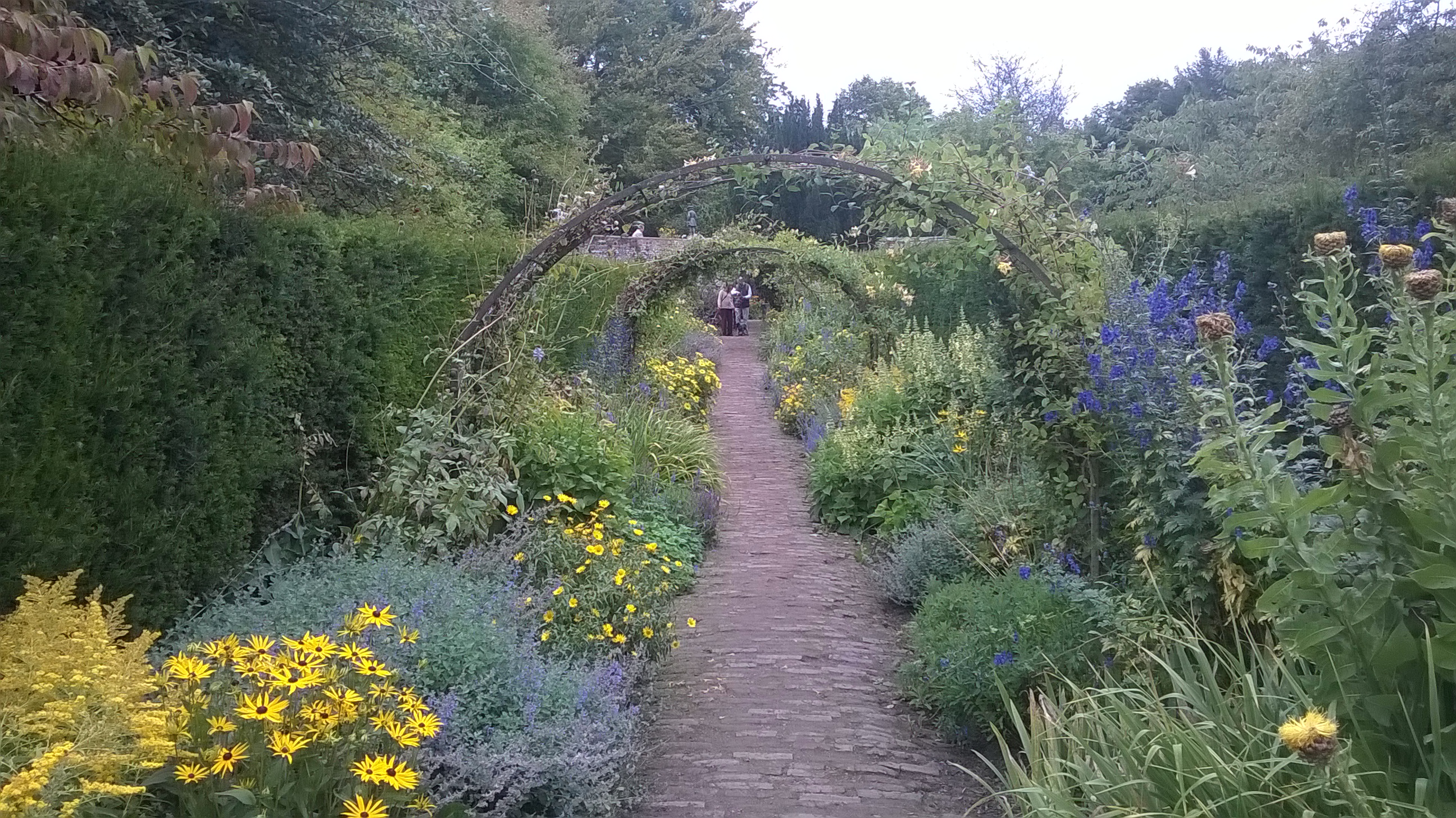
We wandered past colourful borders, which because of its northerly location, gave late summer ‘oomph’, even though it was September when we visited. The planting combinations in the herbaceous borders and further afield in the walled garden, are a triumph. This was once a productive kitchen garden but is no almost entirely ornamental. It slopes gently and a natural stream meanders through it, which creates a wide range of planting and design opportunities. There is also an elevated terrace walkway with a splendid glasshouse to one side, full of tender specimens and beautifully presented.

This slideshow requires JavaScript.

This is definitely another of those ‘Garden of Smiles’- almost at every turn there is a feature or planting group that just works.

WP_20150909_12_25_57_ProFurther information: National Trust website

Old School Gardener

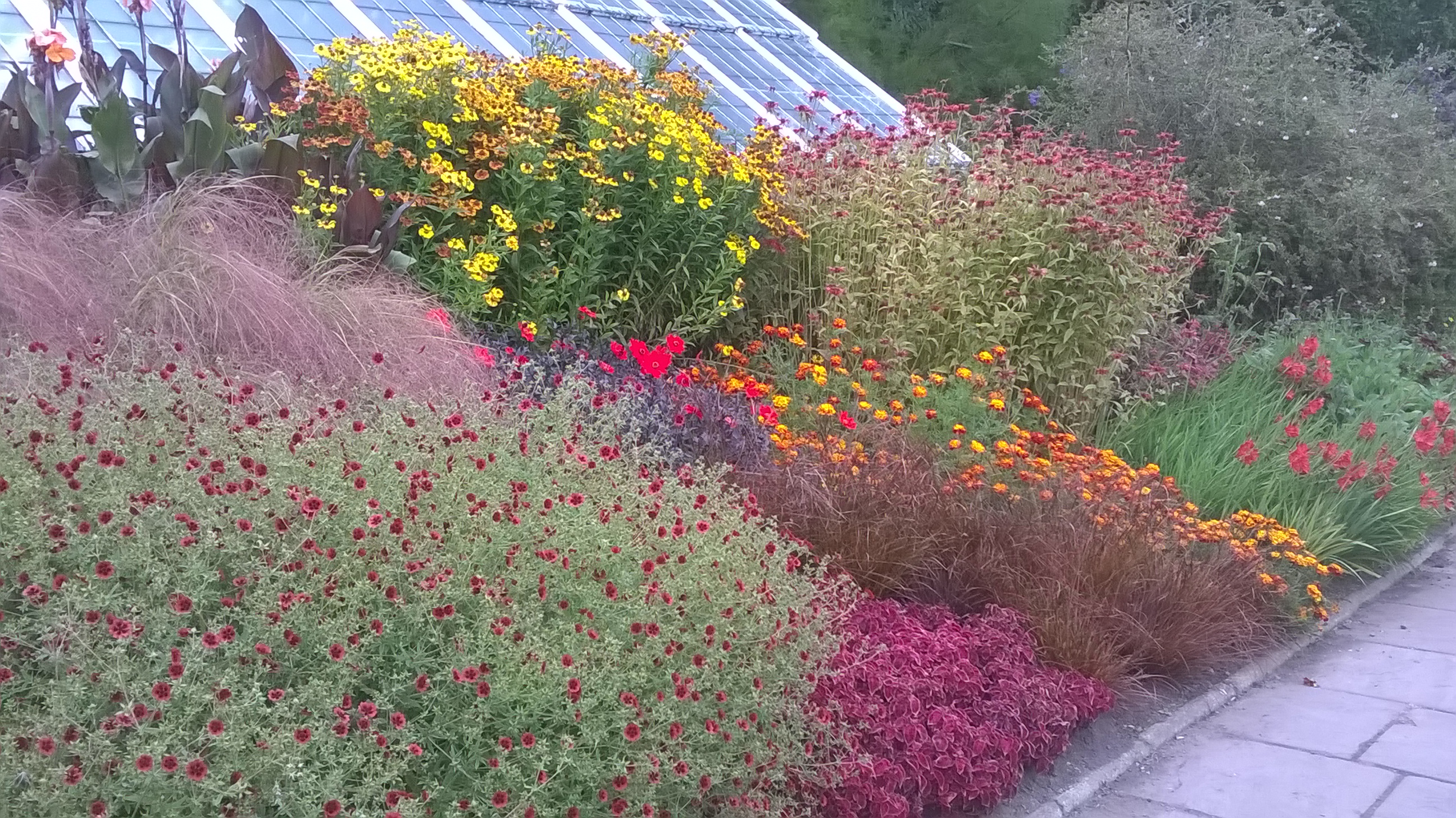
WP_20150721_12_59_38_ProI’ve posted about Buckland Abbey in Devon (the former home of Sir Francis Drake), before. I thought I’d add a few pictures from a visit a couple of months ago, when the gardens (especially the Cider House) were looking very attractive.

I also loved the combination of different textures on stone floors and walls…

Oh, and I found this Magnolia seed head (I think it’s from a grandiflora), and brought it home with a view to trying to harvest seed and growing my own…it could be a few years before I have anything to show for it!

Further information:

The gardens at Buckland Abbey, Devon – National Trust web site

Old School Gardener

Thanks to my friends Jen and Dave for this recent picture at Kew’s outpost, Wakehurst Place.

image

Old School Gardener

WP_20150808_12_39_16_ProThe Star Park (Jardim da Estrela), is certainly one of my favourite places, not just in Lisbon, but anywhere (not that I can claim to be a well-travelled gardener!).

I was glad to be able to see it in mid summer once more, bustling with life across the generations but managing somehow to retain a serene calmness that makes you just want to sit and watch the world go by. And its also wonderfully cool under the many tall trees that give shelter from the hot summer sun. I always love seeing the voluntary library with its attentive manager and the beautifully ornate bandstand’s – perhaps one day I’ll hear it in use.

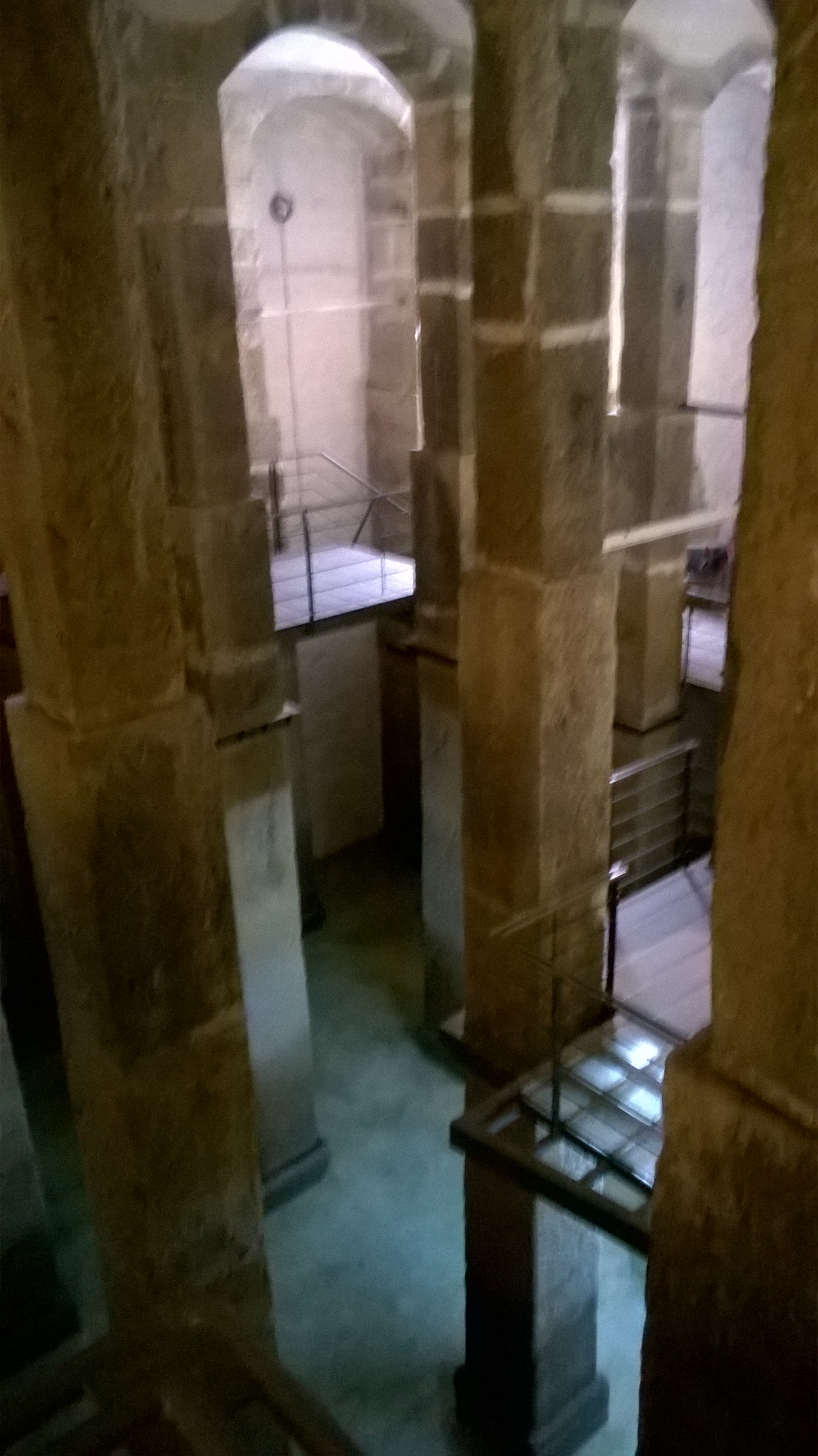
Sadly, the nearby English Cemetery, on which I’ve posted before, was closed on this latest visit, but we did manage to find a fascinating underground reservoir to visit as we wandered back towards the centre of Lisbon, where we finished the day with a walk around the Moorish district of Alfama and had a beery lunch overlooking the River Tagus.

The underground cathedral that is the Lisbon Patriarchal Reservoir

The underground cathedral that is the Lisbon Patriarchal Reservoir

Old School Gardener

WP_20150812_16_31_09_ProAnother day in Portugal, another visit, this time after we’d been to the airport to drop off our daughter. We’d been to the ‘Park of Nations’ (Parque das Nacoes), some years ago, but hadn’t managed to see everything at this site of the 1998 Expo.

For one, we hadn’t ventured into the large park which sits on the River to the north of the many exhibition and conference buildings that dominate the place, so that’s where we began. It was worth it. The park, beautifully landscaped in a series of wave-like mounds which afford a rich variety of settings, is a contemporary design which seems to work- as playground (kids love hills), performance space, running route and chillout zone. The riverside setting is especially impressive, with views towards (and under) the long Vasco da Gama bridge. Even the seats carry through the wave theme and the planting is subtle and mainly naturalistic, giving the feeling that you’re in the country, despite the ‘designed’ nature of the place. It looked pretty well looked after, too, which couldn’t be said of some of the other places later in our visit.

This slideshow requires JavaScript.

After some tea and cake (how very British), we walked back along the riverside and then took the cable car that takes you along the riverside, harbour and to the aquarium. The views were great and took us over some gardens we would look at later.

After landing we discovered another couple of gardens we’d not seen before, beginning with the exciting water gardens: the long cascade was superb.

Taking in a space dominated by tall palm trees, a lovely rill and curious camel (only a full size replica), we ventured to a terraced garden that seemed promising. How disappointing to see the lack of maintenance on this splendid location especially the water gardens at its very top, which were empty and obviously neglected. The rest of the gardens looked reasonably tidy, but once the whole ensemble must have been brilliant. Maybe this is one example of how austerity has hit the country? Unfortunately, we found further evidence of this, such a shame for what was once a great emblem of the country’s investment in its future.

This slideshow requires JavaScript.

For our next and final visit was to those gardens we’d seen from above, along the the riverside. I remember these gardens being a series of themed spaces, all I think, with some water features. Again we were initially disappointed to see the wooden bridge entrance closed due to safety risks and other areas, though accessible, were decidedly run down with hard landscaping in need of repair in various spots. The planting, however, seemed to be lush and varied, and passing the area a day or two later I saw piles of timber and other materials stacked, ready for use, so maybe some (overdue) repairs were about to happen.

This slideshow requires JavaScript.

Despite the disappointment, I tried to understand the public investment challenges facing the country and overall, feel this modern day playground- apparently hugely popular with Lisbon livers- is still a great addition to the city’s green spaces.

Old School Gardener

Finding Nature

Nature Connectedness Research Blog by Prof. Miles Richardson

Norfolk Green Care Network

Connecting People with Nature

Discover WordPress

A daily selection of the best content published on WordPress, collected for you by humans who love to read.

Susan Rushton

Celebrating gardens, photography and a creative life

Unlocking Landscapes

Writing, photography and more by Daniel Greenwood

Alphabet Ravine

Lydia Rae Bush Poetry

TIME GENTS

Australian Pub Project, Established 2013

Vanha Talo Suomi

The Journey from Finnish Rintamamiestalo to Arboretum & Gardens

Marigolds and Gin

Because even in chaos, there’s always gin and a good story …

Bits & Tidbits

RANDOM BITS & MORE TIDBITS

Rambling in the Garden

.....and nurturing my soul

The Interpretation Game

Cultural Heritage and the Digital Economy

pbmGarden

Sense of place, purpose, rejuvenation and joy

SISSINGHURST GARDEN

Notes from the Gardeners...

Deep Green Permaculture

Connecting People to Nature, Empowering People to Live Sustainably

BloominBootiful

A girl and her garden :)