Category: Gardening techniques


Old School Gardener

White Walls and light paving can help to lift a shady space
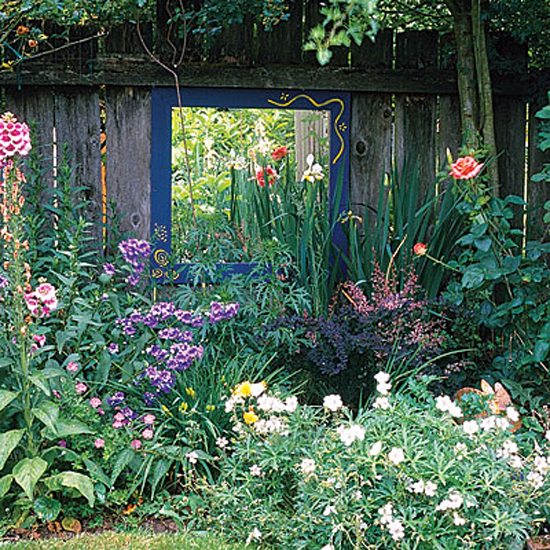
White Walls and light paving can help to lift a shady space

Even  dense shade in the garden can be made attractive to look at and suitable for growing plants.

1. Whiten up

Make the best use of available light by painting walls and fences white. Also lay light coloured paving, stain trellis work white and use seats and containers which are either white or pastel shades.

2. Reflect on it

You can create the illusion of space and brighten up dark corners by putting up a mirror, which will also reflect light onto the plants.

3. Water works

The reflected light and the gentle sound of a water feature with a fountain will help to lift a dark corner.

Mirrors can give a shady space a whole new dimension

Mirrors can give a shady space a whole new dimension

Source: ‘Short Cuts to Great Gardens’- Reader’s Digest

Old School Gardener


WP_20150524_13_47_31_Pro To Walter Degrasse

29th May 2015

Dear Walter

Looking back to my letter to you at this time last year, I see that various things were further ahead, especially in the ornamental garden and to some extent vegetables. But it’s still a lovely time of year, with fresh green growth everywhere and other emerging colours in flower and foliage.

This slideshow requires JavaScript.

I was out weeding today and planting out some Cosmos, tobacco plants and ornamental grasses, just before the rain came to helpfully water them in. I finally got round to weeding (for the first time this year) an area at the front of the garden which was in danger of becoming overgrown with ground elder, nettles and the like- it was a relief to see it cleared and the strong growth of the shrubs and other plants there coming through, hopefully to invade the space that I’ve created. Whilst I was out a group stopped by the gate and were talking about the garden- after bidding them good morning they were very complimentary about the garden, which is always nice to hear.

Elsewhere in the garden I’m just about up to speed on the food front. Broad beans are podding up nicely, I’ve some Calabrese, Cabbage and onions bulking up. The potatoes are up above ground (I’ll earth these up next week), and I’ve just put out some squash (interplanted with the onions) and Sweet Corn. I don’t know if you watch the gardening programme ‘Beechwood Garden’ (shown early Sunday mornings on BBC 1), but they are trialling different approaches to growing tomatoes in a greenhouse. I was very interested to see the use of as specially designed ‘aquaponic’ system where the plants sit in pots with a wick in then that is dipped in a reservoir underneath in which you out the diluted feed. I’ve decided to buy the ‘Quadgrow’ system which I think is the one the TV programme is using, and can;t wait to get this set up next week. I’ve got 8 good looking tomato plants from my friend Steve to put in as well as the usual cucumber and peppers he’s kindly given me.

This slideshow requires JavaScript.

So, Old School Garden, in spite of me being away for much of the month, seems to be shaping up nicely. Oh, I almost forgot, I finally cut back the Melianthus having had a couple fo flower spikes go over. It’s interesting seeing how small the new growth is compared to last year when I cut it back much earlier. I wonder if it will catch up!

As I’ve been away a lot I haven’t been in to Gressenhall or Blickling much. you may have seen my post about my latest sessions at Blickling earlier in the week. I also spent a couple fo hours at Gressenhall, doing a bit of tidying up and planting out a few annuals in the gaps in one of the borders there as well as the entrance border, which I was pleased to see looking good, with purple Alliums contrasting well with the newly maroon red foliage of the Cotinus. The grasses in this border have done really well, in fact they might be in danger of unbalancing the design, so a bit of ‘editing’ might be required here.


Well, as you read this we shall be back in Devon once more, hopefully finally sorting out a flat for my mother-in Law and getting some bulky items moved across so that she can move in once she’s out of hospital. Oh, and no doubt there’ll be a bit of lawn cutting and weeding to be done in her current garden, to prepare the way for selling the place.

I do hope that you and Lise are enjoying the lovely Spring weather and managing to get out and enjoy your garden, especially now that you’ve got a gardener in to help you manage it. All the best for this month old friend.

Old School Gardener


Stunning Underground Garage Design Ideas With Hydraulic SystemMy friend Les sent me this link to an item on BBC News, which makes for interesting, if not surprising and worrying reading…

Old School Gardener


plant combination1Tip:

Look for plant combinations that work well together when visiting other gardens. Don’t be afraid to copy tried and tested ideas from books and magazines as this will save you time experimenting by trial and error.


plant combination2

Further information: Great Plant combinations

Old School Gardener

pest controlPests and diseases-

Buy varieties of plants that are restistant to pests and diseases. If you want to grow vegetables, choose modern varieties that are easier to grow and protect them with crop covers such as insect-proof mesh or garden fleece. Encourage natural predators to take up residence in your garden by growing nectar-rich flowers, providing nesting and overwintering sites, and by feeding birds in winter. Use bilogical controls in the greenhouse.

Further information:

Natural pest and disease control

Biological Pest control- RHS

Source: ‘Short Cuts to Great Gardens’ (Reader’s Digest 1999)

Old School Gardener


front garden1A front garden is on view to all, so must look good all year and be functional. Here are a few ideas for making your own ‘entrance’:

Focal points-

  • A statue, pot or some other hard landscape feature can be used to provide a focal point; something to draw the eye and give a sense of unity to the front garden.

  • Alternatively, box topiary shapes or other bold ‘architectural’ plants can fulfil this role and can be relatively easy to maintain. Likewise, planting groups of the same plant can be used to create a series of ‘green’ focal points.

  • Another idea is to create a feature such as a rockery that will be seen from the roadside and combines both hard and soft landscaping elements.

Paths and drives-

  • A path to the front door is a central feature of most front gardens. By laying this diagonally across the plot an illusion of depth can be created. If your plot is relatively small and your path from garden entrance to front door has to be primarily fucntional, they should take the shortest route if they are going to be used by casual visitors. However, they can be made to look more attractive by introducing gentle curves or by by using a mixture of path surfacing materials such as brick and stone. But don’t use more than two or three different materials as this can cretae a fussy, disjointed look.

  • If your plot is larger and you can fit in a second path which has a mainly decorative role, this can be routed to meander through the garden and provide easy access to each part of the plot; it could be a continuous ‘snake’ of paving or stepping stones, or a combination of both.

  • Don’t underlay gravel with different coloured or shaped chippings, as over time these will rise to the surface and the result will look ugly.

  • Try to avoid using impermeable materials for vehicle hard standings (there are now regulations in place about this) and if you do have large hard surfaced areas use planting pockets to break these up- a car can easily pass over low growing plants.

Planting-

  • Drought- tolerant shrubs such as Hebe and Choisya help to squeeze out weeds, so helping to keep the front garden looking tidy.

  • Plant tough plants at the edges of drives such as ornamental grasses, heathers or creeping thymes, which will survive an occasional clipping by a car tyre.

  • Use creeping plants near to the edges of the garden to create a natural look.

Good neighbour-

  • Abide by the law if you are thinking about some more major changes to your front garden e.g. if you are putting up a wall or fence adjoining a public road that is higher than 90cms or hedges in such locations. You need to contact the local authority before putting in solid boundaries and may be asked to cut back hedges that interfere with sight lines.

  • Likewise you need to contact the local authority if you plan to put in a vehicle ‘crossover’ over a public footpath and if you want to cultivate any grass verge outside your house.

front garden2

Source: Short Cuts to Great Gardens- Reader’s Digest

Old School Gardener


wheelbarrow jpgI’ve been guilty of these, have you?

1. Taking on too much

2. Too optimistic about the weather

3. Misunderstanding soil

4. Forgetting to fertilize

5. Not giving plants enough space

6. Accidentally inviting bad company

For more details and some sound advice see the full article by Barbara Pleasant here

Old School Gardener

gardening_hints_windy_gardens_windswept_treeHave you got an exposed garden? In these sites- especially on hillsides or in coastal areas- wind can cause more damage than frost or cold. Think about the best ways of providing some shelter.

A solid wall or fence can make wind eddy over the top and can cause strong back-drafts on the leeward side. Instead, filter the wind to slow it down with a hedge or artificial wind break, which will give useful shelter for a distance about ten times its height on the leeward side. Another option- if you have the space- is to plant a shelter belt of trees. If you have views out from the garden that you want to preserve, try creating ‘windows’ in a hedge or other barrier.

Here are four typical problems in windy sites and tips on what to do about them…

1. Growth

Problem: Wind slows plant growth by increasing water loss through evaporation. This can significantly reduce the yields of vegetables.

Tip: protect the vegetable plot with wind break netting or a natural barrier like a hedge.

2. Pollination

Problem: Pollinating insects avoid windy areas.

Tip: To get good pollination of fruit crops grow them against sheltered walls.

3. Leaves and flowers

Problem: Plants with big leaves and those that come into flower early in the season are more vulnerable to wind damage.

Tip: Avoid growing such plants or place them in sheltered spots.

4. New plants

Problem: New plants, particularly evergreens, are especially susceptible to wind damage.

Tip: Protect these plants with wind break netting until they are well establishes and keep all new plants well watered.

Windbreak fabric can be an effective method of sheltering your vegetables

Wind break netting can be an effective method of sheltering your vegetables

Further information: Gardening hints for windy and exposed gardens

Source: ‘Short Cuts to Great Gardens’- (Reader’s Digest 1999)

Old School Gardener

Finding Nature

Nature Connectedness Research Blog by Prof. Miles Richardson

Norfolk Green Care Network

Connecting People with Nature

Discover WordPress

A daily selection of the best content published on WordPress, collected for you by humans who love to read.

Susan Rushton

Celebrating gardens, photography and a creative life

Unlocking Landscapes

Writing, photography and more by Daniel Greenwood

Alphabet Ravine

Lydia Rae Bush Poetry

TIME GENTS

Australian Pub Project, Established 2013

Vanha Talo Suomi

The Journey from Finnish Rintamamiestalo to Arboretum & Gardens

Marigolds and Gin

Because even in chaos, there’s always gin and a good story …

Bits & Tidbits

RANDOM BITS & MORE TIDBITS

Rambling in the Garden

.....and nurturing my soul

The Interpretation Game

Cultural Heritage and the Digital Economy

pbmGarden

Sense of place, purpose, rejuvenation and joy

SISSINGHURST GARDEN

Notes from the Gardeners...

Deep Green Permaculture

Connecting People to Nature, Empowering People to Live Sustainably

BloominBootiful

A girl and her garden :)