
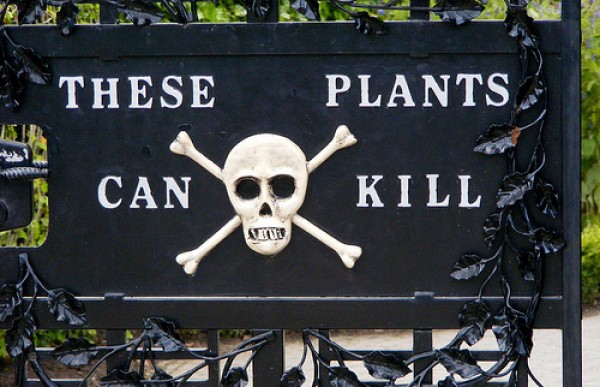
 There are many plants that can cause you harm, particularly from the sap or if they are eaten. At Alnwick Gardens, Northumberland a Poison Garden contains quite a few of these – and several had to have their own special licence from the Home Office to be on show! Many plants have medicinal qualities of course (and some otherwise poisonous ones are used in medicines- Foxgloves and Yew, for example). But there is a fascination with the dangerous ones. As the creator of the Poison Garden, the Duchess of Northumberland, says:
‘I wondered why so many gardens around the world focused on the healing power of plants rather than their ability to kill… I felt that most children I knew would be more interested in hearing how a plant killed, how long it would take you to die if you ate it and how gruesome and painful the death might be.’

Pretty but poisonous- part of the Poison Garden at Alnwick Gardens
The garden contains over 100 plants with varying degrees of deadliness. It’s difficult to tell if a plant is harmful from it’s look, as some are beautiful while others look pretty harmless. Many of the plants grown in the Poison Garden are easily recognised as common to the back garden; Foxgloves, Belladonna, Poppies, Laburnum and varieties of Aquilegia for example.
And the nasty things they can do to you are many and varied. Eczema is a chronic inflammation of the skin and causes itchiness. Sometimes this is caused because the victim has an allergy to a particular plant substance. However, serious poisoning from plants in the UK is relatively rare and many plants can be grown safely provided they are treated with respect (and usually wearing gloves).

Foxglove
Younger children under the age of six who are able to walk have an increased risk of poisoning, because they often put things in their mouth without realising they are harmful. Also, as their bodies are smaller they are more vulnerable to the harmful effects of certain substances.
Poisonous plants cause far less harm than might be expected. In ‘Accidental poisoning deaths in British children 1958-77’ (British Medical Journal), Neil C Fraser reports a total of 598 poisoning deaths of children under 10 years of age.
In the period covered only three deaths were attributed to plants.
Even this low number is overstated – one death was due to eating fungi and in another of the three cases eating the poisonous plant was doubted as the cause of death. In the one confirmed plant death Hemlock was the plant responsible.
The report makes it clear that medication, household cleaning materials and cosmetics pose a much higher risk than poison plants.
But illness, injury or irritation can of course be more frequent unless care is taken. The following is a list of some common ornamental plants that are either poisonous and/or a skin/ eye irritant, so remember they should not be eaten and cover your skin for protection if handling them:
Acalypha – Aconitum – Actaea – Aglaonema – Alstroemeria – Anthurium – Arum – Asparagus – Calla palustris – Capsicum annum – Chelidonium majus – Chrysanthemum – Colocasia esculenta – Datura – Drancunculus – Euphorbia – Fremontodendron – Helleborus – Heracleum mantegazzianum – Iris – Laburnum – Narcissus – Phytolacca – Primula obconcica – Solanum pseudocapsicum – Spathphyllum – Tulipa – Zantedeschia
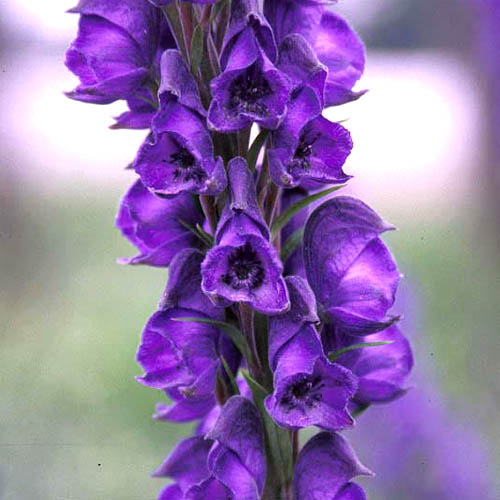
Aconitum (‘Monkshood’)

Arum (‘Cuckoopint’)

Iris

Lily of the Valley
More examples of poisonous plants can be found on the Royal Horticultural Society’s and other websites listed below. If you think you or someone else has eaten part of a harmful plant, seek medical advice from a hospital Accident and Emergency Department immediately, taking a sample of the plant with you. Do not try to make the person sick. Likewise if a pet has consumed something you suspect is poisonous seek veterinary advice as soon as possible.
 Three leaves, leave be! – Poison Ivy
  The effects of Poison Ivy
Sources and further information:
‘Poisonous plants to be wary of‘- Martyn Davey, Eastern Daily Press, March 16th 2013
Wikipedia- List of poisonous plants
The Poison Garden website- lots of useful information
Botanical.com- index of poisonous plants
Livescience- 10 most common poisonous plants
Realgardeners- list of poisonous plants with images
NHS- plant dangers in the garden and countryside
RHS- potentially harmful garden plants
Garden Safety- pretty but poisonous plants
RHS Wisley– to seek information about plant poisons (tel. 0845 260 8000- 10am-12.30pm and 1.30pm – 4pm)
Kew gardens – plant poisons information (tel. 020 8332 5792 9am-5pm) General, non urgent inquiries about poisonous pants can be emailed to ceb-enq@kew.org
Old School Gardener
If you’ve enjoyed reading this post and others on this blog, why not comment and join others by signing up for automatic updates via email (see side bar, above right ) or through an RSS feed (see top of page)?






 Old School Garden