Category: Gardening techniques


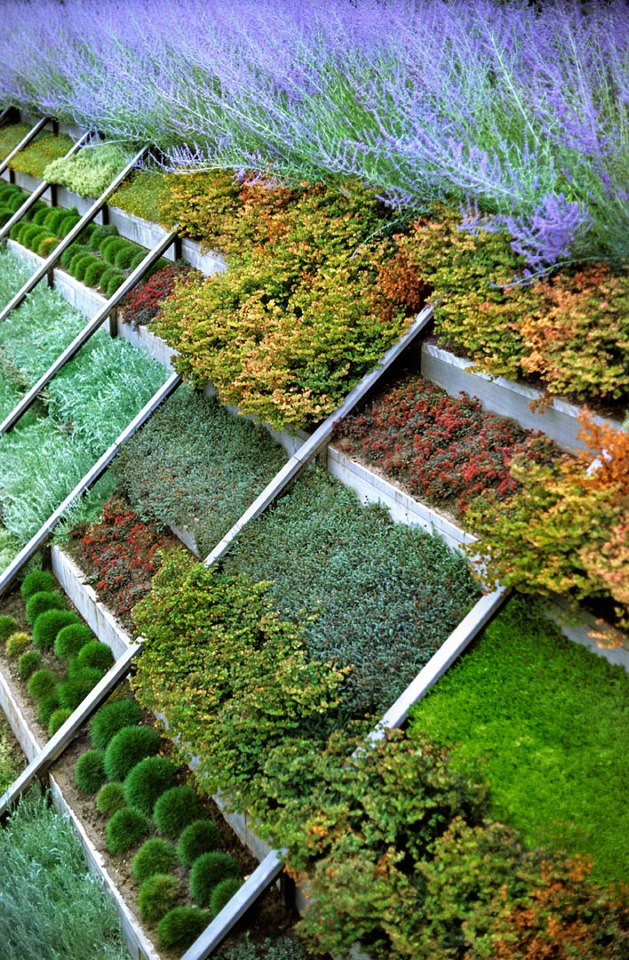
PicPost: Through the Garden Gate

Photo from Grow Veg

PicPost: Bottle it up

patinaandcompany's avatarpatinaandcompany

Many gardeners are beginners.  I see this from the number of gardening bloggers who say so, and from my experience living in and about a large city where people work constantly and are afraid to plunge into having much of a garden, because they don’t know how to put one together or how to look after a garden once they have it.

People constantly say that they don’t want to be tied to the maintenance of a garden–they work, they are away in the summer–and that is why they give up the joy of having their own personal piece of paradise.

One easy way to have a garden look after itself is to know what the conditions of the various areas of your property are and to plant only plants that love to be in those conditions.  An experienced garden designer would never do otherwise!

Another is to choose mainly…

View original post 1,210 more words

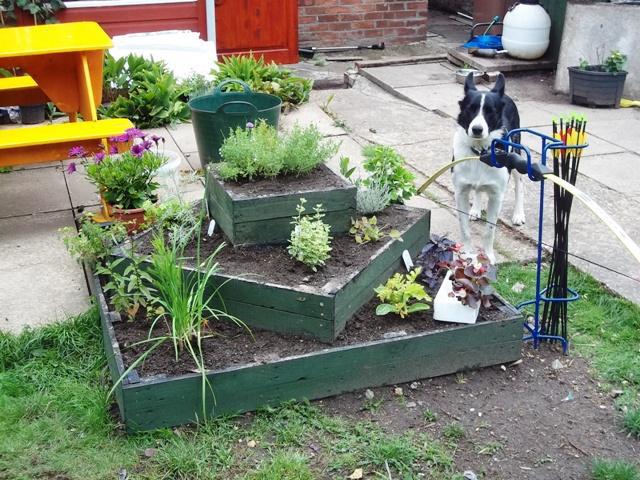
PicPost: It'll end in tiers

I’ve come across a few other pallet construction ideas for you – do you have any plans of your own? I’d love to hear from you and see your pictures!

Pallet planter – useful for displaying plants for sale?

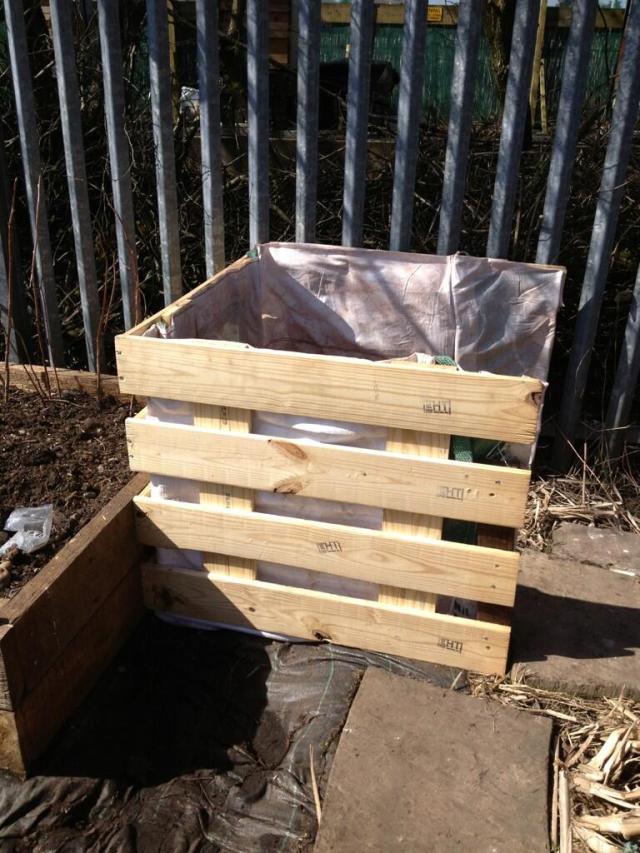
Compost bin lined with old builders bag by Liz Ackerly (and hubby)

Compost bin lined with old builders bag by Liz Ackerly (and hubby)

Read about one person’s experience in making a vertical pallet planter

Old School Gardener

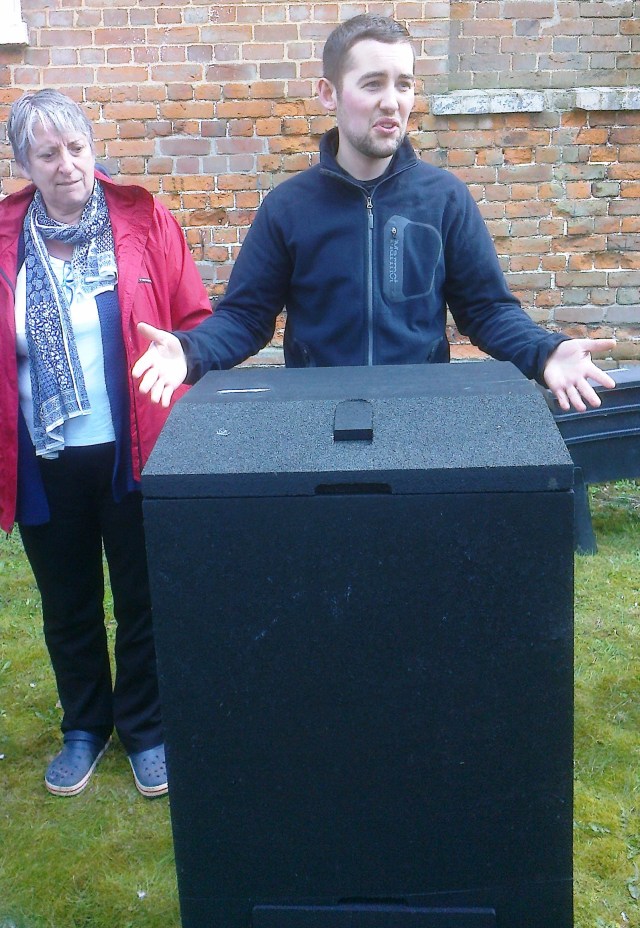
David Garrett from Garden Organic explaing how a 'Hot Bin' works

David Garrett from Garden Organic explaining how a ‘Hot Bin’ works

Since the beginning of the month local councils are having to pay around £100 per tonne of waste they dump in holes in the ground in Norfolk. Increases in the tax charged on ‘landfill’ (which makes up around 75% of the total charge) are becoming a significant cost to hard – pressed councils and by implication local Council Tax payers. So, in addition to the prime environmental reasons for diverting waste away for landfill, there is now an increasingly important economic driver. And this charge – which is planned to increase in years to come – could eventually help to make it economically viable to recycle a lot more of the stuff we stick in the ground – yoghurt pots and other hard plastics for example.

And the holes in the ground that readily lend themselves to landfill are also drying up, leading to controversial proposals for incineration plants which can generate useful heat at the same time. It is clear that reducing waste , re – using or recycling what we can, makes financial and environmental sense. This was the key message from a two day training course I attended last week, which now means that I can play my part in promoting sustainable approaches to waste – in my case and the 18 others who joined me on the training, as a ‘Master Composter’. In my case I don’t pretend to be an expert, as the title perhaps implies, more of an enthusiast expanding my knowledge and able to pass some of this on to others who can be convinced to recycle their green and food waste into ‘black gold’ – or compost for the garden if you like!

The local Master Composter scheme is run as a partnership between Garden Organic and Norfolk County Council and aims  to:

  • raise awareness of the benefits of composting to the public

  • encourage more people to compost at home

  • help those already composting to do so more effectively

  • encourage and support more community composting schemes

Those delivering the scheme are expected to give at least 30 hours of their time to preparing and delivering information and advice at events, to individuals, schools or to community composting schemes. There is a wealth of support and resources available to help in this including three sets of display materials, leaflets and rather natty digital microscopes so that you can see the mini creatures creating compost before your eyes – these are bound to be a hit with children and adults alike!

In the classroom- some of the trainee Master Composters

In the classroom- some of the trainee Master Composters

The two day training was inspiring , informative and lot of fun. After some introductory remarks about the scheme we were invited (‘Who wants to be a Millionaire’ style), to take part in a quiz to focus on the sorts of mind boggling amounts of waste, money and other resources involved in the disposal and processing of household waste. We were then introduced to the different types of larger scale composting:

  • Centralised large scale purpose run, mainly open air facilities where large amounts of green and other organic waste are regularly turned and high temperatures achieved to produce a crumbly black material great as a soil improver
  • ‘In vessel’ or indoor facilities where material is once again handled on a large scale and the ‘cooking’ process begins inside before the material is transferred outside for ‘maturation’
  • On farm composting where farmers will create their own compost heaps from agricultural and animal waste
  • Community composting schemes where local groups offer to collect green waste from households, create compost at a central site and then give the resulting product back to eager gardeners

After a wholesome lunch we were whisked off to see two sites that rammed home the importance of composting, one landfill site the other an ‘in vessel’ composting unit.

Edgefield Land fill site- coming to the end of its life

Edgefield Land fill site- coming to the end of its life

 Edgefield Landfill site in north Norfolk, has been operating a good few years and is focused on filling in holes in the ground left by quarrying. Now into its last few months of life, this site shows how landfill practices have developed over the years. Once these holes were unlined and the ‘leachate‘ (nasty liquid) running away from the rubbish was allowed to do so without any monitoring or control, so the area’s water courses were expected to somehow deal with the poison seeping into them. Now plastic sheeting is laid in the holes and careful measures taken to both monitor the release of leachate and methane gas as well as drawing both of these substances off, the leachate going for reprocessing at a sewage treatment works, the gas used on site to power  an electricity generator which is contributing power to the national grid. As we stood atop the windy mound of rubbish already topped off with soil we could see the open scar of the remaining tip which is due to be finished off in the next couple of months at which point the site will be closed, grassed over, trees planted and monitoring continued.

Our second visit was to the Marsham Composting Facility of Norfolk Environmental Waste Services (‘NEWS’ – a wholly owned company of the County Council). This impressive complex (not far from Old School Garden in fact) has been open about a year and takes in green and food waste collected by local District Councils  and others (who are charged for the amount they dump). I turns it into soil improver which is virtually all sold to a local farmer for use on his fields – and he is impressed with the results, it seems.

Waste material is dumped inside the main building where it is heaped against wooden barriers and the process of activation is started. Temperatures of 60C are achieved and once this process is well underway the material is moved outside into various bays where air is drawn through it by fan- assisted pipes and the cooking process continues until eventually temperatures die down to achieve the final product, which is collected in tractor – towed trailers and deposited on fields or in farmyard dumps awaiting the right time to apply it. The first facility of its kind locally, there seems to be scope for more as green and food waste collection increases. It would be great if the public could roll up and fill their own trailers with this ‘black gold’ – I’ve used something similar on my garden and it not only does great things to the soil, it also is dark enough to act as an attractive foil for the greens and other colours of the garden.


The second day of the training began with an overview of the composting process. A jigsaw of location, organic raw material, heat, water and air combine to produce a chemical reaction which decays and decomposes the green material and encourages a host of micro organisms plus other ‘critters’ who contribute most to this process. We also had a fun exercise exploring how to ‘sell’ the benefits of composting to a range of different ‘characters’ (I pretended to be a female student who was keen to do her bit to manage her own waste!). We distinguished between ‘hot’ and ‘cold’ composting, the former where relatively large amounts of material are brought togetehr at once to generate high temperatures and the composting process is relatively fast, the latter more suited to smaller scale, occasional additions of organic waste and which takes longer. Ideally, you need to ‘turn’ your organic material in ‘hot’ composting and don’t in the ‘cold’ system.

After lunch two experienced Master Composters, Russell and Mary Baylin, described their experiences, which included representing the Master Composters at the Queen’s Diamond Jubilee Tea Party last year! Becoming Master Composters in 2007, this couple are clearly dedicated to the whole composting cause, having been involved in many events around the county and working with schools and individuals to help them make the most of their green waste.

Russell and Mary Baylin, experienced Master Composters

Russell and Mary Baylin, experienced Master Composters

We went on to examine the range of opportunities for ‘getting the message across’ as Master Composters as well as rehearsing the sorts of answers we might give to frequently asked questions. So, for example, we know that compost is ready when its is dark in colour has little or no smell, is crumbly and relatively fine in texture, and we can use it to mulch important, hungry plants as well as a more general soil improver, maybe as a top-dressing to lawns  and in potting mixes.


The afternoon concluded with an examination of different types of composting boxes/ equipment – including a wormery (from which you get not only lovely fine worm – cast compost, but also a liquid fertiliser) a japanese style composter called a Bokashi (involving the intermingling of a special bran meal with green waste) and the latest ‘hot box’ being developed to fast process whole bin loads of material in a few weeks. We examined the pros and cons of each kind and who they might suit. I’m hopeful that my local school, can get a Wormery as way of using up the fruit, salad and other food waste from school lunches for example.


Following a quick tour of the gardens at Gressenhall Farm and Workhouse Museum (our base for the two days) and a look at their larger scale composting facility, including leaf mould and loam making, we gathered up our folders, tee shirts and other resources and began to ponder how we can make the biggest impact on composting in Norfolk. I’m expecting to help my local primary school with its composting activities and we begin this on Thursday with a session with older children to look at composting and what the school already does, including engaging the School Cook to see if we can compost more kitchen waste to use in the School gardens! I’ll let you know how I get on!

Thanks to Garden Organic and Norfolk County Council Staff who made for such an enjoyable and useful event: Jane, the 2 Davids, Amanda and Alex

Old School Gardener

P.S. It’s International Composting Awareness Week on 6th – 12th May – decorate your own compost bin and win a prize! 

If you’ve enjoyed reading this post and others on this blog, why not comment and join others by signing up for automatic updates via email (see side bar, above right ) or through an RSS feed (see top of page)?

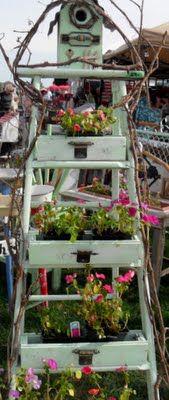
PicPost: Growth Ladder

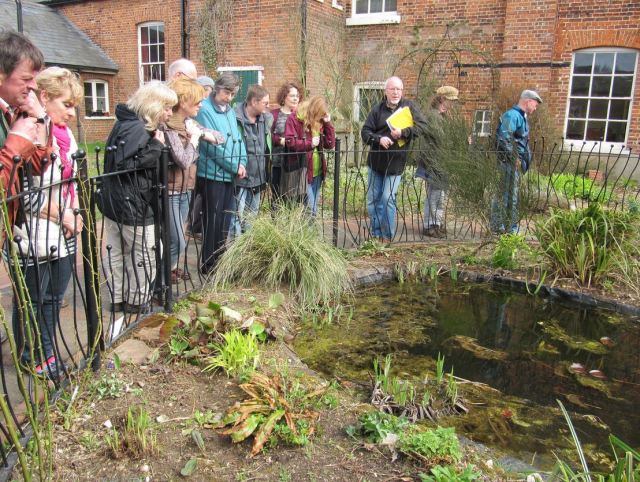
Me showing 20 new Master Gardeners around the Wildlife Garden at Gressenhall Farm and Workhouse Museum

Me showing 20 new Master Gardeners around the Wildlife Garden at Gressenhall Farm and Workhouse Museum

18th April 2013

To Walter Degrasse

Dear Walter,

How time flies – four weeks since I last wrote and I’m pleased to say that at last the weather has meant a more active time in the garden!

Where to start? well as I write this I’m about to set off for some induction training as a ‘Master Composter’ – a voluntary scheme that provides advice and support to households and communities in ways of recycling green waste. It’s run by Garden Organic and Norfolk County Council, the same partnership that runs the local Master Gardener scheme in which I’m involved. I’ll do a post next week about my experiences on the training.

Coincidentally I was asked to contribute to the latest Master Gardener foundation training that took place at Gressenhall Farm and Workhouse Museum last weekend. I did a similar session  last year about my experiences of recruiting households and other food growing projects and the sort of things I do to support them. Initially I took this group of 20 enthusiastic new Master Gardeners on a brief tour of the gardens at Gressenhall (you remember that I’m a garden volunteer there?). They seemed to enjoy this and a ‘site analysis ‘ of one of the gardens with the Scheme Manager Philip Turvil. The classroom session also went well, I think. It was fun telling of  my experiences and ideas and some ‘do’s and don’ts’ for the new recruits.

Earlier in the week I called round to one of my Master Gardener households in the next village, a young Mum with a couple  of pre school children, who is an enthusiastic food grower, though needs some advice and discussion of her ideas. We talked about her plans for the coming year, including different ways of growing tomatoes in a Greenhouse, putting potatoes in a front garden border, moving some fruit bushes and what to grow in the six raised beds her husband made last year. Even though some of her crops last year suffered from pests, and perhaps insufficient attention due to her other commitments, she remains up beat and keen to be more self sufficient in food. I must say I came away re – energised myself and what with the final arrival of spring – like weather, I’ve been wading in (or should it be ‘catching up’) with jobs in Old School Garden.

Most of my recent effort in my own garden has gone on ‘cleaning up’ – terrace pavings and pathways, fences, wooden buildings etc. It does seem like I’ve had a good few days of ‘pressure washing’ , but everything does look better for it (along with the cutting of new edges to the borders and grass mown for the first time). I spent a few hours yesterday repainting/staining fences, door frames, gates, shed, compost bins, wooden edges to my raised beds as well as the garage and outbuilding doors. The next thing will be the greenhouse, where the milder weather has meant that I can start moving things out (some tender potted plants that over – wintered plus some seedlings, via the cold frame). I can then remove the insulation and heater and give everything a good wash. I think I’ll remove the top few inches of soil in there too, given I had such a problem with tomato blight last year.

Unfortunately the frosty weather has finally near- demolished a couple of terracotta pots. These have done good service over the years, but (as the picture shows) they are literally being held together by ‘belt and braces’! Once the spring display of bulbs and wall flowers is over, these can be recycled as crocks for drainage in other pots.

One of two Terracotta pots that have just about 'given up the ghost' as a result of frosty weather

One of two Terracotta pots that have just about ‘given up the ghost’ as a result of frosty weather

Though the windowsills are still creaking with the amount of seedlings I’ve started off, again the warmer weather is allowing me to pot up and move things on – I’ve got a pretty good ‘conveyor belt’ of heated propagators/covered trays inside – uncovered trays inside – greenhouse – cold frame – plant out under cloches/fleece- reveal all! As you appreciate it’s important to gradually acclimatise the seedlings to outside conditions and at the same time keep potting on before the young plants grow to fill their containers.

The last few days have seen spring flowering getting underway (at last) and there are now good shows of Daffodils, some early Tulips , Forsythia, Cherry blossom as well as Primulas and one or two other things that seem intent on getting their flower show done and dusted before summer arrives (so I guess that some will not last as long as in previous springs). The weather has also meant that I’ve been able to plant my potatoes (on April 5th to be precise – supposedly a good day, astronomically speaking!). I used fleece to warm the trenches (which I’d previously filled with manure) for a couple of weeks beforehand and have replaced this over the planted potato rows to keep the warming process going. I’ve got a few spare ‘Charlotte’ tubers which are a bit of insurance against furtehr bad weather in the next week or so. It will be interesting to compare how they do with the earlier planting.


A few days ago I planted out a few Broad Beans plants under a cloche – I’d raised these in a couple of pots in the greenhouse as my direct autumn sowings were nowhere to be seen. I suspect the seeds either rotted in the very wet weather or the young seedings didn’t withstand the frosty January weather. I now have Calabrese, Cauliflower, Leeks, Celery and Cabbage plants nearing a size where they can be put outside, but we’ll just have to pot these on and keep them protected for a couple of weeks yet, I think, though some could probably go out under cloches.


I’ve also experimented with starting off carrots in an 80 plug modular tray this year. I tried this last year, but I think the weather and poor ultimate planting position made for a pretty dismal crop – like many people, I think. Hopefully this year I can plant out the carrot modules once they get to a decent size – they have at least germinated and the plants seem to be coming along well in the cold frame. The idea is to avoid the need to thin directly sown carrots (the traditional method) and enable me to plant out individual carrot plants into neat and efficient rows – we’ll see how succesful this proves to be, as you know that carrots don’t like to be moved around!

Lots of seedlings now ready for potting up- these are Nicotiana

Lots of seedlings now ready for potting up- these are Nicotiana

Apart from activity in Old School Garden, I’ve continued to support the local Primary School’s gardening programme. You may recall that I mentioned some ‘tool use and safety’ and digging sessions I’d held with small groups of children, and these continued up to the Easter break. I’m returning to help them every Thursday from next week, the early jobs being to plant out their broad bean and courgette plants (grown from seed in the last few weeks), potatoes (which have been ‘chitting’ in the classrooms), and sow some wild flower borders.  I was successful in getting some free seeds from the RHS as part of ‘National Gardening Week’ (this week!) and added to some seeds the school already has we should be able to do an area of about 10 m2 close to the raised beds and pond. Oh, and some good news on the pond, too. You remember that I designed and supervised the construction of this with much community help? The School Gardening Coordinator tells me that the project has won first prize in a competition run by the Aylsham and District Wildlife Trust! The prize of £100 will help to support further gardening activity at the School.

Well, I guess that about brings you up to date with my gardening activities of late. I’m glad to hear that you’re getting back into your lovely garden and I look forward to visiting you over the summer to see those superb herbaceous borders of yours!

All the best for now.

Old School Gardener

Other posts in this series:

Dear Walter….letter from Old School Garden, 11th March 2013

Dear Walter… letter from Old School Garden: 15th February 2013

If you’ve enjoyed reading this post and others on this blog, why not comment and join others by signing up for automatic updates via email (see side bar, above right ) or through an RSS feed (see top of page)?

Chas Spain's avatarChas Spain

The Gisborne Garden full of gold and silver glimpses.

Have been out painting the outside of (another) house all weekend – absolutely knackered – so this is in honour of enjoying those arcadian afternoons when you can wander around someone else’s garden.

View original post

deltagardener's avatarThat Bloomin' Garden

Last week as part of the demonstrations at the Milner garden Party, I happened to visit the Kwantlen Polytechnic University Seed Library. Now I know what you are thinking, seed library, whats that?  Good question! The seed library opened to keep heritage seed varieties alive and to build interest in locally sourced sustainably grown food.

So how does someone use the seed library? There is no charge. The seed library asks that you return to the library with some saved seed from your own garden to make up for what you have taken. They want their seed library to keep on growing and supply gardeners for years to come.

What is a seed library?

I think this such a great idea. Just look at this file bursting with flower seeds. Think about it, when you buy package of something like onions seeds, do you use them all? Often there are almost 800-1000 seeds per package and…

View original post 187 more words

Finding Nature

Nature Connectedness Research Blog by Prof. Miles Richardson

Norfolk Green Care Network

Connecting People with Nature

Discover WordPress

A daily selection of the best content published on WordPress, collected for you by humans who love to read.

Susan Rushton

Celebrating gardens, photography and a creative life

Unlocking Landscapes

Writing, photography and more by Daniel Greenwood

Alphabet Ravine

Lydia Rae Bush Poetry

TIME GENTS

Australian Pub Project, Established 2013

Vanha Talo Suomi

The Journey from Finnish Rintamamiestalo to Arboretum & Gardens

Marigolds and Gin

Because even in chaos, there’s always gin and a good story …

Bits & Tidbits

RANDOM BITS & MORE TIDBITS

Rambling in the Garden

.....and nurturing my soul

The Interpretation Game

Cultural Heritage and the Digital Economy

pbmGarden

Sense of place, purpose, rejuvenation and joy

SISSINGHURST GARDEN

Notes from the Gardeners...

Deep Green Permaculture

Connecting People to Nature, Empowering People to Live Sustainably

BloominBootiful

A girl and her garden :)