Category: Gardening techniques


To buy or not to buy?

To buy or not to buy? – compost bags at a Garden Centre

Up to now I’ve relied on buying seed and potting compost from my local nursery. Until about 2 years ago this was the standard ‘multi purpose’ stuff and it contained peat. More recently I’ve switched to ‘Peat Free’ both to do my bit to reduce Peat extraction and because having used it (it’s the ‘Which?’ – recommended ‘New Horizon’ brand) I’ve generally liked it for it’s more flakey, open structure. I’ve also started to use my own compost as a top dressing around plants in the spring and have used specialist composts for ericaceous plants, aquatics and for long-term planting in pots.

I’ve had variable results when I’ve used the shop – bought multi- purpose compost for seed germination, as its larger fragments can be a bit much for some seeds to make contact with and get going. On the other hand, the special seed compost I’ve bought can be a bit too dense and water-retaining , so just the opposite problem. So, now I’m wondering if I should try to make up my own seed and possibly potting mixes. The main argument seems to be that by doing this you can tailor your compost to the job in hand, and more generally, for potting on different plants with their different needs. So, when a new ‘Master Composter’ Factsheet arrived from Garden Organic which contains some interesting information on making your own seed and potting composts, I thought that you might find it helpful too. So I’ll summarise the main points here – maybe by the end of the article I’ll decide what I’ll buy and what I’ll make myself!

Why Make your own compost?

  • Organic, peat free composts aren’t always available to buy
  • Even commercially produced seed and potting composts have a limited life. If you ony need a small amount buying a 50 or 60 litre bag can be wasteful
  • It seems easy to do (hmm, I’ll reserve judgment on this one)
  • The basic ingredients such as loam, compost and leaf mould can be readily available at no cost (hmm again, I’m not sure about the quality of my garden soil as the loam…)
  • You can make the amount you need as you need it
  • If you prefer using animal- free products you can be confident about the ingredients
  • You can make different mixes appropriate for different plants and purposes.
What to fill seed trays and modules with?

What to fill seed trays and modules with?

So what’s the downside?

Apparently it isn’t as simple as it first seems….

Commercial producers spend years developing their products and it’s hard to replicate the characteristics of an ideal growing medium – good structure which retains water and air well but also drains well and which provides the correct nutrients for the plant.

Although plain garden soil will grow seedlings and plants very effectively in your garden, it won’t be as effective if it’s used in a tray or pot. For starters the number of micro- organisms in garden soil is mind blowingly large, and they create just the right balance  by regulating nutrient levels, suppressing diseases etc. If this balance is disturbed by using just a small volume of soil in a tray, for example, many of the benefits of garden soil are lost and problems can occur with germination and plant development.

So, trying to come up with the right balance of nutrients in a homemade mix is a big challenge, as the levels of essential nutrients will vary in organic compost and their release is unpredictable. An over – rich mixture, for example, can be as much of a problem as one lacking in nutrients. Ideally, you don’t want a mix that breaks down, leaving trays and pots half empty, or a mix which ‘slumps’, becoming compacted and airless, let alone one which contains diseases.

What are the ingredients?

Seed and potting composts consist of two main ingredients:

  1. Bulky material to hold the plants upright. Loam, peat substitute or a mix of the two tends to be the most common material used.
  2. Nutrients to feed them

Specific ingredients are:

Loam – good quality garden soil or home-made loam from old turf stacked upside down and covered for 6 – 12 months and then sieved and pasteurised before used for seed sowing,

Peat substitute such as coir and composted fine grade wood waste. Reclaimed peat from river dredging can also be used  (but this can contain weed seeds).

Garden compost is nutrient rich and isn’t needed for seed germination, but is useful in potting mixes and for longer term growing in containers. The release of nutrients can be very variable and it can contain weed seeds.

Leaf mould – 2 year old leaf mould can be used neat for seed sowing or incorporated into mixes to improve structure. It’s rich in micro organisms but low in nutrients and might contain some weed seeds.

Worm compost (from wormeries) is ideal in mixes needing plenty of nutrients and has good water – holding capacity, so is useful in hanging baskets. It can also be spread on the top of these and other containers and watered in where an additional feed is required during the growing season.

Manures – well rotted strawy farmyard manure provides both bulk and nutrients and is best used in rich mixes for long term use, such as tomatoes and peppers growing in pots.

Horticultural grit is needed to ensure good drainage if the loam is too heavy.

Organic fertilisers  – bone meal, hoof and horn etc. can be added to a mix to provide the necessary plant nutrients. These ‘slow release’ materials are used in small quantities. Sea weed is another option for those who prefer animal – free fertilisers.

Worm compost- a good top dressing for containers and hanging baskets

Worm compost- a good top dressing for containers and hanging baskets

What sort of compost?

Different composts suit different needs (all parts are by volume, not weight):

  • Seed composts do not need to be very nutritious as seeds come with their own initial power store. Once a pair of true leaves has formed the seedlings need to be potted up into a richer mix.  For seed compost use mature leaf mould or a mix of equal parts loam and leaf mould.

  • Temporary potting mixes need to be rich enough to sustain a plant during its early life, aiming for sturdy plantlets. This is where making a mix suitable for different types of plant and different stages in their growth process comes in. It might be tempting to make up a rich mix but it’s probably better to be a bit mean on the nutrients to encourage plants grow up ‘hard’. Too much nutrient can lead to lots of soft, lush foliage which is prone to weather damage, and attack by pests and diseases. There are different recipes to try out: either equal parts loam, garden compost and leaf mould; or, 2 parts peat substitute, 1 part grit, 3 parts loam and half part garden compost; or, 2 buckets loam,2 buckets coir/ leaf mould, plus 225g seaweed meal,110g bonemeal and 85g hoof and horn; or 3 parts leaf mould, 1 part worm compost

  • Long term potting mixes– a good balance of slow release nutrients is needed to sustain plants in containers for a long time. Try either 4 parts loam (no need to pasteurise) with 2 parts leaf mould or 3 parts loam; or, 3 parts loam, 1 part manure, 1 part leaf mould – this is especially good for hungry, fast growing plants like tomatoes, aubergines and peppers in pots.

Tips for success

  • Pasteurise loam when used in a seed sowing mix
  • Don’t sow seeds or transplant seedlings into neat garden compost – it may well be too rich
  • Add horticultural grit to ensure good drainage wherever necessary
  • Make different mixes for different things
  • Loam-based mixes tend to be more successful than peat or peat substitutes
  • Mix ingredients thoroughly
  • Don’t store home – made mixes
  • Try out small quantities and monitor plant reactions
  • Don’t feed to a rota, but respond to plant growth and needs
  • Keep mixes in use only slightly moist – wet soil rots seeds, so if in doubt DON’T WATER! (I think this is where I’ve been going wrong with my shop – bought seed compost)
My usual choice of 'mulit-purpose' compost- other brands are available...

My usual choice of ‘multi-purpose’ compost- other brands are available…

So will I take the plunge and start making my own seed and potting compost?

I can see the advantages of mixing different things for different plants and stages in development and as seed compost is quite expensive to buy it is probably well worth me making this up for myself. As to potting mixes, I think I don’t produce enough leaf mould and compost and have a good enough loam to make it a realistic option on any scale. It might be best overall if I use most of my own leaf mould as a soil improver in the autumn and garden compost as a mulch in the spring as now, but perhaps use some of these ingredients (and grit) to amend the multi – purpose (peat free) compost I normally buy to make up different potting mixes according to the plants and their stages of development.

What’s your experiences of shop- bought and home-made compost? I’d love to hear from you.

Source: ‘Potting composts: Making your Own’ – Master Composter Factsheet 5 – Garden Organic

Old School Gardener

If you’ve enjoyed reading this post and others on this blog, why not comment and join others by signing up for automatic updates via email (see side bar, above right ) or through an RSS feed (see top of page)?

My previous articles on using pallets and other recycled materials (mainly wood) in the garden have proved to be very popular. I couldn’t resist throwing the net a bit wider and so have put together a mix of different, ingenious ideas using a range of recycled materials.

Tell me what you think! And please let me have pictures of your own recycling projects for future features!

Other articles you might be interested in:

PicPost: Pallet to Strawberry planter

PicPost: Pallet Summer House

PicPost: Pallet Artwork

Pallet sizes

Even more Pallet Power

Pallet Projects – more creative ideas

Polished Primary Pallet Planters

Pallets Plus –  more examples of recycled wood in the garden

Pallet Power- the sequel

Pallet Power

Raised beds on the cheap

Old School Gardener

If you’ve enjoyed reading this post and others on this blog, why not comment and join others by signing up for automatic updates via email (see side bar, above right ) or through an RSS feed (see top of page)?

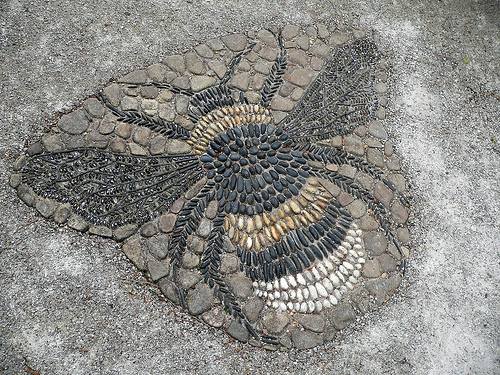
PicPost: Bee mosaic

SONY DSCNettles are one of the most widespread and well-known plants in Britain. You might think of them as weeds or nasty things to avoid with bare legs, but they do have some uses in the garden (as well as for making paper, dyeing cloth and eating)!

The two types – the perennial or stinging nettle and the smaller annual nettle- grow everywhere and their main benefits in the garden are:

  • For attracting beneficial insects the perennial nettle supports some 107 different species, including hoverflies, lacewings, parasitic wasps and ladybirds- all great for natural pest control.

  • In the compost heap freshly cut nettles, especially young, soft growth, make an excellent compost activator, as they provide a good source of nitrogen for the bacteria that start the decomposition process.

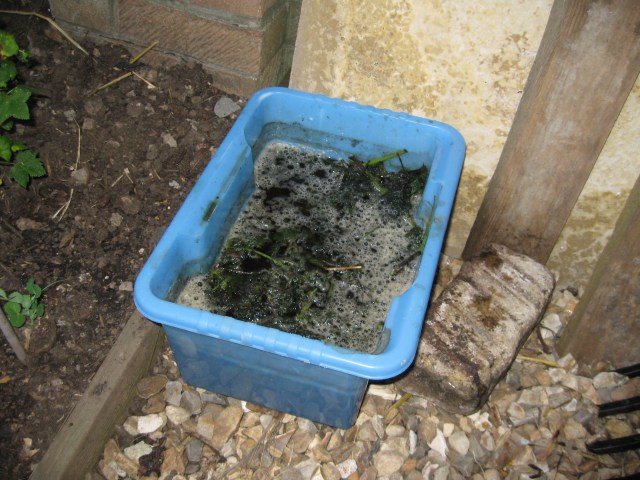
  • Liquid plant food research in Sweden has shown that liquid made from nettles gathered in the spring has high mineral content and so if you have access to plenty of nettles at that time of year, you can harvest them and dry for use later in the season to make nettle plant feed. To do this soak 1 kilo of nettles in 10 litres of water for about 2 weeks stirring occasionally. It won’t smell too good, but it’s worth the pong! You then strain the liquid off and use it diluted 1 part nettle juice to 10 parts water. The Nettle remains can be added to the compost heap but won’t act as an activator.

Making Nettle Plant Food- image from Tracey the transitoner

Making Nettle Plant Food- image from Tracey the transitioner

The roots of the perennial nettle form a dense mat from which they regrow each year- I have lots on the edges of the wood next to Old School Garden and they are constantly trying to invade! If you want to use the foliage and still keep them growing, cut them back only twice a year- if you want to be rid of them cut them back 3 or 4 times a year, even so it will probably take a couple of years to clear them entirely!

Source: Garden Organic Master Composter Factsheet 6

Further information:

Nettles- Royal Horticultural Society

Perennial Nettle- Garden Organic

Annual Nettle Garden Organic

Top ten uses for Nettles- Daily Telegraph

Heal the burn

Old School Gardener

If you’ve enjoyed reading this post and others on this blog, why not comment and join others by signing up for automatic updates via email (see side bar, above right ) or through an RSS feed (see top of page)?

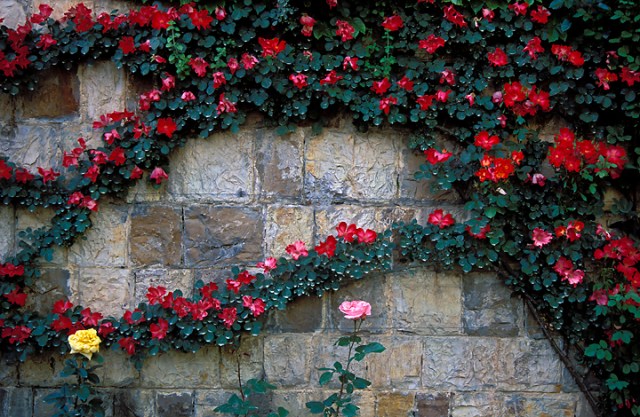
RoseWallAs I write today we have some rain in Norfolk (nothing dramatic, just a steady drip) – after three weeks of virtually nothing! I can almost hear the plants saying aahhhh….

Looking through my inbox I’ve come across another interesting question which I’ll use for this week’s GQT:

‘I would like to train some climbers on the wall of my house but do not want to use too many nails. What is the best way to go about it?’

So writes Salome St. John from Headon Platter in Cumbria. Well Salome, there are probably two good ways of tackling this. For small areas and plants which are not too heavy once fully grown, you can put up trellis. For larger areas and for supporting plants which can become very heavy over time (e.g. Wisteria) it might be best to put up a permanent wire – support system. Trellis can be attached to the wall with screws and plastic plugs after you have drilled holes with a masonry drill. To support wires, plug the wall in the same way and screw large ‘vine eyes’ into them – these should be about 1 – 1.2metres apart and at vertical intervals of about 450 – 600mm. Plastic covered or galvanised wires can then be threaded through the vine eyes and tensioned by means of tensioning bolts at one end.

Have you ever thought about using climbers in your borders?

You can train clematis or roses to add height to your borders by using rustic poles about 3m tall- these provide the least obtrusive supports. Dig a hole and/or ram in the posts so that they are at least 450mm, and preferably 600mm in the ground. Paint them before you put them in with a good wood preservative or one of the brightly coloured outdoor paints if you want them to stand out a bit more or tone in with other structures/furniture. A few cross – pieces will help support the plants that can be trained along them. Alternatively you can go for the ‘cottage garden’ look of  swags – these are basically thick ropes or other material (e.g chains) slung between the posts and along which roses can be trained. These make a great not – too – intrusive divider in the garden as well as being a good way of adding height to a border. Other options for adding height to a border are obelisks, which we use here in the Old School Garden to support runner beans and sweet peas.

Add height to your borders with a simple post, plus mesh for Clematis to clamber up

Add height to your borders with a simple post, plus mesh for Clematis to clamber up

Clematis can also be supported on tubes of special clematis netting: 2 metre lengths of netting are nailed to 2.4 metre stakes, which are hammered 600mm into the ground. This support is really only suitable for those late summer -flowering varieties which can be cut back in spring to keep them to a reasonable size.

Here at Old School Garden I’ve used panels of heavy-duty trellis to provide a screen for an oil tank and other things I want to hide and then trained clematis up this tying it in as it produces new growth. You can use all sorts of other climbers in the same way, but be careful you don’t go for those that are very vigorous and which will give you maintenance problems in the future; e.g. Clematis montana, the climbing rose ‘Kiftsgate’ or Boston Ivy (which is a fast wall coverer but which unless kept in check will get under roofs etc.).

A rose trained along a rope 'swag' between posts provides a permeable divider in the garden

A rose trained along a rope ‘swag’ between posts provides a permeable divider in the garden

Home made obelisks in Old School Garden used for Runner Beans and Sweet Peas

Home made obelisks in Old School Garden used for Runner Beans and Sweet Peas and heavy duty trells in the background screening a garage and oil tank

You might also be interested in related articles on this blog:

Arbours and Pergolas in the garden- 7 top tips

Lock down- pros and cons of garden ties

Build yourself an obelisk

Old School Gardener

If you’ve enjoyed reading this post and others on this blog, why not comment and join others by signing up for automatic updates via email (see side bar, above right ) or through an RSS feed (see top of page)?


What if all new houses had to be built with living roofs? Imagine if your apartment rent also included free fruit and vegetables from the roof garden…
http://ecosalon.com/high-tech-green-roof-technology-in-architecture/

living wall

Image by: Laura Manning

A guest article by Gavin Harvey

As urban spaces are growing, the desire to have a little bit of nature return to the living and working space is greater than ever. Living green walls help to escape the wasteland of concrete we find ourselves in, and counteract pollution to restore a natural balance to the local atmosphere.

Invented by Stanley Hart White in 1938, living green walls (also called vertical gardens or eco-walls) are more than just climbing plants. It is sustainable architecture at its finest!

 Benefits of Living Green Walls

With the expansion of cities everywhere, air pollution has increased; unknown to many people, toxins are not only outdoors on the streets filled with car fumes, but can build up indoors too thanks to air fresheners, cooking fumes and myriad other things. Plants filter these pollutants and improve air quality, whether that’s indoors or outdoors.

Living green walls on the outside of buildings also help to reduce energy costs by cooling the building in summer and insulating it in winter. Damages to walls are minimised by regulating the temperature fluctuations and diverting rainwater from the wall. Plants have long been used to block high frequency sounds on roadsides, and living green walls are a new way of diminishing noise pollution in busy urban areas.

Green walls also increase the property’s value by gaining LEED credits! This is an internationally recognised green building certification system, which rewards commercial buildings and home owners alike for developing certain green criteria.

 How Does it Work?

According to the climate of the location, carefully selected plants are put on structures that are either free-standing or attached to walls. These are irrigated by a drip-irrigation method, using recirculation systems to reduce water wastage.

Each wall is individually designed for the specific project. Plants for the exterior differ from those you would use indoors. They are chosen according to climate zones, usually for a higher zone than the location’s climate to ensure survival. Plants that have a wide range of tolerances and are able to adapt to a new environment quickly are perfect for the green walls.

If required, the wall can even feature a custom design, such as a logo crafted from carefully planted blooms in different colours.

 Cost and Maintenance

Plants grown on the wall are the cheaper option, but they will need a year before they are fully grown so if you want a stunning display immediately this isn’t your best option. Plants grown off-site and later inserted into the wall have their cost, as the nursery has to be paid plus fertilisers and day-to-day care.

Maintenance is crucial for a long-lasting living green wall. As the technology is still relatively young, it is hard to tell how long the plants will survive. The hardware can last up to 25 years whereas the plants will only grow until their roots run out of space within the panels, so it’s wise to choose species that don’t grow very rapidly! Plants in a tray system have to be replaced every year.

For more information about living green walls, check out The Ultimate Guide to Living Green Walls.

 Thanks to Gavin Harvey and Johann Heb for supplying this article.

You might also be interested in – Style Counsel: Gardens in the Sky

Old School Gardener


The blckbirds nesting among the vine in the Courtyard Garden at Old School Garden- picture by Gabbie Joyce and Paul Hill

The blackbirds nesting among the vine in the Courtyard Garden at Old School Garden- picture by Gabbie Joyce and Paul Young

To Walter Degrasse

Dear Walter,

It’s coming to the end of one of the driest and hottest July’s we’ve had in nearly 10 years. Today looks like it will be the hottest of the year to date – somewhere in the upper 20s if not low 30s Celsius in our corner of England (and higher elsewhere)! Having spent a couple of hours this morning planting out the last of my summer annuals, thinning and transplanting wallflowers and planting some leeks, I’ve escaped the worst of the heat and come inside to drop you a line!

As you can imagine, the last few weeks have been very busy on several gardening fronts. I guess the most significant event was our first garden opening last week, which I’ve done a separate article about. This was great fun and I was very pleased with the way the garden looked and the many positive comments from the 70+ visitors. We raised over £300 too which will be going to three local ‘good causes’.

One of these is ‘Master Gardener’, where I continue to offer my voluntary advice and help to those starting  to grow their own food. Gabbie, the local co-ordinator, has come up with the idea of using the money we raised as a special fund to be tapped into by Norfolk Master Gardeners to purchase small items to help their households, groups and other new growers- I’ll tell you more about this in due course. I’ve attended a few events recently and had fun talking with a range of people about their food growing experiences and maybe even helped to recruit a few new households. The latest event was the ‘Destination Aylsham’ Fun Day yesterday, which I helped out at with fellow Master Composter Sally Wilson- Town and co-ordinator David Hawkyard. Well over 70 people came over to discuss composting and ‘growing your own’, though my period at the stall seemed to coincide with the quieter, ‘wind down’ phase towards the end. Still,  no matter, we seem to have promoted composting and food growing to a few more people – and I managed to sell some plants and produce too!

I’ve done my last session this academic year at Cawston Primary School, where we had great fun harvesting potatoes, broad beans and a few onions. In truth, with the exception of the Broad Beans, these were harvested a little too soon, because this was the last opportunity for the children to garden before their holidays which begin on Thursday. Still, the potatoes were of a good size and a reasonable quantity and will be used in the school kitchen this week along with the beans and some of my donated home grown produce (we’ve had some enormous Calabrese and Cauliflowers lately). The children also continued to dig out the old compost bins so that we can make a new start there in the Autumn. However, it’s disappointing that we’ve not been able to keep on top of the weeding in the bog garden around  the wildlife pond (which is also looking extremely dry), as many weeds have now set seed, so that will be an added problem for us in the Autumn, when  hopefully the soil will be damper and weeding easier. However, the Outdoor Learning Co-ordinator , Sharon, tells me that the pond has been a real winner with the children and has yielded examples of a wide range of insect and other wildlife.

The gardens at Gressenhall Farm and Workhouse Museum are struggling in the sun and heat, but the planting and care taken earlier in the year by myself and other volunteer gardeners seem to be paying off. The rambling rose ‘Rambling Rector’ in the Wildife Garden looks particularly splendid as it covers the arbour and adjoining wall, where I and my friend Steve spent an hour or two pruning and tying in last autumn.


At home, Old School Garden is also struggling in the heat, and evening watering sessions of hand held spray and sprinkler have lasted a good few hours in recent weeks – and still many new plantings are wilting! Anyway, the long borders are looking great, though with a few gaps after shearing back the oriental poppies. I’m hoping that my strategically placed pots of tender perennials and plantings of annuals will soon plug these and the overall show will reach a crescendo in a few weeks time. The kitchen garden has proved to be very productive to date, though we  continue to get problems with pests such as pigeons and to a lesser extent blackbirds and aphids. I’ve noticed a few Cabbage White butterflies recently, but hopefully with my planting of Nasturtiums and netting of my Brassicas, we’ll not be too badly affected by their hungry green caterpillars! So far we’ve had crops of :

  • Potatoes – though I had to lift many of these a bit early as blight had started to affect them

  • Calabrese  -huge heads from the F1 variety ‘Beaumont’

  • Cauiliflowers- though a few heads were ‘blown’ as we couldn’t keep up with the supply!

  • Mange Tout – despite early pigeon attacks!

  • Celery – too much to cope with!

  • Carrots – a reasonable first crop though many were twisted and misshapen, possibly a combination of too rich and stony soil

  • Lettucs – a few varieties from the garden have tasted good along with some ‘cut and come again’ varieties in pots.

  • Tomatoes – just a few of the smaller, golden variety to date, but plenty on the plants in the greenhouse, ready for swelling and ripening.

  • Courgettes – the start of what promises to be a bumper year, especially as my friend Steve has given me four ‘Patty Pan’ plants to go with the two green varieties he’d already supplied!

  • Strawberries-  you remember I’d started the process of relocating the strawberry bed? Well the new plants seem to have taken well, though, as youd’ expect I didn’t let them flower or fruit this first year, but the old plants I left hoping for ‘one more year’ of fruit were a disaster. Very few fruits and what there were the blackbirds, slugs and mould seem to have taken. So for the first time in many years I actually bought two punnets of strawberries!

  • Raspberries – these are coming on well and we’ve enjoyed a few days supply so far, though the pigeons, despite my various ‘bird scarers’, seem to be enjoying themselves and breaking off the fruiting stems as they use them like ladder to go up and down the canes!

  • Garlic – most now harvested but some along with the onions are just drying  out before storing

  • Broad Beans – a good crop of a rosy pink variety, though when cooked their attractive colour seems to turn a rather dull grey, but they taste just fine!

  • Gooseberries- first bush harvested , two red varieties to come this weekend

  • Blackcurrants- two bushes harvested and a lot frozen, with one more to come shortly

Later today, I’ll be sowing some further crops of Lettuce, Mange Tout, Carrots and Cabbage as well as some Pansies I got from the Royal Norfolk Show and which  should provide us with some autumn and winter colour. That’s if it is not too hot of course.

Well, old friend, I see that it’s about time for lunch, so I’ll close for now and wish you and your good wifeFerdy’ well. By the way, would she mind terribly if I called her by her second name, which I find so much more attractive? Lise seems to capture her elegant beauty a lot more than that  nickname she got all those years ago at University! We’re looking forward to seeing you both here at Old School Garden in a week or two’s time – hopefully the garden will still look good and the weather will mean we can enjoy some warm summer evenings on the terrace with some good food, and even better wine!

all the best

Old School Gardener

Other posts in this series:

Dear Walter…. letter from Old School Garden 21st June 2013

Dear Walter….letter from Old School Garden, 20th May 2013

Dear Walter….letter from Old School Garden, 18th April May 2013

Dear Walter….letter from Old School Garden, 11th March 2013

Dear Walter… letter from Old School Garden: 15th February 2013

If you’ve enjoyed reading this post and others on this blog, why not comment and join others by signing up for automatic updates via email (see side bar, above right ) or through an RSS feed (see top of page)?

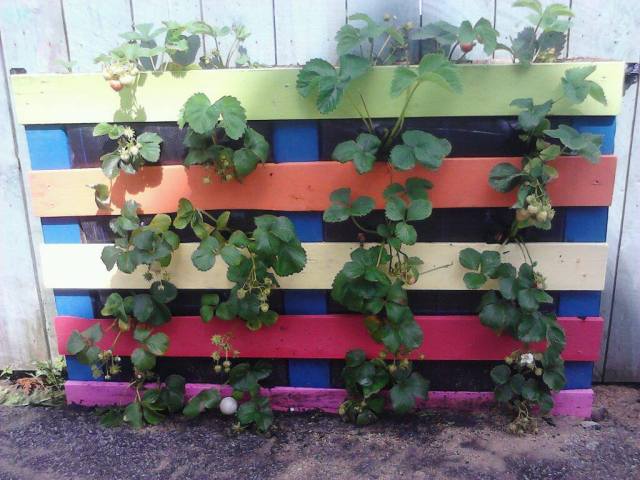
PicPost:Pallet to Strawberry planter

'Friend or foe?'

‘Friend or foe?’

‘Prevention is better than cure’ applies to many situations in  life and controlling the pests and diseases in your garden is one of them.

As part of the ‘Master Composter’ project providing advice to families and groups about using green waste to make compost and enrich their soil, I’ve recently been sent a useful factsheet about organic pest and disease control. And pest control – specifically pigeons and blackbirds – is presently keeping me well exercised in the garden! More positively, I don’t seem to have had much of a problem with either slugs and snails, aphids or caterpillars – so far. A harsh winter and dry spell may be part of the answer. Anyway, I thought I’d share the basics of this factsheet with you (plus a few thoughts of my own).

Here are 7 tips for effective action to prevent your crops and plants being trashed by those not – so – welcome forces of nature!

1. Healthy soil

Too much fertiliser and your plants will be soft and sappy – providing a lovely lunch for pests and encouraging you to spray to deal with them. Not good practice. Better to feed your soil with a ‘wholefood’ diet of garden compost and leaf mould rather than those ‘fast food’ fertilisers designed to feed the plant and not the soil.

2. Resistant plants

Choose varieties of plant that can withstand the attack of pests and disease; e.g. blight resistant potatoes such as ‘Remarka’ and Sarpo’ and root aphid resistant lettuces like ‘Milan’.

Leaf mould - a great way to improve your soil

Leaf mould – a great way to improve your soil

3. Rotate your crops

Focusing on the veggy garden, crop rotation is an essential technique to build soil fertility and controlling the build up of pests and diseases.  Divide your veg into at least four groups (those in the same or similar families and having similar feeding habits) that stay together each year, but move onto another part of the garden  every spring.

4. Barriers and scarers

Keeping pests out of your crops and off your choice plants is probably the most effective way of reducing if not preventing damage. There is a range of different barriers and scarers suited to different types of crop or plant:

  • Fine mesh netting  – works well for carrot root fly and pea moth as well as pretty well most pests that attack cabbages (flea beetles, cabbage white butterfly, leaf weevils, birds and white fly).
  • Other Netting – useful for preventing birds eating/ damaging fruit and vegetables, but remember it should be tightly drawn to the ground to avoid any gaps – my own experience is that pigeons and blackbirds are past masters at finding the smallest of holes and working their way in! Netting can also prevent cabbage white butterflies from laying their eggs on Brassicas, but the gauge of the net needs to be fine enough to stop them. Also, having used hard plastic mesh netting for a while, I’d suggest investing in those made of softer, string -like material (nylon?), as this will drape more easily over crops.
  • Cabbage collars  – a collar of carpet underlay around the neck of  a young cabbage will prevent cabbage root fly from laying its eggs at the base of the cabbage.
  • Bottle cloches – made out of plastic bottles (tops and bottoms cut off) and placed over newly planted vegetables will prevent them being eaten by slugs or anything else that takes a fancy to them.
  • Small gauge chicken wire – always useful, this can be placed over newly sown peas to stop them being eaten by mice while germinating or being scratched up by cats. Wrapped around flowering bulbs, it can prevent them being dug up by squirrels.
  • Bird scarers – a ‘humming line’ (sometimes called buzzwire) criss – crossed over veg and which vibrates in the slightest of breezes will help scare off birds. You can come up with any number of other devices that use the wind to create noises or flashes of light and colour that will put off the birds, but move them around, as birds get used to things being in the same place and will eventually ignore them. I’ve just bought (for the princely sum of £2.50) a colourful windmill that I’ve stuck atop a cane and put over a spot where pigeons come to pinch my raspberries – we’ll see how effective that is! Another method is to tie up old CDs/DVDs to lines between canes to let them flash and move in the breeze. I’ve also seen some pretty realistic models of Owls and other birds of prey and a host of other devices that you can set up to ward off other birds – I’m not sure if they are effective, though.
A beer trap will entice slugs

A beer trap will entice slugs

5. Traps

Beers traps for slugs do work. Codling and Plum moth traps hung from apple trees and other ‘sticky’ traps can also be effective, using  a pheromone stuck to a sticky base which attracts male insects and gets them stuck in the glue. Greasebands painted around the trunks of apple trees in autumn will prevent the wingless female winter moth from climbing up the tree to mate. Sticky glue is also useful for glasshouse staging if you have a problem with ants. Sticky yellow bits of card hung up in greenhouses can help reduce the white fly population.

6. Beneficial bugs

These are your best friends when it comes to controlling pests in your garden. Planting simple annuals among the veg (e.g. Marigolds, Californian poppies), will attract  a wealth of beneficial insects  like ladybirds and hoverflies which will gobble up your aphids. I’ve put some marigolds alongside my tomatoes in the greenhouse for this reason and also planted Nasturtiums which can attract cabbage white butterflies as a diversion away from my Brassicas.You can also plant a few native shrubs and herbaceous perennials (e.g. hazel and hardy geraniums), create a pond, leave a small pile of logs in the corner of the garden or create a ‘bug hotel’  and feed the birds throughout the winter. There are other ‘biological controls’  that you can buy to deal w ith specific problems- little packets of some of the bugs for use in the greenhouse as well as nematodes that can attack some of the more troublesome pests.  Any or all of these will keep enough wildlife in your garden to eat literally thousands of pests and their eggs!

'Bishybarnabee' - or a ladybird- will eat loads of aphids at one sitting

‘Bishybarnabee’ – or a ladybird- will eat loads of aphids at one sitting

7. Keep it clean

Think ‘clean cut’. If you’re removing a dead or diseased branch from a tree (e.g one with coral spot), make sure you cut into healthy wood and always wash your tools in boiling water or wipe them with surgical spirit afterwards. Scrub out pots and give your greenhouse a good scrub every winter to get rid of over wintering pests. Maximise air circulation by correct pruning of plants and leaving  just a little more space between plants will help control fungal diseases, though his needs to be balanced of course against closer planting to keep weeds under control! Controlling powdery mildew in Roses is something that benefits from greater air circulation, for instance. Finally, and most importantly, be vigilant and check your plants regularly so that any pests and diseases don’t get a foothold. For example, start checking the centre of any Gooseberry bushes in April for Sawfly eggs and larvae. Also be wary of accepting gifts of onion and cabbage plants, as they may well carry onion white rot or clubroot respectively!

So, not a spray in sight – rather planning, forethought, observation and simple control measures can help you beat those garden pests and diseases!

Source: Master Composter Manual Factsheet 4, Jojo Norris, Garden Organic 2013

Old School Gardener

If you’ve enjoyed reading this post and others on this blog, why not comment and join others by signing up for automatic updates via email (see side bar, above right ) or through an RSS feed (see top of page)?

Finding Nature

Nature Connectedness Research Blog by Prof. Miles Richardson

Norfolk Green Care Network

Connecting People with Nature

Discover WordPress

A daily selection of the best content published on WordPress, collected for you by humans who love to read.

Susan Rushton

Celebrating gardens, photography and a creative life

Unlocking Landscapes

Writing, photography and more by Daniel Greenwood

Alphabet Ravine

Lydia Rae Bush Poetry

TIME GENTS

Australian Pub Project, Established 2013

Vanha Talo Suomi

The Journey from Finnish Rintamamiestalo to Arboretum & Gardens

Marigolds and Gin

Because even in chaos, there’s always gin and a good story …

Bits & Tidbits

RANDOM BITS & MORE TIDBITS

Rambling in the Garden

.....and nurturing my soul

The Interpretation Game

Cultural Heritage and the Digital Economy

pbmGarden

Sense of place, purpose, rejuvenation and joy

SISSINGHURST GARDEN

Notes from the Gardeners...

Deep Green Permaculture

Connecting People to Nature, Empowering People to Live Sustainably

BloominBootiful

A girl and her garden :)