
Category: Gardening techniques

With the first real ‘icy blast’ due in the UK this week, here’s a useful video reminder of some key jobs to do before winter really takes hold! (Thanks to Grow Veg)
Old School Gardener

At last a half day of dry weather allowed us a window in which to cut our last meadow on the allotments. This meadow is situated close to our very mature oak tree and within the grasses we grow wildflowers and cultivated plants that we know attract bees, butterflies and moths, hoverflies and all sorts of beneficial insects. It is home too to amphibians, small mammals and even grasshoppers and crickets. The flowering plants here this year just have not stopped flowering their hearts out so we have left cutting the meadow down until last.
So early in November four of us set to with strimmers, mowers and rakes and we made sure we had our water proof clothes at the ready. An hour into our work and we needed them. But we persevered and got the job done. Beautiful rainbows came out to wish us luck.


A few weeks…
View original post 231 more words

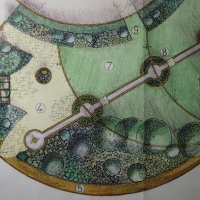
Flower and Hay Bale Garden by Carol Leigh Thomas

- Rosa rubiginosa- a wild or species rose that needs minimal pruning
This week’s gardener’s question comes from a Miss Flora Dunmore of Argyll, and focuses on roses:
‘I’ve just inherited a big garden with lots of different roses, icncuding bush, climbers and ramblers. Can you tell me why, when and how to prune these, please?’
Flora, what a lovely inheritance! First why do you prune:
to remove weak, spindly and diseased shoots
to encourage strong new shoots to grow from the base of the plant each year (these bear the best flowers)
to open out the centre of the bush to increase air circulation (this helps to check disease)
to create a pleasing (usually symmetrical) outline to the plant.
When to prune depends on the types of roses you have:
-
For large-flowered bush roses the traditional months are March in the south and April in the north of England (and possibly even later in Scotland), when growth is just beginning- but pruning can be done safely any time from November onwards in the south, provided you are prepared, if necessary to remove some frost damaged growth in spring. Most importantly never prune during a frosty spell.
-
For ramblers the best time to prune is after flowering, probably late August (you can dead head throughout the flowering season to achieve much the same result)
-
For climbers, the best time is October, when the recurrently flowering types have finished their show, but it can be done later if the weather is mild.
The techniques for pruning vary according to the type of rose:
For large flowered, bush roses cut away completely any diseased,weak and spindly shoots as well as removing all dead stumps from earlier pruning (use a fine toothed saw if they are particularly woody and thick). If there are many canes criss-crossing in the centre then remove a few to open out the bush. If two shoots are growing so that they rub each other, remove one. Finally, cut the remaining shoots back to about 200-250mm long. Harder pruning than this will produce larger, but probably fewer flowers – but it won’t harm the rose.
For smaller, cluster-flowered roses do the same as for larger flowered varieties but leave the main shoots 300-350mm long. If the main shoots have side shoots, the latter don’t need to be removed, provided they are fairly thick (say about a pencil thickness), but they should be cut back by about two-thirds of their length.
Climbers should be pruned to establish a permanent framework of significant branches from which flowering stems are produced. To achieve this cut back side shoots to one or two buds from the point where they branch out from the main shoots. If the plant has become bare at the base, cut one of it’s main shoots hard back to encourage new growth from ground level.
Ramblers need to be pruned to encourage flowering on young shoots that grow from the base of the plant each year. To achieve this cut out completely the side shoots that have finished flowering and tie in the new shoots in their place. If in some years there are only a few of these, some of the old shoots (which can still produce flowers) may be left in place, but their side shoots should be shortened by about two-thirds.

-
Rambling roses need a framework of stems establishing, with selective removal of the oldest to encourage new growth from the base and flowering shoots pruned after flowering
Miniature Roses which produce a thick tangle of tiny, wiry shoots, require these to be thinned out. Remove dead or diseased shoots and trim back the rest by about two-thirds. It may be difficult to find a bud to cut back to, so just clip them over so that they look neat.
Shrub roses vary enormously in size and type, so it’s difficult to give a general guide to pruning. Wild (species) roses should not be pruned at all, other than for removal of dead or diseased branches. Most of the old garden roses such as Gallicas, Damasks, Albas, Centifolias and Bourbons will give more flowers if they have their side shoots shortened by about two-thirds in winter. Modern shrub roses that are in fact like giant versions of the smaller cluster types should be pruned in a similar way to those – but reduce their height by only about two-thirds. The Rugosa family needs little if any pruning, although for the less dense kinds, a few older canes cut back every two-three years will encourage bushiness.
If you have newly planted roses then you should prune them even harder than established plants so that a strong framework of new shoots will be built up for the beginning. Leave their shoots only about 50-75mm long. Prune autumn planted roses when you do your established ones and spring planted ones at planting time. But, don’t prune climbers at all in their first year, as they take longer to establish.
Pruning cuts are easiest with secateurs. Ensure that a clean cut is made with clean blades (these should be sterilised with surgical spirit/alcohol to avoid passing on diseases from plant to plant). Cuts should be made about 6mm above a bud on a shoot; the cut should slope down towards the side away from the bud. Cutting to an outward- facing bud encourages the bush to spread outwards, but don’t worry if you can’t find one exactly where you want to cut- often a bud lower down will grow away more vigourously in the direction you want, and you can always trim it back later.

- Clean secateurs with surgical spirit or alcohol before pruning each rose plant
Old School Gardener

“When the weather is bad and no other work can be done, clear out manure for the compost heap,” recommends Roman statesman Marcus Porcious Cato, better known as Cato the Elder. In his writings De Agricultura, he shares the secrets to running a successful farm-business in the ancient Roman Empire.
In this work, Cato, who lived between 234 and 149 B.C., provides us with an early how-to guide for enriching the soil through the practice of composting.
The Dirt on Dirt (and Compost)
Compost is not actually soil itself, but the dark, crumbly result of a controlled process of breaking down animal and vegetable matter. The resulting product is fairly stable, no longer decomposing at the previously speedy rate, and is full of nutrients (especially nitrogen and carbon) and minerals in forms ready for hungry plants to absorb.
But composting isn’t just any old rot, full of stink…
View original post 938 more words

- Winter Tares- good at protecting the soil, smothering weeds and maintaining nitrogen in the soil, once dug in. Picture from Garden Organic

At one of my recent ‘Grow Your Own’ classes, one of the participants raised an interesting question about Green Manures (GM’s).
He wondered if it was actually worth growing green manures as additional sources of nutrients. He reasoned that as they use up nutrients from the ground there isn’t any real gain in the nutrients avialable to follow on crops. Like me, he had also heard that legumes, (peas and beans) do fix nitrogen from the air and therefore their roots are a source of additional supplies of this if dug into the soil. And he also mentioned that deeper rooting plants like Comfrey tap into nutrients that wouldn’t otherwise be available to plants with shallower roots, so making these available via their leaves once composted, and also from a ‘tea’ made from these and applied as a liquid feed. So is this all correct?
I decided to contact my colleagues at Garden Organic and ask for their advice on all this and got a very interesting reply from Francis, their Horticultural Research Manager:
“Green manures and nitrogen
Legumes, when the temperature is warm enough and they have the right bacteria, will fix the nitrogen they need from the atmosphere. It is very true, and seldom appreciated, that if a legume crop (eg beans) is harvested then most of this nitrogen is taken away and not left in the soil. However, if the legume is grown as a green manure and dug in whole (usually in an immature state) rather than being harvested then there will certainly be a net benefit; nitrogen fixation (directly or indirectly via animal manures) is the main source of nitrogen for agriculture and horticulture in the absence of artificial fertilisers.
Non leguminous plants can only take up nitrogen from the soil as inorganic ions (ammonium but mainly nitrate). The latter is very soluble in water and so easily washed out by the rain and so lost from the soil, contaminating drinking water and rivers etc. A lot of work was done (some by Garden Organic) to demonstrate that one of the best ways of preventing this was by growing winter green manures such as rye. When this is dug in the nitrogen they have taken up is mineralised to be made use of by following vegetable crops.
Green manures and other nutrients
Other nutrients (especially the metals such as K, Mg etc) are more tightly held on the surface of the soil particles and so are not easily leached so it is true that green manures are less important for keeping them in the soil. However, some do have specific effects (eg buckwheat can help mobilise phosphorus and chicory is deep rooting and so is a source of trace elements from the subsoil that may have been depleted nearer the surface). All green manures will add organic matter to the soil which helps with structure and also stimulates microbial activity, important for general nutrient cycling.”
So, the net result is that there are several good reasons for using GM’s over the winter, including maintaining nitrogen where this would leach away from unprotected soil, weed reduction, protecting soil structure, and the addition of organic matter to help moisture retention and soil structure. However, the legume contribution to soil fertility (assuming you grow these to produce food), is of questionable value if left in the soil and dug in. Better to add animal manure or your own compost to boost nitrogen levels.

- Comfrey- reaches the nutrients other plants cannot reach…and you can out them into your soil via a (smelly) tea made from their leaves

Further information:
Garden Organic and Cotswold Seeds have produced a useful advice booklet on soil improvement. It’s available as a pdf to download for free at ‘Sort out your Soil’
Linked articles:
Green Gold – 7 reasons for using green manures
Green Gold: Where and when to use Green Manures
Green Gold: Making the most of green manures
Green Gold: 12 plants for soil improvement
Old School Gardener
How to make leafmould

A downloadable factsheet from the good folk at Garden Organic- just click on the link above.
Old School Gardener
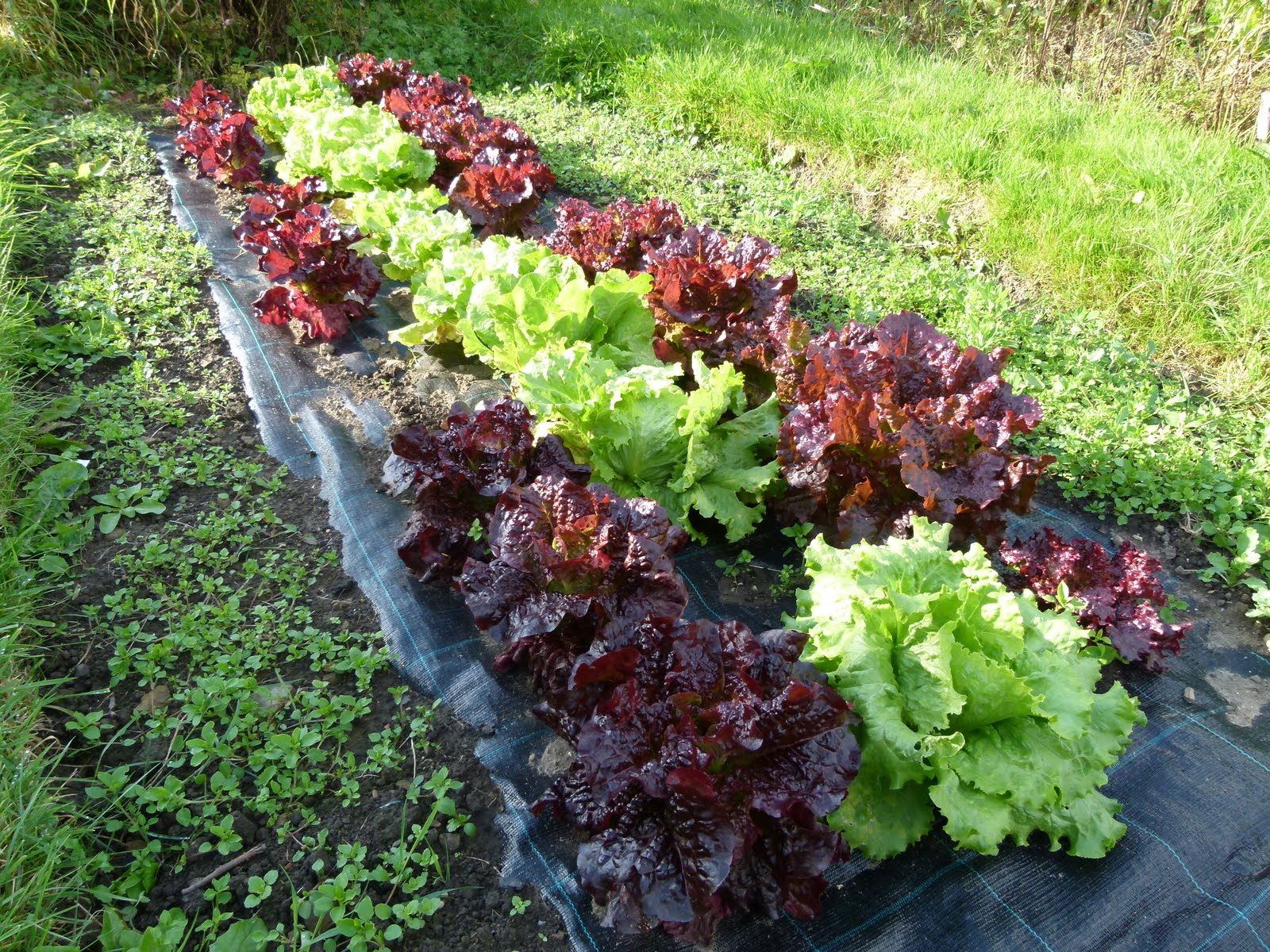
Weed – proof membranes can be an effective way of controlling weeds around vegetable crops
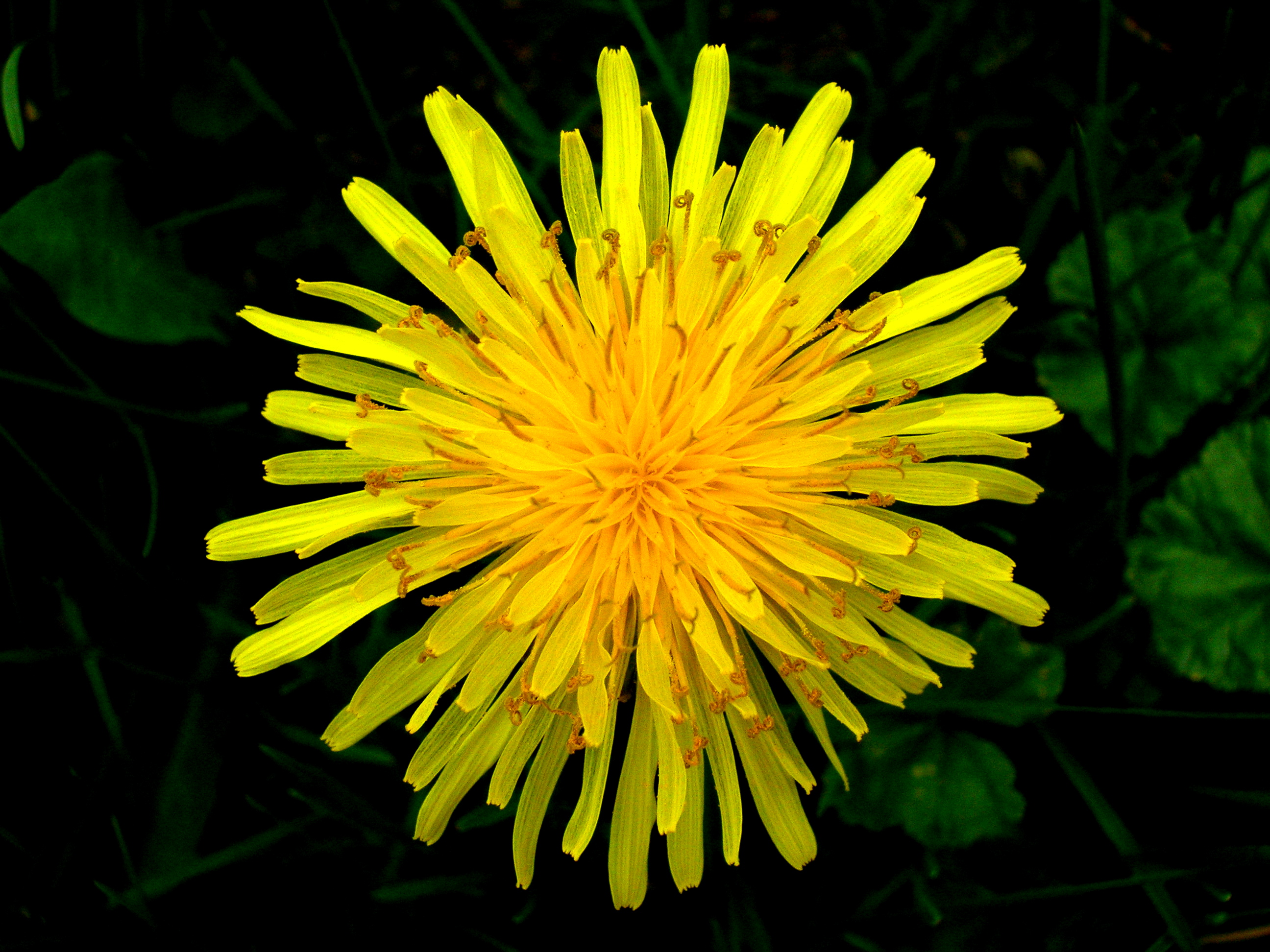
A weed might be a ‘plant in the wrong place’ but some ‘weeds’ have positive features. They can look good; some are edible; some provide food and shelter for birds, butterflies and beneficial insects and many can also be used in the compost heap (though if you don’t have a ‘hot’ compost system its probably unwise to put in the tap-rooted perennials).
But much of a gardener’s time is taken up with preventing, removing or controlling those plants that if left alone might quickly over run less vigourous species and rob them of precious moisture and nutrients. So what are the best ways of keeping these invaders under control?
-
Try to ‘design out’ weeds by close planting, crop rotation, weed-proof membranes under paths and effective barriers (possibly including some plunged into the soil to prevent spreading roots) to keep weeds from entering the garden from surrounding land.
-
Know your weeds – it will help to work out the best way of dealing with them.
-
Take time to clear perennial weeds effectively before any permanent planting- this might take more than one year and be realistic – don’t clear more than you can keep weed free. Cover the rest up with black plastic or other covers. And wait for the soil to be moist to aid removal.
-
Choose methods to suit the time and energy you have– using glyphosate- based herbicides might be the quickest and most effective for large, difficult areas
-
Never leave soil bare– plant it including with green manures. Use man made covers or nautural mulches which can both prevent and eradicate weeds- for little effort.
-
Create ‘stale seed beds’ by preparing the ground a few weeks before you need it – this will allow weed seeds to germinate and mean that you can clear the weeds before you sow, or cover the ground with black plastic for a couple of months. This will give your plants a better chance of survivial.
-
Use transplants rather than sowing directly into the ground where strong weed competition is likely.

Weed or food source?
Old School Gardener
If you’ve enjoyed reading this post and others on this blog, why not comment and join others by signing up for automatic updates via email (see side bar, above right ) or through an RSS feed (see top of page)?




 Old School Garden