Category: Gardening techniques


Euphorbias putting on a show at Old School Garden

Euphorbias putting on a show at Old School Garden

To Walter Degrasse

Dear Walter,

I looked back at my letter to you written at the same time last year and it is interesting to see how flowers and growth generally were more advanced then. Still, there’s starting to be the first signs of real growth in Old School Garden; such an uplifting time.

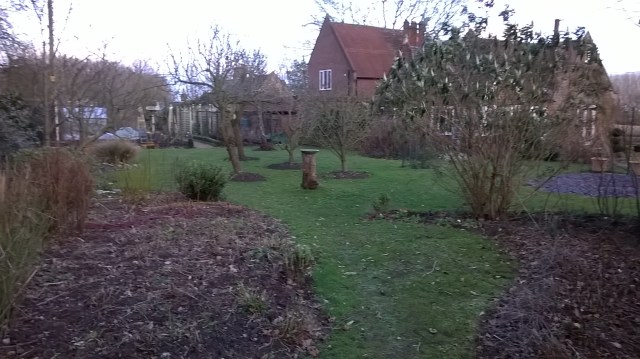
As you know, we have the builders in, so my time is pretty divided ; I’m conscious of not getting on top of the borders soon enough, though it is good that Deborah is able to lend a hand this year. Still, progress is being made on most fronts and despite a general air of untidiness, some parts of the garden are starting to fill out and green up.
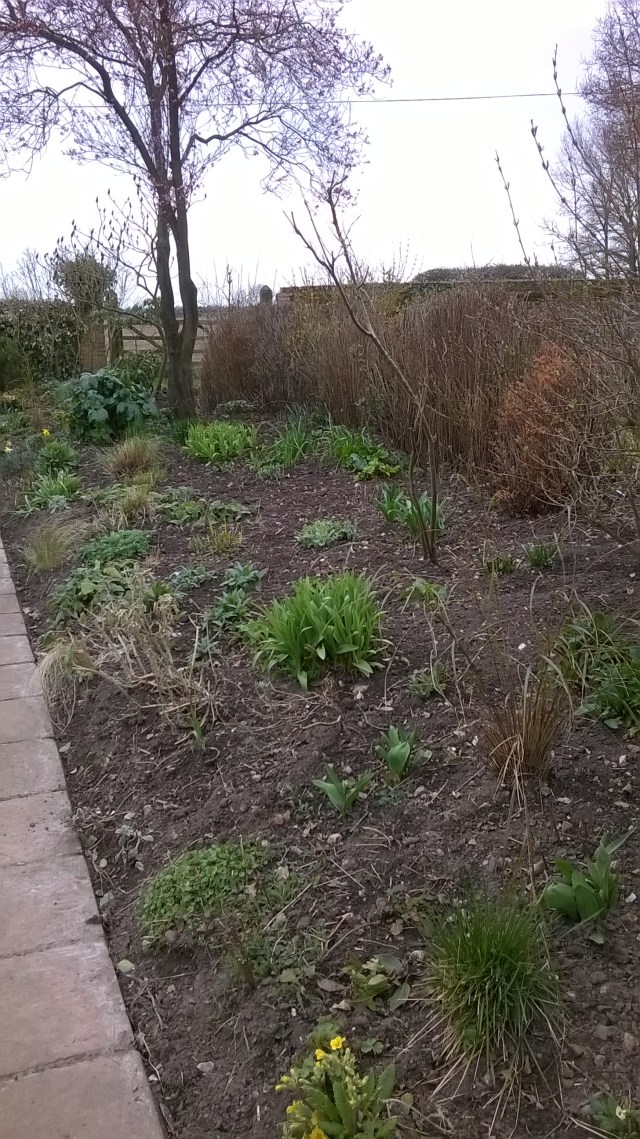
One of the Terrace Mixed borders, newly 'tickled' and starting to green up

One of the Terrace Mixed borders, newly ‘tickled’ and starting to green up

I’ve also got a range of seedlings underway, and last week took the insulation out of the greenhouse and the more tender plants too, so now there’s a light, warmish place for the new plants to put on growth; and by and large they are. The Melianthus tale continues; see the picture below which shows that the plant now has two flower spikes and it could be that a real flower will appear in the next week or two, if the temperature and sunshine are sufficient. The whole plant, whilst looking a bit bare lower down, isn’t quite the tatty specimen I thought it might be. Hopefully, once the flowering has finished I can cut it to ground level and we’ll have a new flush of large, peanut-butter smelling foliage.
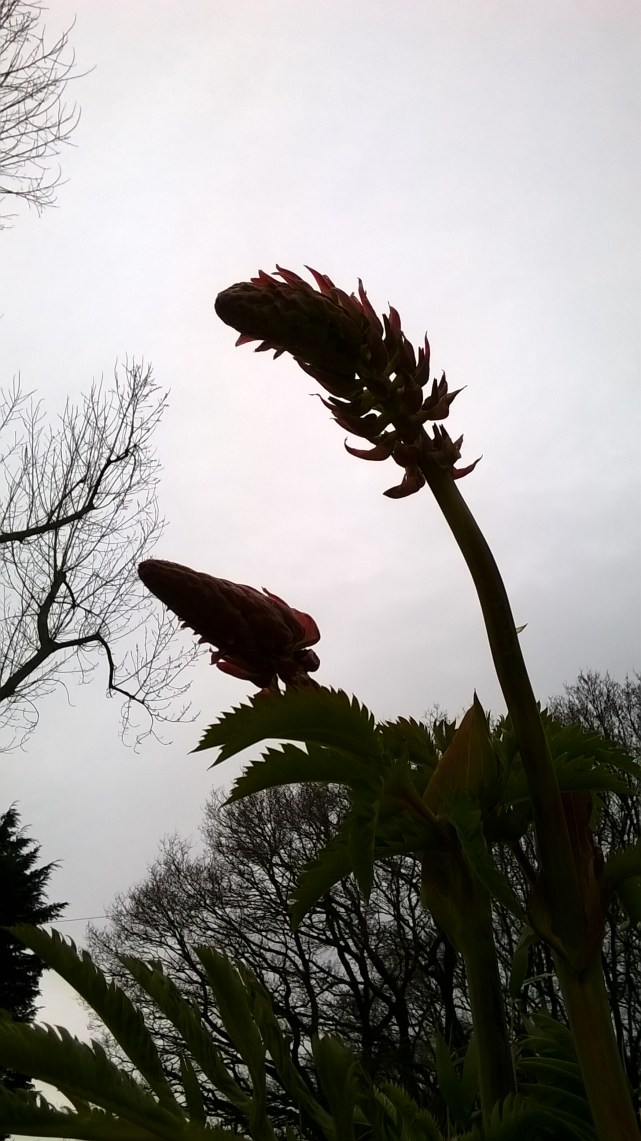
Meianthus flower heads- to flower or not to flower?

Meianthus flower heads- to flower or not to flower?

I’ve put in my first early potatoes (‘Foremost’) and plan to do the ‘seconds’ in a day or two (once more I’m growing ‘Charlotte’). The early veg seems to have survived the winter pretty well; onions and broad beans are getting on nicely and I’ve also planted out some more asparagus in an attempt to get a decent row in a year or two’s time. And I’m going to experiment with a ‘table bed’ given to me by our new neighbours, who won’t have the time to grow their own food. This was built by their predecessors and had a large compost- filled bottom with concrete slab sides. Probably a little deeper than is needed for most things, so I’m going to adapt the basic shape and add a wooden slatted bottom along with a plastic lining. I thnk I’ll try a mix of salad leaves in it for starters. More pictures to come of this new recycling project!

Progress on the wildlife pond area is pretty slow; it’s taking a long time to redistribute the ash and soil from the old bonfire heap and my latest obstacle is a large Birch tree stump that I’m trying to dig out. Still, this area of the garden is starting to a bit more organised and hopefully, in due course, will add to the variety of spaces here. As part of the building work I’m having a new shed put in to hold mowers, other powered garden equipment and no doubt some general storage too.

The site for this new shed that I originally cleared proved to be too tight, so not to be put off, I’ve decided to turn this area – which sits under a mix of evergreen and deciduous trees- into a spring garden. So here is a convenient spot right next to the old bonfire area where some of the spare soil can be spread to deepen the base for this new garden. It will be fun planting this up in the Autumn with a mixture of bulbs and other things.

I mentioned last month that I’d begun a creative writing course at Gressenhall Museum. This has proved to be very enjoyable, focusing on characters from the place when it was a Workhouse and exploring different modes fo writing to tell their stories. I have a final piece to write up about one William Rush, a pauper inmate who when  he as 13 years old volunteered to stand in for the Schoolmaster when the latter was off sick; he seems to have done an exemplary job and became one of the first ‘pupil teachers’ that formed part of the new approach to public education here in the latter part of the 19th century. If it seems of a reasonable quality I may even put this short story on the blog for all to see!
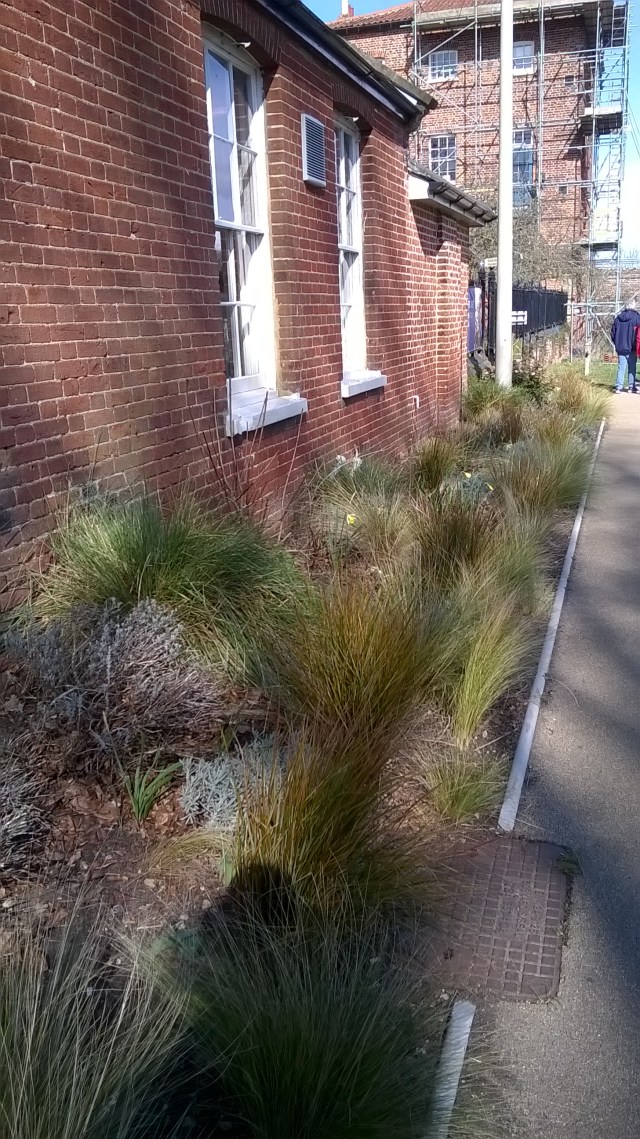
The entrance border at Gressenhall- grasses have really taken hold and will sonn be joined by 'Mount Hood' Narcissus and pink Tulips

The entrance border at Gressenhall- grasses have really taken hold and will sonn be joined by ‘Mount Hood’ Narcissus and pink Tulips

Whilst at Gressenhall for the course I’ve spent a few hours in the gardens getting things pruned and tidied up. i completed most fo the rose pruning there last week (and I’ve also spent quite a time doing the climbers and ramblers at Old School Garden) and done a bit of weeding. As you may have read, I’ve also put in some time at Blickling. The setting out of the walled garden seems to be going well, with the irrigation system now in place and a long length fo metal edging ready for installation in the next couple of weeks. This, along with the restored greenhouse, should really give the area some definition and we can see the scale of the planting task that confronts us!

So that’s about it for this month. Hopefully, you and Lise are well ahead in your own garden preparations, but if not, don’t lose heart; a little bit of untidiness is a good thing!

All the best old friend,

Old School Gardener

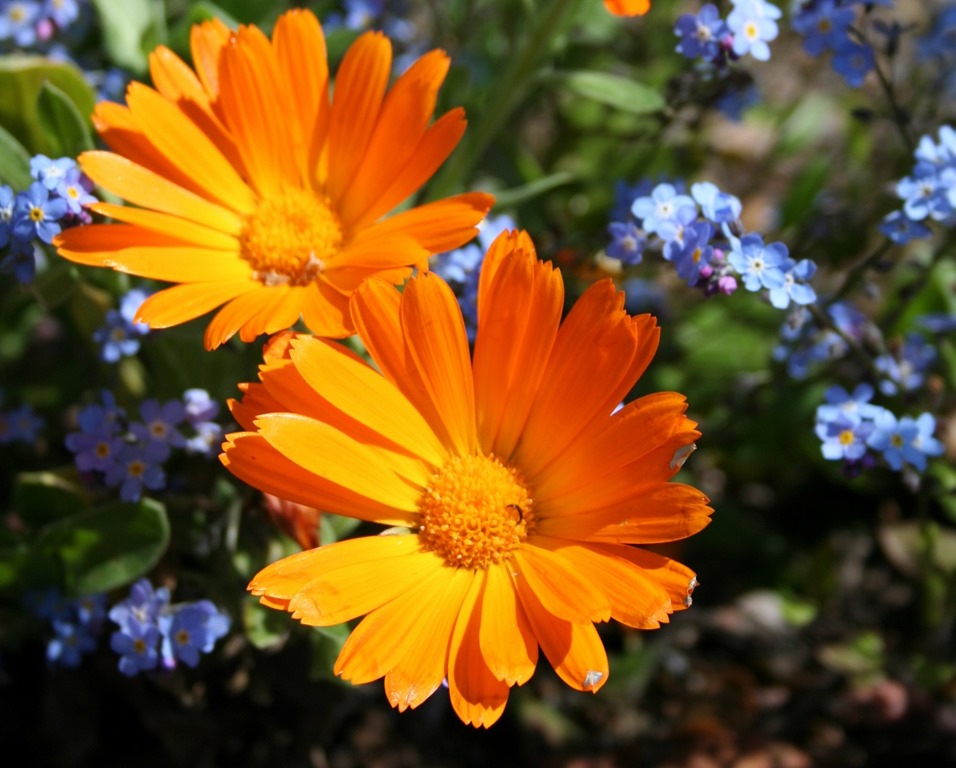
2-Calendula

A useful article by Andrew McIndoe on companion planting- find it here.

Old School Gardener

  • chamomile lawnDo choose drought resistant plants

  • Do conserve moisture by mulching in spring when the soil is moist

  • Do mulch problem problem soils- too dry, sandy or chalky- twice a year, in spring and autumn

  • Do build a deep no-dig bed if you want to grow fruit and vegetables

  • Don’t try to grow a conventional lawn. Instead, create patches of green with a herb lawn using thyme or chamomile.

Source: ‘Short Cuts to Great Gardens’- Readers Digest

Also- see this great article:

No Dig Gardening Demystified: Embracing the Magic of Natural Garden Nurturing

Old School Gardener

gardeninacity's avatargardeninacity

The purpose of plants is to make more plants. That is all they want to do. Gardeners sometimes frustrate, sometimes tolerate this will to reproduce.

Photo from www.TimberPress.com. Photo from http://www.TimberPress.com.

Some plants are particularly successful in this endeavor. Oftentimes gardeners consider such plants mildly criminal. How often have we heard the word “thug” used in the context of the garden, as if Monardas were members of the Blackstone Rangers? (Confession: I have used this adjective on plants a few times myself.)

Plantiful, by Kristin Green, suggests a different point of view. She lays out how gardeners can collaborate with the botanical drive to reproduce. This collaboration enables gardeners to create large, bountiful gardens at a greatly reduced cost.

kristin green Kristin Green. Photo from http://www.timberpress.com.

Green practices what she preaches. She works as a professional gardener at Blithewold Mansion, a non-profit, public garden in Rhode Island.

The book is divided in three parts –…

View original post 389 more words

WP_20150224_17_13_25_ProOld School Garden

26th February 2015

To Walter Degrasse

Dear Walter,

A month of ‘not much’ I’m afraid!

I’ve started to clear the pile of bonfire cinders, ash and other ‘soil’ to make way for the new pond, hard graft spreading the soil around the borders (especially around the fruit bushes), but I’m starting to make an impact. I was also pleased to accept my neighbour’s offer of some large flints (removed from a raised bed wall they have altered).

I’ve bought in a few bags of good manure and started putting this around the fruit, so hopefully, if everything works (especially the weather and pollination), we should have a good harvest.

The general tidying up that’s a typical task at this time of year has continued; raking leaves and other litter off of the borders, weeding and tickling over the soil surface. This was especially rewarding this week, as I came across a flash of metal whilst turning over the herb bed; yes, to my (and Deborah’s) delight it was my wedding ring, lost about 18 months ago! It just shows you that I didn’t get round to dealing with this area last year! I’ve also commenced the pruning of various shrubs and grasses, including fixing some support wires for climbing roses. It’s always great to see the new growth buds appearing.

Seed sowing has continued, and I had delivery of an interesting selection from the RHS Members’ seed scheme, so some have gone into the fridge for some ‘stratification’ (a period of cold to help break dormancy). Unfortunately I was a little too eager to move my cucumber seedlings on, and once in the greenhouse they suffered ‘damping off’ and had to be dumped- a new set awaits sowing.

Elsewhere, I’m on a two week break from gardening at Blickling Hall, but it seems that the walled garden is coming on well; manure has been dug in and the delivery of path edging and the refurbished greenhouse is awaited. I popped over to Gressenhall earlier in the week, too, not for gardening, but to commence a new ‘creative writing’ course- hopefully it’ll improve my blog (and letter) writing skills! The gardens there looked pretty good, but I shall combine my future course sessions with some gardening to get the gardens ready for the Museum opening in early March.

Deborah and I visited Prague last week for three days, and whilst there wasn’t much of gardening interest, it was an amazing experience; one that touched many emotions and which involved 24 miles of walking over two days! I’ll post soem pictures from this trip in a day or two.

We’re also contemplating some alterations to the house, including some energy conservation measures, so it may be that the garden will be rather more neglected than usual.

Getting there- view across the Old School Garden orchard

Getting there- view across the Old School Garden orchard

I  hope that you and Lise are keeping well as the winter slips away and spring is approaching.

 All the best for now,

Old School Gardener

10985234_10153910401654625_2682403255946161842_n

Old School Gardener

10958570_10152548813985426_2486245202340711633_n

Thinking of growing your own cut flowers this year? Here are 10 flowers to grow from seed

via Gardeners’ World Magazine

black-gold-sifted-compostGuest article by Master Composter, Jill Wragg

The days are getting longer and it won’t be long before we are hard at work in our gardens again – time for a bit of planning and preparation…

The key to a good garden lies in the soil.

Providing the right soil conditions will produce good looking, healthy plants, resistant to pests & disease – and you can improve the structure & fertility of almost any soil by adding organic matter in the form of compost.

There are all sorts of myths and misconceptions about composting – many people think of a stinking, slimy heap covered in flies, or a pile of dried up old plants, which harbours rats and other pests. But compost is nature’s way of recycling; breaking down and reusing the organic materials for the plants we eat, or use for shelter and pleasure.

So, how do you make this wonderful compost stuff?

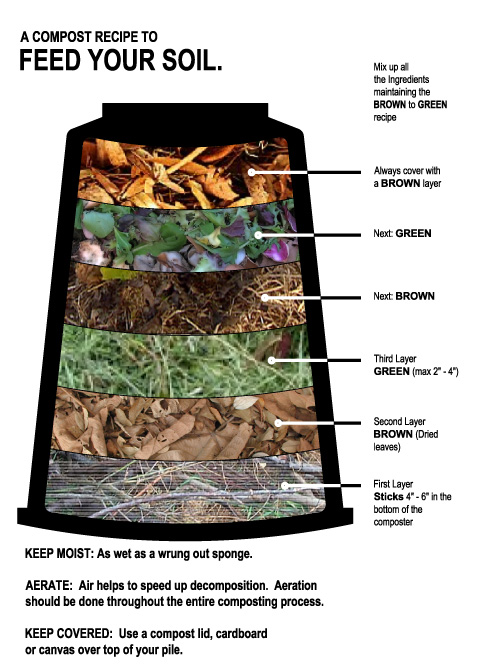
• find a suitable container, purpose built or out of scrap wood, old carpet or chicken wire and newspaper,
• place it on the soil or grass in a warm spot
• then fill it over time with a balanced mixture (about 50/50) of ‘greens’ and ‘browns’

A healthy compost bin needs nitrogen, carbon and oxygen. The ‘greens’ provide the nitrogen, and the ‘browns’ provide the carbon, and create spaces & air pockets in the bin for oxygen.

compostGarden waste is not the only thing that you can put in your compost bin.
At least 30% of most people’s household bin could be composted – helping to reduce the impact of global warming by cutting the amount of methane gas produced at landfill sites.

The ‘browns’ can include: egg boxes & toilet/kitchen roll tubes (not crushed, but left whole to provide space for oxygen), cereal boxes, corrugated cardboard packaging, newspaper, straw & hay, bedding from vegetarian pets, vacuum bag contents, tissues, paper towels & napkins, old natural fibre clothes (cut up your old woolly jumpers and cotton T shirts), feathers, egg shells, wood & paper ashes as well as your garden prunings, twigs, hedge clippings, pine needles and cones.

Your ‘greens’ can be: tea bags, grass cuttings, vegetable peelings, old flowers, fruit scraps, nettles, coffee grounds & filter paper, rhubarb leaves, annual weeds, pond algae & seaweed, spent bedding plants, comfrey leaves.

wpID233imgID316Then just leave it…

… for thousands of bacteria, fungi, insects and worms to make it their home, and turn it into rich crumbly compost – absolutely FREE! If you want to speed things up add a nitrogen rich ingredient such as farmyard manure (chicken / horse) or even human urine!

For more information see ‘handy hints and essential advice’ at www.homecomposting.org.uk

Current agricultural practices can be extremely damaging to soil, leading to erosion and exhaustion of valuable nutrients. We are all dependent on soil for our food. The United Nations estimates that a third of the world’s topsoil has already been degraded, and that if things don’t improve we may only have 60 years of healthy usable soil left! To raise awareness of the issues, 2015 has been declared ‘International Year of Soils’.

Do your bit for soil – start composting today!

Old School Gardener


Blickling Hall, under some recent snow

Blickling Hall, under some recent snow

Old School Garden

31st January 2015

To Walter Degrasse

Dear Walter,

Well the New Year came, and it heralded a new gardening energy for me after a few months of relative sloth!

I’ve begun my volunteering at Blickling Hall and as you might have read this is proving to be very interesting and satisfying, including meeting a host of other volunteers and helping to begin the regeneration of the two acre walled garden.

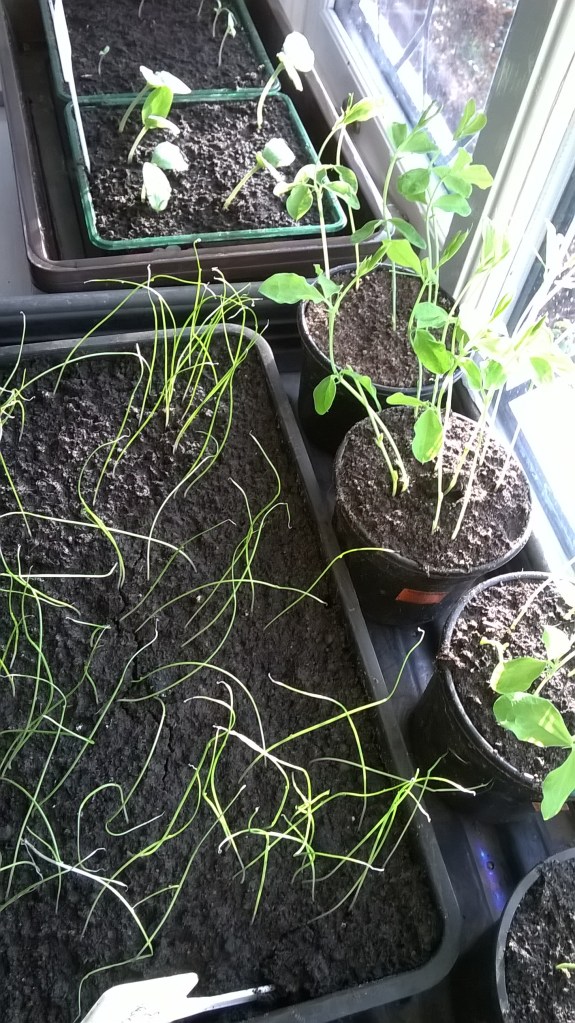
At home it’s been a few weeks of planning (seed checking, organising and buying), thinking a bit more about the wildlife pond I’m going to install here at Old School Garden and getting a few things under way, like chitting the potatoes (‘Foremost’ as first earlies and ‘Charlotte’ as second earlies), sowing  the first leeks, some bush tomatoes, cucumbers and sweet peas, all with the aid of some heated propagators. They’re now doing nicely and in the next week or two I’ll pot these up and bring them on in my makeshift greenhouse (our lounge!). It’ll soon be time to get the next lot of seeds underway.

WP_20150130_09_05_31_Pro

Seed potatoes being ‘chitted’ on the windowsill

I haven’t been up to much outside- and the mole hills continue to appear! I think I’ll venture out in the next few weeks and continue the tidying up before things really get going. Oh, by the way, I’m persevering with the Melianthus as I believe if I leave the foliage on (despite the plant looking a bit straggly now) I might get some flowers in the next few weeks- there are some already forming on a plant I’ve seen at Blickling.

WP_20150130_09_08_58_Pro

First signs of growth for the new season…

I’ve completed my review of the grounds and gardens at the local primary school and hope that this will help them get to grips with their open spaces and get the most from them, especially educational and play value and for improving the diversity of wildlife. I’m also still working on the Management Plan for the local churchyard – the base plan is in place and I now need to research some details on establishing much of the space as a wild flower meadow. My latest garden design course is due to begin in Reepham in just over a week’s time- hopefully there’ll be enough takers to let it run.

I guess that’s about all the news this month old friend. I hope you’re keeping well and warm in this spell of cold weather, though thankfully we seem to have missed the dramatic snowfalls in New England (well, at least for now).

all the best,

Old School Gardener

Finding Nature

Nature Connectedness Research Blog by Prof. Miles Richardson

Norfolk Green Care Network

Connecting People with Nature

Discover WordPress

A daily selection of the best content published on WordPress, collected for you by humans who love to read.

Susan Rushton

Celebrating gardens, photography and a creative life

Unlocking Landscapes

Writing, photography and more by Daniel Greenwood

Alphabet Ravine

Lydia Rae Bush Poetry

TIME GENTS

Australian Pub Project, Established 2013

Vanha Talo Suomi

The Journey from Finnish Rintamamiestalo to Arboretum & Gardens

Marigolds and Gin

Because even in chaos, there’s always gin and a good story …

Bits & Tidbits

RANDOM BITS & MORE TIDBITS

Rambling in the Garden

.....and nurturing my soul

The Interpretation Game

Cultural Heritage and the Digital Economy

pbmGarden

Sense of place, purpose, rejuvenation and joy

SISSINGHURST GARDEN

Notes from the Gardeners...

Deep Green Permaculture

Connecting People to Nature, Empowering People to Live Sustainably

BloominBootiful

A girl and her garden :)