Category: Gardening and Gardeners: historical snapshots


-garden-centreMy third offering from a book I bought in a charity shop recently…..

1. Avoid any nursery advertising ‘While Stocks last’

2. ‘Bargain of the Week’: something you cannot possibly use at a price you cannot possibly refuse.

From : ‘Mrs. Murphy’s Laws of Gardening’ – Faith Hines (Temple House books, 1992)

Old School Gardener


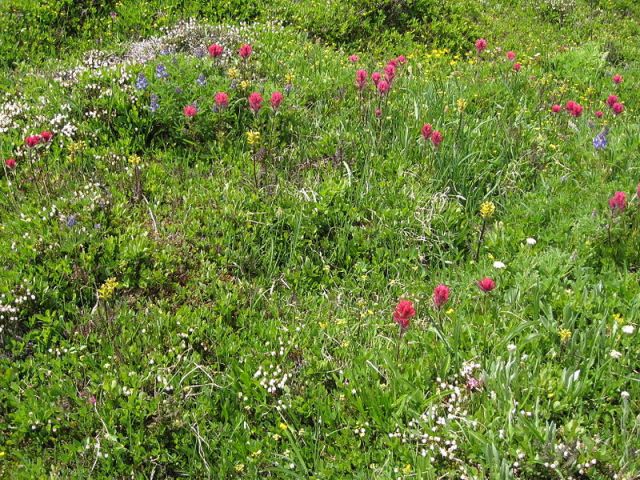
'Wild Gardens' have a different kind of attractiveness - and value- to those that are more actively 'gardened'
‘Wild Gardens’ have a different kind of attractiveness – and value- to those that are more actively ‘gardened’

I’ve just finished reading a fascinating, beautifully written book about taking a more ecological approach to gardening: ‘Noah’s Garden’ by Sara Stein. Set in the suburbs of the USA, she describes how she ‘unbecame’ a gardener and developed her plot into somewhere that bore a closer resemblance to the native surrounding countryside. In short ‘restoring the ecology of our own back yards.’

I have her sequel, ‘Planting Noah’s Garden’ and another book called ‘Noah’s Children’ ready for my summer holiday reading! The latter is about ‘restoring the ecology of childhood’, and I’m especially looking forward to reading this because of my interest in designing and promoting ‘natural play’ spaces. Stein wrote these all about 15 years ago, but they still seem very relevant today (Stein passed away in 2005).

I’m left wondering if and how far the principles she advocates can and should be applied to somewhere like the UK. Here the climate has – at least up to now- enabled us to grow a very wide range of plants, and so has given us the chance to grow more ‘exotics’ than  many other places around the globe. Arguably this resulted in a diluting, if not replacement of a ‘native environment’ hundreds of years ago, especially from the foreign travels of the ‘plant hunters’ and the subsequent importation of exotic species, as well as the devleopment of new, hybridised forms.

I guess the principle of gardeners working with nature, acting as ‘managers of the environment’ not ‘controllers’ (or worse still, having no concern for the wider impacts of what we plant, construct or remove in our gardens), is still very valid, and we should always have regard to the impact of our planting on the wider environment – in terms of the wildlife habitats and food sources it provides, for example.

Sara Stein

Sara Stein

I was especially taken with Stein’s suggestion in the last few pages of ‘Noah’s Garden’:

‘Let’s imagine a goal: that at some time in the future, the value of a property will be perceived in part according to its value to wildlife. A property hedged with fruiting shrubs will be worth more than one bordered by Forsythia. One with dry-stone walls that provide passageways for chipmunks will be valued higher than one whose walls are cemented stone. Buyers will place a premium on lots that provide summer flowers and fall crops of seed. Perhaps there will be formal incentives; tax abatements geared to the number of native species; deductions for lots that require neither sprays nor sprinklers. A nursery colony of bats might be considered a capital improvement. There could be bonuses for birdhouses.

Oh, brave new world!’…

Well, in the UK the arrival of energy efficiency ratings for houses is perhaps a step in this direction? Maybe we should encourage ‘Garden Ratings’ too?

Old School Gardener

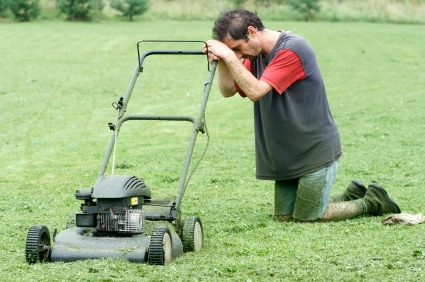
2011-08-17-mowing-the-lawnMy second offering from a book I bought in a charity shop recently…..

1. Whenever you set out to do anything worthwhile in the garden, something else needs doing first.

corollaries:

  • There is never enough time to do it right

  • It’s too late to do it again

  • If there’s enough time and you’re not too late, it will rain.

2. In anything can go wrong in the garden, it will.

corollary:

  • Every solution breeds new blight.

3. Backache is invisible.

corollaries:

  • Backache can be heard but not seen.

  • The one certian thing abotu backache is gardening.

4. You can cultivate the plot until your fingers turn green: if you can get it to weed itself, patent the method quick.

corollary:

If you can get the lawn to mow itself then you’ve got a sure-fire winner.

From : ‘Mrs. Murphy’s Laws of Gardening’ – Faith Hines (Temple House books, 1992)

Old School Gardener


happy-manWhilst on holiday in Suffolk recently, I ventured into one of several Charity Shops to look at the books, especially those on gardening. I came across a little paperback which takes a ‘sideways look’ at gardening and bought it (for the princely sum of £1) in order to share some of the best little offerings with you. For a 1990’s book it sounds a little quaint, I think, especially in relation to gender stereotyping in the garden (and elsewhere)! Tell me what you think…

“1. Never plant anything in the garden that can subsequently be held against you.

2. Birds can be fooled once… the family pet, never.

3. A man who helps with the weeding is up to something.

4. Men who have difficulty making a start in the garden have no trouble at all with the motorbike or car.

5. No matter who plants it, you’ll end up peeling it.

6.’Popping down the road to borrow Fred’s tools’  translated means, ‘Popping down the pub, and should I by chance see Fred I’ll ask if I can borrow his tools.’

Corollary

Fred is always in the pub.”

From : ‘Mrs. Murphy’s Laws of Gardening’ – Faith Hines (Temple House books, 1992)

Old School Gardener


botany‘Botany, n. The science of vegetables – those that are not good to eat, as well as those that are. It deals largely with their flowers, which are commonly badly designed, inartistic in colour, and ill- smelling.’

Ambrose Bierce ‘The Devil’s Dictionary’ 1911

Some of the apples developing nicely in Old School Garden- but due to a late frost, flower wilt and insect attack, most of the trees are showing only a afew if any fruit.
Some of the apples developing nicely in Old School Garden– but due to a late frost, flower wilt and insect attack, most of the trees are showing only a few, if any, fruit.

‘Is it not a pleasant sight to behold a multitude of  trees round about, in decent form and order, bespangled and gorgeously apparelled with green leaves, blooms and goodly fruits as with a rich robe of embroidered work, or as hanging with some precious and costly jewels or pearls, the boughs laden and burdened, bowing down to you, and freely offering their ripe fruits as a large satisfaction of all your labours?’

Ralph Austen ‘A Treatise of Fruit – Trees’ 1653

Contemplation/ garden of Gethsemane- by Jenny Meehan
Contemplation/ Garden of Gethsemane by Jenny Meehan

‘..Gardening has always been regarded as a peculiarly English activity: indeed, it has assumed a key role in English identity. There are two main reasons for this..first…the weather….But there are also cultural reasons why gardening became the favoured activity of the English….English Gardens were seen as having curative powers for the English malady of melancholy….English people, unlike their continental counterparts, for whom it was a place for parade and social intercourse, went into the garden for a very different purpose- contemplation. I believe it was the Reformation which gave Englishmen their green fingers. In Catholic countries meditation took place in churches, monasteries and nunneries. In England the setting for contemplation became the garden….’

Sir Roy Strong: ‘Visions of England’ (Random House, 2011)

Old School Gardener

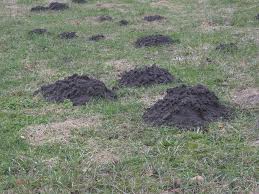
mole hills‘The worst ENEMYES to gardens are Moles, Catts, Earewiggs, Snailes and Mice, and they must be carefully destroyed, or all your labor all the year long is lost.’

The garden book of Sir Thomas Hanmer 1653

To what extent can we ‘control’ these pests in ecologically sound ways, or is destroying them the only effective method? Old School Garden is suffering from major mole damage at present and I’m stopping short of acting other than to clear up the (increasingly annoying) mole hills in the grass and putting down some powder that’s supposed to encourage them to move elsewhere (the neighbour’s garden?!). I have been tempted to get the garden fork and plunge this along the runs, but I’ve resisted the temptation- so far. What methods of ‘pest control’ do you use?

Old School Gardener

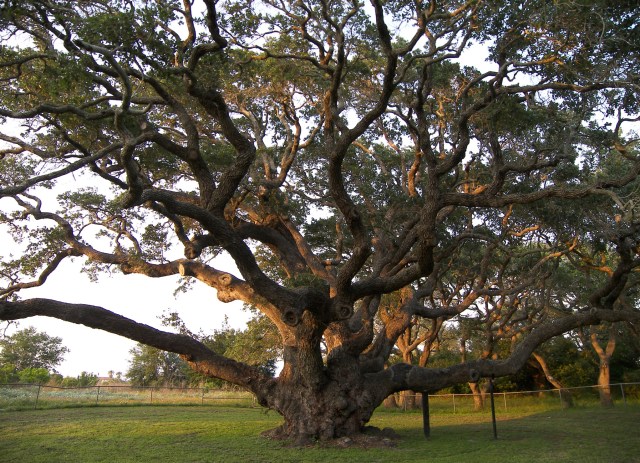
Big_tree‘Men seldom plant trees till they begin to grow Wise, that is, till they grow Old and find by Experience the Prudence and Necessity of it.’

John Evelyn

‘Trees are the best monuments that a man can erect to his own memory. They speak his praises without flattery, and they are blessings to children yet unborn.’

Lord Orrery to Thomas Carew 15th May 1749

‘Of all the wonders of nature, a tree in summer is perhaps the most remarkable; with the possible exception of a moose singing ‘Embraceable You’ in spats.’

Woody Allen

tree avenue

Old School Gardener

snail‘…the snail, whose tender horns beign hit,
Shrinks backward in his shelly cave with pain,
And there, all smother’d up, in shade doth sit,
Long after fearing to creep forth again:’

William Shakespeare

Finding Nature

Nature Connectedness Research Blog by Prof. Miles Richardson

Norfolk Green Care Network

Connecting People with Nature

Discover WordPress

A daily selection of the best content published on WordPress, collected for you by humans who love to read.

Susan Rushton

Celebrating gardens, photography and a creative life

Unlocking Landscapes

Writing, photography and more by Daniel Greenwood

Alphabet Ravine

Lydia Rae Bush Poetry

TIME GENTS

Australian Pub Project, Established 2013

Vanha Talo Suomi

The Journey from Finnish Rintamamiestalo to Arboretum & Gardens

Marigolds and Gin

Because even in chaos, there’s always gin and a good story …

Bits & Tidbits

RANDOM BITS & MORE TIDBITS

Rambling in the Garden

.....and nurturing my soul

The Interpretation Game

Cultural Heritage and the Digital Economy

pbmGarden

Sense of place, purpose, rejuvenation and joy

SISSINGHURST GARDEN

Notes from the Gardeners...

Deep Green Permaculture

Connecting People to Nature, Empowering People to Live Sustainably

BloominBootiful

A girl and her garden :)