Category: Feature plants


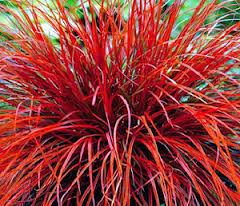
Uncinia rubra 'Firedance'

Uncinia rubra ‘Firedance’

Uncinia is a showy addition to any border or garden with its shiny red-bronze foliage.

Uncinia is a genus of about 35-45 species of tufted,evergreen perennials, known as hook-sedges (or hook grasses or bastard grasses in New Zealand. The plants develop hooks, which are used to attach it’s fruit to passing animals, especially birds. The name derives from the latin word uncinus, which means a hook or barb. Uncinia is a “satellite genus” of the very large genus Carex.  Most species are found in Australia, New Zealand and South America.

Uncinia flower
Uncinia flower

Some species are rhizomatous and most are native to damp, tussocky grassland, moist woodland or swamps. Grown for their colourful leaves, Uncinia are suitable for the front of borders, or gravel plantings. Though they are frost hardy to about -10 degrees C for short periods, longer term exposure to frost is best avoided for some species and so these should be grown in cool greenhouses. They prefer moderately fertile, humus-rich, moist but well-drained soil in full sun or light dappled shade. They are not troubled by any pests or diseases.

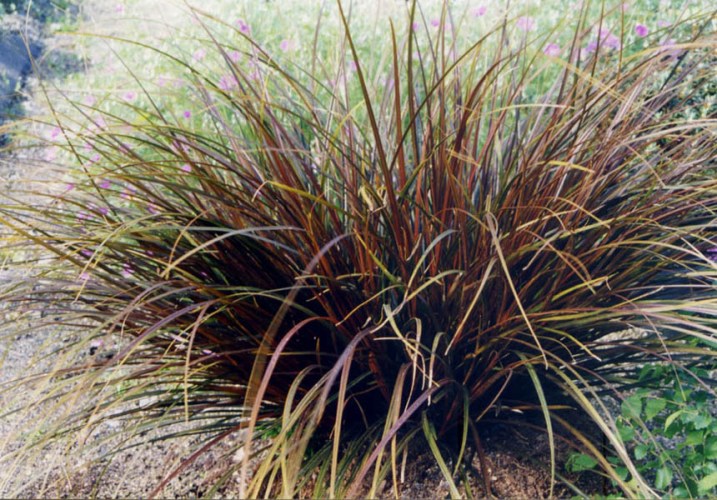
The most common Uncinia used in gardens are U. rubra (around 30 cms high, with greenish red to rich reddish brown stems and foliage and with dark brown to black flowers) and U. uncinata (25cms tall and with pale brown to red-brown leaves and dark brown flowers). Both bear flowers in mid to late summer. Foliage colour is best in late spring.

Uncinia ucinata 'Red'
Uncinia uncinata ‘Red’

The plants gradually form dense clumps of short, arching, grassy, evergreen foliage.  Slow growing, Uncinia look at their best in groups as leafy ground cover at the front of a sunny border. They can be combined with other perennial grasses that enjoy similar conditions; e.g.

  • Carex oshimensis ‘Evergold’

  • Phormium ‘Alison Blackman’

  • Ophiopogon planiscapus.

It will do well in soggy areas and around water features and ponds. U. rubra ‘Firedance’ will add a highlight to the rock garden as well as the mixed border, and it also looks great in containers. It’s advisable to avoid planting them next to vigorous plants that would smother them, as they need lots of sun to do well. Comb or rake off any old, tired or dead leaves and flowers in spring. If necessary they can be cut back (by up to half) at almost any time from April to July, but should not be cut back in autumn or winter.

Uncinia uncinata
Uncinia uncinata

You can raise Uncinia seeds in a cold frame for protection and hardiness. Seeds can be started in the late winter or early spring and should be sown in good quality, well-draining seed compost, pressing the seeds into the soil. Lower temperatures of less than 41°F are very effective. Constant moisture must be maintained and trays should not be left in direct sunlight. Once seedlings are large enough to handle, move them into a pot to grow on. Transplanting can be done in spring or summer after all frost danger has passed.

Old School Gardener

You might recall that a month or two back one of my blog followers, Elena, asked what to do with a couple of Amaryllis bulbs she’d bought. I gave her (or rather a useful video did) the tried and tested advice of potting them up and putting them somewhere warm and dark until there were signs of growth aboove ground. I’m pleased to say that her two bulbs are coming on well- here’s the latest evidence, courtesy of Elena, who’s living in Bergamo, Italy.

Old School Gardener

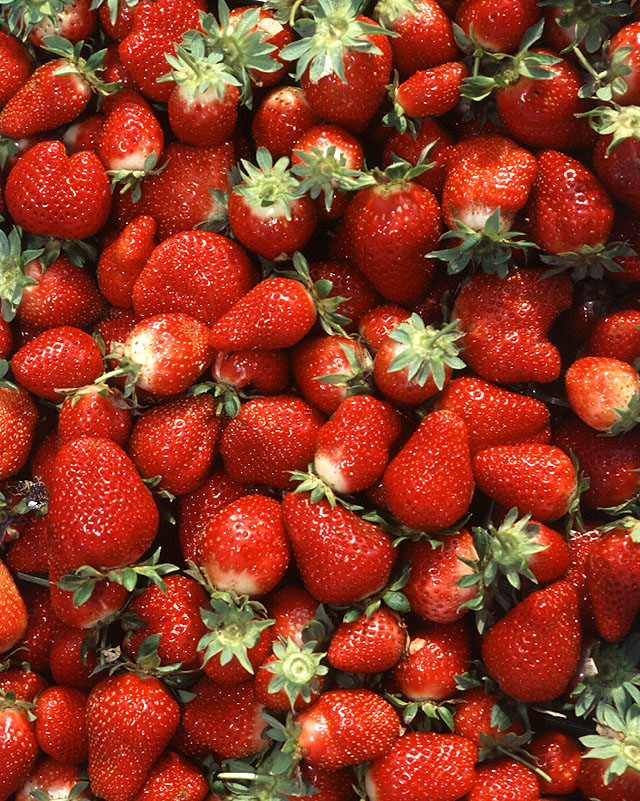
Chandler_strawberriesHere’s the second article in the new series ‘Eat Me’. This one has been written by another of the participants in the ‘Grow Your Own’ course that I ran recently in Foulsham, Norfolk.

Strawberries- a guest article by Colin Ferris

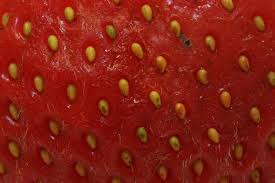
The fruit of the strawberry is not a berry but rather is a pseudo fruit or accessory fruit; some would not even accept the definition as a fruit. Indeed what appear to be the seeds on the outside are achenes, each of which is really a single seeded fruit.

Close up of strawberry

HISTORY

The  wild strawberry Fragaria vesca was the first to be grown and cultivated for its fruit until the hybrid ‘garden strawberry’ Fragaria x ananassa was bred in France in 1750. It is a cross between the North American  F. virginiana and  F. chiloensis  from Chile.

CLASSIFICATION

Fragaria is a flowering plant (Angiosperm) in the family Rosaceae. The Genus Fragaria contains about 20 species plus many hybrids and cultivars. The structure of the strawberry plant is quite typical of a member of the rose family, most noticeably when looking at the flower with its five petals.

Botanical-Fruit-Strawberry-2

CULTIVATION

Whilst generally considered in this country as a very typical British fruit, it is surprising to find that the UK does not even make it in the top ten of the world strawberry producers. By far the biggest producer is the USA, growing about 1.5 million tons of fruit per year. Strawberries grow well in any fertile soil and respond well to the addition of manure or fertiliser. It is not advisable however to grow them in soil that has previously been used to grow potatoes, chrysanthemums or tomatoes, due to the build up of soil pests and diseases. Plants will grow well for four or five years after which they decline and do not fruit well. It is thus best to replace them when four years old but not to grow the new plants in the same soil previously used for strawberries, i.e. employ suitable crop rotation.

Strawberries being grown hydroponically

PLANTING

Plant rooted runners or bought plants in fertile but well drained soil either in the ground, or in any form of container that can be suitably positioned in a sunny place and watered frequently. Plant in autumn or early spring but avoid cold wet weather and avoid areas prone to frost. Space plants about 14 inches apart with 30 inches between rows.  Keep plants well watered especially in dry spells but take care not to rot the crown with too much water given from above.  When fruits begin to form a mulch, typically straw, should be tucked underneath them to prevent rotting from the soil. Keep weed free. After cropping has finished remove old leaves and straw. If you will not be using them runners should be removed to prevent energy being wasted on them.

Strawberry flower
Strawberry flower

PROPAGATION

In order to produce new plants with the same characteristics as the parent plant, it is best to use strawberry runners. The stolons or runners produced by the plant are a form of vegetative reproduction and so produces plants that are genetically identical to the parent. It is important to let the new plants remain on the runner until a good healthy set of roots has formed.

CULTIVARS

Summer fruiting varieties These are the most popular with large fruits over a short but heavy cropping period of a few weeks. There are early, mid-, and late types.

Perpetual varietiesThese have a much longer fruiting season but fruits are smaller and crops not so heavy.

Strawberry display at Chelsea Flower Show 2009

PROBLEMS

Fungus – Botrytis grey mould, powdery mildew, leaf spot, Verticillium wilt, and red core: remove dead material immediately, lower humidity around plants, remove weeds and prevent overcrowding.

PestsRed spider mite, seed beetle and vine weevil: use appropriate sprays or preferably biological control. Birds: use netting or preferably a fruit cage, bird scarers may help but generally are of little benefit.

USES

Strawberries have such a wonderful flavour that they are used in so many recipes that it is impossible to list them. They are best when picked fully ripe (bright red in colour) when the sun has warmed them, and they taste extremely good with a little sprinkling of sugar and some fresh cream. Given that they crop heavily over a short period, strawberries are often used to make jam.

Strawberries and Cream- the tatse of an English summer...
Strawberries and Cream- the tatse of an English summer…

Old School Gardener

Brigid Jackson's avatararistonorganic

I purchased this Orchid Cactus Kitty Hawk from The Green Cathedral some years ago. She has rewarded me every year with a stunning display.

The name ‘Green Cathedral of South Africa’ is derived from a media publication and, until August 1 2011, used as an alias for ‘Soekershof; Private Mazes & Botanical Gardens in South Africa’; located in the tranquil Klaas Voogds area near the small town of Robertson. Since August 2011 Green Cathedral of South Africa resides in Stanford, Western Cape as does a precious collection of plants.

I dedicated this post to Herman Van Bron who is the custodian of the Green Cathedral.

RELATED ARTICLES :

Orchid Cactus http://aristonorganic.com/2013/11/18/orchid-cactus/

View original post

Color on the Mountain

Visit Ariston Organic’s site (click on the title) to learn more about this South African scene…

Old School Gardener

PicPost: Yorchiding again!

The Flying Duck Orchid (Caleana major) from Australia. From https://www.facebook.com/Original.Everything

PicPost: Succulent

450px-Tulip_-_floriade_canberraTulipa (Tulips) is a genus of some 100 species of hardy, bulbous perennials from Europe, asia and the middle east- especially Central Asia. They prefer sun but will take light shade, and must have a well-drained soil, though seem to prefer heavier soils than lighter ones. Tulips are grown for their showy flowers, which are usually at the end of a stem and upright, with six tepals. They vary from cup- or bowl-shaped to goblet-shaped, some with long, very narrow tepals, or lily-like or star-shaped- some are fringed.

There is a wide range of colours and bi colours. Depending on the species, tulip plants can grow as short as 4 inches (10 cm) or as high as 28 inches (71 cm). The leaves are usually grown from the base of the main stems, are broadly ovate in shape and sometimes are wavy-edged or channelled.

Tulips can be planted in groups among other plants in a border, in pots or ‘naturalised’ in grass. They tend to be later flowering than Narcissus and crocus so growing these together can produce a flowering display lasting up to three or four months.

The bulbs should be planted 15cm deep in the autumn. Cultivars benefit from being lifted and ripened every year once the leaves have died down. Most of the Darwin hybrids (such as ‘Apeldoorn’), the Greigii and Kaufmanniana groups  and the species tulips can be left in the ground for a number of years; mark the position to avoid damaging the bulbs with other planting. The size of flowers will diminish over time and they will also benefit from being lifted and divided every few years – this should be done as soon as the foliage dies down.

Mice love tulip bulbs, so store lifted bulbs out of reach and protect newly planted bulbs from disturbance. Some people have an allergic reaction  to any part of the plant which may cause skin irritation, and all parts can be mildly poisonous if eaten (though the flower petals can apparently be eaten – see link below).

Although tulips are often associated with the Netherlands, commercial cultivation of the flower began in early Persia probably somewhere in the 10th century. Early cultivars must have emerged from hybridisation in gardens from wild collected plants, which were then favoured, possibly due to flower size or growth vigour. During the Ottoman Empire, numerous tulips were cultivated and bred. 

Bulbs fields in Holland

The word tulip, which earlier appeared in English in forms such as tulipa or tulipant, entered the language by way of the French tulipe and its obsolete form tulipan or by way of Modern Latin. The word derives from the Persian word for ‘turban’ chosen because of a perceived resemblance of the shape of a tulip flower to that of a turban This may have been due to a translation error in early times, when it was fashion in the Ottoman Empire to wear tulips on their turbans. The translator possibly confused the flower for the turban.

Between 1634 and 1637, the early enthusiasm for the new flowers in the Netherlands triggered a speculative frenzy now known as Tulip Mania. Tulips became so expensive that they were treated as a form of currency.  To this day, tulips are associated with the Netherlands, and the cultivated forms of the tulip are often called “Dutch tulips.” In addition to the tulip industry and tulip festivals, the Netherlands has the world’s largest permanent display of tulips at Keukenhof, although the display is only open to the public seasonally.

In horticulture, tulips are divided up into fifteen groups (Divisions) mostly based on flower characteristics and plant size.

  • Div. 1: Single early with cup-shaped single flowers, no larger than 8 cm across (3 inches). They bloom early to mid season. Growing 15 to 45 cm tall.

  • Div. 2: Double early with fully double flowers, bowl-shaped to 8 cm across. Plants typically grow from 30–40 cm tall.

  • Div. 3: Triumph single, cup-shaped flowers up to 6 cm wide. Plants grow 35–60 cm tall and bloom mid to late season.

  • Div. 4: Darwin hybrid single flowers are ovoid in shape and up to 8 cm wide. Plants grow 50–70 cm tall and bloom mid to late season. This group should not be confused with older Darwin tulips, which belong in the Single Late Group below.

  • Div. 5: Single late cup or goblet-shaded flowers up to 8 cm wide, some plants produce multi-flowering stems. Plants grow 45–75 cm tall and bloom late season.

  • Div. 6: Lily-flowered the flowers possess a distinct narrow ‘waist’ with pointed and reflexed petals. Previously included with the old Darwins, only becoming a group in their own right in 1958.

  • Div. 7: Fringed (Crispa)

  • Div. 8: Viridiflora

  • Div. 9: Rembrandt

  • Div. 10: Parrot

  • Div. 11: Double late Large, heavy blooms. They range from 18 to 22 in. tall

  • Div. 12: Kaufmanniana Waterlily tulip. Medium-large creamy yellow flowers marked red on the outside and yellow at the center. Stems 6 in. tall.

  • Div. 13: Fosteriana (Emperor)

  • Div. 14: Greigii Scarlet flowers 6 in. across, on 10 in. stems. Foliage mottled with brown.

  • Div. 15: Species (Botanical)

  • Div. 16: Multiflowering not an official division, these tulips belong in the first 15 divisions but are often listed separately because they have multiple blooms per bulb.

They may also be classified by their flowering season:

  • Early flowering: Single Early Tulips, Double Early Tulips, Greigii Tulips, Kaufmanniana Tulips, Fosteriana Tulips, Species Tulips

  • Mid-season flowering: Darwin Hybrid Tulips, Triumph Tulips, Parrot Tulips

  • Late season flowering: Single Late Tulips, Double Late Tulips, Viridiflora Tulips, Lily-flowering Tulips, Fringed Tulips, Rembrandt Tulips

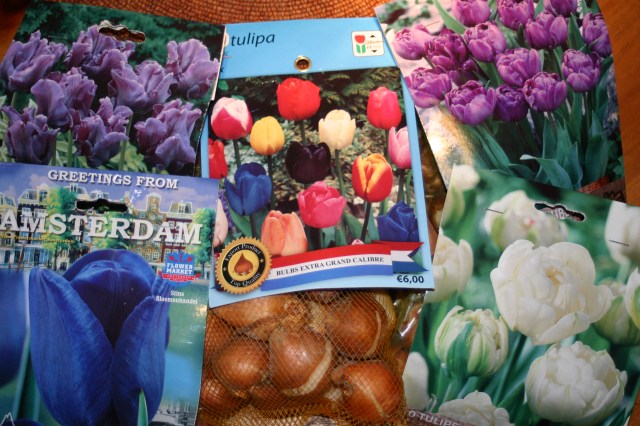
I mentioned my visit to the Amsterdam Flower Market recenrtly and here’s the 70 tulips I have for adding to the many groups that I already have in borders and pots at Old School Garden.

Tulips from Amsterdam...
Tulips from Amsterdam…

Sources and further information:

Wikipedia

Growing Tulips- RHS

How to grow Tulips- Bunny Guinness

Tulips and Holland

Tulip Mania

Eating Tulip flowers

Related articles:

It’s Time to Talk Tulipsage

PicPost: Tulip Mania

Tip Toe Through the Tulips

Tulip mania and Bitcoin

Bloemen Marvellous

November in the Garden: 10 Top Tips

A-Z of Perennials: Q is for Quamash

GQT: Grow-bag Bulbs

Pleasing Planters

May in the Garden- Top 10 Tips

Plants to die for…

Old School Gardener

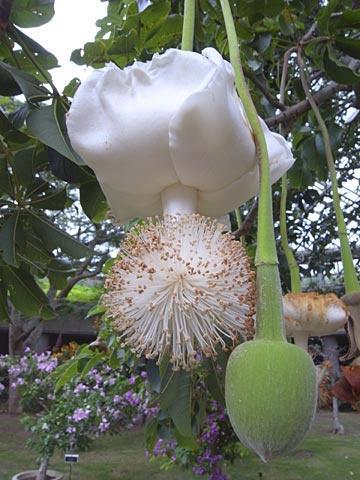
PicPost: Pendulum

Baobab flower

Finding Nature

Nature Connectedness Research Blog by Prof. Miles Richardson

Norfolk Green Care Network

Connecting People with Nature

Discover WordPress

A daily selection of the best content published on WordPress, collected for you by humans who love to read.

Susan Rushton

Celebrating gardens, photography and a creative life

Unlocking Landscapes

Writing, photography and more by Daniel Greenwood

Alphabet Ravine

Lydia Rae Bush Poetry

TIME GENTS

Australian Pub Project, Established 2013

Vanha Talo Suomi

The Journey from Finnish Rintamamiestalo to Arboretum & Gardens

Marigolds and Gin

Because even in chaos, there’s always gin and a good story …

Bits & Tidbits

RANDOM BITS & MORE TIDBITS

Rambling in the Garden

.....and nurturing my soul

The Interpretation Game

Cultural Heritage and the Digital Economy

pbmGarden

Sense of place, purpose, rejuvenation and joy

SISSINGHURST GARDEN

Notes from the Gardeners...

Deep Green Permaculture

Connecting People to Nature, Empowering People to Live Sustainably

BloominBootiful

A girl and her garden :)