Category: Feature plants


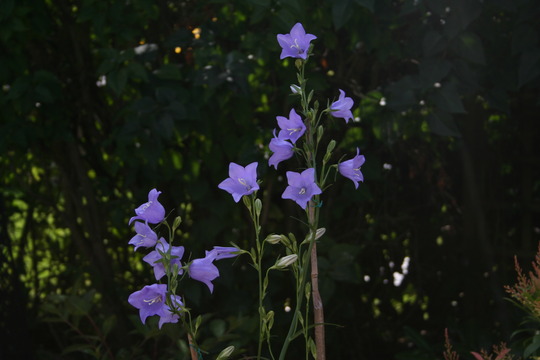
Campanula persicifolia

Campanula persicifolia

A very large genus, with some 300 species, including annuals and biennials as well as perennials. Campanulas are native to southern Europe, Turkey and Asia, and are found in wide range of habitats. Therefore the different species can have very different cultivation requirements. On the whole, they are undemanding and like dappled shade or sun in a well drained, fertile soil.

Campanulas vary in habit from dwarf arctic and alpine species under 5 cm high, to large temperate grassland and woodland species growing to 2 m tall. So there is a Campanula to fit most garden situations, from wall plants to borders, with different habits of trailing, spreading or clump – forming. Taller varieties may need staking.

The flowers have a wide variety of shapes, between star-shaped to bell-shaped (The ‘Bellflower’ is the common name for the genus) and variations in between.
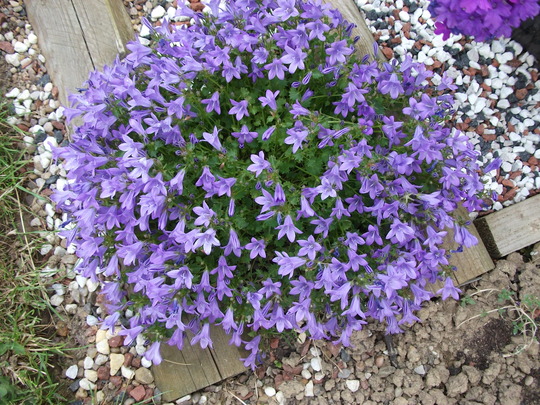
Campanula poscharskyana (Serbian Bellflower)

Campanula poscharskyana (Serbian Bellflower)

Campanula takesimana 'Alba' with Cotinus

Campanula takesimana ‘Alba’ with Cotinus

Campanula lactiflora - seed heads

Campanula lactiflora – seed heads

Campanula glomerata  'Superba'

Campanula glomerata ‘Superba’

Campanulas have a long flowering season – late spring through summer. Some are rather invasive, so think about where you place these and keep an eye on them – or alternatively grow them in pots or other containers; examples are C. persicifolia (which also self seeds around the garden), C. pulla and C. takesimana.

They can be subject to attack by slugs and snails. Propagate by seed or division, cutting back old flowers and foliage in the autumn. Good for alpine beds, rockeries, ground cover and in borders and also good cut flowers. Campanulas partner well with Lamb’s Ear (Stachys), Lady’s Mantle (Alchemilla), Columbine, and Roses. Their delicate form and cool colors complement many other perennials.

Further information:

Campanula ‘Bernice’

Pictures of Campanula and other info

Rare Campanulas

Growing Campanulas

Quizzicals: answers to those on the last A-Z post- 

  • Helen drives a French car – Citronella
  • The era of the taxi – Cabbage

Old School Gardener

If you’ve enjoyed reading this post and others on this blog, why not comment and join others by signing up for automatic updates via email (see side bar, above right ) or through an RSS feed (see top of page)?

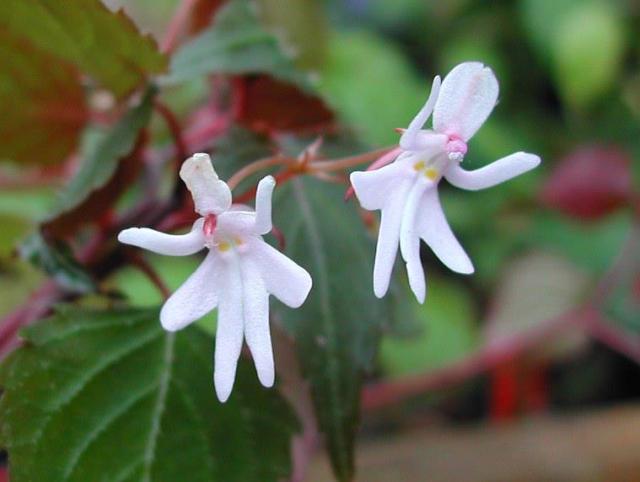
Picpost: Fairies

Impatiens bequaertii

PicPost: Lollipop

Picpost: Ensete ventricosum 'Maurelii'

Photo – Will Giles- The Exotic Garden

Wordless Wednesday

Bergenia cordifolia

Bergenia cordifolia

This is a genus of only half a dozen species, but many hybrids. Originally from the moorlands,woodlands and meadows of central and eastern Asia, these evergreen perennials – otherwise known as ‘Elephant’s Ears’ because of their large rounded leaves – are extremely useful as they grow in shade or sun and wet or dry soil.

The leaves are glossy and leathery and colour well in the winter, especially in poor soil. They are excellent ground cover plants, especially in or on the edge of a woodland garden.

The flowers are handsome and are especially welcome in winter and early spring. They also last well in water, and the leaves are also long lasting, making them good flowers for arranging.

Bergenia leaves

Bergenia leaves

They benefit from regular lifting and dividing and this is the best way to propagate them, as gardens with more than one variety can hybridise and produce seed that is not true to the original types. Slugs can be a problem.

Bergenia 'Simply Sweet' in mass planting

Bergenia ‘Simply Sweet’ in mass planting

The Royal Horticultural Society has given its Award of Garden Merit (AGM) to some of the cultivars, including ‘Bressingham White’ and Bergenia cordifolia ‘Purpurea’.

Early spring bulbs (Snowdrops, Crocus, Scilla, Wood Anemones) are perfect partners for Bergenia- it’s best to plant both at the same time, ideally in autumn. Alternatively, using a narrow trowel, bulbs can be slipped in between established plants.

Further information:

How to grow Bergenias

BBC Plant finder

Cambridge Botanic Garden (national collection)

Quizzicals: two more cryptic clues to the names of plants, veg or fruit –

  • Helen drives a French car
  • The era of the taxi

Old School Gardener

If you’ve enjoyed reading this post and others on this blog, why not comment and join others by signing up for automatic updates via email (see side bar, above right ) or through an RSS feed (see top of page)?

Anthemis tinctoria 'E.C.Buxton'

Anthemis tinctoria ‘E.C.Buxton’

There are around 100 mat or clump-forming species in the genus Anthemis.

They make very useful border plants, with a long flowering season from late spring – end of summer.

Most grow between 30 -60 cms high and have a similar spread.

Beautiful filigree, aromatic evergreen foliage when not in flower.

Smaller types suitable for rock gardens.

Flower heads are daisy-like; with white or yellow ray florets or yellow disc florets- some make good cut flowers.

Though many species are not long lived (A. tinctoria especially so), they are all easily propagated from seed or cuttings.

The plant’s life can be extended by shearing over in autumn just after flowering – this encourages new basal growth which takes the plant through the winter. Shearing also helps to prevent mildew.

They need sunny, well-drained sites and wet winters are generally not favourable.

They do not transplant well, but should anyway be divided regularly in spring.

Anthemis maritima

Anthemis maritima

The orangey- yellow varieties look well woven in and out of mixed borders, and complement warmer coloured flowers; e.g. Crocosmia ‘Lucifer’, Dahlias, Hemerocallis etc. The yellow varieties look well with blue flowers such as Nepeta or Agapanthus. The pale lemon variety ‘E.C. Buxton’ (or ‘Golden Marguerite’- one of my favourites)  works well with wispy grasses such as Stipa tenuissima and the darker Lavenders (e.g. ‘Hidcote’).

Further information:

Wikipedia

How to grow Anthemis- Telegraph article

Anthemis marschalliana– silver foliage

Quizzicals: answers to the two in the post ‘Gypsies, tramps and thieves…’

  • The scourge of female chickens – Henbane
  • Cheap goods in a pile of dung – Potato

Old School Gardener

If you’ve enjoyed reading this post and others on this blog, why not comment and join others by signing up for automatic updates via email (see side bar, above right ) or through an RSS feed (see top of page)?

Finding Nature

Nature Connectedness Research Blog by Prof. Miles Richardson

Norfolk Green Care Network

Connecting People with Nature

Discover WordPress

A daily selection of the best content published on WordPress, collected for you by humans who love to read.

Susan Rushton

Celebrating gardens, photography and a creative life

Unlocking Landscapes

Writing, photography and more by Daniel Greenwood

Alphabet Ravine

Lydia Rae Bush Poetry

TIME GENTS

Australian Pub Project, Established 2013

Vanha Talo Suomi

The Journey from Finnish Rintamamiestalo to Arboretum & Gardens

Marigolds and Gin

Because even in chaos, there’s always gin and a good story …

Bits & Tidbits

RANDOM BITS & MORE TIDBITS

Rambling in the Garden

.....and nurturing my soul

The Interpretation Game

Cultural Heritage and the Digital Economy

pbmGarden

Sense of place, purpose, rejuvenation and joy

SISSINGHURST GARDEN

Notes from the Gardeners...

Deep Green Permaculture

Connecting People to Nature, Empowering People to Live Sustainably

BloominBootiful

A girl and her garden :)