Category: Feature plants


Tamara Jare's avatarMy Botanical Garden

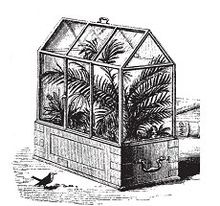
PICT2843PICT2942PICT1821PICT1830PICT1848PICT3062PICT3064PICT3077I guess people in common do have at least slight inclination towards collecting different artefacts. Then I am among the ones who have stronger tendency for collecting. Which makes me happy is not the possession of different items, but the ways they can be arranged in logical categories. From that point of view I could  find ferns interesting items.But I was still surprised to hear about pteridomania, a fern collecting craze in Victorian England. People got crazy collecting different ferns to that extent that some of the ferns got almost extinct! Honestly, I can’t blame them, arranging those photos I’ve almost started collecting ferns!

Pteridomania, meaning Fern Madness or Fern Craze, a compound of Pteridophytes andmania, was coined in 1855 by Charles Kingsley in his book Glaucus, or the Wonders of the Shore:  Your daughters, perhaps, have been seized with the prevailing ‘Pteridomania’…and wrangling over unpronounceable…

View original post 66 more words

Chas Spain's avatarChas Spain

This lovely planting of flannel flowers and white waratah reaches its perfect, but brief, flowering peak in early spring here in a sheltered spot at ‘the workplace’ in Melbourne. 

The luminosity of these flowers in the gold light at the end of the day was superb.

While the great globe heads of the waratah had been bruised by the wind this week, the flannel flowers – which look so delicate and fragile – showed no signs of harm.

The flannel refers to the soft fuzziness of the flowers and leaves, rather than suggesting the plant is somewhat dowdy.

Latin names for those of that ilk are Telopea speciosissima (red waratah) and Actinotus Helianthi (flannel flower)


Other Australian Native flower posts and related blogs you might like:

All flora has significance in indigenous Australia and one of the stories of the waratah is retold on Out of the Blue…

View original post 154 more words

Camassia quamash via Charles S. Peterson

Camassia quamash via Charles S. Peterson

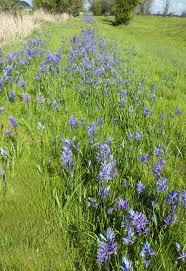
Quamash, the common name for Camassia, is a genus of 5 or 6 species of bulbous perennials native to damp, fertile meadowland in north America. They have large, ovoid bulbs which give rise to narrow, erect, linear leaves at the base. The flowers form in racemes on the top of the otherwise bare stems. These are showy flowers, star or cup shaped in blues, purples and white, appearing in mid- late spring.

Camassia leichtlinii via Gentry George

Camassia leichtlinii via Gentry George

 The bulbs of the species Camassia quamash were once an important food source for native American indians.

Camassias are great in borders or wildflower meadows and make good cut flowers. They are fully hardy to frost hardy and should be planted in the autumn about 10cm deep in moist but well drained soil in sun or partial shade. The soil should not be allowed to become waterlogged. They should be mulched over winter in areas with persistent frosts.

New plants can be grown from seed, which should be sown in containers in a cold frame as soon as it is ripe. Offsets can be removed in summer when the plants are dormant. There are no major pests or diseases affecting Camassia.


To get the best from Camassia flowers plant them against a background that will allow the pale flowers to stand out:  e.g. Berberis thunbergii ‘Rose Glow’ – a good foil because the leaves are purple, splashed pink and white; Photinia x fraseri ‘Red Robin’ – blood-red young leaves; and Choisya ternata (Mexican orange blossom).

In borders, Camassias associate well, in light shade, with forget-me-nots, Dicentra spectabilis (bleeding hearts), Lunaria rediviva, Leucojum aestivum (spring snowflake) and Polygonatum x hybridum (Solomon’s seal), and in sun with early-flowering Geraniums and Aquilegia. If naturalised in a meadow, they look good with buttercups, cowslips and the late-flowering pheasant’s eye (Narcissus poeticus var. recurvus).

I have some purple flowered Camassias here in Old School Garden, planted in a mixed border and close by to an orange Tulip ‘Ballerina’ which flowers at about the same time – the colour combination works really well.

Camassias growing in the wild via Oregon State University

Camassias growing in the wild via Oregon State University

Sources and further information:

Wikipedia

How to grow Camassias

Camssia leichtlinii – RHS

Old School Gardener

If you’ve enjoyed reading this post and others on this blog, why not comment and join others by signing up for automatic updates via email (see side bar, above right ) or through an RSS feed (see top of page)?

PicPost: Shower Head

Lotus seed pod

PicPost: Theatre of Dreams

Pelargoniums display at Calke Abbey via Colin Garratt

Papapver orientale at Old School Garden

Papaver orientale at Old School Garden

Papaver (poppy) is a genus of 70 species of annuals, biennials and perennials native to many parts of the world. The perennials include Papaver orientale (Oriental poppy), which is native to the Caucasus, northeastern Turkey, and northern Iran.

Perennial poppies are easy to grow – all are sun lovers and will grow well as long as they are in the sun and the soil is not waterlogged. They do best in poor but deeply cultivated, well-drained soil, (on the calcareous side) or even sharply drained in the case of Papaver alpinum and its forms. Apart from Papaver orientale other perennial poppies tend to be short-lived.

Poppies are tap rooted and do not transplant well, so should be sited carefully when first planted. Propagation is mainly from seed.

The flowers (which open from late spring into mid summer), are short-lived but beautiful – I particularly love the way a lowish sun can light up the garden as it shines through the large, brightly coloured, silky petals of the flowers. The flowers are followed by distinctive ‘pepper pot’ shaped seed capsules – best removed if you want to avoid abundant self seeding, but if this is not a concern, leave them to ripen on the plant –  they also provide a striking feature amidst other early summer flowering plants.

The flowers are low in allergens and are good for arrangements. However, they need to be picked at night before the bud opens; the bottom of the stem dipped in very hot water; kept cool overnight; then arranged in the morning. The seed pods are also good for arrangements, either fresh or dried.

The only drawbacks to poppies are that they often need to be staked; are prone to downy mildew; and the foliage can become untidy after flowering, This should be removed and another flush of leaves (and sometimes a second flowering) will follow. Alternatively, make sure the foliage, once removed does not leave a gap in your border by having other plants nearby that mature a bit later and take up the space left behind.

Further information:

Papaver orientale – Kew Gardens

Papaver orientale – RHS

Papaver orientale ‘Ladybird’

Nastional collection of Papaver orientale

Papaver alpinum

Papaver nudicaule

Poppyland: A Victorian romance and the birth of Norfolk tourism

Old School Gardener

If you’ve enjoyed reading this post and others on this blog, why not comment and join others by signing up for automatic updates via email (see side bar, above right ) or through an RSS feed (see top of page)?

Osteospermum ecklonis

Osteospermum ecklonis

Osteospermum is a genus of some 70 species of annuals, perennials and evergreen sub shlrubs from mountainous, forest edge or grassland habitats in southern Africa and the Arabian peninsula. It has several common names: African Daisy, South African Daisy, Cape Daisy and Blue-eyed Daisy.

They are mostly tender or half-hardy, but a few are reliably hardy, and hybrids are being produced from these which are also hardy. In frost – prone areas the more tender types can be treated as annuals.
Osteospermum have three features that commend them to the gardener:

  1. A very long flowering season
  2. They are evergreen
  3. They make excellent ground cover

Their daisy-like flower heads have ray florets of pink, white or yellow- with a wider range of shades available in the cultivars and often with contrasting, darker disc florets.

800px-Daisy1web

Osteospermum Daisyweb

Osteospermums are relatively new to most gardeners, and were almost unheard of 25 years ago. They have risen in popularity in the last decade as they have become more commercially available. Osteospermums have now become very popular as summer bedding plants, either to put in the border or in pots. The prostrate varieties can be used in hanging baskets. Osteospermums require full sun for the flowers to fully open, although while half-closed it is possible to appreciate the different colours on the underneath of the petals. Some old favourites such as ‘Whirligig’ and ‘Pink Whirls’ have spoon shaped petals. There are also stunning variegated leaf varieties available such as ‘Giles Gilbey’ and ‘Silver Sparkler’.

As well as preferring a warm and sunny position they like rich, well drained soil- a sunny bank is ideal. They also  tolerate poor soil, salt or drought well. Modern cultivars flower continuously when watered and fertilised well, and dead-heading to prevent self seeding is not necessary, because they do not set seed easily, Deadheading will improve and prolong flowering, however. They make good cut flowers. If planted in a container, soil should be prevented from drying out completely. If they do, the plants will go into “sleep mode” and survive the period of drought, but they will abort their flower buds and not easily come back into flower. Moreover, roots are relatively susceptible to rotting if watered too profusely after the dry period. Regrettably, like most daisy- like flowers, they are highly allergenic. They are prone to downy mildew in wet areas.

O. 'Lemon Symphony'

O. ‘Lemon Symphony’

Sources and further information:

Osteospermum.com

Wikipedia

RHS plant selector

BBC- O. jucundum

Old School Gardener

If you’ve enjoyed reading this post and others on this blog, why not comment and join others by signing up for automatic updates via email (see side bar, above right ) or through an RSS feed (see top of page)?

Lonicera sempervirens

Lonicera sempervirens

Lonicera (synonym Caprifolium and common names Honeysuckle or Woodbine), is a genus of arching shrubs or twining vines native to the Northern Hemisphere. There are about 180 species of honeysuckle, 100 of which occur in China, Europe, India and North America, with about 20 native species in each area.

The name Lonicera stems from Adam Lonicer, a Renaissance German botanist (1528 – 1586). He was noted for his 1557 revised version of Eucharius Rosslin’s herbal. Lonicer was born in Marburg and studied here and at the University of Mainz, and obtained his Magister degree at sixteen years of age. He became professor of Mathematics and Doctor of Medicine, becoming the town physician in Frankfurt am Main. His true interest though was herbs and the study of botany. His first important work on herbs, the Kräuterbuch, was published in 1557, a large part dealing with distillation.

Adam Lonicer

Adam Lonicer

Some species names of Lonicera include:

L. aureo – reticulata = golden veined, a variety of L. japonica

L. caprifolium = a herbalist name for a plant that climbs like a goat

L. fragrantissima = most fragrant

L. nitida = shining- the glossy leaves

L. periclymenum = to twine around, the true ‘Woodbine’ or ‘Honeysuckle’

L. pileata = having a cap, the berry being topped by a curious outgrowth of the calyx

L. sempervirens = always green

l. syringantha = the flowers resembling Syringa (Lilac)

L. xylosteum = a disused generic name from the greek xylon (wood) – the woody stems

The common honeysuckle (L. periclymenum) is a vigorous twining plant with large cartwheel-shaped flower-heads made up of rings of curved, almost tubular shaped individual flowers, which open white, but often red-flushed, for most of the summer. The plants climb rapidly up trellis or over arches, where they associate well with climbing roses or other varieties of honeysuckle. They are also superb trained up into trees or covering old tree stumps.

Sources and further information:

Wikipedia

RHS- growing honeysuckles

BBC- Common honeysuckle

Quizzicals: answers to the two clues given in Plantax 14 …

  • Cold yearning = Chile Pine
  • How Jack Charlton refers to brother Bobby = Orchid

Old School Gardener

If you’ve enjoyed reading this post and others on this blog, why not comment and join others by signing up for automatic updates via email (see side bar, above right ) or through an RSS feed (see top of page)?

PicPost: Iris my case

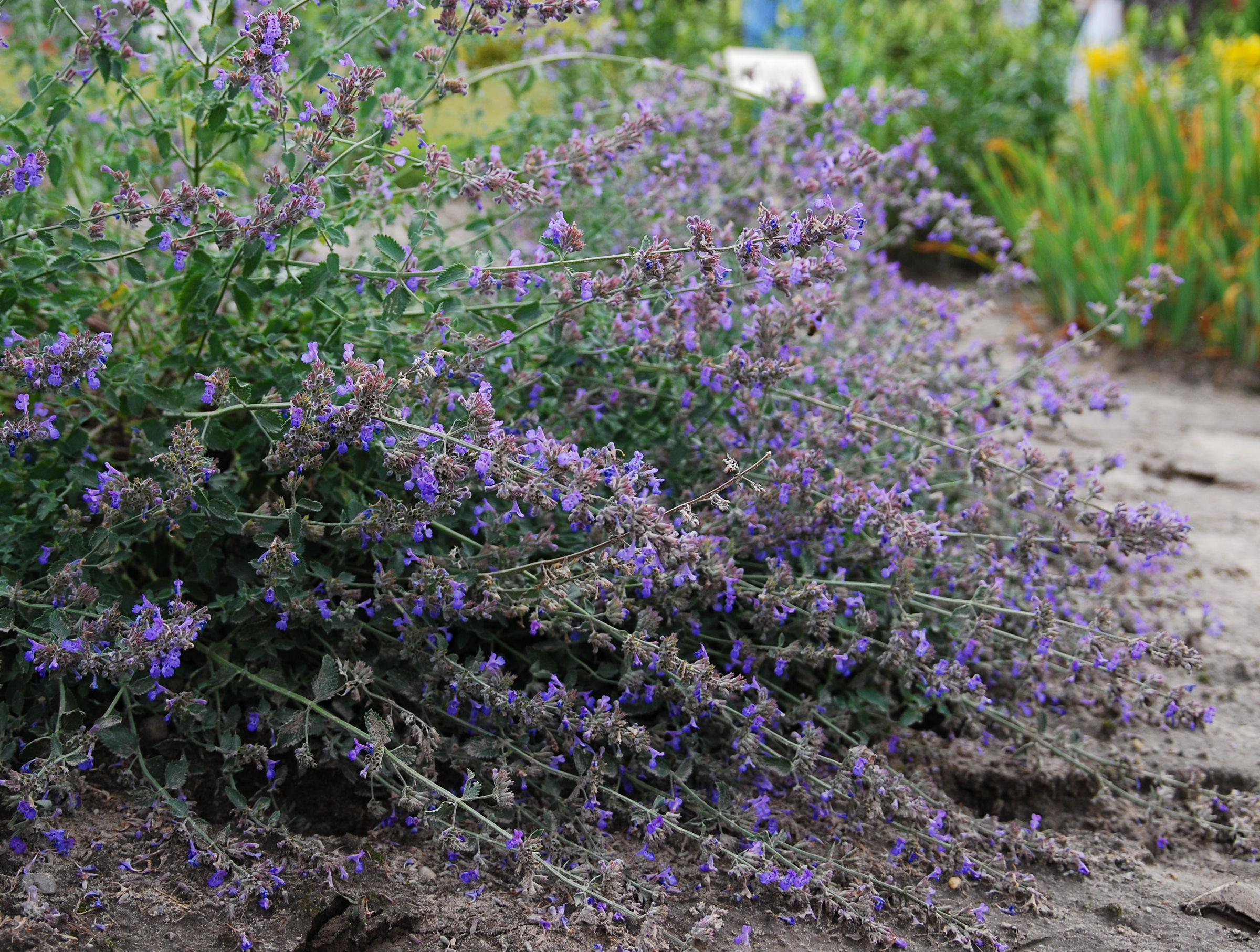
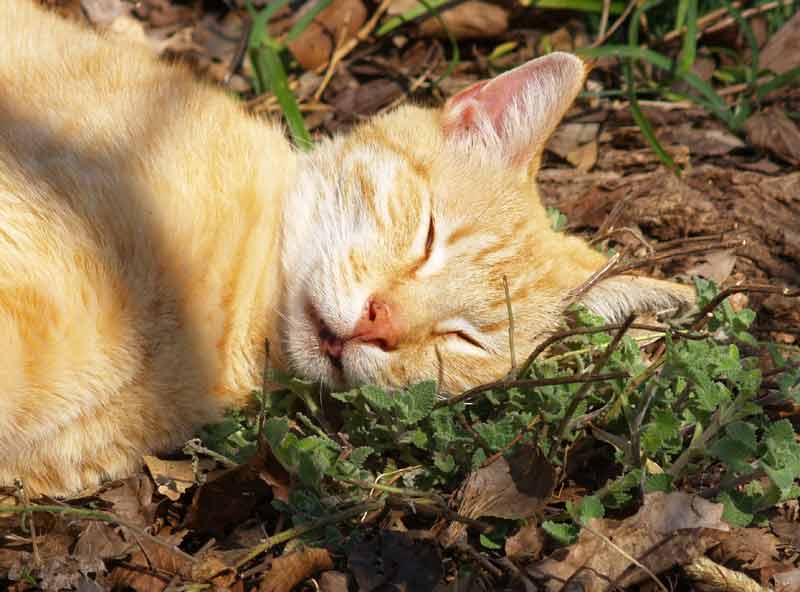
Nepeta- soem varieites are called Catnip or Catmint because cats love them!

Nepeta- some varieites are called Catnip or Catmint because cats love them!

Nepeta is a genus of about 250 species of perennials and a few annuals, native to cool and moist to hot and dry habitats in scrub, grassy banks, stony slopes or in high mountains, in non tropical areas of the northern hemisphere. So as you can see, there’s pretty much a Nepeta to suit every garden situation!

Some members of this group are known as catnip or catmint because of their effect on cats – the nepetalactone contained in some Nepeta species binds to the olfactory receptors of cats, typically resulting in temporary euphoria!

They have sturdy stems with opposite heart-shaped, green to grey-green leaves. Nepeta plants are usually aromatic in foliage and flowers. The tubular flowers can be lavender, blue, white, pink, or lilac, and spotted with tiny lavender-purple dots. The flowers are located in ‘verticillasters’ grouped on spikes; or the verticillasters are arranged in opposite groups – toward the tip of the stems.

Nepeta can be drought tolerant, being able to conserve water. They bloom over a long period from late spring to autumn. Some species also have repellent properties to insect pests, including aphids and squash bugs, when planted in a garden. Nepeta species are used as food plants by the larvae of some butterflies and moths and as nectar sources for pollinators like bees.

Nepeta makea a wonderful sprawling edge to an informal border

Nepeta makes a wonderful sprawling edge to an informal border

Nepeta can be grown in any well drained soil in full sun or partial shade. Some species, like N. govaniana and N. subsessilis prefer moist, cool conditions, whereas N. sibirica likes it fairly dry. There are a few tall growing varieties, like ‘Six Hills Giant’, with a more upright habit. These need staking or support to see them at their best.  Most Nepetas will rebloom if sheared back after their initial flowering (N. x faassenii and N. nervosa for example). Some won’t provide much of a second show, but their foliage will be refreshed and tidied by the shearing.

Nepeta looks wonderful when covered in flower from early summer. The pale, often lavender-blue flowers perfectly complement the hairy, scalloped and wrinkled, silvery, blue-green leaves. The flowers appear as a haze of blue from a distance. It is often used as an informal, low hedge echoing the colours of lavender (and is used as a substitute where lavender isn’t hardy enough). But it has a rather lax form and will spread itself to cover its allotted space (and more!). Nepeta is best planted at the front of the border, edging a path, so that when you brush past it you will catch the full scent from its aromatic leaves. Nepeta is also a classic underplanting for roses. The colours complement and the foliage hides the ugly ‘knees’ of the rose bush.

We have some here at Old School Garden and this year I’m experimenting with it in some raised planters to try to get a cascading effect, as I’ve seen it used effectively this way on top of an old garden wall in Devon, though I suspect some varieties will have longer stems than others so are better suited to this treatment. The pastel blues of Nepeta combine wonderfully well with pinks and yellows, such as day lilies and yarrow (Achillea). It also looks good with Allium cristophii and Zinnia elegans ‘Envy’.

Some suggested varieties:

  • N. nervosa ‘Felix’ – Compact plant with vivid lavender-blue flowers. (12″ H x 24″ W)
  • N. x ‘Six Hills Giant’ – One of the tallest growing Nepetas, with lavender-blue flowers.(36″ H x 30″ W)
  • N. subsessilis ‘Sweet Dreams’ – Pink flowers with burgundy bracts. Likes a bit more water than most Nepetas. (2′ H x 3′ W)
  • N. racemosa ‘Walkers Low’– has 8″ spikes of lavender-blue flowers.  ( 2 H’ x 2′ W)

Nepeta faassenii 'Six Hills Giant'- foliage

Nepeta faassenii ‘Six Hills Giant’- foliage

Nepeta is one of those plants that thrives on neglect. Too much fertilizer will only make it grow lots of flimsy foliage. A lean soil and somewhat dry growing conditions will encourage both flowers and scent. Many of the newer varieties of Nepeta are sterile, producing no viable seeds. This is a plus if you don’t like the weedy, self-seeding habit of older Nepeta varieties, but it means you will need to either buy plants or make plants from divisions or cuttings.  Division is not a requirement, but if you’d like more plants divide it in spring or in autumn. The Royal Horticultural Society have given it their prestigious Award of Garden Merit.

Nepeta longipes

Nepeta longipes

Sources and further information:

Wikipedia

BBC – Catmint

About.com

One plant 3 ways- Nepeta design tips

Old School Gardener

If you’ve enjoyed reading this post and others on this blog, why not comment and join others by signing up for automatic updates via email (see side bar, above right ) or through an RSS feed (see top of page)?

Finding Nature

Nature Connectedness Research Blog by Prof. Miles Richardson

Norfolk Green Care Network

Connecting People with Nature

Discover WordPress

A daily selection of the best content published on WordPress, collected for you by humans who love to read.

Susan Rushton

Celebrating gardens, photography and a creative life

Unlocking Landscapes

Writing, photography and more by Daniel Greenwood

Alphabet Ravine

Lydia Rae Bush Poetry

TIME GENTS

Australian Pub Project, Established 2013

Vanha Talo Suomi

The Journey from Finnish Rintamamiestalo to Arboretum & Gardens

Marigolds and Gin

Because even in chaos, there’s always gin and a good story …

Bits & Tidbits

RANDOM BITS & MORE TIDBITS

Rambling in the Garden

.....and nurturing my soul

The Interpretation Game

Cultural Heritage and the Digital Economy

pbmGarden

Sense of place, purpose, rejuvenation and joy

SISSINGHURST GARDEN

Notes from the Gardeners...

Deep Green Permaculture

Connecting People to Nature, Empowering People to Live Sustainably

BloominBootiful

A girl and her garden :)