Category: Climate change and gardening


Specifier Review's avatarArchitecture, Design & Innovation

by Paul Gilby – Riefa Green Roof

ONE of the paradoxes of the living roof industry is that, for all our evangelical promotion of the environmental agenda, our products have often been surprisingly un-green.

RIEFA2

Living roofs are a case in point. What we hold out as the bright new hope of the inner city frequently requires an onerous quantity of plastic trays, felt bases, and granular linings whose eco-credentials are, to put it kindly, borderline.

Ten years ago, I was introduced to a product which, the German makers claimed, would change that. I was initially dubious about the whole proposition; how was this vorsprung durch organic product going to live up to the remarkable promises made?

A decade on, I am utterly convinced. And I’d like to take the next couple of minutes to explain why, and urge you to test the truth of the Riefa system for yourselves.

Riefa…

View original post 636 more words

World Temperature Records on Google Earth

‘Climate researchers at the University of East Anglia have made the world’s temperature records available via Google Earth.

The Climatic Research Unit Temperature Version 4 (CRUTEM4) land-surface air temperature dataset is one of the most widely used records of the climate system.

The new Google Earth format allows users to scroll around the world, zoom in on 6,000 weather stations, and view monthly, seasonal and annual temperature data more easily than ever before.

Users can drill down to see some 20,000 graphs – some of which show temperature records dating back to 1850.

The move is part of an ongoing effort to make data about past climate and climate change as accessible and transparent as possible…..’

click on the title for the full article and link to the data

Old School Gardener

I recently attended a lecture by Sir Gordon Conway, the gist of which I hope to reflect on and share soon- its all about ‘sustainable intensification’ of food growing as the way forward to tackle global hunger…fascinating projects and innovations from around the world point the way. Here’s an article that captures the approach.

canwefeedtheworld's avatarOne Billion Hungry: Can We Feed the World?

ID-10088298Professor Sir Gordon Conway and Katy Wilson highlight the need for innovative solutions to food insecurity

Article originally appeared on The Economist Insights

With global population expected to reach 9.6 billion by 2050 the world faces unprecedented demands on its resources – not least water, biodiversity and land. Add to this the likely impact of climate change, and the challenge of feeding a world where some 870 million people are already chronically hungry appears a difficult one.

Governments, NGOs, academia and the private sector are searching for long-term sustainable solutions to global food insecurity and future resource scarcity.  One solution, first proposed by Jules Pretty in the 1990s, and backed by the Montpellier Panel, a high-level group of European and African experts in the fields of agriculture, trade, policy, and global development, is sustainable intensification. At its heart sustainable intensification is about producing more food, more efficiently.

Achieving global…

View original post 640 more words

Met Office Press Office's avatarOfficial blog of the Met Office news team

Provisional Met Office statistics for October show it was one of the warmest in the national record dating back to 1910.

The mean temperature for the UK is 11.2 °C, which is 1.7 °C above the long-term (1981-2010) average. This makes it the 9th warmest on record, and means that five out of the top ten warmest Octobers have occurred since 2000 – the others being 2011 (11.3 °C), 2005 and 2006 (11.7 °C) and the warmest on record 2001 (12.2 °C).

Mild nights were a feature across the UK, with most stations south of Scotland yet to report an air frost.

October 2013 is also notable because it was, for most places, dull and relatively wet. Sunshine hours for the UK were 83 % of the long term average, while rainfall was 27 % above average. For England this was provisionally the wettest October since 2000 and equal-8

View original post 105 more words

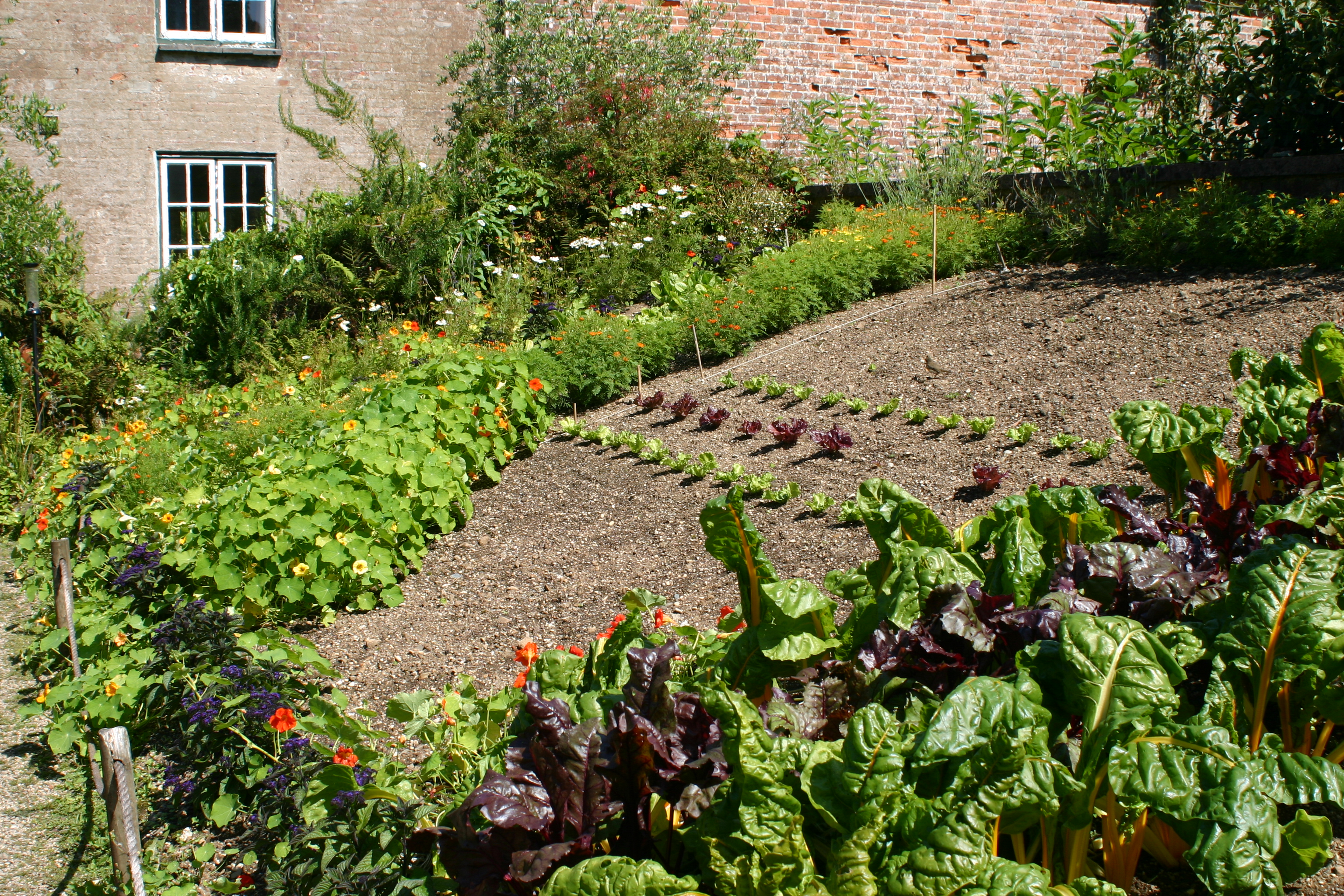
One of the sloping beds

One of the sloping beds

My previous article on Trengwainton covered the wider gardens and grounds as well as some historical background. Today I want to focus on the extensive walled gardens, built by previous owner, Rose Price. This is said to follow the dimensions of Noah’s Ark- though why, I’m not sure.

It also seems to have been created as a response to the period of persistently cooler weather known as the ‘Maunder Minimum’ (or otherwise known as the ‘prolonged sunspot minimum’). This period- starting in about 1645 and continuing to about 1715 – was when  sunspots became exceedingly rare. The term was named after the 19th Century solar astronomer Edward D. Maunder who studied how sunspot latitudes changed with time. The Maunder Minimum coincided with the middle—and coldest part—of the ‘Little Ice Age’, during which Europe and North America were subjected to bitterly cold winters. recent research has established a causal link between low sunspot activity and cold winters.

The surrounding garden wall prevented warm air from escaping from the garden on cool nights, thereby allowing frost-sensitive fruit trees to survive, despite the cooling climate. The walled garden is also interesting for its use of sloping beds – orientated to take advantage of the sunny aspect and so aiding the warming of the soil and creating beneficial growing conditions. 

The gardens – there are separate walled enclosures rather than one large expanse – are both a fascinating horticultural legacy and also a modern-day guide to good food and flower growing. There are demonstration plots and little corners showing different sorts of container growing, raised beds, nectar – rich flowers, a DIY device for creating liquid plant food etc. A wide range of food is still grown here as well as beautiful ‘cottage garden’ style flower borders, orchards and a demonstration plot conjuring up the ‘Dig for Victory’ campaign of the second World War. And while we were there the Gardens sported a delightful display of home-made ‘fairytale’ characters which amused and enchanted the young children who were eager to discover the next character on their way round!

This slideshow requires JavaScript.

Related article: West Country Gardens: Hydrangea Heaven at Trengwainton

Met Office Press Office's avatarOfficial blog of the Met Office news team

A relatively deep area of low pressure is tracking past the north of Scotland today and is then expected to head south into the North Sea tomorrow.

This will bring some strong winds to northern Scotland tonight, then to the east coast of England tomorrow – particularly through the afternoon.

These northerly winds are expected to gust up to 50-60mph, which is unlikely to cause any wind damage but could generate some big waves in the North Sea.

The Met Office has issued a warning this possibility as the big waves could combine with a storm surge to overtop sea walls and potentially flood some coastal roads.

A spokeswoman for the Environment Agency said: “Strong winds and large waves could cause minor disruption along the North Sea coast on Thursday from Yorkshire to Essex. Spray and waves may overtop sea walls and people are urged to stay safe and avoid…

View original post 213 more words

Met Office Press Office's avatarOfficial blog of the Met Office news team

Provisional Met Office statistics show September has been fairly average for the UK, with lower than average rainfall being the only notable feature.

The UK mean temperature for the month was 12.8C, which is just 0.1C above the long-term (1981-2010) average. It’s the same story with maximum and minimum temperatures, which at 16.6C and 8.9C respectively, are both 0.1C above the long-term average.

There were 115.8 hours of sunshine in the UK during the month which adds up to 93% of the long term average – again, fairly normal. However, there were some big regional differences. Sunshine amounts were below normal in the west and south, but near or above normal in the north and east. For south Wales and south-west England this was provisionally the dullest September since 1994.

When it comes to rainfall, it has been a drier than average month for the UK. There was 70.7mm of…

View original post 134 more words

Domestic Scale Rain Garden

Rain Gardens

‘A rain garden is a planted depression or a hole that allows rainwater runoff from impervious urban areas, like roofs, driveways, walkways, parking lots, and compacted lawn areas, the opportunity to be absorbed. This reduces rain runoff by allowing stormwater to soak into the ground (as opposed to flowing into storm drains and surface waters which causes erosion, water pollution, flooding, and diminished groundwater). They can be designed for specific soils and climates. The purpose of a rain garden is to improve water quality in nearby bodies of water. Rain gardens can cut down on the amount of pollution reaching creeks and streams by up to 30%.’

Source: http://en.wikipedia.org/wiki/Rain_garden
Tutorial: seagrant

via Avantgardens

What if all new houses had to be built with living roofs? Imagine if your apartment rent also included free fruit and vegetables from the roof garden…
http://ecosalon.com/high-tech-green-roof-technology-in-architecture/

living wall

Image by: Laura Manning

A guest article by Gavin Harvey

As urban spaces are growing, the desire to have a little bit of nature return to the living and working space is greater than ever. Living green walls help to escape the wasteland of concrete we find ourselves in, and counteract pollution to restore a natural balance to the local atmosphere.

Invented by Stanley Hart White in 1938, living green walls (also called vertical gardens or eco-walls) are more than just climbing plants. It is sustainable architecture at its finest!

 Benefits of Living Green Walls

With the expansion of cities everywhere, air pollution has increased; unknown to many people, toxins are not only outdoors on the streets filled with car fumes, but can build up indoors too thanks to air fresheners, cooking fumes and myriad other things. Plants filter these pollutants and improve air quality, whether that’s indoors or outdoors.

Living green walls on the outside of buildings also help to reduce energy costs by cooling the building in summer and insulating it in winter. Damages to walls are minimised by regulating the temperature fluctuations and diverting rainwater from the wall. Plants have long been used to block high frequency sounds on roadsides, and living green walls are a new way of diminishing noise pollution in busy urban areas.

Green walls also increase the property’s value by gaining LEED credits! This is an internationally recognised green building certification system, which rewards commercial buildings and home owners alike for developing certain green criteria.

 How Does it Work?

According to the climate of the location, carefully selected plants are put on structures that are either free-standing or attached to walls. These are irrigated by a drip-irrigation method, using recirculation systems to reduce water wastage.

Each wall is individually designed for the specific project. Plants for the exterior differ from those you would use indoors. They are chosen according to climate zones, usually for a higher zone than the location’s climate to ensure survival. Plants that have a wide range of tolerances and are able to adapt to a new environment quickly are perfect for the green walls.

If required, the wall can even feature a custom design, such as a logo crafted from carefully planted blooms in different colours.

 Cost and Maintenance

Plants grown on the wall are the cheaper option, but they will need a year before they are fully grown so if you want a stunning display immediately this isn’t your best option. Plants grown off-site and later inserted into the wall have their cost, as the nursery has to be paid plus fertilisers and day-to-day care.

Maintenance is crucial for a long-lasting living green wall. As the technology is still relatively young, it is hard to tell how long the plants will survive. The hardware can last up to 25 years whereas the plants will only grow until their roots run out of space within the panels, so it’s wise to choose species that don’t grow very rapidly! Plants in a tray system have to be replaced every year.

For more information about living green walls, check out The Ultimate Guide to Living Green Walls.

 Thanks to Gavin Harvey and Johann Heb for supplying this article.

You might also be interested in – Style Counsel: Gardens in the Sky

Old School Gardener


Finding Nature

Nature Connectedness Research Blog by Prof. Miles Richardson

Norfolk Green Care Network

Connecting People with Nature

Discover WordPress

A daily selection of the best content published on WordPress, collected for you by humans who love to read.

Susan Rushton

Celebrating gardens, photography and a creative life

Unlocking Landscapes

Writing, photography and more by Daniel Greenwood

Alphabet Ravine

Lydia Rae Bush Poetry

TIME GENTS

Australian Pub Project, Established 2013

Vanha Talo Suomi

The Journey from Finnish Rintamamiestalo to Arboretum & Gardens

Marigolds and Gin

Because even in chaos, there’s always gin and a good story …

Bits & Tidbits

RANDOM BITS & MORE TIDBITS

Rambling in the Garden

.....and nurturing my soul

The Interpretation Game

Cultural Heritage and the Digital Economy

pbmGarden

Sense of place, purpose, rejuvenation and joy

SISSINGHURST GARDEN

Notes from the Gardeners...

Deep Green Permaculture

Connecting People to Nature, Empowering People to Live Sustainably

BloominBootiful

A girl and her garden :)