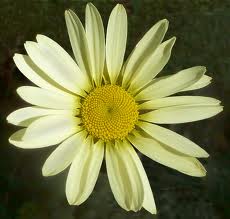
Category: A-Z of Perennials


Fuchsia-flowerFuchsia (named after the 16th century German botanist Leonhart Fuchs) are a genus of sub shrubs native to Central and South America and New Zealand. Whilst there are only around 100 species (organised into 12 sections) there are over 8,000 hybrids in cultivation!

Leonhart Fuchs

Leonhart Fuchs

Most are tender and deciduous but some are evergreen, especially in warmer areas. They like any reasonably moist soil and flower from midsummer to autumn.

The flowers are unique in form and handsome. They form in clusters of pendent tubes or are bell-shaped  with widely spread sepals, with a surrounding ‘skirt’ of petals – some varieties with the same colour as the tube, others different. The number of petals varies between 4 (in the single flower varieties) and 8 (in double-flowered). The Fuchsia Tryphylla group have very long, single flower tubes.

Fcuhsia 'Thalia'

Fuchsia ‘Thalia’

Fuchsia 'Black Beauty'

Fuchsia ‘Black Beauty’

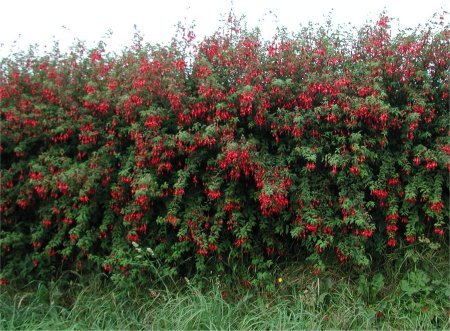
In colder areas fuchsia need to be in the warmest part of the garden and even then frost may kill off a lot of their top growth during winter.  Fuchsias do not grow well under trees.  A few are grown for their attractive foliage and all carry berries after flowering. Fuchsias are popular garden plants and can live for years with minimal care. The British Fuchsia Society maintains a list of “hardy” fuchsias that can survive through British winters. In the United States, the Northwest Fuchsia Society maintains an extensive list of fuchsias that have proven hardy in the Pacific Northwest over at least three winters.  Some more vigorous varieties can be trained as hedges (F magellanica, F. magellanica ‘Riccartonii’) and do particularly well in coastal areas. There are three main types :

  • Half-hardy fuchsia: These need to be overwintered in frost-free conditions. Trailing types are ideal for hanging baskets (they need daily watering). Upright Fuchsias are a good choice for containers. In both cases, plants benefit from a balanced, liquid fertiliser in late summer
  • Hardy fuchsia: Plant the base of the stem 5cm below the soil surface and protect the crown in autumn with a mulch of compost, bark or straw. Cuttings can be taken in early autumn as an insurance against frost damage. Apply a dressing of general fertiliser in spring and again in summer
  • Standard fuchsia: These tend to be of the faster growing varieties and should always be brought under cover for winter as the main stem is prone to frost damage even if the variety is considered hardy. A balanced, liquid fertiliser used in summer encourages better blooms over a long flowering period
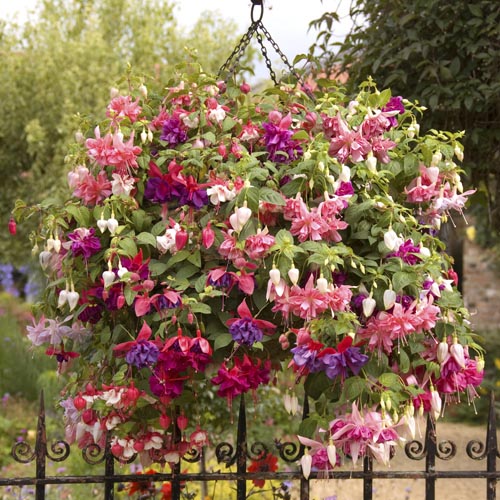
Fuchsia Hanging Basket

Fuchsia Hanging Basket

Fuchsia magellanica hedge

Fuchsia magellanica hedge

Fuchsias from these ‘sections’ have been shown to be especially hardy in the UK, Ireland and many other countries, including New Zealand and the Pacific N.W. of the United States:

  • Quelusia (F. magellanica and its variants, F. regia, etc.)

  • Encliandra (some encliandra hybrids flower continuously)

  • Skinnera (F. excorticata, F. perscandens)

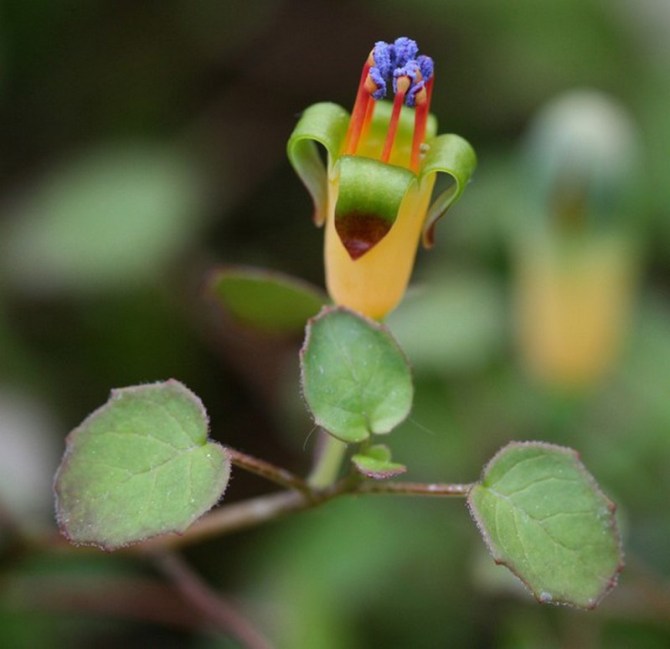
  • Procumbentes (F. procumbens is suitable as a groundcover)
Fuchsia boliviana

Fuchsia boliviana

Fuchsia magellanica var. molinae

Fuchsia magellanica var. ‘Molinae’

Fuchsia procumbens

Fuchsia procumbens

Fuchsia michoacanensis

Fuchsia michoacanensis

Fuchsia 'Wendy's Beauty'

Fuchsia ‘Wendy’s Beauty’

A number of species survive outdoors in agreeable mild temperate areas, though some may not always flower in the average British summer. Due to the mild, temperate climate created by the North Atlantic Current, Fuchsias grow abundantly in the West Cork region of Ireland. They are associated with the area and a local branding initiative uses the fuchsia flower as its logo. For similar reasons fuchsias grow abundantly in the Isles of Scilly, where they have even colonised wild areas. While F. magellanica is not wide spread in Scotland it has been found growing wild in sheltered areas, and can been seen growing from self set seedlings along the banks of a stream that runs through Cambo gardens in Fife. Even in somewhat colder regions, a number of the hardier species will often survive as herbaceous perennials, dying back and re – shooting from below ground in the spring.

Fuchsias may suffer from infestations of aphids such as Whitefly. Fuchsia Gall Mite is a new pest threatening to cause more problems, and it can also be difficult to gain good control of Fuchsia Rust and Red Spider Mite once they get hold.

Sources and further information:

RHS- growing Fuchsias

Find that Fuchsia

The British Fuchsia Society

Wikipedia

Hmm... not sure about this Fuchsia.....

Hmm… not sure about this Fuchsia…..

Old School Gardener

If you’ve enjoyed reading this post and others on this blog, why not comment and join others by signing up for automatic updates via email (see side bar, above right ) or through an RSS feed (see top of page)?
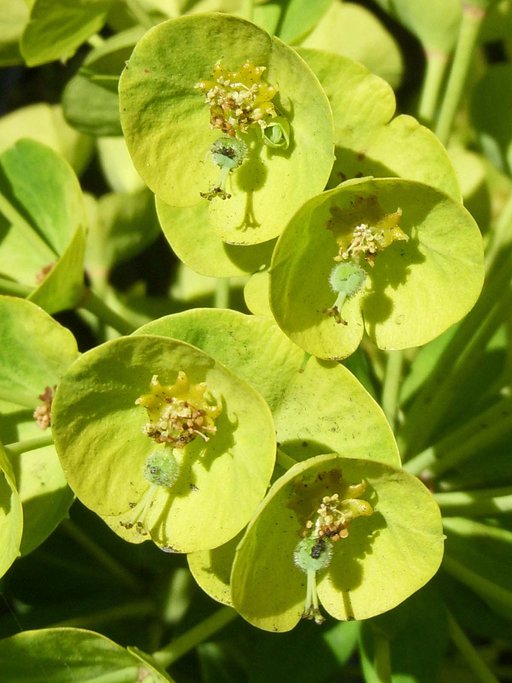
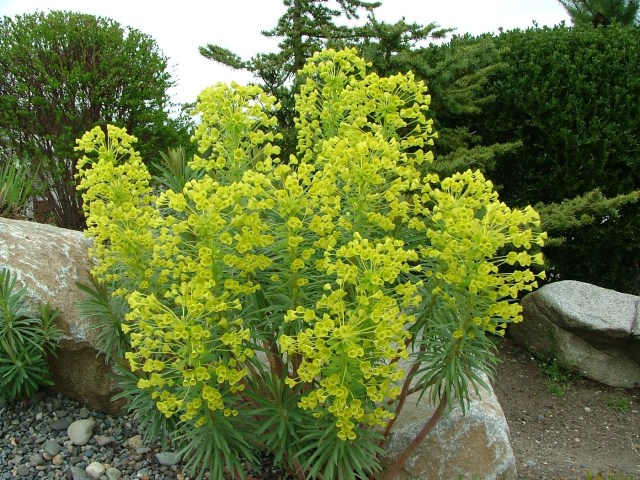
Euphorbia characias sub species 'Wulfenii'

Euphorbia characias sub species wulfenii

A bit like Marmite, gardeners  seem to either love or hate Euphorbia (Spurge) – I love them!

This is a large genus of over 2,000 species, including annuals,perennials as well as shrubs and succulents. They originate from many different parts of the world and as a result their growing requirements differ widely. They include the red-leaved species commonly seen at Christmas, Euphorbia pulcherrima (Poinsettia)

Euphorbia pulcherrima (Poinsettia)

Euphorbia pulcherrima (Poinsettia)

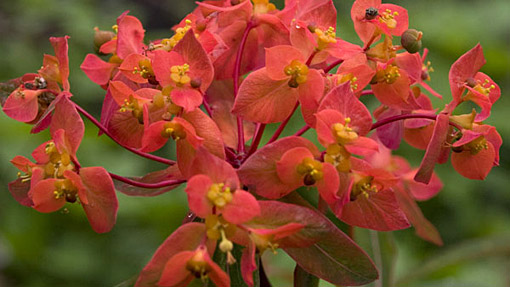
Some are evergreen and hardy, others are semi evergreen or deciduous. Nearly all species have distinctive ‘cyathia‘- small cups of long – lasting bracts that can be green, yellow, red, brown or purple. These are ‘cupping nectaries’ containing insignificant flowers with much reduced parts. In the perennials and shrubs these cyathia are carried in dense clusters. The leaves are very varied  and often are shed quite quickly.

Some species are very invasive and are not really suitable for the garden (e.g. E. cyparissias and E. pseudovirgata) others will self seed prolifically so need to be used with care (e.g. E. lathyris, E. hybernia,E.coralloides and E.wallichii). Some species can be invasive in some climates (e.g. E. myrsinites in parts of the USA) but are less problematic in milder, wetter places.

Euphorbia cyparissias (Cypress Spurge)

Euphorbia cyparissias (Cypress Spurge)

Euphorbia myrsinites

Euphorbia myrsinites

All Euphorbias resent disturbance, so siting them carefully from the start is important for long lasting plants. Euphorbia suit every situation from desert to bog, formal courtyard to wild woodland. With a couple of  exceptions Euphorbia are easy to grow. They are also look great in the garden, the colourful bracts lasting many weeks.

Euphorbia look best if allowed to sprawl at will, but if space is limited, you may need to support the floppier ones.

The evergreens require no routine pruning – simply tidy them up when they start to look untidy. Deciduous ones should be cut down to ground level in autumn. New shoots will emerge from the crown in spring. The biennial forms such as E. characias produce new shoots from the base each year. Cut out dead stems in winter. They are not fussy as to soil, but most prefer good drainage.

The bigger, more sculptural forms look good with architecture – against steps or walls, or in corners of courtyards. E. mellifera is a superb statement plant. E. myrsinites can be used in raised planters to sprawl over the sides. E. griffithii ‘Fireglow’ looks great beside water, with bronzy Rodgersias and red-flushed Astilbes, but will also look good in a hot border, while E. ‘Whistleberry Garnet’ associates well with ferns, Hostas and the dark-patterned leaves of Geranium phaeum.

All parts of Euphorbia are useful in flower arranging either in the fresh or dried state.

However all Euphorbia are poisonous and bleed a skin irritant milky sap, whereas the flowers are highly allergenic, so be careful when cutting or handling these wonderful plants.

Euphorbia polychroma

Euphorbia polychroma

Euphorbia griffithii 'Fireglow'

Euphorbia griffithii ‘Fireglow’

Euphorbia characias sub species 'Wulfenii'

Euphorbia characias sub species wulfenii

Further information:

National Collection of hardy Euphorbias

Growing Euphorbias

Euphorbia pulcherrima (Poinsettia)

Common varieties

Wikipedia

Old School Gardener

If you’ve enjoyed reading this post and others on this blog, why not comment and join others by signing up for automatic updates via email (see side bar, above right ) or through an RSS feed (see top of page)?

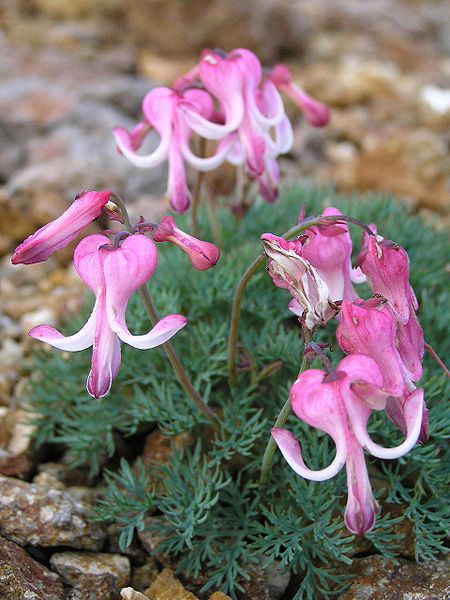
Dicentra Dicentra is a genus of about 20 annuals and perennials (of which about 8 are perennial) and many cultivars. They are native to both Asia and North America (though possibly an ‘honorary native’ in the latter, dating from colonial times), mainly in woodland habitats.

Their roots vary between rhizomes,tubers or fleshy tap roots. All varieties are reliably hardy. Most are deciduous but some are evergreen and have fern-like, divided foliage, some of a silver – grey colour.

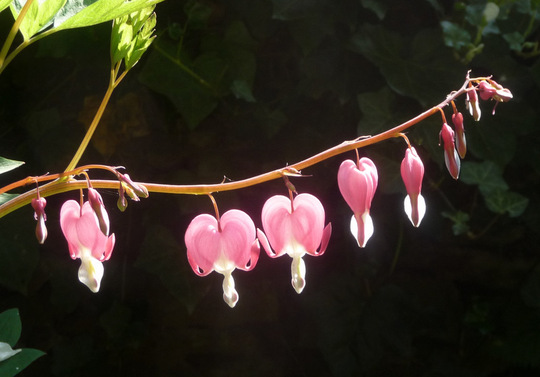
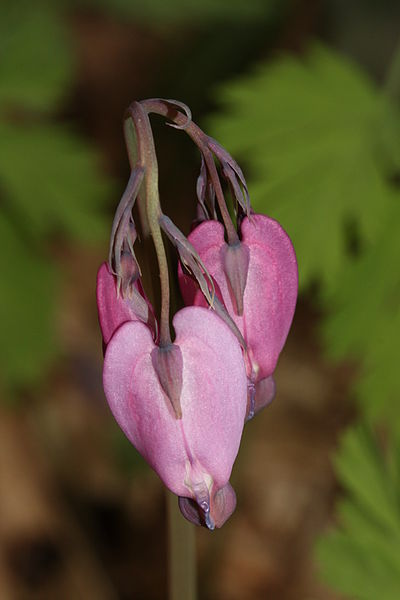
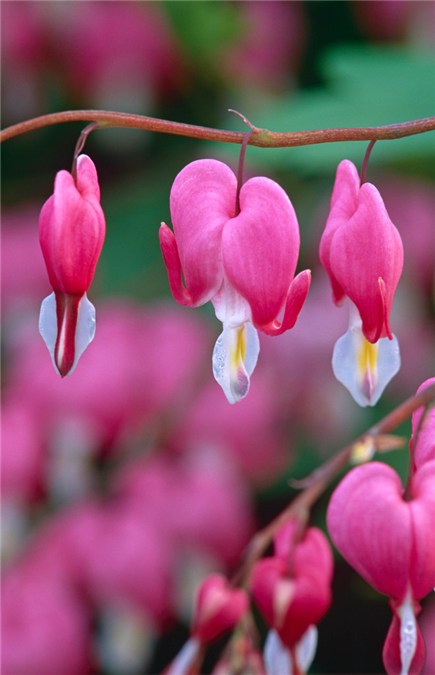
Flowers – which come in shades of red,pink and white – hang as pendents on racemes or panicles and are very distinctive – two outer petals are pouched, giving a heart-shaped outline with the two inner petals forming a hood over the anthers. Not surprisingly this arrangement has led to many descriptive common names such as:

  • Bleeding heart (most usually used for D. spectabilis)
  • Showy bleeding heart
  • Dutchman’s breeches
  • Chinaman’s breeches
  • Locks and keys
  • Lyre flower
  • Seal flower
  • Old-fashioned bleeding heart

Flowering time is late spring into early summer. The flowers and foliage are useful in flower arrangements, the flowers lasting well in water.

Dicentra canadensis (Squirrel Corn)

Dicentra canadensis (Squirrel Corn)

Dicentra cucullaria (Dutchman's breeches)

Dicentra cucullaria (Dutchman’s breeches)

Dicentra formosa oregona 'PEARL DROPS'

Dicentra formosa oregona ‘Pearl Drops’

Dicentra formosa pink

Dicentra formosa

Dicentra formosa

Dicentra formosa – close up of flowers

Dicentra peregrina (Komakusa)

Dicentra peregrina ‘Komakusa’

Dicentra spectablis

Dicentra spectablis

Most of the perennial Dicentra make good border plants, though a couple are rather invasive (spectabilis and formosa) and are best used in a woodland garden, where seedlings or spreading rhizomes can be allowed to expand or be easily removed. D. spectabilis is not long-lived. All Dicentra are low in allergens, but all parts of the plant are poisonous and a skin irritant.

Most varieties prefer growing in half shade in moist fertile soil – but they are drought tolerant so can be useful in drier shaded positions.

Most varieties grow to between 25cm and 45cm tall, though D. spectabilis is taller and the white form (‘Alba’) and ‘Gold Heart’ (with striking yellow foliage) grow to 90cm tall and spread to around 50cm.

Further information:

Dicentra spectabilis

Varieties and growing Dicentra

Dicentra ‘Stuart Boothman’ AGM

National Dicentra collection

Dicentra photographs

Old School Gardener

If you’ve enjoyed reading this post and others on this blog, why not comment and join others by signing up for automatic updates via email (see side bar, above right ) or through an RSS feed (see top of page)?
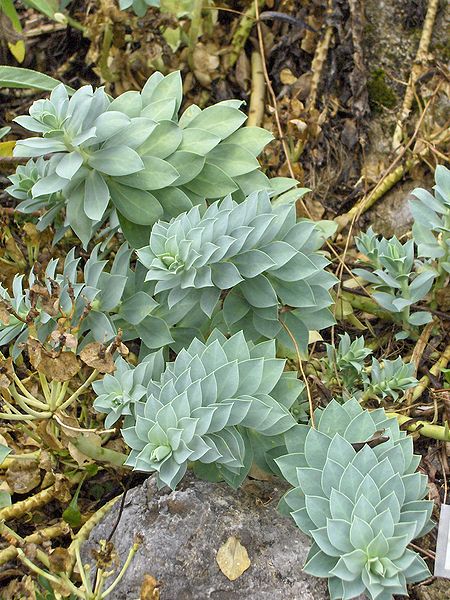
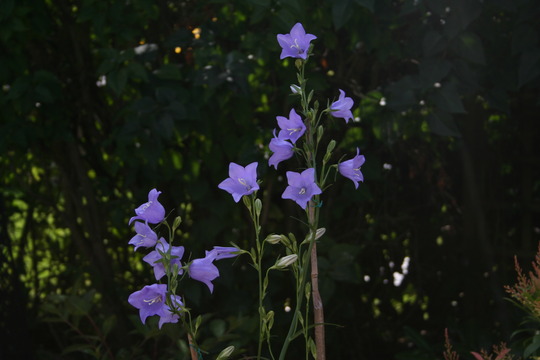
Campanula persicifolia

Campanula persicifolia

A very large genus, with some 300 species, including annuals and biennials as well as perennials. Campanulas are native to southern Europe, Turkey and Asia, and are found in wide range of habitats. Therefore the different species can have very different cultivation requirements. On the whole, they are undemanding and like dappled shade or sun in a well drained, fertile soil.

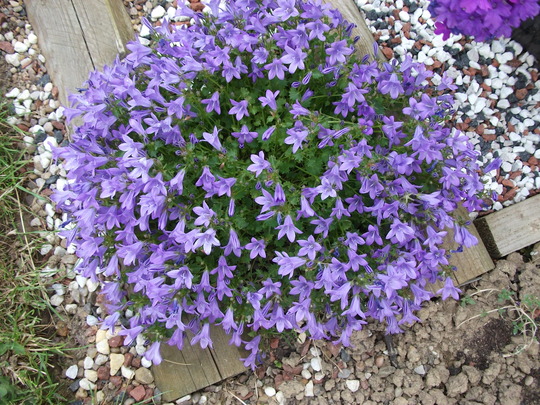
Campanulas vary in habit from dwarf arctic and alpine species under 5 cm high, to large temperate grassland and woodland species growing to 2 m tall. So there is a Campanula to fit most garden situations, from wall plants to borders, with different habits of trailing, spreading or clump – forming. Taller varieties may need staking.

The flowers have a wide variety of shapes, between star-shaped to bell-shaped (The ‘Bellflower’ is the common name for the genus) and variations in between.

Campanula poscharskyana (Serbian Bellflower)

Campanula poscharskyana (Serbian Bellflower)

Campanula takesimana 'Alba' with Cotinus

Campanula takesimana ‘Alba’ with Cotinus

Campanula lactiflora - seed heads

Campanula lactiflora – seed heads

Campanula glomerata  'Superba'

Campanula glomerata ‘Superba’

Campanulas have a long flowering season – late spring through summer. Some are rather invasive, so think about where you place these and keep an eye on them – or alternatively grow them in pots or other containers; examples are C. persicifolia (which also self seeds around the garden), C. pulla and C. takesimana.

They can be subject to attack by slugs and snails. Propagate by seed or division, cutting back old flowers and foliage in the autumn. Good for alpine beds, rockeries, ground cover and in borders and also good cut flowers. Campanulas partner well with Lamb’s Ear (Stachys), Lady’s Mantle (Alchemilla), Columbine, and Roses. Their delicate form and cool colors complement many other perennials.

Further information:

Campanula ‘Bernice’

Pictures of Campanula and other info

Rare Campanulas

Growing Campanulas

Quizzicals: answers to those on the last A-Z post- 

  • Helen drives a French car – Citronella
  • The era of the taxi – Cabbage

Old School Gardener

If you’ve enjoyed reading this post and others on this blog, why not comment and join others by signing up for automatic updates via email (see side bar, above right ) or through an RSS feed (see top of page)?

Bergenia cordifolia

Bergenia cordifolia

This is a genus of only half a dozen species, but many hybrids. Originally from the moorlands,woodlands and meadows of central and eastern Asia, these evergreen perennials – otherwise known as ‘Elephant’s Ears’ because of their large rounded leaves – are extremely useful as they grow in shade or sun and wet or dry soil.

The leaves are glossy and leathery and colour well in the winter, especially in poor soil. They are excellent ground cover plants, especially in or on the edge of a woodland garden.

The flowers are handsome and are especially welcome in winter and early spring. They also last well in water, and the leaves are also long lasting, making them good flowers for arranging.

Bergenia leaves

Bergenia leaves

They benefit from regular lifting and dividing and this is the best way to propagate them, as gardens with more than one variety can hybridise and produce seed that is not true to the original types. Slugs can be a problem.

Bergenia 'Simply Sweet' in mass planting

Bergenia ‘Simply Sweet’ in mass planting

The Royal Horticultural Society has given its Award of Garden Merit (AGM) to some of the cultivars, including ‘Bressingham White’ and Bergenia cordifolia ‘Purpurea’.

Early spring bulbs (Snowdrops, Crocus, Scilla, Wood Anemones) are perfect partners for Bergenia- it’s best to plant both at the same time, ideally in autumn. Alternatively, using a narrow trowel, bulbs can be slipped in between established plants.

Further information:

How to grow Bergenias

BBC Plant finder

Cambridge Botanic Garden (national collection)

Quizzicals: two more cryptic clues to the names of plants, veg or fruit –

  • Helen drives a French car
  • The era of the taxi

Old School Gardener

If you’ve enjoyed reading this post and others on this blog, why not comment and join others by signing up for automatic updates via email (see side bar, above right ) or through an RSS feed (see top of page)?
Anthemis tinctoria 'E.C.Buxton'

Anthemis tinctoria ‘E.C.Buxton’

There are around 100 mat or clump-forming species in the genus Anthemis.

They make very useful border plants, with a long flowering season from late spring – end of summer.

Most grow between 30 -60 cms high and have a similar spread.

Beautiful filigree, aromatic evergreen foliage when not in flower.

Smaller types suitable for rock gardens.

Flower heads are daisy-like; with white or yellow ray florets or yellow disc florets- some make good cut flowers.

Though many species are not long lived (A. tinctoria especially so), they are all easily propagated from seed or cuttings.

The plant’s life can be extended by shearing over in autumn just after flowering – this encourages new basal growth which takes the plant through the winter. Shearing also helps to prevent mildew.

They need sunny, well-drained sites and wet winters are generally not favourable.

They do not transplant well, but should anyway be divided regularly in spring.

Anthemis maritima

Anthemis maritima

The orangey- yellow varieties look well woven in and out of mixed borders, and complement warmer coloured flowers; e.g. Crocosmia ‘Lucifer’, Dahlias, Hemerocallis etc. The yellow varieties look well with blue flowers such as Nepeta or Agapanthus. The pale lemon variety ‘E.C. Buxton’ (or ‘Golden Marguerite’- one of my favourites)  works well with wispy grasses such as Stipa tenuissima and the darker Lavenders (e.g. ‘Hidcote’).

Further information:

Wikipedia

How to grow Anthemis- Telegraph article

Anthemis marschalliana– silver foliage

Quizzicals: answers to the two in the post ‘Gypsies, tramps and thieves…’

  • The scourge of female chickens – Henbane
  • Cheap goods in a pile of dung – Potato

Old School Gardener

If you’ve enjoyed reading this post and others on this blog, why not comment and join others by signing up for automatic updates via email (see side bar, above right ) or through an RSS feed (see top of page)?
Finding Nature

Nature Connectedness Research Blog by Prof. Miles Richardson

Norfolk Green Care Network

Connecting People with Nature

Discover WordPress

A daily selection of the best content published on WordPress, collected for you by humans who love to read.

Susan Rushton

Celebrating gardens, photography and a creative life

Unlocking Landscapes

Writing, photography and more by Daniel Greenwood

Alphabet Ravine

Lydia Rae Bush Poetry

TIME GENTS

Australian Pub Project, Established 2013

Vanha Talo Suomi

The Journey from Finnish Rintamamiestalo to Arboretum & Gardens

Marigolds and Gin

Because even in chaos, there’s always gin and a good story …

Bits & Tidbits

RANDOM BITS & MORE TIDBITS

Rambling in the Garden

.....and nurturing my soul

The Interpretation Game

Cultural Heritage and the Digital Economy

pbmGarden

Sense of place, purpose, rejuvenation and joy

SISSINGHURST GARDEN

Notes from the Gardeners...

Deep Green Permaculture

Connecting People to Nature, Empowering People to Live Sustainably

BloominBootiful

A girl and her garden :)