Category: A-Z of Garden Trees


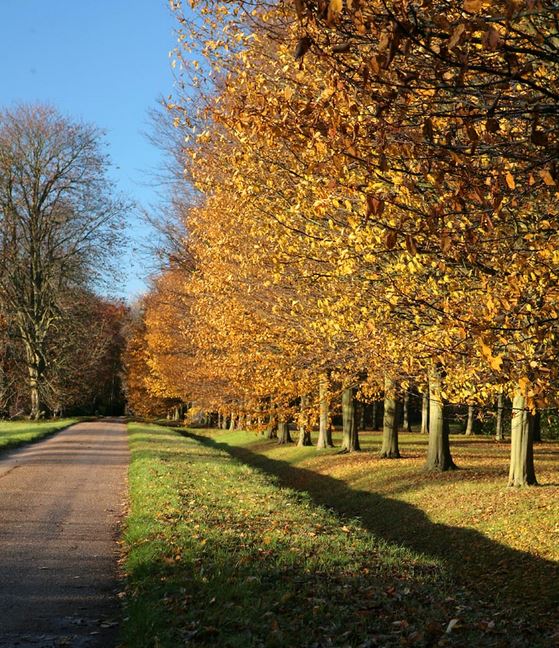
carpinus betulus autumn colourThis is the third in my new series on garden trees. I’ve also done an article about trees and garden design.

Common name: Hornbeam

Native areas: The 30–40 species occur across much of the north temperate regions, including the U.K., with the greatest number of species in east Asia, particularly China. Only two species occur in Europe, and only one in eastern North America. 

Historical notes: Traditionally, the timber of hornbeams has been used to produce mallets, skittles and even the moving parts of pianos! The common English name of “hornbeam” derives from the hardness of the wood (likened to ‘horn’) and the Old English ‘beam’, a tree (similar to the German for tree, “Baum”).

Pleached trees- picture RHS

Features: A large, deciduous tree (growing to 20 metres plus), with a grey-fluted trunk and spreading canopy. It has ovate, ribbed and serrated edge leaves that turn a beautiful clear yellow in autumn. The flowers are wind-pollinated pendulous catkins, produced in spring. The male and female flowers are on separate catkins, but on the same tree (i.e it is monoecious). The fruit is a small nut about 3–6 mm long, held in a leafy bract; the bract may be either trilobed or a simple oval, and is slightly asymmetrical.

Uses:  Wonderful in a parkland setting, grown in groups, it also ideal for pleaching (i.e. training into a ‘hedge on stilts’) and for use along the edges of smaller gardens – just like here at Old School Garden. Received the Award of Garden Merit from the RHS in 2002.  Some of the cultivars are suitable for smaller gardens as their growth habit is more columnar.

Some of the cultivars available include:

‘Fastigiata’– a tree of medium size (10-15 metres in height) and with a pyramidal habit, slender in its youth. Suitable for smaller areas despite developing ‘middle age spread’ (it can grow out to  1o metres wide). Very effective if left feathered at the base to encourage gold and orange autumn leaf colour. Stiffly ascending branches give it a columnar shape, resembling Lombardy Poplar.

‘Fastigiata Frans Fontaine’- selected from a street in the Netherlands in the 1980’s this retains its columnar habit better than the ordinary ‘Fastigiata’ variety (3 metres wide after 25 years) so is even better suited to restricted areas.

‘Purpurea’-  medium height (10-15 metres), introduced in the 1870’s , this is well suited to arboretums and plant collections. Young leaves flush with a purple tinge and then gradually turn deep green and them a similar yellow to the species hornbeam in  autumn. Slower growing and ultimately smaller than the species tree. Well suited to heavier soils.

”Japonica’-  (Japanese hornbeam), introduced from Japan in 1895, a small (5-10 metres tall), rounded tree, very effective if pleached. Darker than the species tree, with heavily corrugated leaves, darker than the species tree. Attractive, prolific hop-like fruit. AGM in 2002

Growing conditions: hornbeams grow well in most soils, including clay and chalk and is useful for planting where there are poor planting conditions.

 Further information:

Wikipedia

RHS- Carpinus betulus

RHS- pleaching

Barcham trees directory

Old School Gardener

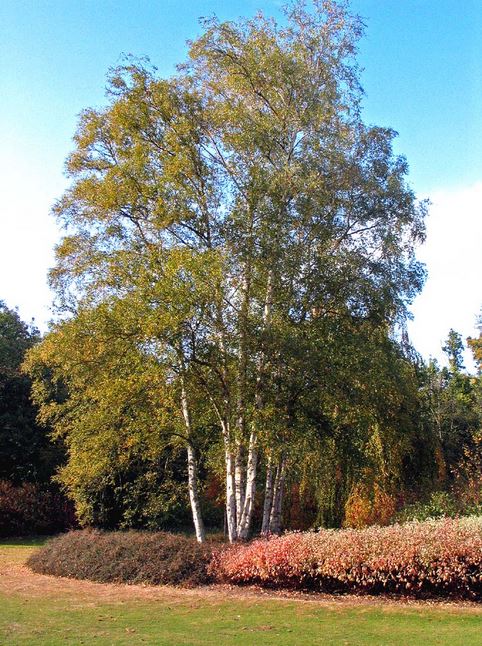
mature betula pendula bartram treesThis is the second in my new series on garden trees. I’ll shortly be doing one or two articles about trees and garden design, in my series ‘Design my garden’, so keep an eye out.

Common name: Silver Birch

Native areas: Europe, though in southern Europe it is only found at higher altitudes

Historical notes: Also known as the ‘Lady of the woods’ because of its slender and graceful appearance. Especially popular in the UK. Grown as an ornamental plant and also for its timber. It is used for a range of purposes, from broom-making and steeple-chase fencing to medicines.

Features: A medium tree (15- 20 metres tall), with a conical, semi weeping habit, with white bark and horizontal lines and large diamond -shaped cracks which form as the tree matures. Leaves ovate, yellow in autumn. Flowers in catkins. Can be grown either as a single or multi-stemmed tree.

This slideshow requires JavaScript.

Uses: Very good as a multi-stemmed tree for exposed or elevated positions as they have a low centre of gravity. These look good in small groups in informal settings. I have a few that contribute to a mixed ‘woodland edge’  here at Old School Garden, providing a natural boundary to the garden. It can also be used as a specimen, though some of the cultivars available perhaps provide more interesting features than the species plant:

‘Dalecarlica’ (Swedish Birch, syn. ‘Laciniata’ or ‘Crispa’)- deeply cut leaves which weep gracefully, white peeling bark

‘Fastigiata’- stiffly ascending branches give it a columnar shape, resembling Lombardy Poplar

‘Purpurea’ slow growing and rare, with new, dark purple leaves,softening t o dark green/purple by summer.

‘Tristis’- tall (15-20 metres), weeping birch, with beautiful winter structure.

‘Youngii’- similar habit to ‘Tristis’ but shorter (5-10 metres) and so more suitable for smaller gardens, especially good as a specimen  in lawns.

‘Zwisters Glory’- from Switzerland, this new variety has gleaming white bark, so makes a good avenue tree and a good choice for urban areas and is quick growing.

Two other species of birch are also worth mentioning:

Betula pubescens- ‘Common White Birch’, prefers damper conditions than B. pendula, also it’s more hardy. It’s ascending branches give it a more solid appearance than B. pendula.

Betula utilis ‘Jacquemontii’/ ‘Doorenbos’-a medium tree with ascending branches, most admired for its almost pure white bark, looking very effective against a dark background.

Growing conditions: grows well in most soils and is good for parks and woodland, but is not suitable for areas which have soil that becomes compacted. Difficult to transfer as a bare rooted specimen, but containerised plants are more successful.

Further information:

Wikipedia

RHS

Barcham trees directory

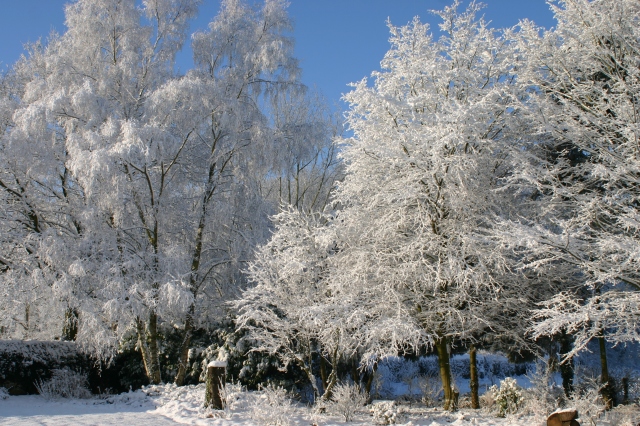
Silver Birch among others in the snow at Old School Garden, January 2013

Old School Gardener

acer campestre by wendy cutler

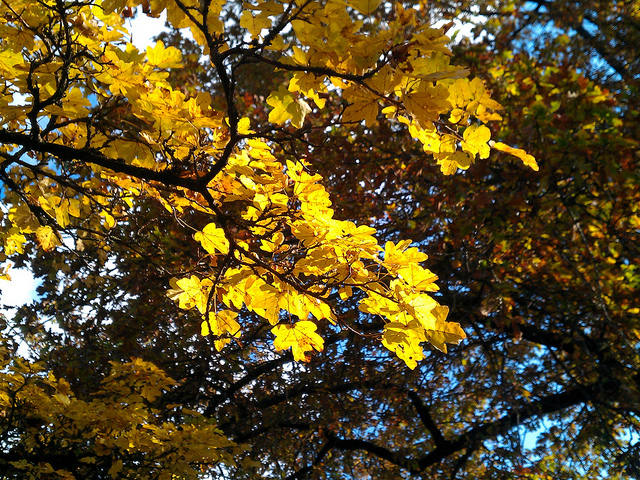
Acer campestre Autumn colour by Wendy Cutler

Welcome to my new ‘A-Z’ series on Garden Trees. My recently concluded series on perennials proved to be very popular so I hope that this will be equally appealing to my blog readers and followers. I plan to give a few brief facts on 26 trees that are suitable for gardens, together with a picture or two and how they might be used in the garden. My companion collection of articles called ‘Design my Garden’ will feature a few articles about the different design uses of trees in parallel with this new series.

I will be using various sources for the articles, but much will come from the very useful catalogues of Barcham Trees,a specialist tree nursery in Cambridgeshire I had the pleasure of visiting a couple of years go. So, here we go…..

Common name: Field Maple

Native areas: England

Historical notes: used for making musical instruments in the Middle Ages.

Features: small to medium height tree (10-15 metres) with rounded for. Leaves with 5 blunt lobes, turning varied tints of yellow, golden brown and red in the autumn.  Flowers small, green, forming typical winged maple fruitsCan be grown as a single or multi-stem tree.

Uses: a tree for woodland settings or used in small groups in large open gardens and landscapes especially valuable for its autumn colour; also useful in hedgerows (it is very wildlife friendly and will tolerate rough pruning in winter to keep its shape). Various clones of Acer campestre are well suited to streetscapes and urban settings as they have a more regular shaped crown than the parent.

Growing conditions: grows best in rich, well-drained soils, but will do well in most soil types and is tolerant of drought, soil compaction and air pollution.

Further information:

Wikipedia

RHS

Barcham trees directory

Old School Gardener

Finding Nature

Nature Connectedness Research Blog by Prof. Miles Richardson

Norfolk Green Care Network

Connecting People with Nature

Discover WordPress

A daily selection of the best content published on WordPress, collected for you by humans who love to read.

Susan Rushton

Celebrating gardens, photography and a creative life

Unlocking Landscapes

Writing, photography and more by Daniel Greenwood

Alphabet Ravine

Lydia Rae Bush Poetry

TIME GENTS

Australian Pub Project, Established 2013

Vanha Talo Suomi

The Journey from Finnish Rintamamiestalo to Arboretum & Gardens

Marigolds and Gin

Because even in chaos, there’s always gin and a good story …

Bits & Tidbits

RANDOM BITS & MORE TIDBITS

Rambling in the Garden

.....and nurturing my soul

The Interpretation Game

Cultural Heritage and the Digital Economy

pbmGarden

Sense of place, purpose, rejuvenation and joy

SISSINGHURST GARDEN

Notes from the Gardeners...

Deep Green Permaculture

Connecting People to Nature, Empowering People to Live Sustainably

BloominBootiful

A girl and her garden :)