

Nigel Boldero aka 'Old School Gardener'
 | Nigel Boldero on Fighting to Reduce Climate Cha… |
 | Anonymous on Fighting to Reduce Climate Cha… |
| Anonymous on PicPost: Carrot, my foot! |
| 18 Surprising Hydran… on Plantax 16: Hydrangea the wate… | |
| Nigel Boldero on Poppyland: A Victorian romance… |
| Anonymous on Poppyland: A Victorian romance… |
| Anonymous on Plants to die for… |
 | Isabella Childress on PicPost: Forest, but not as we… |
 | Happiness Factor on Is child-friendly planning a l… |
 | zidane on Top Tip: On a Pedestal- make m… |




Nature Connectedness Research Blog by Prof. Miles Richardson
Connecting People with Nature
A daily selection of the best content published on WordPress, collected for you by humans who love to read.
Celebrating gardens, photography and a creative life
Writing, photography and more by Daniel Greenwood
Lydia Rae Bush Poetry
Australian Pub Project, Established 2013
The Journey from Finnish Rintamamiestalo to Arboretum & Gardens
Because even in chaos, there’s always gin and a good story …
RANDOM BITS & MORE TIDBITS
.....and nurturing my soul
Cultural Heritage and the Digital Economy
Sense of place, purpose, rejuvenation and joy
Notes from the Gardeners...
Connecting People to Nature, Empowering People to Live Sustainably
A girl and her garden :)

 Old School Garden
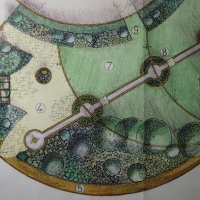
Brilliant design idea. You could put the plants that need most water in the centre by the pool moving out wards to the edge where plants that need least water could be planted. Love it.
Hi Malc- nice thought! 🙂
Hi – interesting photo. I agree with Chez, some permaculture writing advocates non-straight lines. The reasons given are things like creating more ‘edge’ , but I’m not really convinced (tho I love a lot of permaculture ideas, and am studying it!) I think its great to be reminded that veg gardens don’t have to look like the ones we’re used to – ie straight rows, lots of bare soil; there are lots of perennial, polyculture, or forest gardens growing lots of food productively, that don’t look anything like this. But that said, there are good reasons for straight rows too – easier to tend, to harvest, to move between etc. I’m planning a new veg garden and did think about making some curved beds, but decided I’d just be doing this for the sake of being different. I’m sticking with rectangles…Tho there will be polycultures and perennial veg as well!
Thanks for the thoughtful comment. I see what you mean about ‘edge’ but I guess you’d use more ground as paths? The kitchen garden here is along straight lines, but non uniform size/shaped beds; I used this plan to make it more visually interesting but it does have its disdavantages in terms of different bed widths and ‘awkward’ shaped corners, but I’ve adapted my growing patterns to cope with this; e.g growing triangular patches of flowers to add colour and attract insects. I’m gradually installing a series of plastic hoops over the main beds to provide the option of various crop protection/ warming covers, but these are all having to be customised for each bed, so it’s a bit more work. I’ve also started to diversify my patterns within these beds – e.g growing smaller blocks of different things to ensure a steady supply and avoid gluts…these can also be closer together to avoid large areas of bare soil and keep the weeds down! Thanks for following my blog 🙂
Intriguing – this reminds me of permaculture gardens
Hi, thanks- in what way?
The circular pattern. I read a book on permaculture once that advocated for gardens designed as a series of circles, so that everything followed a circular pattern – planting, picking, moving the circular chicken coop over the garden. It was a fascinating idea.