
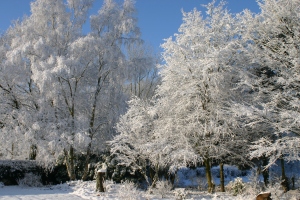
 As I sit and look out of my window this cold January day, the snow has started to fall once more- looks like the heaviest fall will be later today. So the firewood has been stacked and fortunately the week’s shopping was done yesterday…
At this time of year you could be forgiven for thinking there’s not much of interest in the garden. We tend to focus on the other seasons when we think about (or impulse-buy) plants. The weather itself isn’t exactly encouraging us to visit the nursery or garden centre. And anyway, they seem to be rather forlorn places at this time of year, especially the bigger ones that have ‘diversified’ into Christmas tat- the shelves are either emptying to make way for spring gardening stock or they’re full of half price Christmas cards and tinsel…
Well, we should perhaps think about how our garden looks in every part of the year, especially the important views into it from the house, road etc. In the winter, it’s these views that count, as it’ s less likely you’ll want to venture into the wet or cold garden itself.
The choices are significant – yes you can have:
- beautiful flowers
- powerful fragrance
- colourful fruit
- vibrant stems
- interesting bark
- strong form
- fascinating foliage
Here are seven examples of the sorts of plants that can be a winter wonder in your garden.
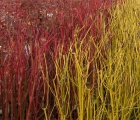
Dogwoods provide wonderful winter stem colour
1. Dogwoods (Cornus species)- vibrant stem colours make this a winner especially where you can group several plants together and maybe combine them for subtle effects (try C. alba ‘Sibirica’ (red) surrounded with C. sanguinea ‘Midwinter Fire’– amber- orangey red). Prune the stems back to the base of the plants in spring or leave one or two stems to grow taller and then pollard it for extra height (prune ‘Midwinter Fire’ less)- you will also get some lovely autumn leaf colour.

Witch Hazels- magical spidery flowers
2. Witch Hazel (Hamamelis in many different varieties)- beautiful spidery-like flowers are magical in woodland edges. Grow as specimens or focal points under trees or in open ground – will grow about 2 metres high and wide over time.

Crab apple ‘Red Sentinel’- plum-sized fruits that birds seem to avoid
3. Crab apple (Malus species and cultivars – but not the ‘orchard’ apple Malus x domestica)- some of these smallish trees are suitable for smaller gardens with their columnar growth – e.g. M. tschnoskii (which can grow to 12 metres high but only 7 metres across). The main reason for growing them, in my view, is their fruit. Plum – sized apples which seem to be just the right size to not interest birds, so you’ll hopefully be left with a great show throughout winter. I particularly like M. x robusta ‘Red Sentinel’ (can grow to 7 metres high and wide). And Crab apples give great spring flowers and autumn colour too.

Mahonia x media- black fruits follow the flowers
4. Oregon Grape (Mahonia species and some cultivars)- this is a winner on several counts, but mainly through its winter flowers and foliage. It’s evergreen leaves (some spiky) will burnish orangey-red if exposed to the sun. My favourite is the hybrid M. x media ‘Charity’ which is an erect evergreen shrub with sharply toothed leaves and dense yellow flowers that cascade from the stems. One ideally for part shade, so a woodland edge is perfect.

Viburnum x bodnantense- wonderful scented flowers
5. Viburnum x bodnantense ‘Dawn’– there are many different Viburnums, and they make a wonderful addition to the garden for their flowers, fragrance and foliage at different times of the year. This one is a hybrid and is chiefly grown for its wonderful scented flowers which grace the medium-sized deciduous shrub through winter on bare stems.

Box- small leaves make it ideal for strong topiary shapes
6. Box (Buxus sempervirens or if you want a slower growing, more compact form go for the variety ‘Suffruticosa’)- one of the great plants for shaping into strong forms that help to carry your garden’s structure through the winter months. Also, don’t forget that some perennials will add form and structure to your garden through their dead stems and shapes. For Box start growing small and gradually develop your desired form, or buy (at some expense) some of the ‘ready- to – rock’ topiary at nurseries and garden centres. There are some wonderful examples of historic topiary in Britain such as Levens Hall, Cumbria.
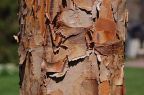
Paper-bark Maple- bark peels into subtle tones
7. Paper bark Maple (Acer griseum)- a fantastic, slow growing tree which can reach 10 metres high and broad. Like most Acers it gives great autumn leaf colour, but it’s main attraction is the peeling bark which looks especially magical with low winter sun shining through it.
Further information;
Quizzicals:
answers to the last two-
- Our monarch continues to work hard – Busy Lizzie
- Nasty spot causing urination problems – Bladderwort
A couple of gardening ditties:
‘Whose sorrel now?’
‘Don’t leaf me this way’
(thanks again to buddie Les for these)


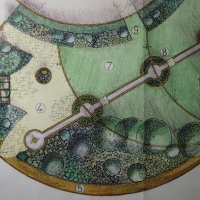


 Old School Garden
I too find the garden in winter quite exciting to view. While we don’t have much snow here in Seattle to present the plants against, we still get enough cold to let the plants change color. I did a post here: http://gardeningingreenwood.wordpress.com/2014/01/29/a-winters-rainbow/ to show off some of the plants I have that turn color in winter. It can be a beautiful time of year in the garden.
Cheers,
Steve
Hi again, I enjoyed your post on winter colour, such wonderful common names for some of your natives! We tend to overlook Lavender as a winter plant, but as you say the foliage is a bright spot in a dull winter, though we’d struggle to keep French lavender (stoechas) in a cold U.K. winter; I lost a lot a couple of years ago.
Hi Jen- hmm, I guess you’re talking about the Cypress aphid? Here’s a link to some more info on that http://www.gardenseeker.com/plant_pests_problems/plant-pests/leylandii_hedge_dying.htm
Have you tried talking to your neighbours about a joint solution (probably involving removal and replacement with a more suitable boundary…)? It could be in both your interests to remove it and give plants nearby a better chance!
What an excellent diplomatic reply! Unfortunately the owners are not gardeners and view the leyandii as looking great. They are responsible about the height etc. but view anything other than mowing the grass and pruning the shrubs as inessential.
Oh well, maybe some late night ‘pruning’ is required!
I love the article, and as you realise, I so agree! You could also divide winter display plants up into those which look good when the weather is quite good (e.g. the viburnum) and those which add something special when it’s really bad – I mean frost or snow.
Thanks for the comment Jonathan, glad you had a look! yes, there are some plants that do well against a white background, and others that look good against something dark green/variegated- I was thinking this just today when looking at a clump of Cornus ‘Sibirica’ and ‘Midwinter Fire’ against some holly. Looks like we may be able to get back in the garden by the end of the week, as long as it thaws….
Thanks for the list, Nigel. I am already looking at my patch ansd seeing how it could be improved for next winter. Any ideas on getting rid of Leyandii without the owners noticing? I did hear of a certain beetle……