
So, here’s the second in a series of posts about great ways of using pallets and other recycled wood. There are so many different ways to create a planting space, as these examples from 1001 Pallets, demonstrate…


Adventure playgrounds were a feature of childhood/adolescence which passed me by really. I wasn’t brought up in London and they were mostly I think a phenomenon of urban life. I saw plenty of them when I first came to London in 1973 – brightly painted constructions of wood, behind fences, teeming with kids and I had the vague sense of having missed out on something. If you come from a small town, urban life, even the life in what might be called “deprived” areas looks exciting.
So when my colleague Tim showed me a packet of photos of the Notting Hill Adventure Playground in Telford Road that he’d retrieved in the course of an enquiry, I was fascinated by these scenes of communal play. The blogging cells in my brain immediately recognised them assomething you had to see.
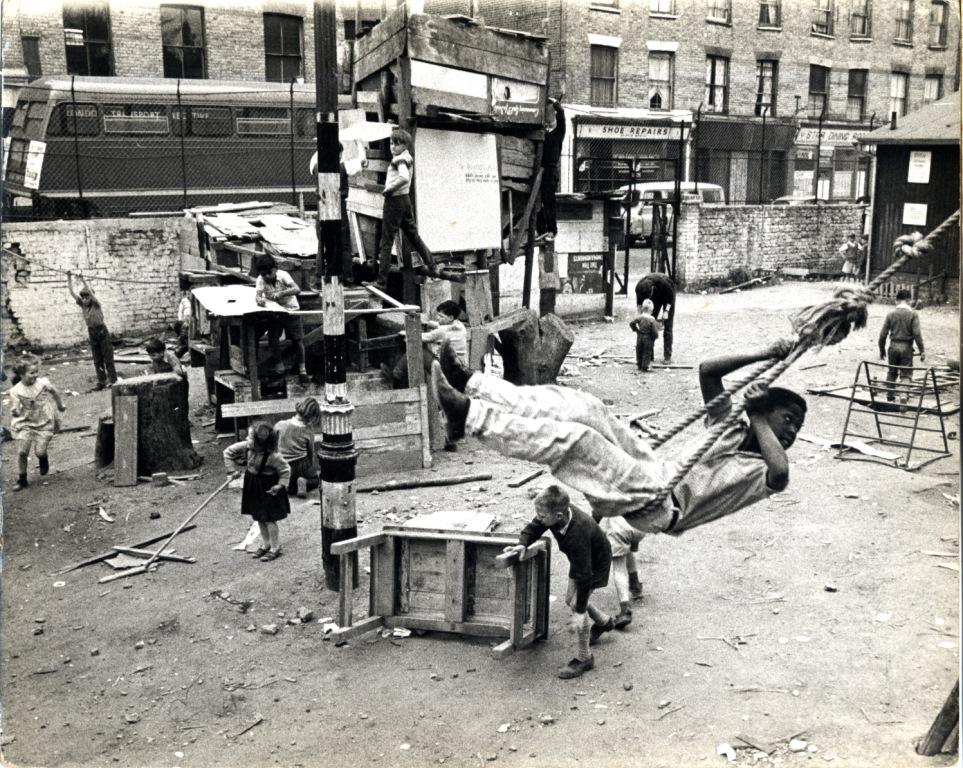
Most of these pictures come from a large packet of photographs donated…
View original post 519 more words

Well, it won! The recently-new second edition of Playing and Learning Outdoors, as described in my earlier post when it was short-listed, has been selected as the winner of the Staff Resources category of this year’s Nursery World awards. I wasn’t able to attend the Gala Dinner event at the end of September, but the shiny trophy and framed certificate are proudly waiting on my mantelpiece for my children to see when they are home next. I think this is the first actual trophy I’ve ever won (my son has more than 20 from his childhood football career!). I’m very chuffed to have this recognition for the book, and grateful for all the ongoing positive feedback I get about how it has helped both students on courses and practitioners who are thinking about their provision outdoors.
Thanks in particular to Julie Mountain (of Play, Learning, Life) and Juliet…
View original post 544 more words
Steam rises from the damp soil as the nurseryman hoses down the careful rows of potted plants. At 10am the heat is already intense and I keep close to the shade of the walls as we descend the steps to the coffee shop. Ahead the sound of a fountain and the welcoming arms of a spreading acacia tree. This is the Four Seasons garden centre in Lilongwe , and we’ve missed breakfast, so two vanilla milkshakes are quickly ordered.
There are several small gift and clothes shops, readying themselves for the day, as well as a restaurant or two.
 Gourds for sale
But of course it’s the plants I want to see – lots of exotic looking ones, which I remember from my days of living in South Africa, as well as the familiar roses, which grow very well here, and a fine assortment of terracotta pots. It seems very…
View original post 171 more words
 Whilst on a trip to nearby Antequera we made our way out of town (eventually, given a one way system, roadworks and a spanish-speaking Sat- Nav) to see the nearby limestone landscape of El Torcal. Andalucia.com says:
‘El Torcal Park Nature Reserve is known for it’s unusual limestone rock formations. … within El Torcal Park’s 17 square km are some of the most beautiful and impressive limestone landscapes in Europe. The whole area was under sea until one hundred million years ago.
Then the violent movements of the Earth’s crust forced it upward into hills and mountains up to 1.300 m, the limestone still kept its layered horizontal formation. Because of this, over the millions of years the rain and wind have been able to chisel away at these layers to form incredible shapes…’


‘Lovers’ Leap’ in the distance- or maybe a slumbering giant?
‘A visit to this historical Andalucían town is a journey almost 5,000 years back in time, beginning with the Bronze Age and the native Iberians. The timeline is there to be followed in this fascinating city’s profusion of burial mounds, dolmens, Roman baths, a Moorish Castle, Gothic churches, Renaissance fountains and baroque bell towers.
The first sighting of Antequera in the distance is that of a typical medieval town, with the spires of her many churches and the walls and towers of the great Moorish fortress silhouetted against the sky. Spread out in the valley below lie rich farmlands irrigated by the Guadalhorce River. For centuries this has been one of Andalucía’s most fertile areas, and is currently a leading producer of asparagus, cereals and olives. In summer, its fields turn brilliant yellow with sunflowers.
The enormous crag of limestone of 880 metres high, that overlooks the town and valley of Antequera (see picture, top) is known as La Peña de los Enamorados, or “The Lovers’ Leap”. The name comes from a local legend about an impossible love affair between a young Christian man from Antequera and a beautiful Moorish girl from nearby Archidona, who were driven to the top of the cliff by the Moorish soldiers, where, rather than renounce their love, they chose to hurl themselves into the abyss.The romantic fable was adapted by 18th century poet Robert Southney in his poem Laila and Manuel about two lovers: a Muslim girl and her father’s Christian slave.
The mountain is also sometimes known as “Montaña del Indio” due to its resemblance to a native Indian from certain angles.’ (It does rather look like a slumbering giant?)


 My sixth offering from a book I bought in a charity shop in the summer…..
 From : ‘Mrs. Murphy’s Laws of Gardening’ – Faith Hines (Temple House books, 1992)

‘Cordoba was founded by the Romans and due to its strategic importance as the highest navigable point of the Guadalquivir River, it became a port city of great importance, used for shipping Spanish olive oil, wine and wheat back to Ancient Rome. The Romans built the mighty bridge crossing the river, now called “El Puente Romano”. But Cordoba’s hour of greatest glory was when it became the capital of the Moorish kingdom of El-Andalus, and this was when work began on the Great Mosque, or “Mezquita”, which – after several centuries of additions and enlargements – became one of the largest in all of Islam.
When the city was reconquered by the Christians in 1236, the new rulers of the city were so awed by its beauty that they left it standing, building their cathedral in the midst of its rows of arches and columns, and creating the extraordinary church-mosque we see today.
As well as the unique mosque-cathedral, Cordoba’s treasures include the Alcazar, or Fortress, built by the Christians in 1328; the Calahorra Fort, originally built by the Arabs, which guards the Roman Bridge, on the far side of the river from the Mezquita, and the ancient Jewish Synagogue, now a museum. Cordoba’s medieval quarter, once the home of the Jewish community, is called “La Judería” (The Jewry), a labyrinth of winding, narrow streets, shady flower-filled courtyards and picturesque squares such as La Plaza del Potro. In early May, homeowners proudly festoon their patios with flowers to compete for the city’s “most beautiful courtyard” contest.’
You are a refined and well-mannered lady quietly sewing by the fireside contemplating the latest family scandal, but you find your face is turning a rather un-dignified shade of pink because of the heat of the fire. So what do you need? A fire screen of course!
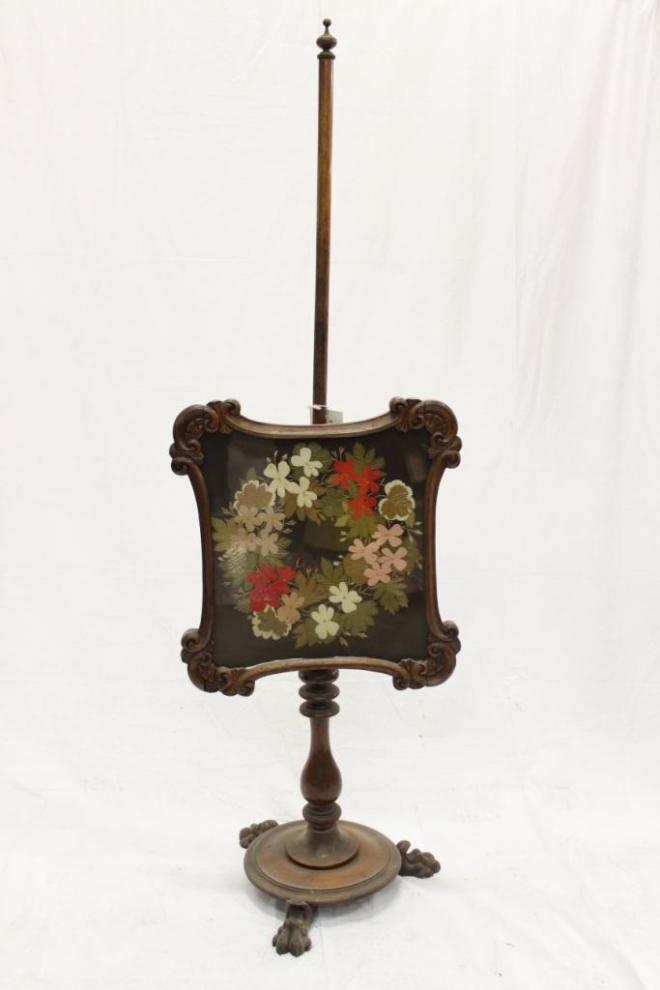

We have many fire screens within Norfolk Museums Service and several excellent examples live at the Norfolk Museums Collection Centre. These objects are the quintessential showcase piece for domestic history. They are beautiful objects and it’s not hard to imagine the gentle lady of the house reclining in front of the fire with the screen to protect her delicate skin.
These objects are at once practical and decorative. They range from simple wicker screens to sumptuous embroidered spectacles. They sit proudly but quietly in every country house. So when you watch Downton Abbey next week take a moment to observe the surroundings of…
View original post 231 more words
Nigel Boldero aka 'Old School Gardener'
 | Nigel Boldero on Fighting to Reduce Climate Cha… |
 | Anonymous on Fighting to Reduce Climate Cha… |
| Anonymous on PicPost: Carrot, my foot! |
| 18 Surprising Hydran… on Plantax 16: Hydrangea the wate… | |
| Nigel Boldero on Poppyland: A Victorian romance… |
| Anonymous on Poppyland: A Victorian romance… |
| Anonymous on Plants to die for… |
 | Isabella Childress on PicPost: Forest, but not as we… |
 | Happiness Factor on Is child-friendly planning a l… |
 | zidane on Top Tip: On a Pedestal- make m… |


Nature Connectedness Research Blog by Prof. Miles Richardson
Connecting People with Nature
A daily selection of the best content published on WordPress, collected for you by humans who love to read.
Celebrating gardens, photography and a creative life
Writing, photography and more by Daniel Greenwood
Lydia Rae Bush Poetry
Australian Pub Project, Established 2013
The Journey from Finnish Rintamamiestalo to Arboretum & Gardens
Because even in chaos, there’s always gin and a good story …
RANDOM BITS & MORE TIDBITS
.....and nurturing my soul
Cultural Heritage and the Digital Economy
Sense of place, purpose, rejuvenation and joy
Notes from the Gardeners...
Connecting People to Nature, Empowering People to Live Sustainably
A girl and her garden :)


 Old School Garden