

Come with me, a big oak we will be. Let’s explore the world through the eyes of a tree. Imagine the scenes that pass as time goes by and we go up. We are the living history books.
Latest Entries »
Well, here we go again. The wonderful Facebook site 1001 pallets has come up with a another set of super examples of how you can usefully up cycle wooden pallets into garden objects or features (plus a couple of other recycling examples from different sites).
First furniture…


Next planters…


Finally, the weird and wonderful!


Related articles:
How to dismantle a wooden pallet
Even more pallet projects
More pallet projects
Recycling in the Garden: widening the net
Even more Pallet Power
Pallet Projects – more creative ideas
Polished Primary Pallet Planters
Pallets Plus – more examples of recycled wood in the garden
Pallet Power- the sequel
Pallet Power
Raised beds on the cheap
Old School Gardener
If you’ve enjoyed reading this post and others on this blog, why not comment and join others by signing up for automatic updates via email (see side bar, above right ) or through an RSS feed (see top of page)?

The clocks are being turned back at Haveringland Church this Harvest. Thanks to vintage farm equipment and enthusiast Graham Kirk from Aylsham we will be re-creating a traditional harvest using his binding machine.
Graham earlier in the year planted his ‘Historic wheat’ around the Church and hoped for good weather. At first nothing happened, but thanks to our wonderful summer the wheat which is a variety used from around 1600, is now perfect for harvesting.
The Vintage Harvest will give 21st century consumers an insight into how harvests were very much a community event before the introduction of combine harvesters. It will be a great opportunity to re-connect with our rural heritage. Friends from Aylsham Town Band will assist with playing some harvest hymns and a short service will include harvest blessing and of course the hymn ‘We Plough the Fields and Scatter.’
Haveringland Church stands at the end of the old Swannington World War II runway. There is a memorial stone dedicated to the service men who flew from the base at the entrance of the Church.
The modern British tradition of celebrating Harvest Festival in churches began in 1843, when the Reverend Robert Hawker invited parishioners to a special thanksgiving service at his church at Morwenstow in Cornwall.
Revd Andrew Beane, Vicar of Aylsham said “This is a wonderful opportunity to see history come alive and realize why the end of the harvest was truly a time to celebrate! Life through the winter depended on a good harvest. We now so often forget the absolute dependence on the land that our great grandparents generation knew, and which so many people around the world still experience. We are so grateful to Graham who has cared for the crop throughout the year to make this special event possible.”
The Vintage Harvest is free to all and anyone is welcome to come along. It would be wonderful to see young and old together sharing in what was once a common event all around rural Norfolk. Why not bring a picnic and join us!
Sunday 6th October, 2.30pm – Haveringland Parish Church
Haveringland Church can be found by following the brown Church signs off the B1149
WEATHER PERMITTING – FREE EVENT – PARKING AVAILABLE – REFRESHMENTS
Related article: The Church in the Fields
Old School Gardener

It’s raining frogs and toads during our visit to Nova Scotia’s Kejimkujik National Park. They are everywhere – carpeting the forest floor and playing hide and seek in the shallow water along the lake shore. Some are getting an up close and personal experience with our kids. The ministrations of love and affection are sweet to hear but undoubtedly terrifying for the amphibian class (do they have ears our kids want to know?).

We’re far from the city with nothing but flimsy nylon fabric between us and a heavenly night sky. The stars spill across the dark, a swirl of light, a timeless dance of now.
One of the many beauties here is that the days are unhurried and filled with simple pleasures. For the kids it’s pretty much eat, sleep, play, explore. And, at almost each and every step, there is so much to discover – acorns, leaves, chipmunks…
View original post 506 more words
 To Walter Degrasse

30th September 2013
Dear Walter,
September has been a month of relative quiet in Old School Garden. Summer has tipped into Autumn and the garden hasn’t needed (?wishful thinking) full throttle attention. The odd weed pulled up, flowers dead headed or staked, hedges trimmed, grass mown (less frequently and less closely). A typical September then, apart from the relatively cold spell we had earlier on which sent me to the wood shed and led to lighting of fires – albeit only once or twice. Still I resisted the temptation to switch on the central heating! Since then we seem to have had something of a mini ‘Indian summer’.
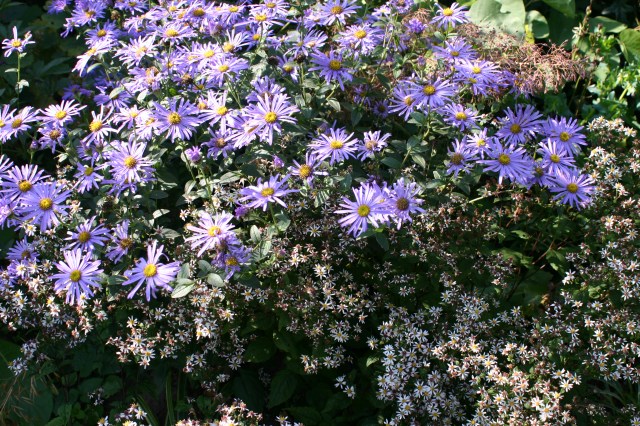
I’ve been pleasantly surprised at how some annuals I planted earlier on have at last come good – Cleome, Cosmos, Nicotiana and Tithonia in particular. A slow start, but they seem to have gone for a sprint finish so to speak! They are looking very good alongside some other late summer perennial colours – Asters, Sedums and Aconitum. And I’m pleased to say that last year’s sowings of Phalaris (‘Chinese Lanterns’) have now turned into beefier plants, just starting to show off their wonderful papery orange ‘lanterns’.
 Cosmos, Asters, Achillea, Helianthemum
  Aster,Echinops,Macleaya
  Cosmos and Asters
  Aconitum and Lavatera
  Verbena bonariensis and Nicotiana
  Fremontodendron
  Gleditsia tricanthos
  Cercis ‘Forest Pansy’, Echinops and Stipa gigantea
  Phalaris
  Actea simplex
  Cotoneaster
  Calamagrostis x acutiflora ‘Karl Foerster’
  Crab apple’ Red Sentinel’
  Sedum matrona
  Scabious ‘Vibtant Violet’
  Seed heads of Clematis tangutica
  One of the mixed borders
  Echeveria backed by Melianthus
Cosmos, Asters, Achillea, Helianthemum
Aster,Echinops,Macleaya
Cosmos and Asters
Aconitum and Lavatera
Verbena bonariensis and Nicotiana
Fremontodendron
Gleditsia tricanthos
Cercis ‘Forest Pansy’, Echinops and Stipa gigantea
Phalaris
Actea simplex
Cotoneaster
Calamagrostis x acutiflora ‘Karl Foerster’
Crab apple’ Red Sentinel’
Sedum matrona
Scabious ‘Vibtant Violet’
Seed heads of Clematis tangutica
One of the mixed borders
Echeveria backed by Melianthus
I’ve continued to harvest various fruit and veg – Chard is now reaching maturity, Tomatoes, Lettuces and Cucumbers have done really well, and some late sowings of Carrots and Mangetout are looking promising. You may recall that I sowed three seeds of ‘Greek Squash’ sent to me by the Garden Organic Heritage Seed Library – two of these have gone on to produce four or five good-sized squashes, which are now hardening off in the autumn sunshine. Oh, and remember my caterpillar disaster with the Calabrese and Broccoli plants last month? Well, I’ve cleared the bed, and managed to get hold of some young plants of Chinese Broccoli and Spinach, so along with some of my own Red Cabbage seedlings we now have that area once more in production – hopefully they’ll all put on good growth before the onset of winter.
The first windfall apples have been falling in some strong breezes recently. We’ve been collecting some of these as well as early pickings directly from the trees, and very tasty they are too! I can see that the next couple of weeks will be consumed with apple harvesting, and that of course raises the question of where to store them! Our larder could soon be a lot fuller.
 The Kitchen Garden
  Rainbow Chard
  Runner beans ‘Lady Di’
  Sunflowers- this monster grew to about 15 feet (5 metres) tall!
  Sun flowers bowing to the inevitable
  Greek Squash
  Windfalls a plenty- if we beat the birds and wasps!
  Chilli peppers
  Marigolds and Chard
The Kitchen Garden
Rainbow Chard
Runner beans ‘Lady Di’
Sunflowers- this monster grew to about 15 feet (5 metres) tall!
Sun flowers bowing to the inevitable
Greek Squash
Windfalls a plenty- if we beat the birds and wasps!
Chilli peppers
Marigolds and Chard
Further afield in my gardening life, I’m pleased to say that the six week Garden Design course I put on last year is once again up and running, with 8 enthusiastic students with a wide range of garden sizes and ideas that I hope to help them develop in the coming weeks. I’ve also planned a one day workshop at nearby Gressenhall Farm and Workhouse where I hope to show people how to get more from their garden through using some of the key elements of garden design. It will also be fun using the gardens at the Museum to illustrate some of these, as i designed some and help to maintain them as a volunteer. As I speak I’m hopeful, too, that the six week beginners course on ‘Growing Your Own’ at nearby Foulsham, will also be viable, but we’ll have to wait and see on that one.
I’ve also started back with my support of gardening and ‘learning outside the classroom’ at the local primary school. I’ve been encouraged by the way the school – and particularly their LOTC Coordinator, is building on the progress we made last year. Over the first half term I’m taking a series of small groups from most classes through some of the basics such as introducing different types of tool and how to use them safely; the importance of clearing and preparing the soil during the autumn; harvesting some of the produce we planted last season (there are some seriously impressive carrots that seem to have thrived on neglect!); gathering different types of seed for next year; how different plants propagate themselves and sowing broad beans, garlic and onions as well as some green manures. The School is also carrying out an international project on composting and organic gardening to which I’m contributing. So a busy half term! It’s always great working with such enthusiastic youngsters, reawakening my own sense of wonder at nature as they dig over the soil and are delighted to discover worms, grubs and creepy crawlies!
On Saturday I went to Garden Organic’s HQ at Ryton, near Coventry, for their annual conference for Master Gardeners and Composters. Around 30 of my colleagues from Norfolk went along and were joined by over 200 other Master Gardeners and Composters from a number of other areas around the country. It was a very interesting and inspiring day. I attended some workshops on community composting, reaching ‘hard to reach’ communities and ‘love your bugs’- all about the goodies and baddies in the garden. Most inspiring was a talk by veteran naturalist Chris Baines, looking at ‘The Nature of the Future’. I’ll do a fuller article on this event later in the week, but here are a couple of pics from the ‘Naturalistic’ area of the gardens, which looked wonderful – as did the many other different gardens which demonstrate a range of gardening techniques and planting arrangements.


So, old friend, that just about brings you up to date for the last few weeks in my gardening life at Old School Garden and beyond. A mellow and measured time when its been possible to enjoy the late summer colour and reap the fruits (and veg) of my labours earlier in the year! No doubt you’re well ahead of me with your autumn garden jobs, but in case you’re not and need some ideas, I’ll be posting my regular monthly item on tasks in the garden for the new month tomorrow, so I hope that proves useful. Happy Gardening!
Old School Gardener
If you’ve enjoyed reading this post and others on this blog, why not comment and join others by signing up for automatic updates via email (see side bar, above right ) or through an RSS feed (see top of page)?

Following up from my last blog explaining how we had been harvesting the rye, oats and barley down on the farm, (I hoped you all liked it) I thought that as my latest blog coincides with our potato harvest, I would explain a little further.

Richard with the horses
The way we harvest the potatoes here at Gressenhall is through the use of a horse drawn Ransomes potato spinner. The spinner we use is a later model dating from around the 1940s.

Spinner

Bottom blade and tines
As you can see from the picture above, the spinner works by the bottom blade cutting into the ridged row of potatoes and then the spinning tines pushing the crop out to the side. As the blade digs into the row, the soil that is pushed up cushions the potatoes from being bruised and broken during the harvesting process. The spinner is powered…
View original post 174 more words
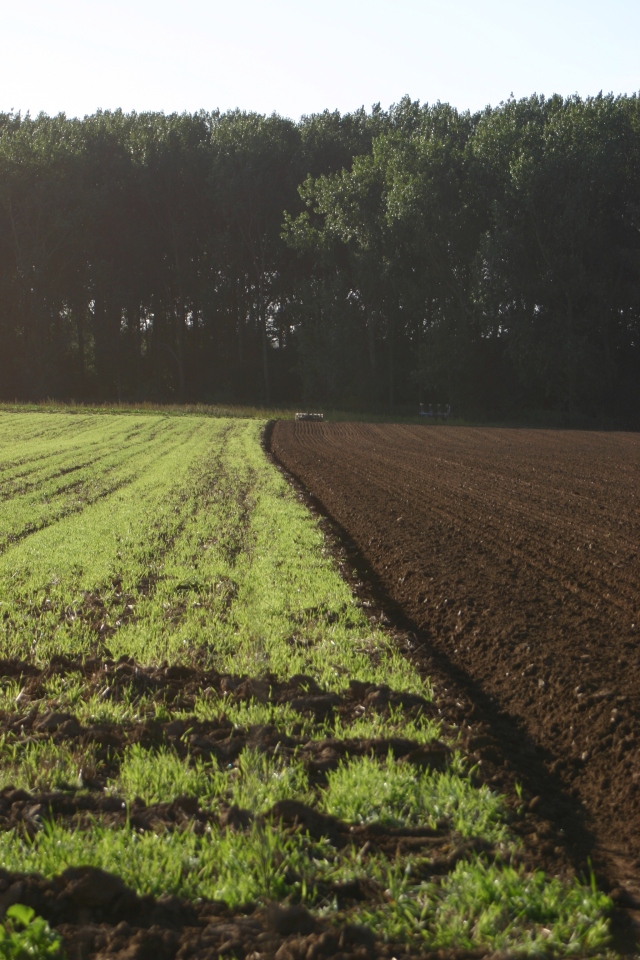 I recently featured a poem by a former neighbour, Jack Kett. I’ve now picked up one of the books of his poems and thought some of these are so evocative of the landscape around me here in Norfolk, that I’d feature a few more. So here’s the first as we end September…..
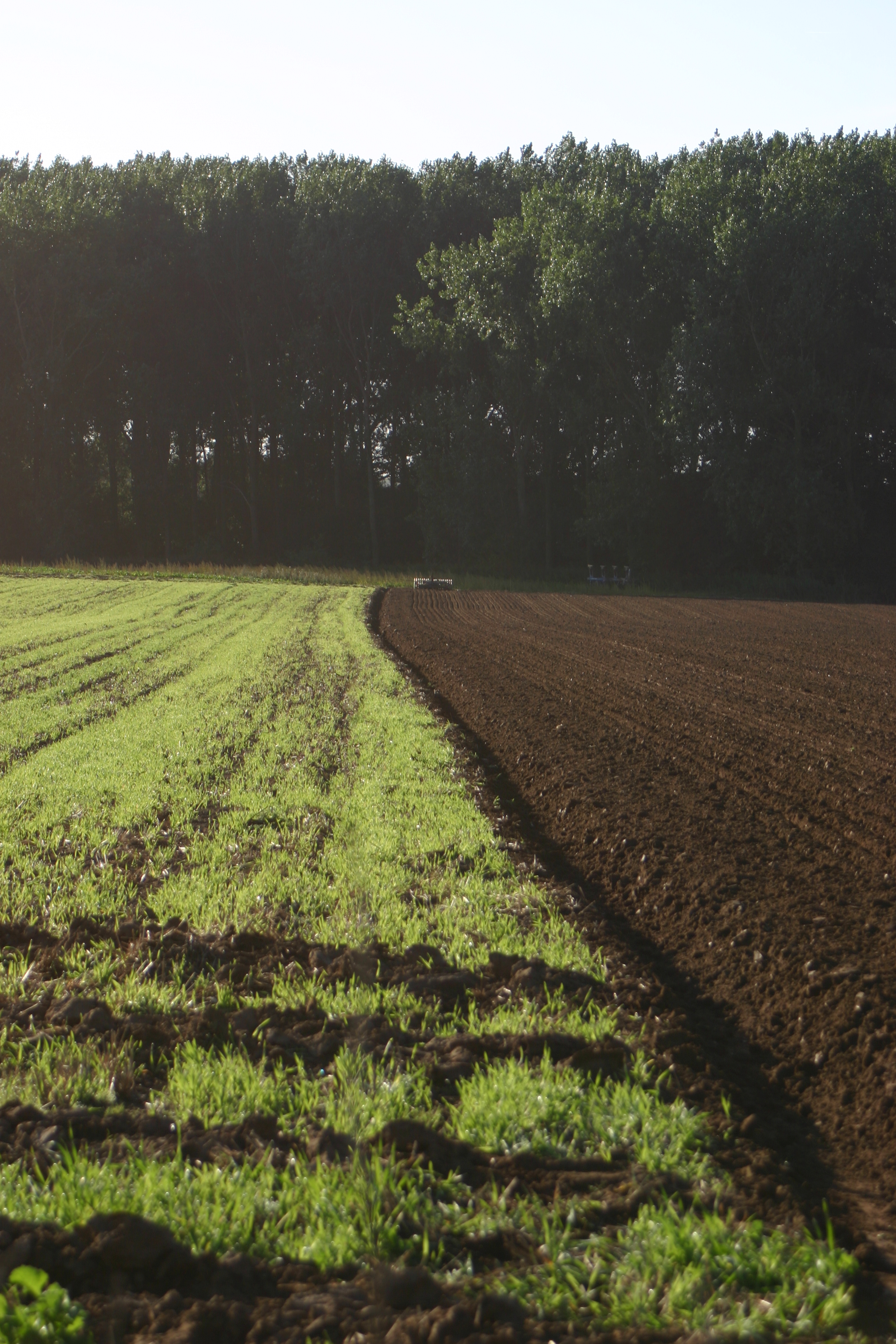
‘September morning, with the warm sun growing
In warmth and brightness, scattering mists of pearl,
Which round the waking village flow and furl.
And see, the top of the church tower is glowing,
Splendid, sunlit, above the misty sea,
Now ebbing fast to set the morning free.
Along the hedgerow countless dying weeds
Show one last beauty in their feathered seeds.
The chattering sparrows wheel, and wheel again
Across the stubble field, and by the lane,
Among the dew-drenched grasses hardly seen,
Yet showing rarely a sun-gilded sheen,
A silver maze of gossamer is spread,
While all around hang berries, richly red.’
‘September Morning’ by John Kett from ‘A late lark Singing’ (Minerva Press 1997)
Related articles:
The Church in the Fields
Old School Gardener


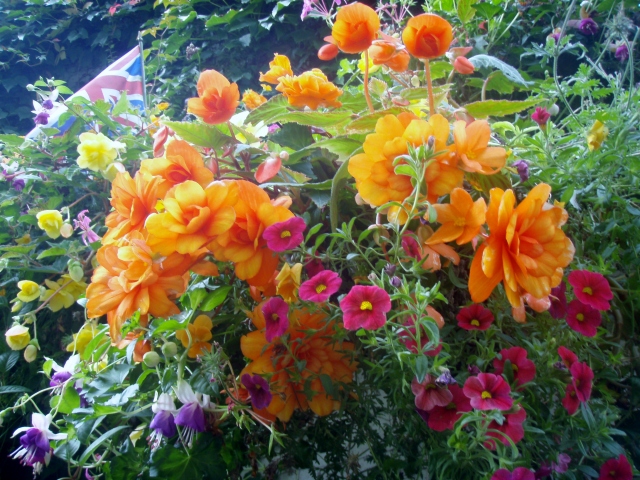
This Pub found in Mevagissey Cornwall is planted up with mainly tuberous Begonias, making a stunning display.

via Woodland Trust

A rose trained along a rope ‘swag’ between posts provides a permeable divider in the garden
Regular readers may recall that I recently mentioned my plans to run a second Garden Design course at Reepham, here in Norfolk. I’m pleased to say that this has now begun and I’m looking forward to working with the 8 enthusiastic participants over the next few weeks to come up with designs and ideas for their gardens.
Coincidentally, I was also contacted recently by one of the students on the first course, Angela, who lives in a village nearby. She updated me on what she’s done in her garden since the course and was trying to arrange a meeting with her fellow students to share progress and ideas. She also asked for some advice. As this raised an interesting issue, I thought I’d share it with you as this week’s ‘GQT’. Her question is:
‘We took out a hedge last year between our vegetable garden and the lawn. Most of the hedge area plus a bit of lawn is now a border, and we’d like to put in some sort of screen where the hedge was. We don’t want a solid screen and were thinking of espalier fruit trees. However, we do not need any more fruit trees and I think something of winter interest would be better. Thoughts so far include Pyracantha or maybe Cotoneaster. Do you think Pyracantha would work?’
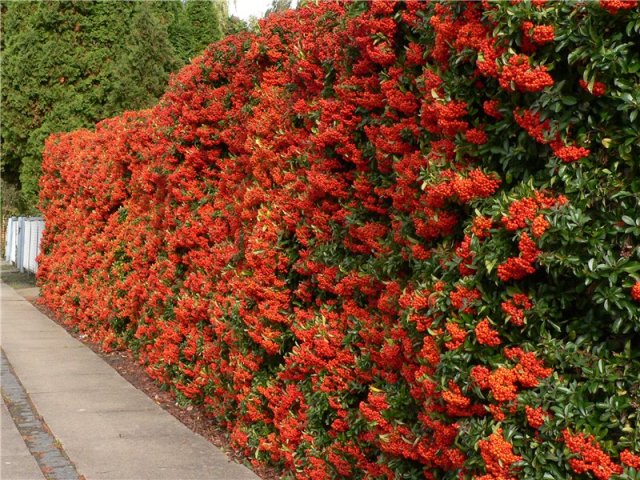
A Pyracantha hedge
Well Angela, Pyracantha makes a lovely informal hedge, with spring flowers and autumn berries as well as evergreen foliage (see the picture above).
However the ones suitable for hedging can grow to 2 – 3 metres high (and can also be quite wide), so unless you keep it cut back it will provide a pretty dense and high screen, perhaps not what you were looking for? The Cotoneasters suitable for a hedge (e.g C. lacteus) have similar range of interest to Pyracantha and are also pretty dense and tall, unless kept in trim. But doing this rather defeats the object of an ‘informal’ hedge, unless you keep trimming to a minimal tidy up of loose ends!
If a more permeable screen is what you’re after, you could go for a backdrop of grasses that would add a lovely golden colour to a border at this time of year.
If they are in a sheltered spot they will stand tall and provide some winter interest (cut them to ground level in the spring); an example is Calamagrostis x acutiflora ‘Karl Foerster’. You could of course mix these along the line of the old hedge with evergreen shrubs (themselves with a variety of interest through the seasons). This would once again define the back of the border in an informal way, leaving ‘peep holes’ through the grasses into the garden beyond.
If you’re looking for something to provide a strong linear backdrop to your border but still give views through to the next garden, another idea might be to go for some sort of post and rail/rope structure (the latter is known as a ‘swag’- see the picture at the top of the article), or even a series of wide – opening trellis panels.
This then gives you the option of climbers to train up and along the wood/rope, but gives you views/glimpses through to what lies beyond. You could go for a mixture of climbers to give you a range of seasonal interest. Clematis of different varieties will give you flowers throughout the year, including winter flowers (e.g C. cirrhosa and its cultivars have winter flowers in creamy/ freckled shades and evergreen leaves). And some varieites give you other sorts of Autumn/winter interest. For example C. tangutica and it’s cultivars have some lovely ‘hairy’ seed heads that last into winter. Rambling/ climbing roses would also provide summer/early autumn flowers, followed by hips on some varieties. However, some of the Clematis (e.g cirrhosa) can get quite bushy so will need to be kept in check if you want to have views through – and the roses will also need pruning. Another option is to train a Pyracantha along a post and rail barrier to give you that ‘espalier’ effect you mentioned (see picture below).

Pyracantha coccinea trained along post and rails
Alternatively try one of the above options, but additionally introduce some winter interest directly into your border – e.g colourful stems from the various Cornus (Dogwoods), or foliage, flower and fragrance from any number of shrubs; e.g Daphne, Winter Jasmine, Eleagnus, Euonymus, various Viburnums etc.

Clematis tangutica flower and seed head- late summer into autumn and winter interest

Clematis cirrhosa flowers- late winter into spring

Daphne odora- wonderful flowers and fragrance from mid winter to spring
Further information:
Hedge selector
10 AGM variegated evergreen shrubs- RHS
Hedge planting- RHS
All about Pyracantha
Related article:
GQT: Climbers as clothing… and as heighteners and dividers
Old School Gardener
If you’ve enjoyed reading this post and others on this blog, why not comment and join others by signing up for automatic updates via email (see side bar, above right ) or through an RSS feed (see top of page)?





 Old School Garden