Latest Entries »

Planting Patterns #9

A ‘screen’ of air plants

Old School Gardener

IMG_8605On the way home from our recent break in Devon, we took the opportunity to visit a couple of National Trust houses and gardens just off the A303, a road that’s conveniently ‘lined’ with some great gardens. First stop was Barrington Court, Somerset.

A large walled garden was lined with displays of wallflowers and tulips which were  wonderfully vibrant. Much of the rest of this area was bare earth- or so I thought until I noticed it  had been covered with landscape/weedproof fabric and then mulched with compost- one of the gardeners explained how they create planting holes through these layers and so restrict the amount of time they weed- a very useful idea that looks attractive as well as being practical.

I was also glad to see the ‘bones’ of the other gardens (it was rather too early to see the borders in all their glory). To my surprise I also found a Melianthus major in flower! I was told how the gardeners usually give this a protective winter mulch and cover and in the season to follow it puts on lots of leaf growth but no flowers- it must be due to the mild winter that this glorious plant (which smells like peanut butter when you brush the foliage), had managed to put on an early spring show. Having just pruned mine at home to the ground I’m wondering if I would have been better leaving it alone! We shall see if it manages to complete its growth cycle this summer.

‘Discover the haunting echoes of the past at Barrington Court, a Tudor manor house free from collections and furniture. Explore using your imagination and your senses to discover a house full of memories, where light fills the rooms and you feel you can almost touch the past.

The property was saved from ruin and restored by the Lyle family in 1920s, when the court house resembled a barn rather than the proud manor house that it is. Close your eyes and you’ll almost be able to hear the sounds and see the sights of the glamorous parties held in the great hall during Barrington’s hey day. On the first floor listen out for the voices resonating from the past, of the young evacuees who called Barrington home during the Second World War.

 Stroll through the Gertrude Jekyll inspired gardens, which with their focus on plant varieties and colours are a delight for all the senses. Be spurred on in your own garden or allotment by the stone-walled kitchen garden that produces a variety of delicious fruit and vegetables. Don’t just take our word for it, why not stop off in the Strode House Restaurant to taste these home-grown delights.’

Oh, and yes, we had a lovely lunch in the afore said restaurant….

This slideshow requires JavaScript.

Further information; National Trust website

Old School Gardener


Planting Patterns #8

Patterns to move through- Alliums and Laburnum tunnel= glorious

Old School Gardener

IMG_8734On Tuesday I attended the latest meeting of the national Landscapes for Early Childhood Network, at the Earlham Early Years Centre in Norwich. The Network, which I joined last year, brings together  professionals working with young children and those concerned with designing and creating play and other landscapes for them. It provides a powerful creative forum for discussion of ideas and approaches to early years spaces and activities and also gives a wonderful opportunity to visit excellent examples of these landscapes, sometimes in schools or nurseries, sometimes in public open spaces.

I was pleased to speak at this week’s meeting on the topic of ‘learning for sustainability’ (or as I termed it ‘Nurturing Nurture’) – how we encourage children (and adults for that matter), to understand the way the world works, how mankind’s activities affect this and what can be done to live more sustainably. I talked about the word ‘sustainability’ and how this has become rather diluted and misused in modern language, but is really about maintaining an ecological balance in the world where non renewable natural resources are used (and reused) carefully, if at all.

I featured some of my own work in this field, especially working with youngsters in school gardening activities as well as creating play landscapes and other spaces which inspire younger children to develop their curiosity, imagination and understanding of the natural world. I focused in particular on the importance of engaging children in food growing as a way of contributing towards food production and security.

Presentations were also given by other network members on their work, but the main event was to see and hear about the very special ‘garden’  at the Earlham EYC. Felicity Thomas, the original head teacher and her colleagues gave us a wonderful guided tour of the garden (it was great seeing the children busy in it as we went around), and told us about why and how it had been developed. The brief for the original design (which has since evolved over the last ten years), is worth sharing, so I repeat it below along with a slide show of pictures I took (which for security reasons do not include the children).  I hope you enjoy them.

‘To create a unique environment for children and others using the Centre which demonstrates sustainable principles in practice, where children can:-

  • access a varied topography in scale, contour and texture, incorporating dramatic changes in level, big mounds, large areas of sand in which to prospect.

  • plant, grow, harvest and cook food.

  • hide and not be seen, find and create places for refuge and reflection; read, share stories and use their imagination.

  • go on expeditions and journeys; develop an understanding of positional words by having places to be in, under, behind, below and above.

  • experience and understand the elements; interact with moving water, solar power and wind, be protected from the sun.

  • explore their senses through plants, materials and elements which provide a myriad of colour, shape, sound, texture and smell.

  • independently access equipment and loose materials.

  • learn to care and take responsibility for themselves, each other and the environment.

  • be happy, be fulfilled.’

This slideshow requires JavaScript.

Old School Gardener

canwefeedtheworld's avatarOne Billion Hungry: Can We Feed the World?

mpg-with-text A major challenge for those working in international development is being able to understand the lives and needs of people in developing countries and being able to understand the challenges facing global decision makers. More and more online games are being developed by the international development community to help us gain insight into global development challenges and increase engagement around these issues, albeit in a virtual world. Here’s a list of some of these online games.
  1. Cyber Nations – Allows you to create and rule a nation, choosing a government type, a national religion, tax rate and more. You can choose and purchase infrastructure, land to expand your borders, technology to increase your effectiveness, and military to defend your national interests. You can build trading ports to enhance your ability to trade with other nations, build clinics and hospitals to increase your total population, invest in schools and universities to…

View original post 448 more words

canwefeedtheworld's avatarOne Billion Hungry: Can We Feed the World?

ID-10013909 Land use change, while most often associated with the loss of natural habitat, could be a cost-effective method of reducing greenhouse gas emissions and conserving threatened species. A new study in Nature entitled, Cheap carbon and biodiversity co-benefits from forest regeneration in a hotspot of endemism , investigated carbon stocks, biodiversity and economic values in the western Andes of Colombia, a threatened ecosystem rich in endemic species where land is predominantly used for cattle farming.

Results of the study found that if farmers were to allow forest to regenerate on their land, foregoing cattle farming, they would match or increase their current incomes through receiving payments for carbon. Under current carbon markets the price per tonne of carbon dioxide trees remove from the atmosphere is $1.99. Farmers’ land would be leased for 30 years and they would be paid for the carbon grown.

Aside from the benefits for climate change…

View original post 305 more words

Jen's Fritillaries

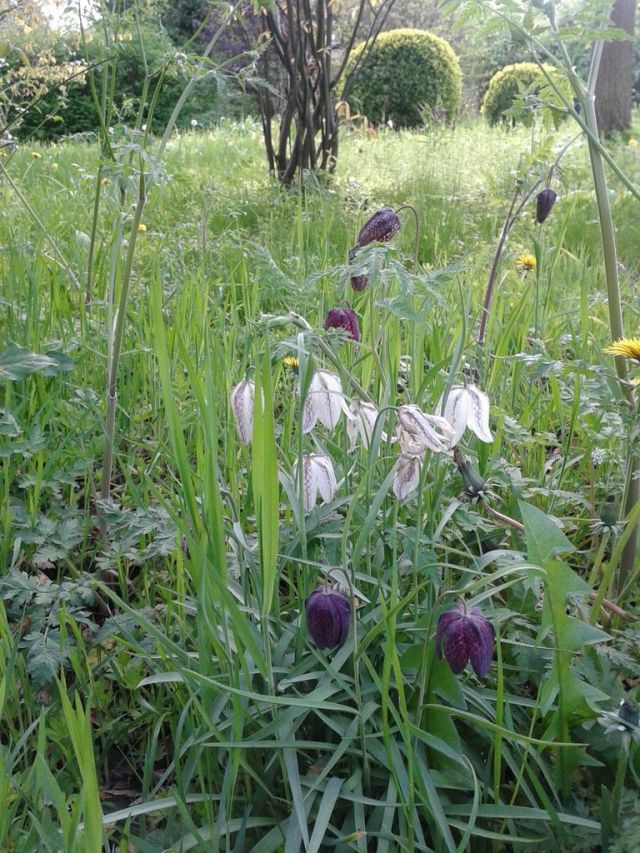
Snakes Head  Fritillaries (Fritillaria meleagris– both purple and white flowered forms) at the Henry Moore Foundation at Perry Green, Hertfordshire, taken by my friend Jen on a recent visit.

Old School Gardener

Gardening-Boots2Two new rounds of my courses on Garden Design and Grow Your Own Food for Beginners start soon, and I’m also offering a new, one day course on Wildlife Gardening. I ran the last Garden Design course earlier this year and had great feedback on it (I even had a thank you present from the students!). All the courses feature a lot of group discussion and some practical tasks as well as useful tips and tricks to help particpants apply what they learn to their own plots.

The Garden Design course takes students through a customised design process, prompting a fresh look at participants’ own gardens, giving them the opportunity to develop their own ideas in a systematic way and benefitting from ideas generated in the whole group. I support participants to draw up their own scale plan design for their garden and supply plenty of useful background information and links to helpful web sources as well as the opportunity to borrow from my own garden book library. The course can also feature a visit to a well known garden to look at design ideas in practice.

The ‘GYO’ course is aimed at food-growing beginners or novices and gets off to a flying start with making paper pots and sowing broad bean seeds. It also prompts students to look at what they want to eat/grow and how they might do this most effectively in their own plots – this can include growing in containers for those with little or no garden.The course includes a visit to Old School Garden to look at my own approach to food growing, and covers topics like soils and soil improvement, growing under glass, encouraging beneficial wildlife into your garden and how to effectively control pests and diseases.

Narrow beds in the Kitchen Garden at Old School GardenNarrow beds in the Kitchen Garden at Old School Garden

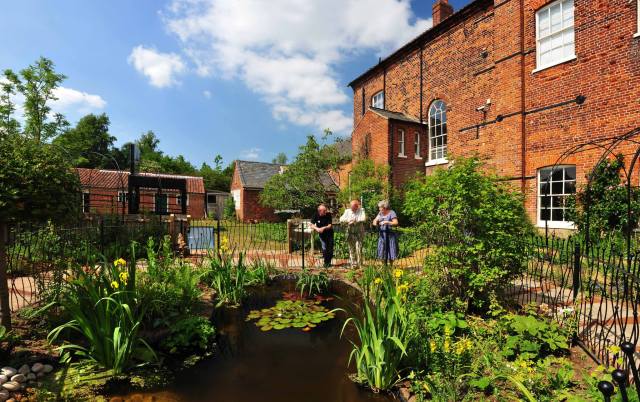
The one day Wildlife Gardening course, taking place at Gressenhall Farm and Workhouse Museum, makes use of the Wildlife Garden at the Museum and includes some practical work to help develop the wildlife -friendly features there as well as helping participants to focus on their own gardens and gardening practices. The aim is for them to develop  their own action plans for the future.

The Wild life Garden at Gressenhall Farm and Museum

The Wild life Garden at Gressenhall Farm and Museum

The courses are fast filling up but there are some places still available if you’re quick!

They are running as follows:

Garden Design–  6 Monday evenings, 7pm-9pm at Reepham High School & College, commencing on 12th May.

Grow Your Own Food for Beginners – 6 Wednesday evenings, 7pm-9pm at Reepham High School and College, commencing 14th May.

Get more details and how to enrol at www.reephamlearningcommunity.co.uk

Wildlife Gardening- Sunday 18th May, 10am-4pm at Gressenhall Farm and Workhouse Museum, near Dereham.

For more information on this and other short courses at the Museum see www.museums.norfolk.gov.uk

Old School Gardener

PicPost: Curly Queue

picture via Green Renaissance

Old School Gardener

Gardening With Children's avatarGardening with Children

My front garden is at its best at the moment it is packed full of Bluebells, not an inch of soil can be seen, it looks stunning and the heady sweet perfume that greets me when I open the front door is wonderful the Bees love the Bluebells too.
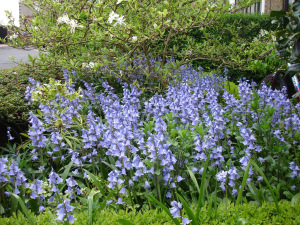
Bluebells in front garden

Hybrid Bluebells in my garden

There are actually 3 types of Bluebell in the UK

The English (native) Bluebell

The narrow bell shaped flowers are violet-blue with straight-sided petals which curl deeply back at the tips, they hang from the same side of the stem which droops over to form an arch, their pollen is creamy white and their leaves are narrow (0.7-2cm wide).

The Spanish Bluebell

Originally from Spain and Portugal their larger flowers open wider with the petal tips curling back only slightly, most flowers are arranged all around the stem which is straight and does not hang over…

View original post 254 more words

Finding Nature

Nature Connectedness Research Blog by Prof. Miles Richardson

Norfolk Green Care Network

Connecting People with Nature

Discover WordPress

A daily selection of the best content published on WordPress, collected for you by humans who love to read.

Susan Rushton

Celebrating gardens, photography and a creative life

Unlocking Landscapes

Writing, photography and more by Daniel Greenwood

Alphabet Ravine

Lydia Rae Bush Poetry

TIME GENTS

Australian Pub Project, Established 2013

Vanha Talo Suomi

The Journey from Finnish Rintamamiestalo to Arboretum & Gardens

Marigolds and Gin

Because even in chaos, there’s always gin and a good story …

Bits & Tidbits

RANDOM BITS & MORE TIDBITS

Rambling in the Garden

.....and nurturing my soul

The Interpretation Game

Cultural Heritage and the Digital Economy

pbmGarden

Sense of place, purpose, rejuvenation and joy

SISSINGHURST GARDEN

Notes from the Gardeners...

Deep Green Permaculture

Connecting People to Nature, Empowering People to Live Sustainably

BloominBootiful

A girl and her garden :)