Latest Entries »

Jardin's avatarJardin

So what is an Insect Hotel?

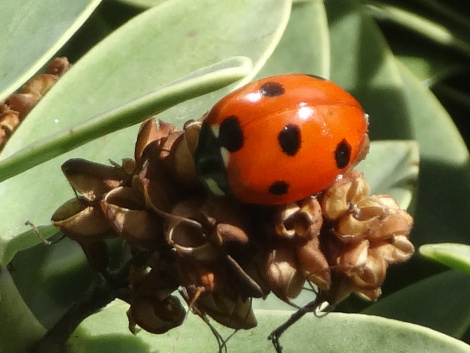
An insect hotel is simply a man-made structure providing accommodation for hibernation, for insects like ladybirds, or a nesting site, for example, for solitary bees. It could also incorporate shelter for frogs and newts depending on the site and structure.
april 2014 057

It is created out of natural, often recycled, materials like old pallets, pots and clay tiles. Its size and design very much depends on materials available and the creativity of the builders.

Using recycled materials to make an insect hotel.

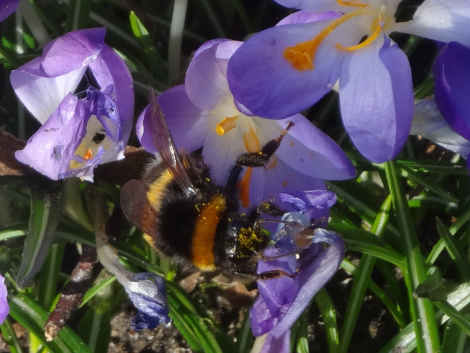
Serving a functional purpose doesn’t mean it doesn’t have to be attractive and fun too. A bee can provide inspiration
Inspiration for a ... Inspiration for a …

… for a cut or stencilled motif :

.. bee motif. .. bee motif, cut or stencilled.

Why build one?

  • To supplement the increasing loss of habitats
  • To encourage beneficial creatures which aid pest control
  • Encouraging biodiversity is good for the ecological balance…

View original post 352 more words

canwefeedtheworld's avatarOne Billion Hungry: Can We Feed the World?

APR2014_cover Released today, the 2014 Africa Progress Report, Grain, fish, money. Financing Africa’s green and blue revolutions , discusses agriculture, fisheries and finance, outlining reasons for optimism but also some of the priorities and barriers to Africa’s development.

The Africa Progress Panel (APP), chaired by Kofi Annan, former Secretary-General of the United Nations and Nobel laureate, consists of ten individuals across the public and private sectors who advocate for equitable and sustainable development for Africa. The annual Africa Progress Report, published every year in May, utilises the best research and analysis available on Africa to make viable, policy recommendations for African policy makers, international partners and civil society organisations.

Many African countries have seen significant economic development and transformation in the last few decades and incomes are set to double in the next 22 years. Senegal, for example, has gone from a debt crisis to selling sovereign debt on eurobond markets…

View original post 878 more words

IMG_8624The second and final stop on our trip home from Devon recently, was Montacute House, Somerset. Surrounded by beautiful, formally laid out gardens, the warm, honey-coloured stone of the house glowed in the spring sunshine. There was a splendid display of tulips and wallflowers and a magnificent ‘cloud’ yew hedge reminiscent of those at Blickling House, near our home in Norfolk. We were fortunate to meet  a gardener in the ”orangery’, which, she explained, was not really in the best spot for this and had in the past been more of a shady water feature, with its tufa – clad grotto. This and it’s surrounds are gradually being replanted with ferns and other suitable species. Pots of standard Bay trees line the terrace outside where once orange and lemon trees would have been placed in summer.

‘Montacute is a masterpiece of Elizabethan Renaissance architecture and design. With its towering walls of glass, glow of ham stone, and its surrounding gardens it is a place of beauty and wonder.

Sir Edward Phelips, was the visionary force and money behind the creation of this masterpiece, which was completed in 1601. Built by skilled craftsman using local ham stone under the instruction of William Arnold, master mason, the house was a statement of wealth, ambition and showmanship.

Come face to face with the past in the Long Gallery, which is the longest of its kind in England. The gallery houses over 60 Tudor and Elizabethan portraits on loan from the National Portrait Gallery.

Beautiful gardens surround Montacute, constantly changing, filling the house with scent in summer and providing an atmospheric backdrop for a winter walk…’

This slideshow requires JavaScript.

Further information: National Trust website

Old School Gardener

Early Years Gardening in Small Spaces

gardening-2

gillians's avatarPlant Heritage

In my family, Cartmel in Cumbria, has long been associated with sensory delights, being the home of Sticky Toffee Pudding, a favourite with my boys and always provided by their grandmother on our trips North.  But after a recent trip to this area I can assure you that all your senses will have a treat with a visit to Holker Hall – home of the National Plant Collection of Styracaceae.

From the dramatic ‘Capability Brown’ style entrance drive

IMG_3060

through the formal gardens planted out with tulips

the labyrinth

IMG_3065

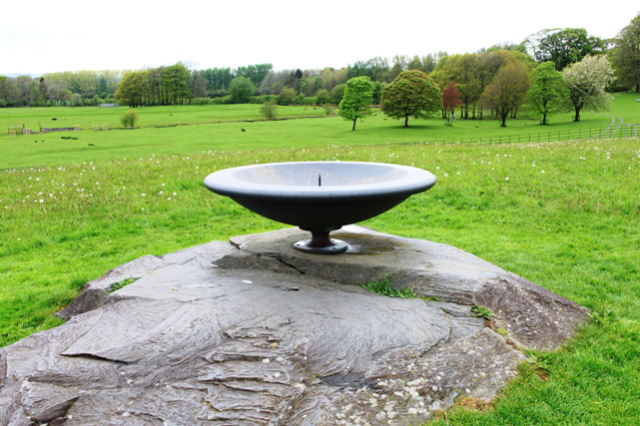
and the sundial

IMG_3066

to the woodland, home for the National Collection.

Styrax is the largest genus in this family, but this Collection also covers Halesia, Pterostyrax and Sinojackia.  Small graceful trees found in Europe, Asia and America, they have dainty pale flowers in the spring which were just about to open on our visit.  This specimen of Styrax japonica

View original post 281 more words


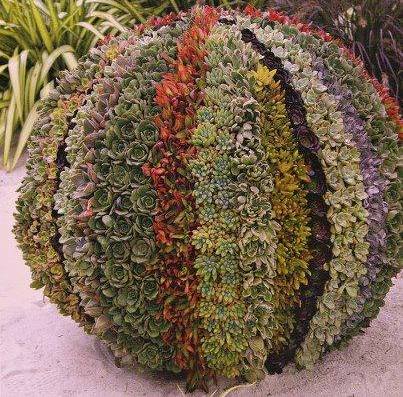
ball of succulentsA ball of succulents- a whole new approach to carpet bedding!

Old School Gardener

Pallet Precautions

Click on the title for a useful article about checking to see if that pallet you’re planning to use, is safe.

palletOld School Gardener


Frog_in_pond_among_aquatic_plants Today’s question comes from a gardener in North Yorkshire. Ernie Uplad of Richmond has just created a new garden pond in an open, sunny spot away from trees and wants some advice about planting:

‘I’m pleased with my new pond but need some help with deciding when to plant it up, the mix of plants to use and how to go about this- can you help, please?’

When to plant?

Well Ernie, you seem to have made a great start with the choice of a good location for your pond. As for planting  now (early spring to mid June) is the perfect time, as the weather is warming up. If you plant to put in some fish (I wouldn’t myself as they tend to eat much of the other wildlife that will inhabit your pond), then it’s important to plant up before you install them as they might go hungry unless you take the trouble to feed them yourself.

What to plant?

Some plants are essential for a pond (whether it’s for ornamental or wildlife value) – oxygenators. These are plants which live almost entirely underwater  and help to maintain an adequate level of oxygen for the other plants, fish and other animal life. They also help to reduce the level of algae, as do water lilies. The oxygenators include Canadian pondweed (Elodea canandensis), which is vigourous; Egeria densa (less vigourous); water Milfoil (Myriophyllum spicatum), with its delightful feathery foliage; and M. verticillatum, also with feathery foliage, and which also likes limy water.There are also plants you should avoid at all costs- the so called space invaders! Here’s a useful guide to these. 

You migth also like to consider ‘marginals’ – these are grown on the inside edge of the pond- here’s a guide to marginal plants. And, don’t forget plants that grow in permanently damp soil- in a bog garden you may have created next door to your pond. Here’s another useful guide to plants for a bog garden.

For planting actually in the pond here is a selection of plants to add height (they all grow up to around 45 cms (18ins) high) and will add other interest:

Water hawthorn (Aponogeton distachyus), with white flowers with dark spots throughout the year

Acorus gramineus ‘Variegatus’, for foliage colour in green and gold

Bog Arum (Calla palustris) with white flowers in summer

Calla palustris ‘Plena’ with double yellow flowers in March- April

Cotula coronopifolia with yellow ‘buttons’ in  July- August

Hydrocharis morsus-ranae, with white-flowered floaters all summer

Mimulus moschatus and M. ‘Whitecroft Scarlet’ with yellow and red flowers, respectively,  all summer

Golden Club (Orontium aticum) with yellow club flowers in May- June

All medium-sized lilies (Nymphaea) in red, white, pink and yellow shades throughout the summer.

How to plant?

Well, let’s take water lilies first.The crowns (rhizomes or tubers) should be planted in a medium to heavy loam with the crown tips exposed and upright- they must not be buried. all other container plants can be planted in the same type of soil and to the same depth as they were at the nursery or when you propagated them, but avoid over rich soils; you can buy special aquatic compost if you like, but by avoiding rich soils  you will minimise problems with algae and weed through raising the nutrient levels in the water. The oxygenators will need to be weighted if this has not already been done by the nursery. Clumps of 6-12 small pieces should be put on the floor of the pool and held in a group by a lead weight. This will keep them from floating to the surface. Natural floaters like Hydrocharis morsus-ranae are simply put on the surface.

How to propagate?

You might in due course want to propagate your own plants and for most water plants this is very simple. you just divide them in the spring after lifting out the containers any plants you  require. Division is achieved by driving in either two handforks (or two larger forks for larger plants) back to back, then pushing the forks apart to prise away the outermost plants in the clump. Do not use the centre crowns; these are the oldest parts of the plant and should be disposed of.

A pond is a fantastic resource for wildlife

Further information: RHS guide to aqauatic planting

Old School Gardener


shinealightproject's avatarShine A Light

By Ann-Marie Peckham

The title of today’s blog has been inspired by Gilbert and Sullivan’s The Mikado, and the topic, by a wooden Courtroom Dock from Norwich Guildhall.

guildhall dock

This is an object which immediately captures the imagination; making you wonder at the trials it has witnessed or the types of prisoners that have stood in it.

However, before I go into that, I thought I would start with a brief history of the Guildhall.

Norwich Guildhall

From the early 1400’s the Guildhall was the headquarters of Norwich’s local government until it was replaced by City Hall in 1938. The original 15th century building was home to financial offices, storage areas for civic regalia and official records. The building also housed offices for civic representatives such as the City Sheriff. The two main chambers within the Guildhall were an Assembly Chamber (which also served as a Sheriff’s Court) and a…

View original post 1,014 more words

Finding Nature

Nature Connectedness Research Blog by Prof. Miles Richardson

Norfolk Green Care Network

Connecting People with Nature

Discover WordPress

A daily selection of the best content published on WordPress, collected for you by humans who love to read.

Susan Rushton

Celebrating gardens, photography and a creative life

Unlocking Landscapes

Writing, photography and more by Daniel Greenwood

Alphabet Ravine

Lydia Rae Bush Poetry

TIME GENTS

Australian Pub Project, Established 2013

Vanha Talo Suomi

The Journey from Finnish Rintamamiestalo to Arboretum & Gardens

Marigolds and Gin

Because even in chaos, there’s always gin and a good story …

Bits & Tidbits

RANDOM BITS & MORE TIDBITS

Rambling in the Garden

.....and nurturing my soul

The Interpretation Game

Cultural Heritage and the Digital Economy

pbmGarden

Sense of place, purpose, rejuvenation and joy

SISSINGHURST GARDEN

Notes from the Gardeners...

Deep Green Permaculture

Connecting People to Nature, Empowering People to Live Sustainably

BloominBootiful

A girl and her garden :)