
‘The bright and busy days of May are here;
The countryside’s ablaze with colours rare
In sun and shower. There’s cricket on the green,
And lilies in the wood, and now are seen
Laburnums pouring gold, tall chestnuts decked
With spires of pink and white, where bees collect
A precious harvest, then away go winging
Past lovely lilacs where a blackbird’s singing.
Old gardeners now their long experience bring
To battle with the weeds; the lawns are neat.
A worried thrush scolds by the garden seat
Her wandering, gaping brood. House-martins cling,
Pied master-builders, on the weathered walls,
And from the woods all day the cuckoo calls.’
John (Jack) Kett
from ‘A Late Lark Singing’ (Minerva press 1997)
Latest Entries »

My thanks to Alex Ball for writing this fascinating account of Nottingham’s impressive early council housing efforts.
There is still much work to be accomplished before the complete solution of the housing problem will be in sight. The shortage in numbers is far from being made good; and only when that has been done can an effective beginning be made of the great task of replacing with good dwellings the hundreds of thousands of old ones which have ceased through age, decay, or other reason to be fit for habitation by human families if they are to live a decent life.
The slightly archaic language aside, that statement could apply to many UK cities in the recent past. But it’s actually from the introduction to an account from nearly one hundred years ago of the Progress of the Housing Schemes in Nottingham by the City’s municipal architect. (1) This post…
View original post 1,838 more words

Today’s Three Weeks Behind the Scenes photograph gives you a one-of-a-kind look at a specimen from our Botany Collection. The state flower of Oregon is a species of barberry (
Berberis aquifolium
Pursh) native to the Pacific Northwest. This Oregon grape was discovered and collected by Meriwether Lewis in 1806 during the Lewis and Clark Expedition (1803–06). Frederick Pursh’s description of this species in 1813 was based on this specimen. Specimens from the Lewis and Clark Herbarium and others collected long ago are now proving useful for studying the environmental conditions that existed before the Industrial Revolution.
How else have Lewis and Clark’s finds made their way to the Academy?
Photography: Cora Rivera.

2014 – the Norfolk group had offered to host the National Plant Heritage AGM and the first visit on offer was a tour of the private garden of the Bishop of Norwich. Although it had rained for us most of the way over from Surrey the sun was shining as a large group walked over to the gate.
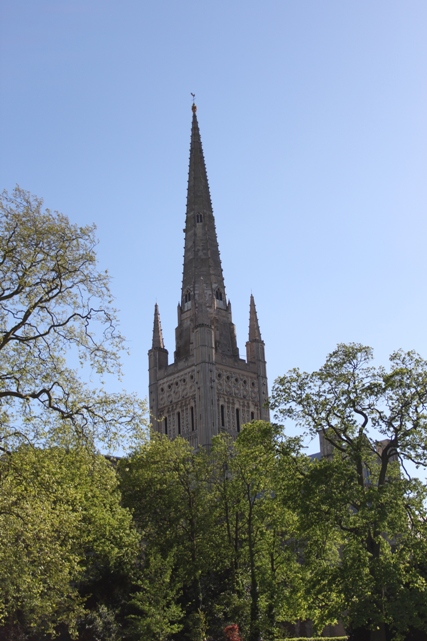
The four acre garden opens in aid of charity several times a year, but was opened specially for our group. We were greeted by two Simons – the Bishop’s Chaplain, Simon Ward and the Head Gardener, Simon Gaches.


Large open areas of lawn and woodland lie close to the cathedral with other smaller areas around the 500 year old flint boundary walls. A rose garden includes Rosa Norwich Cathedral ( = ‘Beacath’) donated by the late Peter Beales to commemorate the 900th anniversary of the cathedral.

One knowledgeable member of the group commented on the similarity of the…
View original post 254 more words
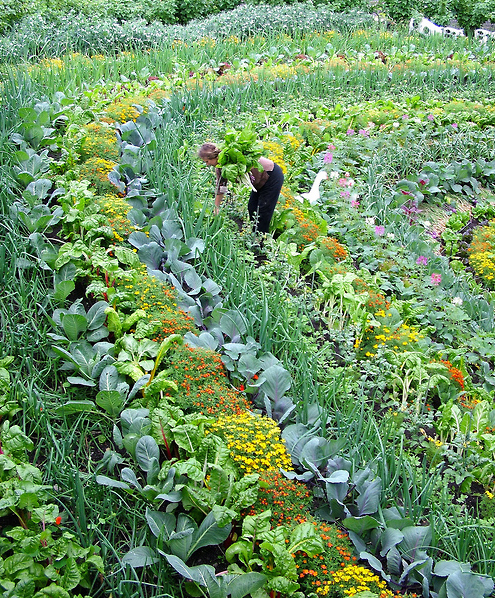
Growing food in style- picking veg at the Eden Project, Cornwall
Old School Gardener
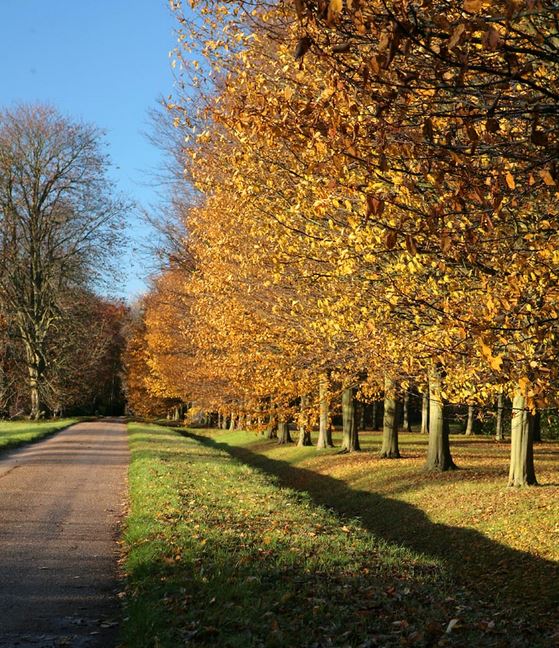 This is the third in my new series on garden trees. I’ve also done an article about trees and garden design.
Common name: Hornbeam
Native areas: The 30–40 species occur across much of the north temperate regions, including the U.K., with the greatest number of species in east Asia, particularly China. Only two species occur in Europe, and only one in eastern North America.
Historical notes: Traditionally, the timber of hornbeams has been used to produce mallets, skittles and even the moving parts of pianos! The common English name of “hornbeam” derives from the hardness of the wood (likened to ‘horn’) and the Old English ‘beam’, a tree (similar to the German for tree, “Baum”).

- Pleached trees- picture RHS
Features: A large, deciduous tree (growing to 20 metres plus), with a grey-fluted trunk and spreading canopy. It has ovate, ribbed and serrated edge leaves that turn a beautiful clear yellow in autumn. The flowers are wind-pollinated pendulous catkins, produced in spring. The male and female flowers are on separate catkins, but on the same tree (i.e it is monoecious). The fruit is a small nut about 3–6 mm long, held in a leafy bract; the bract may be either trilobed or a simple oval, and is slightly asymmetrical.
Uses: Wonderful in a parkland setting, grown in groups, it also ideal for pleaching (i.e. training into a ‘hedge on stilts’) and for use along the edges of smaller gardens – just like here at Old School Garden. Received the Award of Garden Merit from the RHS in 2002. Some of the cultivars are suitable for smaller gardens as their growth habit is more columnar.

Carpinus betulus foliage…

Trunk…

Flower…

Seeds
Some of the cultivars available include:
‘Fastigiata’–– a tree of medium size (10-15 metres in height) and with a pyramidal habit, slender in its youth. Suitable for smaller areas despite developing ‘middle age spread’ (it can grow out to 1o metres wide). Very effective if left feathered at the base to encourage gold and orange autumn leaf colour. Stiffly ascending branches give it a columnar shape, resembling Lombardy Poplar.
‘Fastigiata Frans Fontaine’- selected from a street in the Netherlands in the 1980’s this retains its columnar habit better than the ordinary ‘Fastigiata’ variety (3 metres wide after 25 years) so is even better suited to restricted areas.
‘Purpurea’- medium height (10-15 metres), introduced in the 1870’s , this is well suited to arboretums and plant collections. Young leaves flush with a purple tinge and then gradually turn deep green and them a similar yellow to the species hornbeam in autumn. Slower growing and ultimately smaller than the species tree. Well suited to heavier soils.
”Japonica’- (Japanese hornbeam), introduced from Japan in 1895, a small (5-10 metres tall), rounded tree, very effective if pleached. Darker than the species tree, with heavily corrugated leaves, darker than the species tree. Attractive, prolific hop-like fruit. AGM in 2002
Growing conditions: hornbeams grow well in most soils, including clay and chalk and is useful for planting where there are poor planting conditions.

C. betulus ‘Fastigiata’

C. betulus ‘Fastigiata Frans Fontaine’ after 3 years

C. betulus ‘Purpurea’ as a hedge

C. betulus ‘Japonica’ hop-like fruit
Further information:
Wikipedia
RHS- Carpinus betulus
RHS- pleaching
Barcham trees directory
Old School Gardener




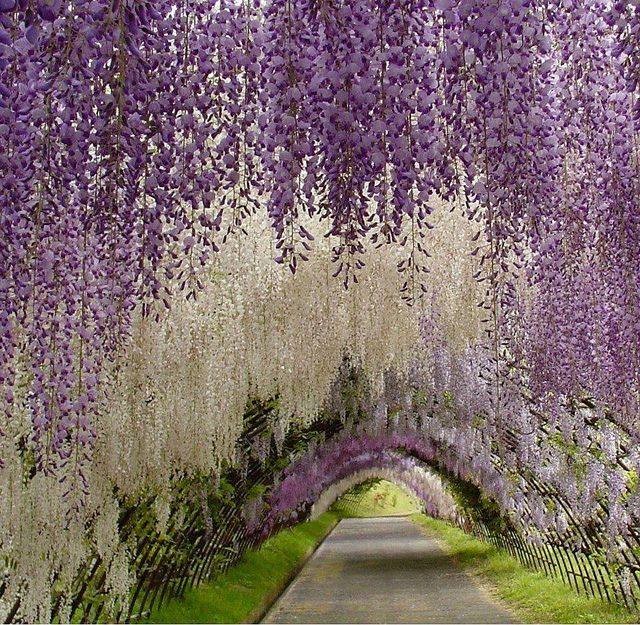
Wisteria tunnel at Kawachi fuji Gardens, Japan
Old School Gardener
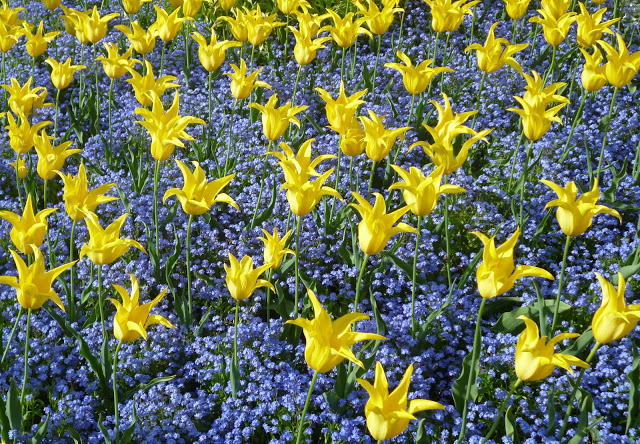





 Old School Garden