Latest Entries »

WP_20140918_16_29_50_Pro

‘Lovers’ Leap’ in the distance- or maybe a slumbering giant?

We took two trips to the town of Antequera, about 45 minutes away. Andalucia.com describes Antequera as ‘the crossroads of Andalucia’:

‘A visit to this historical Andalucían town is a journey almost 5,000 years back in time, beginning with the Bronze Age and the native Iberians. The timeline is there to be followed in this fascinating city’s profusion of burial mounds, dolmens, Roman baths, a Moorish Castle, Gothic churches, Renaissance fountains and baroque bell towers.

The first sighting of Antequera in the distance is that of a typical medieval town, with the spires of her many churches and the walls and towers of the great Moorish fortress silhouetted against the sky. Spread out in the valley below lie rich farmlands irrigated by the Guadalhorce River. For centuries this has been one of Andalucía’s most fertile areas, and is currently a leading producer of asparagus, cereals and olives. In summer, its fields turn brilliant yellow with sunflowers.

The enormous crag of limestone of 880 metres high, that overlooks the town and valley of Antequera (see picture, top) is known as La Peña de los Enamorados, or “The Lovers’ Leap”. The name comes from a local legend about an impossible love affair between a young Christian man from Antequera and a beautiful Moorish girl from nearby Archidona, who were driven to the top of the cliff by the Moorish soldiers, where, rather than renounce their love, they chose to hurl themselves into the abyss.The romantic fable was adapted by 18th century poet Robert Southney in his poem Laila and Manuel about two lovers: a Muslim girl and her father’s Christian slave.

The mountain is also sometimes known as “Montaña del Indio” due to its resemblance to a native Indian from certain angles.’ (It does rather look like a slumbering giant?)

Prior to a rain-soaked walk around the town (ending up with cream cakes and afternoon tea in a rather good cafe), we first visited some of the ancient dolmens on the edge of the town; megalithic burial mounds, dating from the 3rd millennium B.C. The reception building and associated explanatory video were excellent.


The dolmen called Menga is thought to be the largest such structure in Europe (25 metres long, 5 metres wide and 4 metres high), and was built with thirty-two megaliths, the largest weighing about 180 tonnes. After completion of the chamber (which probably served as a grave for the ruling families) and the path leading into the centre, the stone structure was covered with earth and built up into the hill that can be seen today. When the grave was opened and examined in the 19th century, archaeologists found the skeletons of several hundred people inside.

Later in the week we explored the town more properly (again seeming to be on auto pilot for cakes and afternoon tea). The old fortress and it’s environs were especially interesting and well-restored, with some good quality, sympathetic newer housing alongside…

This slideshow requires JavaScript.

Several of the nearby houses had front door curtains in fabrics in jolly patterns including the story of Don Quixote…

So having seen more of the local area, as well as the ‘jewels in the crown’ of Granada and Cordoba, what more could we fit in before the end of the week in Andalucia?


Old School Gardener

weeding-the-garden1My sixth offering from a book I bought in a charity shop in the summer…..
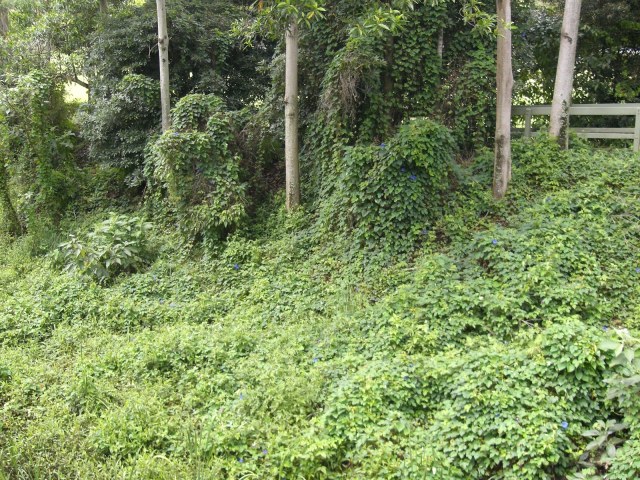
Law of respite:

You always dreamed of a garden to relax in. Now you’ve got it, the time spent weeding it cancels out the time spent enjoying it.

Justified sloth:

Reasons against weeding the plot are always much more potent than those in favour.

Tare’s Reality:

Weeds always move in to fill a gardening vacuum.

weedsFrom : ‘Mrs. Murphy’s Laws of Gardening’ – Faith Hines (Temple House books, 1992)

Old School Gardener


IMG_0323

By now we had settled into our week-long home in the mountains of Andalucia. We were even getting used to driving on the ‘wrong side’ of the road.

Today’s trip was to be our furthest afield, taking a couple of hours by motorway. It is a place I’ve wanted to visit for some time, principally because of the Mezquita (the former mosque) now the city’s  Cathedral- Cordoba.

Having found some parking we made our way into the city, even going past one of the old gates in the city walls, which said ‘you’ve arrived’. We stumbled upon a horse show in the buildings originally used to train up horses for the Spanish Royal family. After winding our way through the narrow streets we came out onto the banks of the River Guadalquivir and the stately old bridge which arrives at the edge of the Mezquita and other notable buildings. Later in the day we had a delightful ‘mooch’ around the old jewish quarter of the city and even found a couple of stylish patios (courtyards) which whetted my appetite for the spring festival that celebrates these – that will have to wait for another visit…..

This slideshow requires JavaScript.

Andalucia.com describes the City:

‘Cordoba was founded by the Romans and due to its strategic importance as the highest navigable point of the Guadalquivir River, it became a port city of great importance, used for shipping Spanish olive oil, wine and wheat back to Ancient Rome. The Romans built the mighty bridge crossing the river, now called “El Puente Romano”. But Cordoba’s hour of greatest glory was when it became the capital of the Moorish kingdom of El-Andalus, and this was when work began on the Great Mosque, or “Mezquita”, which – after several centuries of additions and enlargements – became one of the largest in all of Islam.

When the city was reconquered by the Christians in 1236, the new rulers of the city were so awed by its beauty that they left it standing, building their cathedral in the midst of its rows of arches and columns, and creating the extraordinary church-mosque we see today.

As well as the unique mosque-cathedral, Cordoba’s treasures include the Alcazar, or Fortress, built by the Christians in 1328; the Calahorra Fort, originally built by the Arabs, which guards the Roman Bridge, on the far side of the river from the Mezquita, and the ancient Jewish Synagogue, now a museum. Cordoba’s medieval quarter, once the home of the Jewish community, is called “La Judería” (The Jewry), a labyrinth of winding, narrow streets, shady flower-filled courtyards and picturesque squares such as La Plaza del Potro. In early May, homeowners proudly festoon their patios with flowers to compete for the city’s “most beautiful courtyard” contest.’

 The Mezquita was undoubtedly the highlight of the day, its sheer size (both outside and in) taking my breath away. The inside was a fascinating and beautiful mix of Islamic and Christian symbols and art. The contrast between the relatively simple Islamic decoration and the gold-leaf splendour of the cathedral created within it was startling; and also evidence of the rather brutal way in which the Catholic church muscled in and sought to out do the evidence of Islam. This even extends into the large paved space outside- the original mosque wash basins set into the surface have been filled in and orange trees now fill them with their roots. It was the simpler, but exquisite architecture of the mosque that somehow left the most powerful impression on me, and which also probably appealed more to my own artistic taste…


This slideshow requires JavaScript.

After this we took a tour around the royal palace (the Alcázar de los Reyes Cristianos), that sits nearby and is one of Cordoba’s major landmarks. Originally built in the 8th century as a caliphate residence, this complex of buildings and gardens reached major significance during the Middle Ages, when the Catholic Monarchs Ferdinand and Isabella lived there.

The Alcázar is a composition of massive fortress and royal palace and has some impressive water gardens; complete with statuary, topiarised Box and Yew, a series of arched fountains reminiscent of the Generalife in Granada, and some curious red flowers. I think they were some sort of Celosia but were quite tall and showing distinct evidence of fasciation– when a fault in the growing tip of the plant causes the stems and the flowers to flatten and become fan-like. Apparently some varieties of Celosia are raised especially for their dependably fasciated flower heads, for which they are called “cockscomb” …

This slideshow requires JavaScript.

Rather numbed by the day’s series of wonderful sights, we made our way back along the motorway and mountain tracks and once more to another late night supper by the pool. Could we manage any more beauty on this scale?

Old School Gardener

shinealightproject's avatarShine A Light

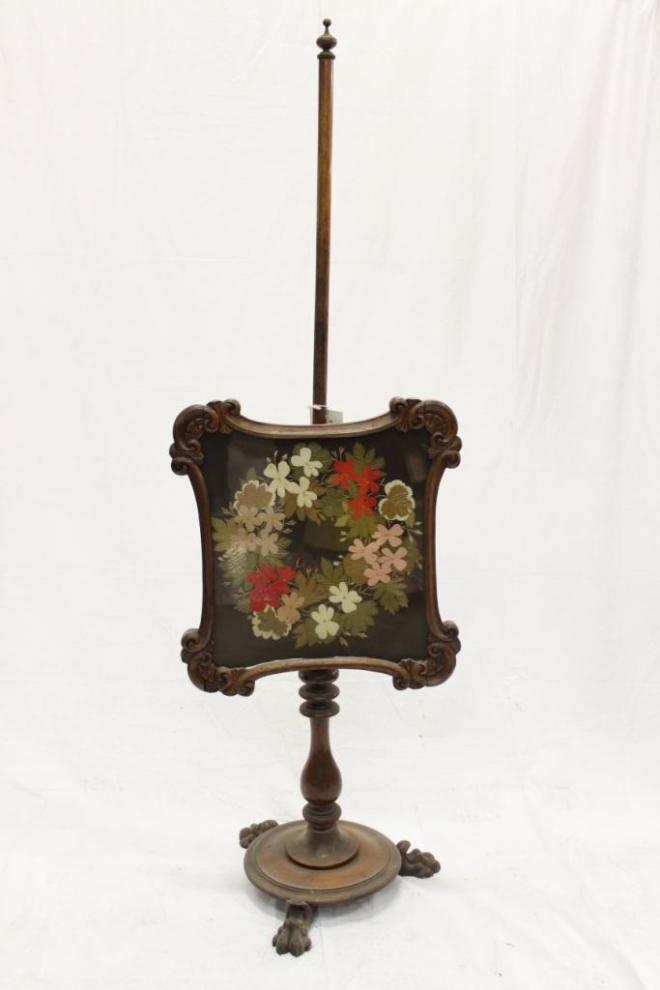
You are a refined and well-mannered lady quietly sewing by the fireside contemplating the latest family scandal, but you find your face is turning a rather un-dignified shade of pink because of the heat of the fire. So what do you need? A fire screen of course!

firescreens blog pics 007

firescreens blog pics 008

We have many fire screens within Norfolk Museums Service and several excellent examples live at the Norfolk Museums Collection Centre. These objects are the quintessential showcase piece for domestic history. They are beautiful objects and it’s not hard to imagine the gentle lady of the house reclining in front of the fire with the screen to protect her delicate skin.

These objects are at once practical and decorative. They range from simple wicker screens to sumptuous embroidered spectacles. They sit proudly but quietly in every country house. So when you watch Downton Abbey next week take a moment to observe the surroundings of…

View original post 231 more words

Municipal Dreams's avatarMunicipal Dreams

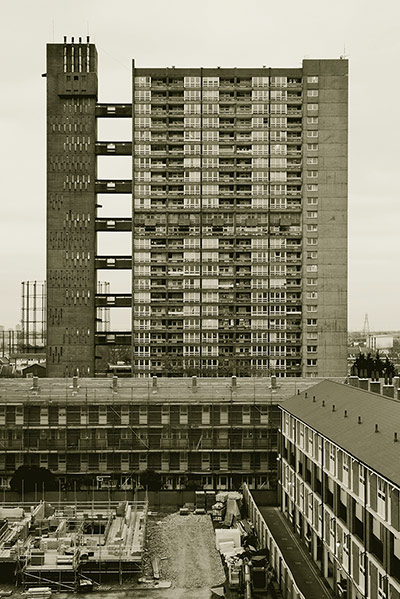
In last week’s post, we left Balfron Tower just as its first residents were moving in, among them the Tower’s architect, Ernő Goldfinger, and his wife, Ursula.  That affluent couple moved out after a couple of months.  It’s a cruel irony that Balfron Tower, conceived in the twentieth century as decent housing for ordinary people, will in the twenty-first become the preserve solely of the most wealthy.  How did it come to this?

Balfron and the Brownfield Estate Balfron and the Brownfield Estate

Back in 1968, the champagne parties thrown by the Goldfingers for their neighbours made it easy for some to condemn their stay as a piece of show-boating by a wealthy couple who would soon return to Hampstead but Goldfinger was serious in his intention to discover the strengths and weaknesses of his design.  This is clear in his own account and in the careful notes drawn up by Ursula – even if…

View original post 1,826 more words

ANOH_Intro_image_340x280.png

For most, Hallowe’en is a night of excitement, friendly frights and safe scares. But for the children of Syria the fear is very real. And it’s every night of the year.

The Syrian civil war is in its fourth year, and has stolen the childhoods of millions of children. Children like Hani, 8, have seen unspeakable horrors. They have witnessed the deaths of family members, endured sleepless nights of bombing and fighting, and now live in constant fear and uncertainty.

This Halloween, show the children of Syria that they have not been forgotten.

Follow this link to World Vision to find out more about how you can help…

Old School Gardener

Awesome Autumn!

nymansgardenblognt's avatarnymansgardenblognt

Acer + Hydrangea = Nymans in Autumn Acer + Hydrangea = Nymans in Autumn

Nymans is often referred to as a garden for all seasons, but for many of our vistors and indeed members of the garden team, Autumn is perhaps the favourite of them all. The showy blooms of Summer may well have faded into memory but the kaleidoscope of colour at this time of year never ceases to dazzle and excite. Whether it’s the fiery foliage tones or the beautiful fruits that adorn the trees that you’re after, Nymans should certainly be top of your list of places to visit soon. In this week’s blog we’ll take you through some of the highlights that await you…

The view from the formal gardens to the Arboretum The view from the formal gardens to the Arboretum

And here it is in some more detail And here it is in some more detail

Perhaps the most obvious place to start looking for turning leaf colour is in our Arboretum and even if you can’t make…

View original post 1,360 more words

It’s a little while since I posted examples of useful (and attractive) garden or other outside projects created from recycled pallets or other materials. Here’s the first of a few posts by way of an update, courtesy of the Facebook site 1001 Pallets.

Old School Gardener

Finding Nature

Nature Connectedness Research Blog by Prof. Miles Richardson

Norfolk Green Care Network

Connecting People with Nature

Discover WordPress

A daily selection of the best content published on WordPress, collected for you by humans who love to read.

Susan Rushton

Celebrating gardens, photography and a creative life

Unlocking Landscapes

Writing, photography and more by Daniel Greenwood

Alphabet Ravine

Lydia Rae Bush Poetry

TIME GENTS

Australian Pub Project, Established 2013

Vanha Talo Suomi

The Journey from Finnish Rintamamiestalo to Arboretum & Gardens

Marigolds and Gin

Because even in chaos, there’s always gin and a good story …

Bits & Tidbits

RANDOM BITS & MORE TIDBITS

Rambling in the Garden

.....and nurturing my soul

The Interpretation Game

Cultural Heritage and the Digital Economy

pbmGarden

Sense of place, purpose, rejuvenation and joy

SISSINGHURST GARDEN

Notes from the Gardeners...

Deep Green Permaculture

Connecting People to Nature, Empowering People to Live Sustainably

BloominBootiful

A girl and her garden :)