Archive for December, 2015


Friends Jen and Dave are having a great time in Vietnam, and Jen has been ‘plant spotting’. She’s sent me some exotic specimens to name and this began with a bit of a mystery. The picture below appears to show a sign with some plant names on it in English.
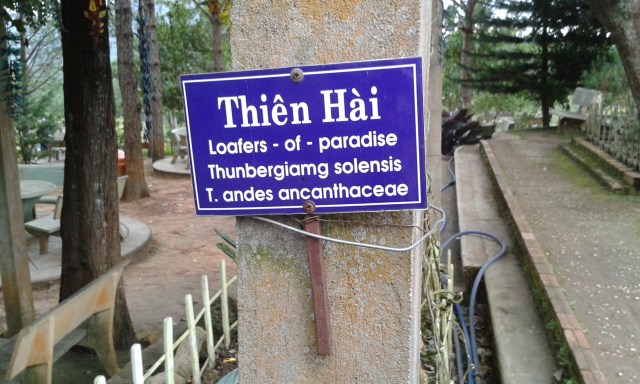
image2Jen assumed this related to the plant picture below, but was puzzled at the (misspelled) reference to Thuinbergia, so I set out to investigate further…

image1

Strongylodon macrobotrys

Jen mentioned that the plant and sign in question were at a monastery in De Lat, which helped me to search online. Here I found a picture of the same plant, but with its correct names of Jade Vine (sometimes also called Tigers’ Teeth); a native of the Philippines, but there are examples in the UK at Cambridge Botanic Garden, Kew and the Eden Project. Interestingly it’s propagated by bats! The botanical name is Strongylodon macrobotrys; and so, not a hint of Thunbergia!

Well, it turns out that another plant nearby (see below), apparently popular in De Lat, is Thunbergia mysorensis (again ‘lost in translation’ on the sign) or its common name of Mysore Trumpet Vine. So, a case of poor sign placement (it looks like its been strapped to a pillar after being in the ground), as well as incorrect botany (incidentally Thunbergia are part of the Acanthaceae family, so that might explain that bit of the sign- but once more, misspelled!).

Thunbergia mysorensis

Thunbergia mysorensis

Another of Jen’s pictures is of the Torch Ginger (Etlingera elatior), a plant used in cooking (especially fresh fish).

Etlingera elatior

Etlingera elatior

I’m still working on identifying the other six plants Jen sent me, but will hopefully crack the mystery in the next few days…look out for further episodes of a Select Vietnamese Flora!

Old School Gardener


The Estrela Basilica

The Estrela Gardens next door are equally inspiring!

saltofportugal's avatarSalt of Portugal

OLYMPUS DIGITAL CAMERA

One of the buildings often found next to a Roman forum is the basilica. It served as a place where people could meet. Basilicas had no statues of Roman gods and had beautiful light that came in through windows near the roof, so they were a favorite gathering place for early Christians.

The plan of the basilica was later adopted for the construction of important churches. Lisbon has an elegant basilica at Estrela, built in 1790 by Queen  Maria I.

Few people seem to know that one can climb the stairs to the roof of the Estrela basilica and enjoy in peaceful silence breathtaking views of the city. It is a perfect place to meet Lisbon.

View original post

The view from Blog HQ...

The view from Blog HQ…

You might be interested to know that 3 years ago today I set up the blog ‘Old School Garden’. The stats:

  • 2,145 posts (including reblogs and this one!)
  • 2,098 comments
  • 256,714 hits (or views) of pages
  • Views from 184 countries with a top ten of U.S.A., U.K., Canada, Australia, France, Germany, New Zealand, Italy, South Africa and Ireland.
  • Posts about recycling, especially using pallets, continue to be the most popular group of posts, with one (the reblogged ‘Ultimate guide to Upcycling Pallets’) achieving over 7,000 views alone.
  • My blog following has increased to 3,036 on all channels, with 634 being direct followers.

And it is to you, my followers, and others reading my stuff that I say, once more, a very big THANKYOU!

Old School Gardener

canwefeedtheworld's avatarOne Billion Hungry: Can We Feed the World?

ID-100232121 Image courtesy of FreeDigitalPhotos.net

Agriculture, being a significant contributor to climate change, will no doubt be on the agenda at COP21 discussions being held in Paris at the moment. Despite being a noted omission from UNFCCC negotiations to date, it is a sector which can’t be ignored if we are to halt climate change. Recent research found that while emissions from Agriculture, Forestry and Other Land Uses (AFOLU) were dropping in terms of their contribution to overall emissions (29% of man-made emissions in the 1990s to 21% in 2010), emissions from agriculture are growing at around 1% per year. Yet there is a lack of public awareness of the magnitude of greenhouse gas emissions from farming. In a global survey by Chatham House less than a third of people surveyed thought that meat and dairy production significantly contributed to climate change, despite it having a larger carbon footprint than the…

View original post 849 more words

12240067_1240555582626966_5779594606128298140_n

‘Carry, & spread dung & compost.’

John Evelyn 1686 (published 1932)

Old School Gardener

deltagardener's avatarThat Bloomin' Garden

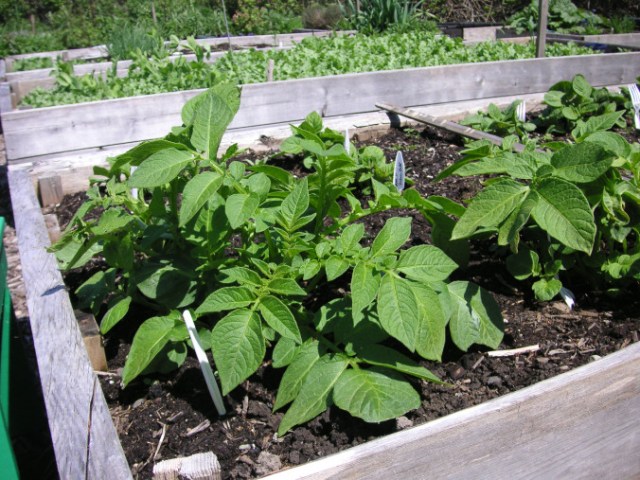
Today I am spending a rainy day planning next years kitchen garden. An important thing to remember when planning your vegetable garden is to ensure you practice good crop rotation. Why is that? If you rotate your crops you will help to prevent the spread of diseases and insect problems.

Planning for Crop Rotation in the Organic Garden

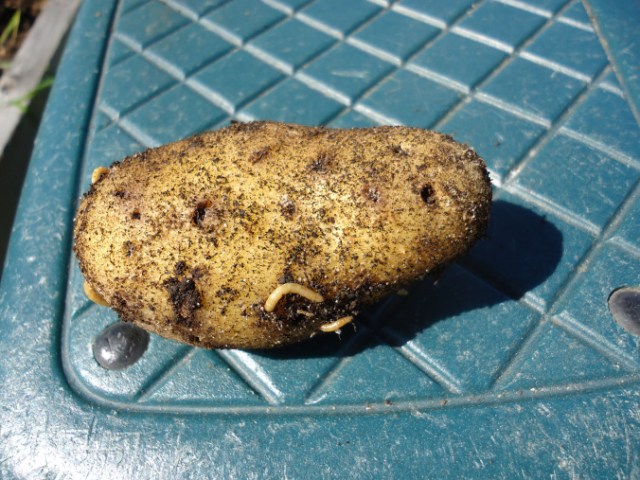
If you have ever grown potatoes in a new garden that used to be in sod the previous year, you may have had an issue with wireworms.  I did when I planted the first community garden bed with potatoes. I harvested the first potatoes with no issues and thought I would leave the potatoes in the soil to harvest in late July.

Planning for Crop Rotation in the Organic Garden

Wasn’t I surprised to see this on my freshly harvested potatoes that summer. Ugh, I didn’t want to look at a potato after that. I had to toss all the damaged potatoes away.  The next year I grew…

View original post 553 more words

Lotus flower- picture by Ellen Zilin

Lotus flower- picture by Ellen Zilin

My second object is small, but none the less important- a plant label. The plant label symbolises gardeners’ efforts to propagate from seed and bring on plants into a state where they can ‘look after themselves’.

It also represents the importance of knowing what you’ve sown, where. It can be a right pain if you don’t and you forget what’s where until you’ve dug up your offspring rather than weeds!

I try to reuse my plastic labels by rubbing off the ‘permanent’ ink with some wire wool each year, which does the job well, though it can mean your next written label is a tad more smudgy than the first as the ink will spread in the fine scratches you create. Still it is the sustainable way to go! (Wooden labels are even better of course and you can also get other kinds, e.g slate).

Copper labels are useful for permanent labels on trees and shrubs and the likes- by impressing rather than inking in the name in the surface you don’t risk losing it to weathering.

Old School Gardener

Sunflowers and Echinops

Sunflowers and Echinops

Finding Nature

Nature Connectedness Research Blog by Prof. Miles Richardson

Norfolk Green Care Network

Connecting People with Nature

Discover WordPress

A daily selection of the best content published on WordPress, collected for you by humans who love to read.

Susan Rushton

Celebrating gardens, photography and a creative life

Unlocking Landscapes

Writing, photography and more by Daniel Greenwood

Alphabet Ravine

Lydia Rae Bush Poetry

TIME GENTS

Australian Pub Project, Established 2013

Vanha Talo Suomi

The Journey from Finnish Rintamamiestalo to Arboretum & Gardens

Marigolds and Gin

Because even in chaos, there’s always gin and a good story …

Bits & Tidbits

RANDOM BITS & MORE TIDBITS

Rambling in the Garden

.....and nurturing my soul

The Interpretation Game

Cultural Heritage and the Digital Economy

pbmGarden

Sense of place, purpose, rejuvenation and joy

SISSINGHURST GARDEN

Notes from the Gardeners...

Deep Green Permaculture

Connecting People to Nature, Empowering People to Live Sustainably

BloominBootiful

A girl and her garden :)