Archive for October, 2014


WP_20140916_13_06_39_Pro

It was late September and we had travelled to Spain for a week’s break in a farmhouse home in a remote mountainous region of innner Andalucia. Having settled in, done our first food shop and enjoyed our first evening meal by the pool we decided to make a short trip out on our first full day to the nearby village and lake of Iznajar.

Felicty enjoying our lunchtime view
Felicity enjoying our lunchtime view

Andalucia.com describes the village and area:

‘This small town of some six thousand inhabitants was transformed some years ago by the creation of an ’embalse’, or reservoir, below the promontory on which Iznajar sits in the River Genil valley. Today, to all intents and purposes, Iznajar now has a waterfront, overlooking an inland sea some thirty kilometres long, and containing an estimated 900 million cubic metres of water destined for domestic consumption…

Iznajar itself escaped the submersion that often visits towns and villages in the region of Andalucía’s controversial programme to construct more and more dams and reservoirs to serve this increasingly thirsty region. If anything, the lake below has given further resonance to its unofficial title as the Mirador (viewpoint) del Genil. Surrounding countryside and communications have been radically altered, not least by a bridge built across the reservoir near Iznajar in order to continue to carry traffic on the Archidona/Priego de Córdoba road…

The village was originally a prehistoric Iberian settlement, but flourished in the eighth century when Arab settlers, in the wake of the 711AD invasion by Tariq ibn Zayid and his Moorish armies, built a castle on the promontory and called it ‘Hins Ashar’ (hence the modern Spanish name). It became the focus of battles between various north African factions, finally being taken by the army of Abderramán III. After the fall of the Caliphate of Córdoba, then the capital of Al-Andalus, it fell under the rule of the dependency of Granada. In 1431, in the reign of Catholic monarch Juan II, it was taken back by the Christian rulers, some sixty years before Granada was to fall in 1492. Iznajar gained brief notoriety in 1861 when the town supported an uprising against the monarchy, led by Rafael Perez del Alamo, with grimly predictable consequences…

The ruins of the 1,200-year-old castle are the obvious key attraction for the visitor… Parts of the fortified town walls can also be seen in the upper reaches of the town. Inside the town walls, a small square called the Patio de las Comedias suggests that, despite its defensive position, Iznajar once had a theatre culture that probably tracks back millennia… the Iglesia de Santiago church, (was) built over time during the fifteenth and sixteenth centuries, with a remarkable late addition in the form of a Baroque altar piece. The cemetery next to the church only dates back to 1806…

The most interesting barrio, district, of Iznajar is the Barrio del Coso, a labyrinth of typical whitewashed Andalucían houses dotted around a labyrinth of narrow lanes that criss-cross the promontory. As if often the case in these hill towns, the ‘lower’ part is also the newer part of town…..’

This slideshow requires JavaScript.

I loved the majestic setting of this lovely village and the obvious care the residents take in looking after their private and public spaces. Having ‘mooched’ around the village in the morning and had a light tapas lunch with a splendid balcony view across the village, we moved off to the nearby ‘beach’, where we had the place almost to ourselves (that’s wife Deborah and friends Nick and Felicity). The beautiful setting, warm sunshine and water (I actually swam!) made for a relaxing beginning to our week’s adventure…

Old School Gardener

Gardening With Children's avatarGardening with Children

I love Autumn; the crisp, frosty mornings when spiders webs appear to have been decorated with crystals, the misty mornings when the fields are cloaked in white and the rich, damp, earthy smells as you walk through the woods. At this time of year most of the plants in the garden have started to die back, the stars of Autumn to my mind are the trees, many of which are dazzling in their ‘coats’ of many colours and heavily laden with masses of fruits and seeds of varying colours, shapes and sizes just waiting for the perfect time and opportunity to break free and become the next generation of trees.

There are many varieties of trees where I live, I just cannot resist the temptation to collect their seeds, my favourites are conkers from the Horse Chestnut Tree and the Spinning Jennies from the Maples, Sycamores and Ashes it is lovely…

View original post 331 more words

walnut tree in gardenThe Walnut tree genus (juglans) has 21 species, but there are two main species in common garden or landscape use; the Black Walnut (Juglans nigra) and English (or Common or Persian)Walnut (Juglans regia). I’ve recently written about the poison they both contain and what this means for growing other plants underneath or nearby.
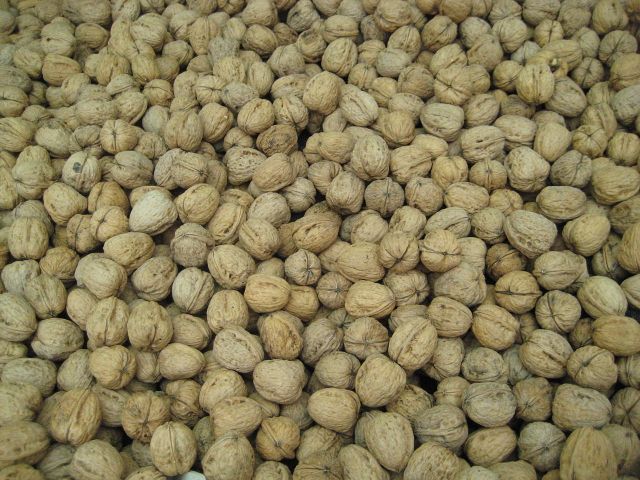
Common name: ‘Walnut’  or Black/English/Common/Persian Walnut. The word walnut derives from the Germanic wal– and Old English wealhhnutu, literally “foreign nut”, wealh meaning “foreign”. The genus name “Juglans” comes from Latin jūglans, meaning ‘walnut, walnut tree’; jūglans in turn is a contraction of Jōvis glans, ‘nut of [the god] Jupiter’

1280px-WalnutsNative areas: The English Walnut (J. regia) originated in Persia, and the Black Walnut (J. nigra) is native to eastern North America.

Historical notes: The Black Walnut was introduced to Europe in 1629 from north America, whereas the English Walnut is thought to have been grown in Britian since Roman times. The worldwide production of walnuts has been increasing rapidly in recent years, with the largest increase coming from Asia. The husks of the black walnut Juglans nigra are used to make an ink for writing and drawing. Walnut ink has good archival properties, and was used by several great artists including Leonardo da Vinci and Rembrandt. Walnut husks are used as a brown dye for fabric. Walnut dyes were used in classical Rome and in medieval  Europe for dyeing hair. The U.S. Army used ground walnut shells for the cleaning of aviation parts because it was inexpensive and non-abrasive. However, an investigation of a fatal helicopter crash in 1982 (in Mannheim, Germany) revealed that walnut grit clogged an oil port, leading to the accident and to the discontinuation of walnut shells as a cleaning agent.

This slideshow requires JavaScript.

Features: The Black Walnut is of high flavour, but due to its hard shell and poor hulling characteristics it is not grown commercially for nut production. The commercially produced walnut varieties are nearly all hybrids of the English Walnut.  Walnuts are late to grow leaves, typically not until more than halfway through the spring. The blossoms also normally appear in spring. The male cylindrical catkins are developed from leafless shoots from the past year; they are about 10 cm (3.9 in) in length and have a large number of little flowers. Female flowers appear in a cluster at the peak of the current year’s leafy shoots. Both main species contain a chemical called “juglone” which can be poisonous (or allelopathic) to other plants. This can be a particular issue for growing other plants underneath a Black Walnut.

Juglans_regia_-_Köhler–s_Medizinal-Pflanzen-081Uses: As garden trees, Walnuts have some drawbacks, in particular the falling nuts and the release of Juglone.However, they are grown and both species make a stately subject for parkland and avenue plantings, or as specimen trees where space allows. The English Walnut develops a broad crown at maturity (and a height of 15- 20 metres). It also has delightfully aromatic young foliage, from which a wine can be made, followed by a crop of delicious nuts. It is smooth barked when young. Both species are also grown for their timber. The Black Walnut is fast growing and was awarded the RHS Award of Garden Merit in 2002. It can  reach 20 metres or more in height and makes a large tree with a pyramidal crown. It produces an abundance of nuts over a long period, but they are rather difficult to extract from their very hard shells. It is rough barked from a young age.

 Growing conditions: Walnuts are light-demanding species that benefit from protection from wind. Walnuts are also very hardy against drought. Walnuts grow on most soils but the English Walnut does not favour water logged conditions. The Black Walnut favours deep loam. Walnut trees are easily propagated from the nuts. Seedlings grow rapidly on good soils.

Further information:

Wikipedia- Walnut

Wikipedia – Juglans

GQT: Underneath the Walnut Tree- what to plant.

Barcham trees directory-  Juglans regia

Old School Gardener

shinealightproject's avatarShine A Light

By Sophie Towne

Over the last couple of months here at the Norfolk Museums Collection Centre we have largely been reorganising and giving a bit of TLC to our collection of fireplaces, fire screens, chimney cranes and roasting spits.

Each fireplace in our collection has its own character and personality; from grandiose and ostentatiously decorative to modestly useful.

Here are a couple of my favourite fire surrounds from our collection, polar opposites but both equally lovely:

A typical fireplace from the 1850s with pillars decorated with acanthus leaves and Prince of Wales feathers in relief A typical fireplace from the 1850s with pillars decorated with acanthus leaves and Prince of Wales feathers in relief

Cast iron fireplace with polychrome tiled floral surround and marble mantelpiece dated 1910 from 72 St Mary's Road in Lowestoft Cast iron fireplace with polychrome tiled floral surround dated 1910 from 72 St Mary’s Road in Lowestoft

This is just a taster of our amazing collection, check back soon for more updates on our fabulous array of all things fiery.

View original post

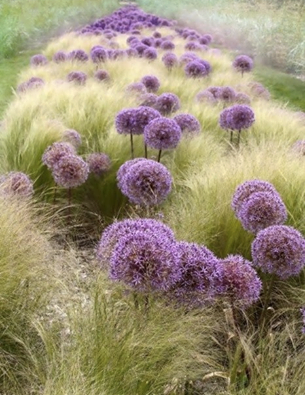
alliums and grass

I love this planting scheme- simple combination of Alliums and Pony Tail grass (Stipa tenuissima)

Old School Gardener

Municipal Dreams's avatarMunicipal Dreams

We looked last week at the building of  the Watling Estate and its early residents.  Watling was seen – for good or ill – as a symbol of the ‘new England’.  Middle-class observers – particularly the new breed of sociologists and planners – asked what type of community was it, was it a community at all? Perhaps what really concerned was that it should be the right sort of community.

Storksmead Road Storksmead Road

As we saw last week, it certainly wasn’t that for many of the well-heeled residents of near-by Mill Hill and Edgware, shocked by this supposed incursion of uncouth slum-dwellers. A 1927 letter to the Hendon and Finchley Times reported flowers stolen from gardens, fruit trees stripped and language that apparently even shocked a local workman. (1)  Children attending the Watling Central School from outside Watling saw the Estate as ‘dirty’ and ‘rough’, according to Ruth Durant. (2)

Watling Central School: class divided its pupils more than gender in the interwar period Watling Central School:…

View original post 2,068 more words

I recently had a ‘tweet’ from fellow Norfolk resident, Claire in Thetford. She was wondering what the growths on these leaves were.

I must admit to being a bit puzzled at first, but some further research suggested that they are some sort of Gall, which Wikipedia describes as:

‘…abnormal outgrowths of plant tissues and can be caused by various parasites, from fungi and bacteria, to insects and mites. Plant galls are often highly organized structures and because of this the cause of the gall can often be determined without the actual agent being identified. This applies particularly to some insect and mite plant galls.’

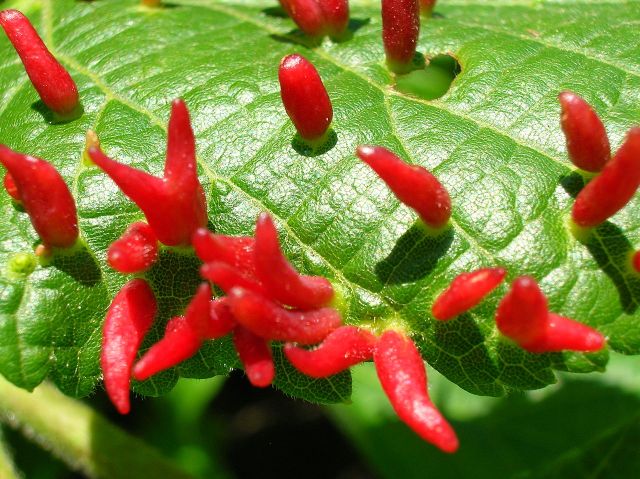
My guess from the pictures was that these were galls possibly created by some sort of parasitic wasp (in this case on the leaves of a Lime Tree). Claire’s own research came up with a more precise description: a ‘Nail Gall’ formed by a small mite Eriophyes tiliae. These microscopic mites overwinter in the bark of lime trees and crawl on to the underside of the foliage in spring to feed. The mites secrete chemicals into the leaves causing them to produce the unusual projections into which the mites move to continue feeding during the summer. Infestations of mites and the nail galls they induce don’t appear to affect the health of the trees and there’s no way of controlling or preventing them. The galls caused by this mite are said to be yellow-green or red in colour (see picture below). It may be that the whitish nails in Claire’s picture have been be caused by another mite (Aceria lateannulatus), which affects both the small-leaved lime (Tilia cordata) and the Common Lime (Tilia x europaeus), but not the large-leaved lime (Tilia platyphyllos).

Nail Galls cauised by Eriophyes tiliae

Nail Galls cauised by Eriophyes tiliae

Galls are fascinating phenomena. As Wikipedia continues, those created by insects are:

‘…highly distinctive plant structures formed by some herbivorous insects as their own microhabitats. They are plant tissue which is controlled by the insect. Galls act as both the habitat and food source for the maker of the gall. The interior of a gall can contain edible nutritious starch and other tissues. Some galls act as “physiologic sinks”, concentrating resources in the gall from the surrounding plant parts. Galls may also provide the insect with physical protection from predators.

Insect galls are usually induced by chemicals injected by the larvae or the adults of the insects into the plants, and possibly mechanical damage. After the galls are formed, the larvae develop inside until fully grown, when they leave. In order to form galls, the insects must seize the time when plant cell division occurs quickly: the growing season, usually spring in temperate climates, but which is extended in the tropics.

The meristems, where plant cell division occurs, are the usual sites of galls, though insect galls can be found on other parts of the plant, such as the leaves, stalks,branches, buds, roots and even flowers and fruits. Gall-inducing insects are usually species-specific and sometimes tissue-specific on the plants they gall.’

Galls are also caused by fungi, bacteria, viruses and nematodes. It seems that in many instances these growths do not cause any significant harm to the plants they infest, though in some cases long term harm can be caused to some species, for example by affecting their overall shape and vigour.

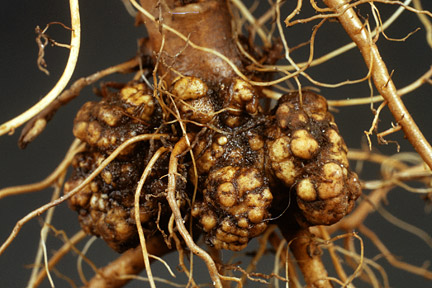
Crown Gall on apple- RHS

Crown Gall on apple- RHS

Crown gall affects a wide array of plants and roses are definitely one of them. It is a plant disorder caused by the bacterium Agrobacterium tumefaciens, that interferes with the plants ability to take up water and nutrients. This results in poor growth and weak plants that are easily stressed and injured- the only remedy in this case is to dig up the plant and dispose of it.

The study of plant galls is called cecidology. While these weird structures have intrigued humans for many years, there is still much that we don’t know about them.

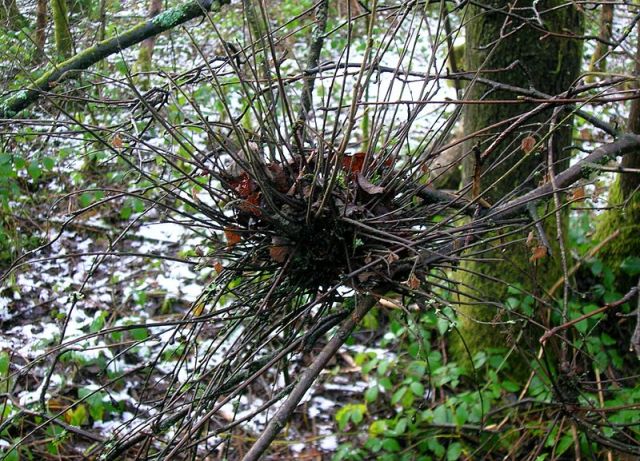
Wiches Broom Gall - picture Rosser1954

Wiches Broom Gall – picture Rosser1954

While some galls are well hidden and hard to spot, others are much more conspicuous. Have you ever looked up into a birch tree (Betula spp.) and noticed what looked like large, dense birds’ nests? In some cases these may well be nests, but very often they are actually galls called ‘witches’ brooms’. These are caused by a fungus (Taphrina betulina), which stimulates the tree to produce numerous extra shoots, resulting in a dense nest-like cluster. The fungus can then feed on the shoots. It was once believed that they were caused by witches flying over the tree!

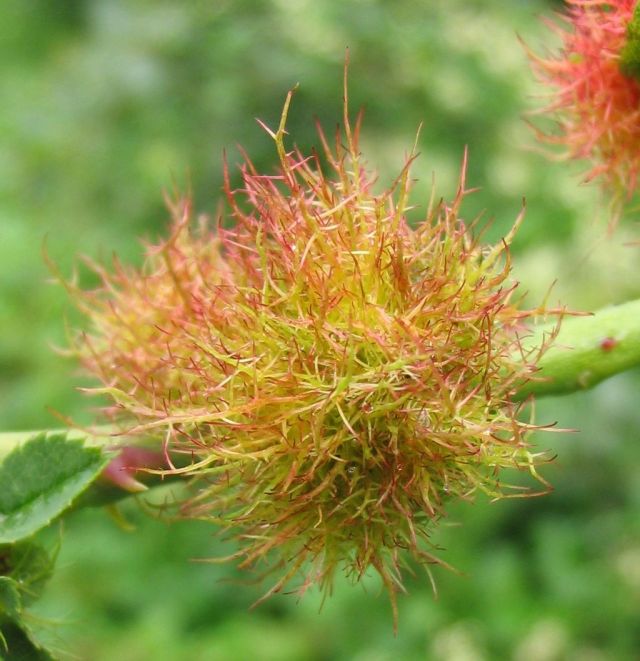
If you spot an odd-looking growth on a dog rose (Rosa canina) it could well be a Robin’s pincushion gall, caused by a wasp (Diplolepis rosae). There was once a belief in England that these were caused by the woodland sprite, Robin Goodfellow or Puck. It is hardly surprising that people ascribed supernatural causes to some galls – they look pretty strange, and their causes aren’t exactly obvious.

'Robins Pincushion' gall on a Wild rose

‘Robins Pincushion’ gall on a Wild rose

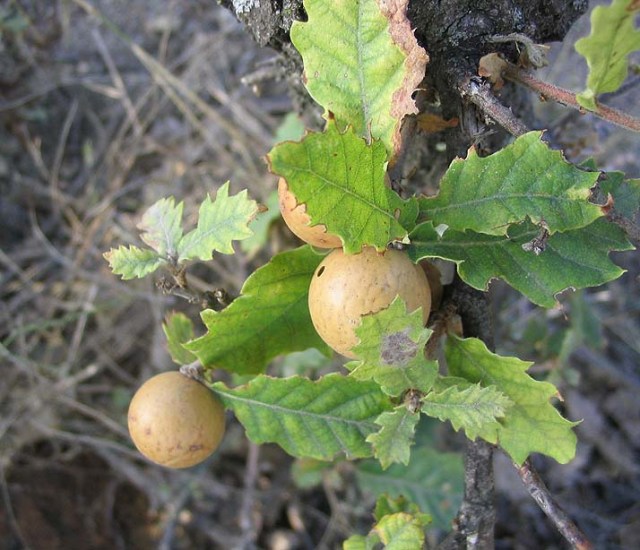
The real gall specialists include gall midges, gall flies and gall wasps. Perhaps one of the most familiar galls is the oak apple, caused by a tiny wasp (Biorhiza pallida).

Oak apples

Oak apples

There are actually hundreds of species of oak gall wasps and they cause a fantastic variety of galls on oaks (Quercus spp.). A single oak tree may support many thousands of galls. Each gall wasp species creates its own unique and outlandish structure: some resemble cotton wool or marbles, pineapples or tiny UFOs!

Here’s a gallery of some of the other amazing galls to be found.

This slideshow requires JavaScript.

Sources and further information:

Galls- Wikipedia

Eriphyes tiliae- Wikipedia

British Plant Gall Society

Trees for Life- Galls

RHS- Crown Gall

Old School Gardener

If you’ve enjoyed reading this post and others on this blog, why not comment and join others by signing up for automatic updates via email (see side bar, above right ) or through an RSS feed (see top of page)?

Jardin's avatarJardin

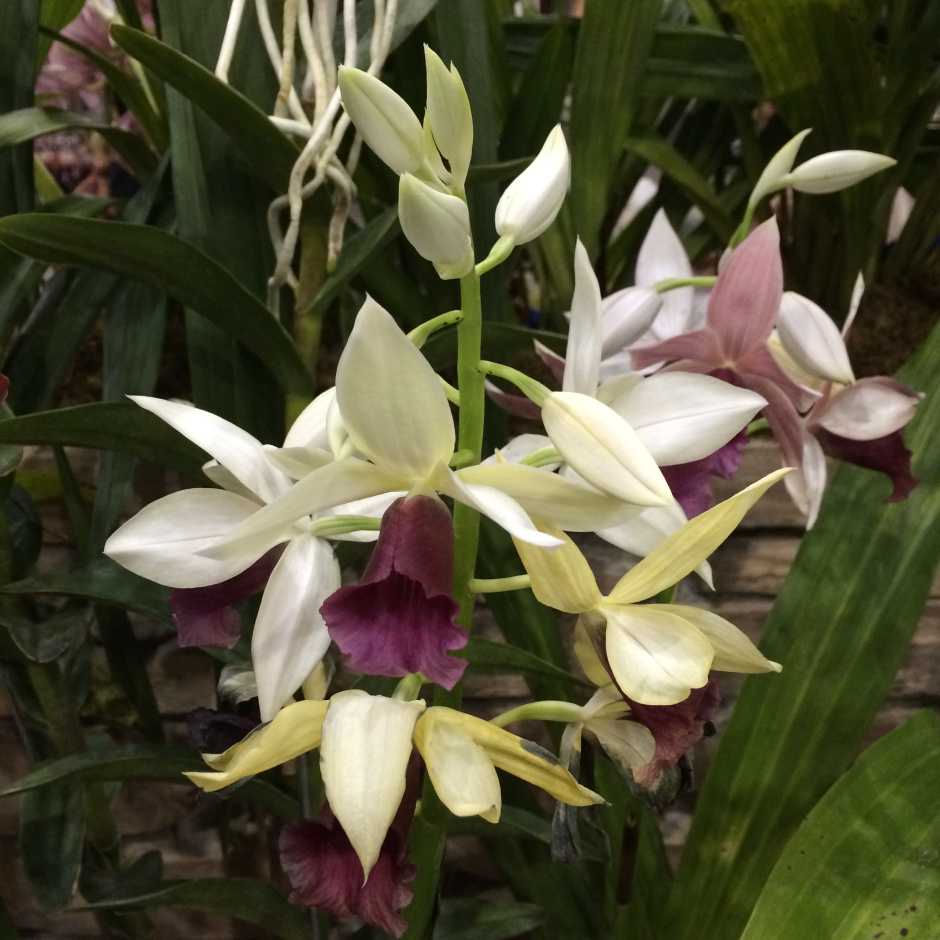
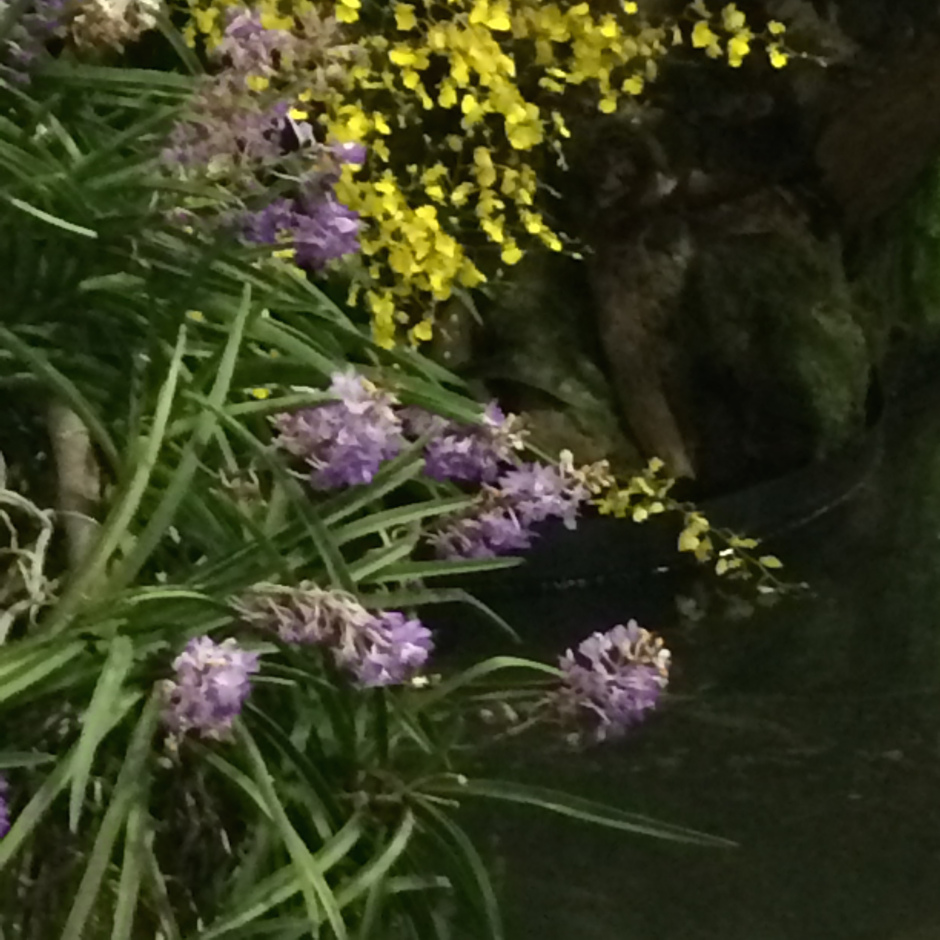
My recent stay in Johannesburg fortunately coincided with the World Orchid Conference and Show, sometimes called the Olympics of Orchids, at the Sandton Convention Centre.

World Orchid show

The Theme was “Gold in the Green Age”, reflecting the natural riches of southern Africa and the need to balance the exploitation of these riches with the preservation of the natural environment.

South Africa has almost 500 wild orchids, many only growing in SA. In Gauteng,the home province, there are 54 recorded wild orchid species, mostly terrestrial grassland orchids much threatened now by urban development.

World Orchid Show

I loved the Cape Orchid Society’s Stand which recreated a botanist’s study, complete with microscope and small reference library.

Botanist's study, World Orchid Show, Johannesburg Botanist’s study, World Orchid Show, Johannesburg

There were representatives from the orchid societies across South Africa, including the local Witwatersrand Orchid Society, whose emblem is the spring-flowering Leopard orchid (Ansellia africana).

Leopard orchid Leopard orchid

There were participants from Denmark, Ecuador…

View original post 164 more words

Met Office Press Office's avatarOfficial blog of the Met Office news team

There are some headlines in the media today which suggest the UK faces another mild, wet and stormy winter this year based on the latest Met Office three month outlook for contingency planners.

Every month the Met Office updates its three month outlook for contingency planners, which is available for anyone to view on our website.

However, it’s not like a normal weather forecast. It’s an experimental and complex outlook based on probabilities which is designed specifically for those who plan ahead for various contingencies based on possible likelihoods.

As we’ve discussed previously, the outlook assesses the likelihood of five different scenarios for both temperature and rainfall for the whole of the UK for the whole three months, based on the most probable prevailing weather patterns.

It’s a bit like the science-equivalent of factoring the odds on a horse race and like any horse race, it’s always possible the…

View original post 305 more words

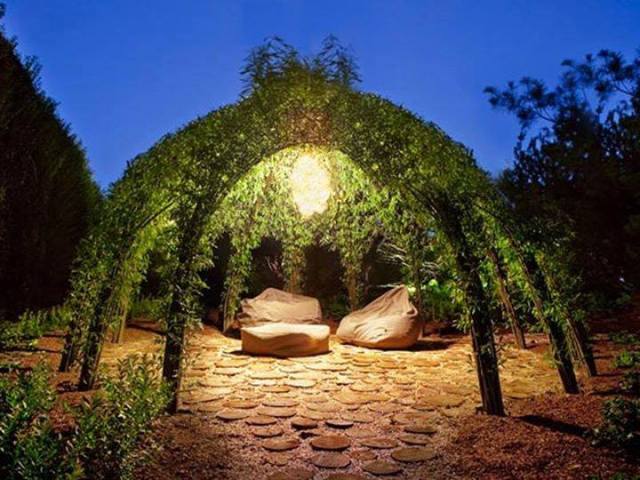
Living Willow Structure by Bonnie Gale

Living willow structure by Bonnie Gale

Finding Nature

Nature Connectedness Research Blog by Prof. Miles Richardson

Norfolk Green Care Network

Connecting People with Nature

Discover WordPress

A daily selection of the best content published on WordPress, collected for you by humans who love to read.

Susan Rushton

Celebrating gardens, photography and a creative life

Unlocking Landscapes

Writing, photography and more by Daniel Greenwood

Alphabet Ravine

Lydia Rae Bush Poetry

TIME GENTS

Australian Pub Project, Established 2013

Vanha Talo Suomi

The Journey from Finnish Rintamamiestalo to Arboretum & Gardens

Marigolds and Gin

Because even in chaos, there’s always gin and a good story …

Bits & Tidbits

RANDOM BITS & MORE TIDBITS

Rambling in the Garden

.....and nurturing my soul

The Interpretation Game

Cultural Heritage and the Digital Economy

pbmGarden

Sense of place, purpose, rejuvenation and joy

SISSINGHURST GARDEN

Notes from the Gardeners...

Deep Green Permaculture

Connecting People to Nature, Empowering People to Live Sustainably

BloominBootiful

A girl and her garden :)