Archive for August, 2014


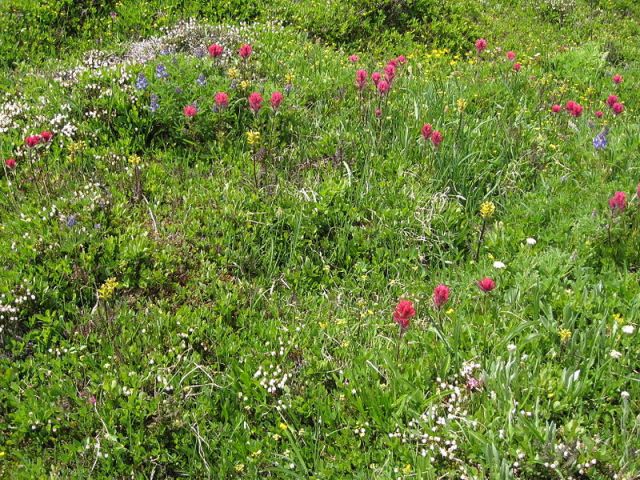
'Wild Gardens' have a different kind of attractiveness - and value- to those that are more actively 'gardened'
‘Wild Gardens’ have a different kind of attractiveness – and value- to those that are more actively ‘gardened’

I’ve just finished reading a fascinating, beautifully written book about taking a more ecological approach to gardening: ‘Noah’s Garden’ by Sara Stein. Set in the suburbs of the USA, she describes how she ‘unbecame’ a gardener and developed her plot into somewhere that bore a closer resemblance to the native surrounding countryside. In short ‘restoring the ecology of our own back yards.’

I have her sequel, ‘Planting Noah’s Garden’ and another book called ‘Noah’s Children’ ready for my summer holiday reading! The latter is about ‘restoring the ecology of childhood’, and I’m especially looking forward to reading this because of my interest in designing and promoting ‘natural play’ spaces. Stein wrote these all about 15 years ago, but they still seem very relevant today (Stein passed away in 2005).

I’m left wondering if and how far the principles she advocates can and should be applied to somewhere like the UK. Here the climate has – at least up to now- enabled us to grow a very wide range of plants, and so has given us the chance to grow more ‘exotics’ than  many other places around the globe. Arguably this resulted in a diluting, if not replacement of a ‘native environment’ hundreds of years ago, especially from the foreign travels of the ‘plant hunters’ and the subsequent importation of exotic species, as well as the devleopment of new, hybridised forms.

I guess the principle of gardeners working with nature, acting as ‘managers of the environment’ not ‘controllers’ (or worse still, having no concern for the wider impacts of what we plant, construct or remove in our gardens), is still very valid, and we should always have regard to the impact of our planting on the wider environment – in terms of the wildlife habitats and food sources it provides, for example.
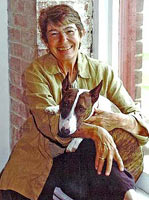
Sara Stein

Sara Stein

I was especially taken with Stein’s suggestion in the last few pages of ‘Noah’s Garden’:

‘Let’s imagine a goal: that at some time in the future, the value of a property will be perceived in part according to its value to wildlife. A property hedged with fruiting shrubs will be worth more than one bordered by Forsythia. One with dry-stone walls that provide passageways for chipmunks will be valued higher than one whose walls are cemented stone. Buyers will place a premium on lots that provide summer flowers and fall crops of seed. Perhaps there will be formal incentives; tax abatements geared to the number of native species; deductions for lots that require neither sprays nor sprinklers. A nursery colony of bats might be considered a capital improvement. There could be bonuses for birdhouses.

Oh, brave new world!’…

Well, in the UK the arrival of energy efficiency ratings for houses is perhaps a step in this direction? Maybe we should encourage ‘Garden Ratings’ too?

Old School Gardener

montreal bot gdn

Montreal Botanical Gardens

Autumn Fruits

IMG_9760I finally fulfilled a long-held ambition last week – to visit Hatfield House, Hertfordshire, especially to see the gardens. Visiting with old friends Dave and Jen, we were first blown away by the sumptuous house with its amazing range of paintings, furnishings, panelled walls and most of all the ceilings- a testament to old-fashioned craftmanship – and lots of dosh! The Hatfield House website says of the house:

‘Hatfield House is the home of the 7th Marquess and Marchioness of Salisbury and their family. The Estate has been in the Cecil family for 400 years. Superb examples of Jacobean craftsmanship can be seen throughout the House.

In 1611, Robert Cecil, 1st Earl of Salisbury built his fine Jacobean House adjoining the site of the Old Palace of Hatfield. The House was splendidly decorated for entertaining the Royal Court, with State Rooms rich in paintings, fine furniture and tapestries.

Superb examples of Jacobean craftsmanship can be seen throughout Hatfield House such as the Grand Staircase with its fine carving and the rare stained glass window in the private chapel. Displayed throughout the House are many historic mementos collected over the centuries by the Cecils, one of England’s foremost political families.’

This slideshow requires JavaScript.

The outside areas were equally enjoyable, with a range of gardens and parkland, currently home to a display of provocative, beautiful and fun sculptures.

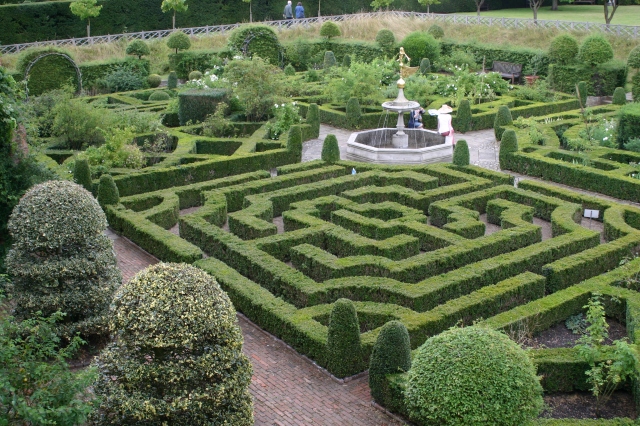
The West Garden was a little past its best when we visited, but was probably a wonderful display of colour just a few weeks earlier from the many herbaceous plants, roses and shrubs set out there. The climax, for me, was the wonderful Tudor Garden with its intricate box knots and clipped hollies. Here’s what the Hatfield House website says about the gardens:

‘The garden at Hatfield House dates from the early 17th century when Robert Cecil employed John Tradescant the Elder to collect plants for his new home. Tradescant was sent to Europe where he found and brought back trees, bulbs, plants and fruit trees, which had never previously been grown in England.

Visitors can enjoy the sundial garden and fountains, and view the famous knot garden adjoining the Tudor Old Palace where Elizabeth I spent much of her childhood. Following the fashion for landscape gardening and some neglect in the 18th century, restoration of the garden started in earnest in Victorian times. Lady Gwendolen Cecil, younger daughter of Prime Minister Salisbury, designed the West Garden as it is today.

The adjoining woodland garden is at its best in spring with masses of naturalised daffodils and bluebells.

The East Garden was laid out by the 5th Marquess of Salisbury. This part of the Garden has elegant parterres, topiary and rare plants are a delight for the gardening enthusiast and for those wishing to spend a quiet time in idyllic surroundings. Designed to be viewed from the first floor of the House, the East Garden is only open to the public on one day each week during the visitor season.

The Garden is maintained by Lady Salisbury and her small team of gardeners’

This slideshow requires JavaScript.

Further Information: Hatfield House Website

Old School Gardener

via la Bioguia

via la Bioguia

Jardin's avatarJardin

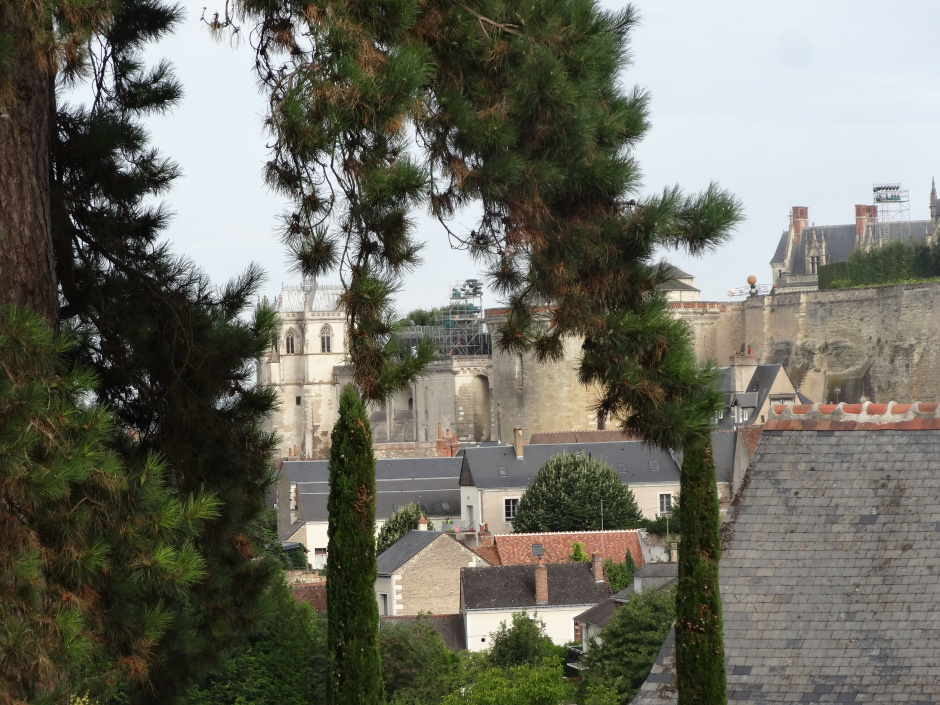
Leonardo da Vinci was already in his sixties when he was prevailed upon by King Francis I to move to the French court at Amboise in the Loire valley.

Chateau d'Amboise Chateau d’Amboise

The King provided the Château du Clos Lucé, 300 metres from the royal Château d’Amboise – “here you will be free to dream, to think and to work”, said the king, and it was here that da Vinci was to spend the remaining three years of his life, working on perfecting his inventions, his creative mind never still.

The view from da Vinci's bedroom of the Chateau d'Amboise and the Church of St Hubert, where he was buried The view from da Vinci’s bedroom of the Chateau d’Amboise and the Church of St Hubert, where he was buried.

Da Vinci was a true Renaissance man, not just the artist renowned for “The Last Supper” and “Mona Lisa”, but a sculptor, engineer, inventor, architect, anatomist, botanist and creator of lavish court festivities. At Clos Lucé today, reconstructions of…

View original post 379 more words

Brigid Jackson's avatararistonorganic

Sewefontein (1878) is a tranquil Old World farm accommodation located in the heart of Namaqualand.

The farm offers seven fresh water fountains, natural swimming pools in the river, hiking trails, waterfall and canyon, Rock Art, wild flowers, rich animal and bird life.
http://www.nieuwoudtville.com/sewefontein/

View original post

canwefeedtheworld's avatarOne Billion Hungry: Can We Feed the World?

ID-100223935New global trade deals are currently being negotiated, in part arising from the failings of the World Trade Organisation’s Doha Round. Proposals include the Trans-Pacific Partnership (TPP) and the Transatlantic Trade and Investment Partnership (TTIP). There are, however, many questions on what these agreements will include and what they will mean for those excluded, particularly poorer, developing countries.

Transatlantic Trade and Investment Partnership

The Transatlantic Trade and Investment Partnership (TTIP) is a proposed free trade agreement between the European Union and the United States that could be finalised by the end of 2014. On the one hand such an agreement could boost multilateral economic growth while on the other it could increase corporate power perhaps at the expense of public benefit.

Although the EU released a document in July entitled, State of Play of TTIP negotiations ahead of the 6th round of the negotiations, the content of negotiations…

View original post 1,192 more words

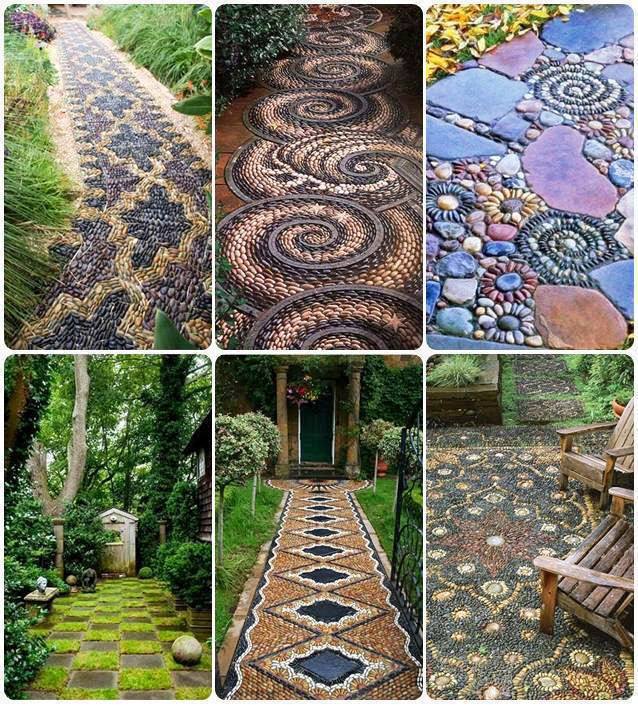
'Flight of the Swallow, via Ancient Art of Stone
‘Flight of the Swallow, via Ancient Art of Stone
Finding Nature

Nature Connectedness Research Blog by Prof. Miles Richardson

Norfolk Green Care Network

Connecting People with Nature

Discover WordPress

A daily selection of the best content published on WordPress, collected for you by humans who love to read.

Susan Rushton

Celebrating gardens, photography and a creative life

Unlocking Landscapes

Writing, photography and more by Daniel Greenwood

Alphabet Ravine

Lydia Rae Bush Poetry

TIME GENTS

Australian Pub Project, Established 2013

Vanha Talo Suomi

The Journey from Finnish Rintamamiestalo to Arboretum & Gardens

Marigolds and Gin

Because even in chaos, there’s always gin and a good story …

Bits & Tidbits

RANDOM BITS & MORE TIDBITS

Rambling in the Garden

.....and nurturing my soul

The Interpretation Game

Cultural Heritage and the Digital Economy

pbmGarden

Sense of place, purpose, rejuvenation and joy

SISSINGHURST GARDEN

Notes from the Gardeners...

Deep Green Permaculture

Connecting People to Nature, Empowering People to Live Sustainably

BloominBootiful

A girl and her garden :)