
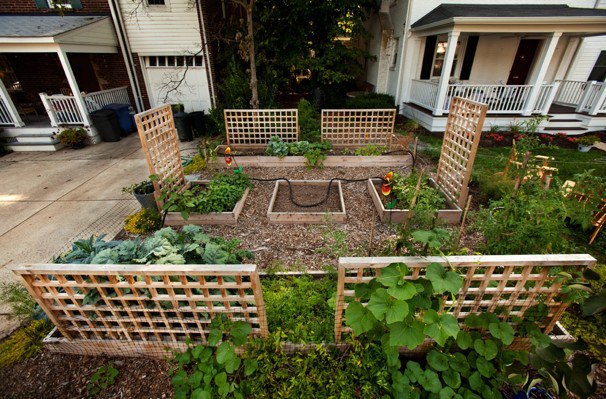
‘Two families made a shared vegetable garden from their front yards. They now share the produce & the maintenance. Would you do this with your neighbour?’
From: Growveg
From: Growveg

You can grow things that can be harvested before the summer holidays – if you start early enough and with the right varieties

Jobs like building ‘bug hotels’ and laying paths are best left to ‘Garden Gang’ days when you can get a good level of adult support for a few hours
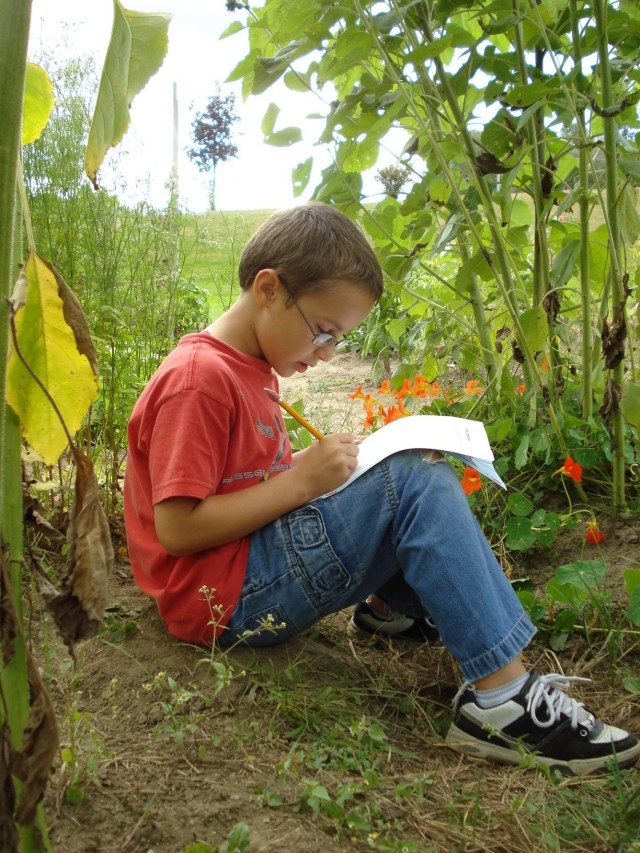
Taking notes and helping to plan for next year…

Have somewhere children can wipe their feet off and store boots

Ask for unused tools and equipment for the School
Growing Children 5: Top tips for School Garden activities
Growing Children 4: AAA rated School Garden in Seven Steps
Growing Children 3: Seven tips for creating your dream School Garden
Growing Children 2: Seven Design tips for your School Garden
Growing Children 1: School Garden start up in Seven Steps
School Gardening – reconnecting children and Nature
‘How to grow a School Garden’ – Arden Bucklin-Spooner and Rachel Kathleen Pringle, Timber Press Books
Budding Gardeners- lots of advice and info
Food & Agriculture Organisation School Garden Planner
California School Garden Network Guide to School Gardening
Garden Organic support for schools
If you’ve enjoyed reading this post and others on this blog, why not comment and join others by signing up for automatic updates via email (see side bar, above right ) or through an RSS feed (see top of page)?

‘The Tree Council is encouraging all UK schools and community groups to plant trees by offering funding through two grant programmes- the ‘Trees for Schools’ and ‘Community Trees’ funds.
They are also offering funds for fruit tree planting in schools through the ‘Orchard Windfalls’ fund. The Tree Council are able to fund projects between £100 and £700 and successful applicants will receive up to 75% towards planting costs.
Applications for 2013 are now open, for more information visit: http://www.treecouncil.org.uk/grants/trees-for-schools
With the generous support of an anonymous donor The Tree Council have produced a teaching and learning resource, which will be sent out free of charge to all successful grant applicants.’

 Continuing on from one of my more recent posts on distinctiveness in landscapes, I thought it might be useful to give a more European perspective on landscapes as well.
The most important document in this is the European Landscape Convention (ELC). This was the first international convention to focus specifically on landscape. Created by the Council of Europe, the convention promotes landscape protection, management and planning, and European co-operation on landscape issues. The document was created in 2000 and was subsequently signed by the UK Government in February 2006; the ELC became binding in the UK from March 2007.
What makes this document special is that it does not just focuses on those landscapes which are already well protected, such as National Parks and Areas of Outstanding Natural Beauty. Instead, the ELC defines landscape very widely, and includes all types of landscapes: rural and urban, inland, coastal or marine, outstanding, ordinary…
View original post 923 more words
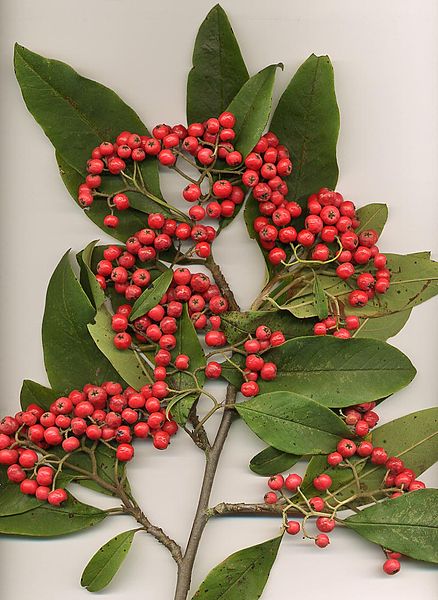
Cotoneaster frigidus – leaves and fruit
The majority of Cotoneaster species are shrubs from 0.5–5 metres tall, varying from ground-hugging prostrate plants to erect shrubs. A few, notably C. frigidus, are small trees up to 15 metres tall and 75 centimetres trunk diameter. The prostrate species are mostly alpine plants growing at high altitude (e.g. C. integrifolius, which grows at 3,000–4,000 metres in the Himalayas), while the larger species occur in scrub and woodland gaps at lower altitudes. Cotoneasters are very popular garden shrubs, grown for their attractive habit and decorative fruit. Many are cultivars, some of hybrid origin; of these, some are of known parentage.

Cotoneaster franchetii

Cotoneaster horizontalis
C. adpressa = close, pressed-down growth or fruits closely pressed against the branch
C. applanata = the branches lie flat or in a plane
C. bullata = wrinkled, referring to the leaves
C. buxifolia = box (buxus) -leaved
C. congesta = crowded, the plant’s habit
C. divaricata =spread-out, forking , referring to the branches
C. franchettii = after Franchet, a French botanist
C. frigida = cold,frosty, probably referring to its native habitat
C. harroviana = after G. Harrow, a nurseryman once of Coombe Wood Nursery
C. henryana = after Dr. Augustine Henry, a 19th century Chinese customs official and ‘plant hunter’
C. horiziontalis = horizontal, its growth habit
C. humifusa = spread on the ground
C. lacteus = milky, probably referring to the milky white flowers (the ‘Late Cotoneaster’)
C. lucida = shining, referring to the leaves
C. microphylla = small – leaved
C. multiflora = many flowered
C. pannosa = woolly, the foliage
C. rotundifoilia = round leaved
C. salicifolia = willow (salix) leaved
C. simonsii = after Simons, (The ‘Himalayan Cotoneaster’ or ‘Simon’s Cotoneaster’)

Cotoneaster adpressus
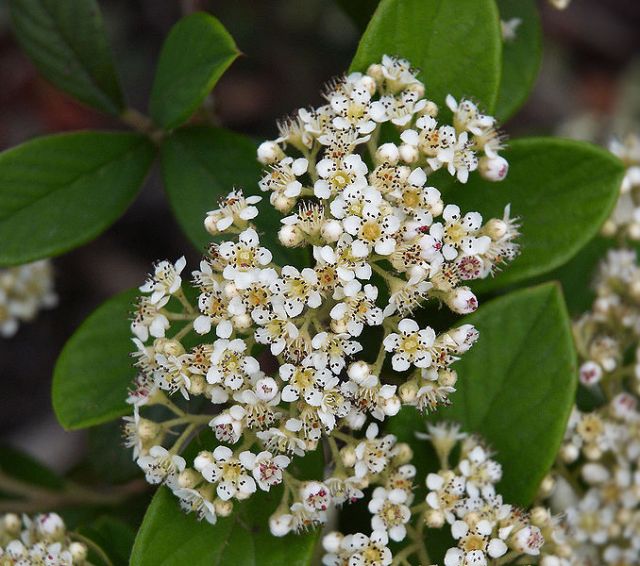
Cotoneaster lacteus – flowers

Cotoneaster simonsii
If you’ve enjoyed reading this post and others on this blog, why not comment and join others by signing up for automatic updates via email (see side bar, above right ) or through an RSS feed (see top of page)?
Nigel Boldero aka 'Old School Gardener'
 | Nigel Boldero on Fighting to Reduce Climate Cha… |
 | Anonymous on Fighting to Reduce Climate Cha… |
| Anonymous on PicPost: Carrot, my foot! |
| 18 Surprising Hydran… on Plantax 16: Hydrangea the wate… | |
| Nigel Boldero on Poppyland: A Victorian romance… |
| Anonymous on Poppyland: A Victorian romance… |
| Anonymous on Plants to die for… |
 | Isabella Childress on PicPost: Forest, but not as we… |
 | Happiness Factor on Is child-friendly planning a l… |
 | zidane on Top Tip: On a Pedestal- make m… |



Nature Connectedness Research Blog by Prof. Miles Richardson
Connecting People with Nature
A daily selection of the best content published on WordPress, collected for you by humans who love to read.
Celebrating gardens, photography and a creative life
Writing, photography and more by Daniel Greenwood
Lydia Rae Bush Poetry
Australian Pub Project, Established 2013
The Journey from Finnish Rintamamiestalo to Arboretum & Gardens
Because even in chaos, there’s always gin and a good story …
RANDOM BITS & MORE TIDBITS
.....and nurturing my soul
Cultural Heritage and the Digital Economy
Sense of place, purpose, rejuvenation and joy
Notes from the Gardeners...
Connecting People to Nature, Empowering People to Live Sustainably
A girl and her garden :)




 Old School Garden