Archive for February, 2013


sethsnap's avatarsethsnap

Come with me along a winding trail that meanders through trees, alongside hills and next to ancient resting places.  A place where people have loved, lived and died.  Listen closely as their voices are thrown to the wind, preserved by the trees in their trunks, released only occasionally for those chosen to follow the path.  Share the experience of the sun warming your face just like it did for the explorers from the east.  Remember what was before, live what is now and imagine what will be as you wander along.

Visit my store.

View original post

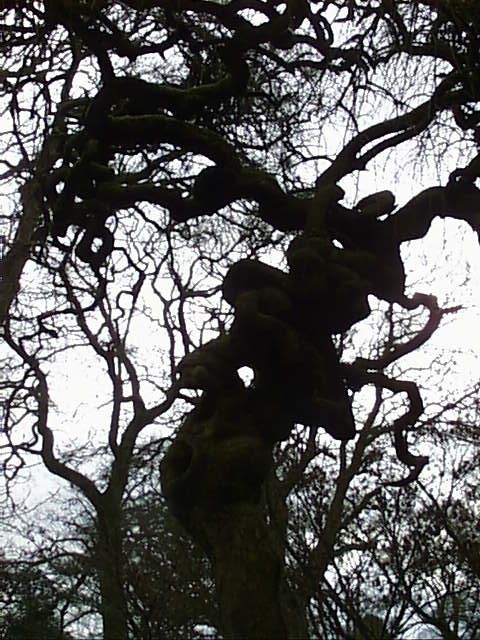
tree puzzled

Batsford Arboretum is a 55-acre arboretum and botanical park near Batsford in Gloucestershire, England… It is owned and run by the Batsford Foundation, a registered charity, and is open to the public daily throughout most of the year. The arboretum sits on the Cotswold scarp and contains around 2,900 trees, with a large collection of Japanese maples, magnolias and pines. It miantains the national collection of Prunus (sato-sakura group) – Japanese Flowering Cherry- under the National Plant Collection Scheme run by the National Council for the Conservation of Plants and Gardens (NCCPG).’

Source: Wikipedia

Anthemis tinctoria 'E.C.Buxton'

Anthemis tinctoria ‘E.C.Buxton’

There are around 100 mat or clump-forming species in the genus Anthemis.

They make very useful border plants, with a long flowering season from late spring – end of summer.

Most grow between 30 -60 cms high and have a similar spread.

Beautiful filigree, aromatic evergreen foliage when not in flower.

Smaller types suitable for rock gardens.

Flower heads are daisy-like; with white or yellow ray florets or yellow disc florets- some make good cut flowers.

Though many species are not long lived (A. tinctoria especially so), they are all easily propagated from seed or cuttings.

The plant’s life can be extended by shearing over in autumn just after flowering – this encourages new basal growth which takes the plant through the winter. Shearing also helps to prevent mildew.

They need sunny, well-drained sites and wet winters are generally not favourable.

They do not transplant well, but should anyway be divided regularly in spring.

Anthemis maritima

Anthemis maritima

The orangey- yellow varieties look well woven in and out of mixed borders, and complement warmer coloured flowers; e.g. Crocosmia ‘Lucifer’, Dahlias, Hemerocallis etc. The yellow varieties look well with blue flowers such as Nepeta or Agapanthus. The pale lemon variety ‘E.C. Buxton’ (or ‘Golden Marguerite’- one of my favourites)  works well with wispy grasses such as Stipa tenuissima and the darker Lavenders (e.g. ‘Hidcote’).

Further information:

Wikipedia

How to grow Anthemis- Telegraph article

Anthemis marschalliana– silver foliage

Quizzicals: answers to the two in the post ‘Gypsies, tramps and thieves…’

  • The scourge of female chickens – Henbane
  • Cheap goods in a pile of dung – Potato

Old School Gardener

If you’ve enjoyed reading this post and others on this blog, why not comment and join others by signing up for automatic updates via email (see side bar, above right ) or through an RSS feed (see top of page)?

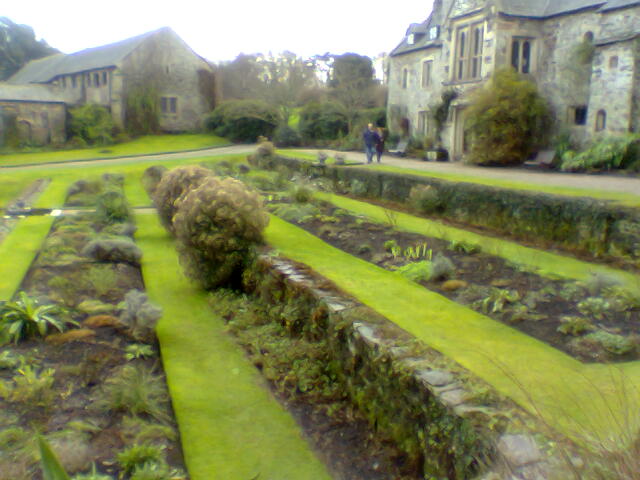
Image040

Cotehele House in Cornwall, England, is a ‘ Tudor house with many stories and legends, festooned with tapestries and adorned with textiles, arms and armour, pewter, brass and old oak furniture; a magical experience as little has changed over the years.Outside, explore the formally planted terraces, or lose yourself in the Valley Garden, which includes a medieval stewpond and dovecote. Seek tranquillity in the Upper Garden or visit the two orchards planted with local apples and cherries.Cotehele Quay is the home of the restored Tamar sailing barge ‘Shamrock’ and gateway to a wider estate. The Discovery Centre tells the story of the Tamar Valley.’

Source and further information:

National Trust Website

Wikipedia

Old School Gardener


The entrance to the workhouse as it looked in the early 1900's - the well house stands next to the person to the rear

The entrance to the workhouse as it looked in the early 1900’s – the well house stands next to the person (gardener?) to the rear

The former grand entrance of the Gressenhall Workhouse now performs a very different function. The once ornamental gardens and driveway have given way to a busy hub for this Norfolk Museum’s outdoor events.

As can be seen from the old photograph the main approach to the Workhouse was once a rather grand affair – a heart-shaped island of formal lawns and borders surrounded by a circular drive.  To the front, huge iron gates and a much smaller wooden door provided the entrances from the forbidding outer wall of the complex. The smaller door was the main pedestrian entrance to the workhouse being next to the porter’s lodge, the man who controlled the arrival and departure of Workhouse inmates. This door today still carries the solid metal knocker shaped into a clasped hand around a metal bar – a hint of the prison-like existence to come for the new inmates! They must have entered here with very mixed emotions – relief at having somewhere to get a square(ish) meal and a warm (ish) bed, mixed with guilt at not being able to fend for their families and anxiety about the harsh regime they were entering.

The 'Yew Tree border' in front of the chapel- before the Yews were reduced

The ‘Yew Tree border’ in front of the chapel- before the Yews were reduced

Towards the main building, but long since demolished, once stood a small building enclosing the Workhouse well (still visible in the old photograph) and the front of the 18th century main building once carried a magnificent Wisteria clambering up and along the warm red brickwork. This was, apparently, cut down to the ground by an over – enthusiastic work placement trainee about thirty years ago! A small rooted area remains and is being carefully trained up the walls once more, in the hope of restoring this once glorious feature. To the side the workhouse chapel is fronted by a small border which is dominated by two Yews and a cherry tree with spring bulbs and other under – planting. Recently these Yews were reduced in width in an attempt to provide a more open, sunny site for the other planting (and increase the width of the adjacent paths). The hard cut – back has improved the shape and balance of the border whilst not harming the Yews, where new growth has begun.

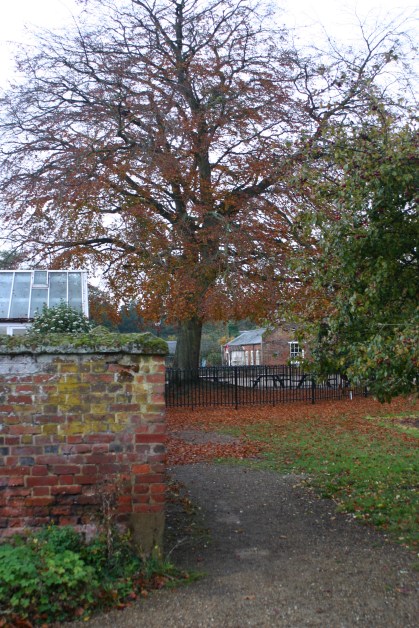
The magnificent Copper Beech Tree in autumn

The magnificent Copper Beech Tree in autumn

To the right of the main approach sits a majestic old Copper Beech tree (which gave its name to the Old People’s Home that succeeded the workhouse after the 2nd World war – ‘Beech House’). This area was originally sub divided by walls into exercise yards and a playground for the adjoining boys school, and in later years for those in the nearby infirmary (and featuring two revolving wooden tuberculosis pavilions). There is also an avenue of beech trees on the approach to the Workhouse believed to be 150 years old.

There is some evidence that the southern section of this area, adjoining the modern café was laid out as a formal ‘garden’ but the historical accuracy of this is uncertain. Today this area houses a semi – permanent marquee used for the many events now taking place at the Museum.  A large expanse of grass (useful for picnicking for the Museum’s many summer visitors) is surrounded by areas of planting including an isolated Crab Apple tree, planted in more recent years as a memorial to a former member of the Norfolk Archaeology Department (also housed on the site).

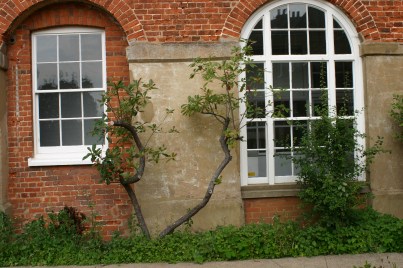
There is also a long south – facing border of mixed shrubs adjoining the walls of the former workhouse, some of which are now rather large for their position adjacent to the building. Others – such as several clumps of Boston Ivy – clamber up the walls and are vigorous enough to get under the eaves and into the roof! Recently these shrubs have been pruned to try to restore their scale and shape as well as encouraging new growth, with some success. And spring bulbs also provide splashes of colour underneath the mainly evergreen shrubs. But a perennial problem is the rabbit population which have burrows in this border and which also occasionally escape into some of the adjoining gardens to wreak havoc!

Shrubs in front of the southern wall of the old Workhouse- showing the arcading that was once open

Shrubs in front of the southern wall of the old Workhouse- showing the arcading that was once open

The walls here still show the evidence of the (once open) arcading that sheltered individual ‘cottages’ for families living in the workhouse. This was before its daily routine became harsher in the mid 19th century, when inmates were divided by sex and age and so families were split up.

One of the borders in the Cafe Garden

One of the borders in the Cafe Garden

Today’s cafe building was once a  fever or isolation ward commonly known as the ‘itch ward’. More recently this was the Museum’s Education Centre, for which a garden was laid out by volunteers in the 1980’s. This was further remodelled into the current space, presumably upon creation of the café and now houses a  delightful, smaller courtyard garden of mixed borders with picnic tables.

Today's courtyard on an event day at the Museum

Today’s courtyard on an event day at the Museum

Today, the large entrance courtyard and its adjoining spaces provide a great setting for the main workhouse buildings and perform an important role as a thoroughfare for the Museum’s visitors as they explore the surrounding gardens and on event days when tents, stalls and other temporary exhibits spring up into a hub of activity.

Other posts in this series:

Gypsies, tramps and thieves: garden where once poor trod at Norfolk Museum

Cottage garden recreates 1930’s at Norfolk Museum

Old Workhouse Garden a wildlife oasis at Norfolk Museum

Unique heritage gardens at Norfolk museum

Old School Gardener

If you’ve enjoyed reading this post and others on this blog, why not comment and join others by signing up for automatic updates via email (see side bar, above right ) or through an RSS feed (see top of page)?

ivy

Waddesdon Manor was built by Baron Ferdinand de Rothschild in 1874 to display his outstanding collection of art treasures and to entertain the fashionable world.The 45 rooms on view combine the highest quality French furniture and decorative arts from the 18th century with superb English portraits and Dutch Old Masters. The Victorian garden is considered one of the finest in Britain with its parterre, seasonal displays, fountains and statuary. At its heart lies the aviary, stocked with species once part of Baron Ferdinand’s collection.’

Source and further information:

National Trust Website

Wikipedia

Waddesdon Manor Website

Old School Gardener

Crocus 'Jeanne d'Arc'

Crocus ‘Jeanne d’Arc’

In the wild, Crocus vernus begins to flower as the snow melts in the mountains of Europe. It is native to the Mediterranean from the Pyrenees in the west to the Ukraine in the east, and south as far as Sicily and the Balkans. This spicy herald of spring has a history dating back thousands of years.

Crocus (plural: crocuses, croci) is part of the Iris family and consists of around 90 species. They are perennials, growing from corms. Cultivated mainly for their flowers which appear in autumn, winter, or spring, Crocuses are also cultivated and harvested for Saffron– the spice obtained from the flower’s anthers. This practice was first documented in the Mediterranean, notably on the island of Crete.  Saffron’s bitter taste and hay-like fragrance is complimented by its rich golden-yellow hue, used to colour food and textiles.It has been  traded and used for over four thousand years. Iran now accounts for approximately 90 percent of the world production of Saffron. Because each flower’s anthers need to be collected by hand and there are only a few per flower, Saffron is the most expensive spice in the world.

The name Crocus is derived from the Greek (krokos), which in turn is probably derived from a Semitic or Sanskrit word, which mean saffron or saffron yellow. Over the years the classification of Crocus species has been revised several times, the division of the many species challenging botanists because of the range of characteristics that are available for scrutiny. Some of the species are:

C. aureus = goldencrocus

C. biflorus = two – flowered – the ‘Scotch Crocus’

C. chrysanthus = golden – flowered

C. minimus = smallest

C. nudiflorus = naked flowered

C. ochroleucus = yellowish – white

C. sativus = The Saffron Crocus

C. sieberi = after Sieber, a botanist

C. susianus = from Susa, Persia

C. vernus = spring flowering- the Dutch or Spring Crocuses are derived from this species

C. versicolour = changing or varied colour

The first crocus seen in the Netherlands, where crocus species are not native, were from corms brought back in the 1560s from Constantinople by the Holy Roman Emperor’s ambassador who sent a few corms to the botanical garden in Leiden. By 1620, new garden varieties had been developed. Some species, known as “autumn crocus”, flower in late summer and autumn, often before their leaves appear. They should not be confused with Colchicum, a different genus of autumn – flowering plants.

crocus carpetAt the Royal Botanical Gardens, Kew, in 1987, Reader’s Digest sponsored the planting of 1.6 million corms of cultivated Dutch crocus for their 50th anniversary. A further 750,000 corms of C. vernus ‘Jeanne d’Arc’ and C. vernus ‘Purpureus grandiflorus’ have been planted since – a visit to Kew to see this ‘Crocus Carpet’ is a must.

Sources and further information:

Wikipedia

The Alpine House – information

National Crocus collection – Wisley

A crocus planter

Crocus carpet at Kew

Saffron

Pacific Bulb Society

Old School Gardener

If you’ve enjoyed reading this post and others on this blog, why not comment and join others by signing up for automatic updates via email (see side bar, above right ) or through an RSS feed (see top of page)?

PIC00019

‘The Royal Botanic Gardens, Kew, usually referred to as Kew Gardens, comprises 121 hectares of gardens and botanical glasshouses between Richmond and Kew in southwest London, England. “The Royal Botanic Gardens, Kew” and the brand name “Kew” are also used as umbrella terms for the institution that runs both the gardens at Kew and Wakehurst Place gardens in Sussex.

The Royal Botanic Gardens, Kew… is an internationally important botanical research and education institution with 700 staff and an income of £56 million for the year ended 31 March 2008, as well as a visitor attraction receiving almost two million visits in that year. Created in 1759, the gardens celebrated their 250th anniversary in 2009.

The Gardens.. contain the world’s largest collection of living plants… The living collections inlcude more than 30,000 different kinds of plants, while the herbarium, which is one of the largest in the world, has over seven million preserved plant specimens. The library contains more than 750,000 volumes, and the illustrations collection contains more than 175,000 prints and drawings of plants. The Kew site includes four Grade I listd buildings and 36 Grade II listed structures in an internationally significant landscape.’

Source : Wikipedia

Old School Gardener

school gdn headerIn part one of this series of posts I outlined a few tips on getting your School Garden project up and running. If you’ve got the key people on board, identified what the overall aims and objectives of the project are and hopefully secured some start-up funding and promises of help, it’s time to get serious about the design of your Garden. Here are seven ideas to help you…

1. Who will be using your space and what are their needs? It’s important to think about the range of users and why they’ll want to use your garden. Yes, children, but what numbers and ages? During the school day or afterwards? Will parents or the wider community want to get involved? And just what sorts of activities will your garden need to support: growing food, outdoor play, studying nature, formal lessons (in some sort of shelter?) etc.? It’s important to list these and start to see what they suggest in terms of the overall layout of different areas, spaces, structures etc

2. Survey and appraise your site– you may have your area already defined by walls, fences, hedges etc. or perhaps you’re confined to an area of the playgrround. In any event it’s important to accurately measure out the plot. From these measurements you can create a scale drawing (say 1cm = 1 metre) and any key features that are likely to remain – e.g water taps; significant slopes; trees; hedges; types of soil (you can see if it needs improving and what the pH is by using a simple test kit); the way the site lies (in relation to sun, wind, prevailing rainfall etc.) and how the site is accessed. It’s also worth checking on the current maintenance regime and who’s responsible for this (e.g. if you’re thinking of taking over an area of sports field that is regularly mown).

A gathering place like this shelter is probably important

A gathering place like this shelter is probably important

3. Think about basic needs:

  • Sunlight- ideally you’ll have a space which is open to sun at most times of the day, but use your survey information to identify the sunniest and shadiest spots and start to think about what to place in these
  • Shelter – from strong, cold winds and midday sun – look at boundaries and think about growing hedges , using fences (ideally with gaps to allow slowed wind to pass through) or putting in wind breaks of mesh material. Do you need some trees or an awning to provide a sun shade?
  • Water – either from a tap or through adequate outdoor harvesting of rainwater from sheds, glasshouses, or possibly school buildings
  • Pathways –  to get around the various areas. These need to be wide enough and of a surface and gradient that a wheelchair – user can negotiate without too much effort
  • Good soil – if you’re removing asphalt, the soil underneath is likely to need radical improvement or possibly overlain with imported topsoil. In most situations you’ll need to get organic matter – compost, manure, leafmould– to improve it over time
  • Fencing or another suitable boundary – to keep younger children in and intruders out . You could grow a hedge and whilst this gets established, on one side try a chain link or similar fence which in due course can be removed leaving you the wonderful sight and wildlife value of the hedge
  • Plants– what are you intending to grow? Each type will have different needs – are you envisaging growing under glass/polythene, if so space for a glasshouse/polytunnel will be needed. Do you envisage some sort of wildlife pond, if so this will need a suitable range of plants and may need a secure boundary
  • A gathering area – where groups/classes can be instructed or shown a task. This can be outside and informal (e.g. getting an annual supply of straw bales is a good cheap way of providing seating)  or enclosed within a shelter
  • Storage– a good tool shed, which if large enough can possibly double up for seed sowing/potting up, or alternatively a separate shelter/structure for this if that’s something you envisage doing in your garden
  • Tools and equipment – these will vary according to what you are growing and the size of your plot (and your children), but here’s a guide. Tools:  gloves– enough for everyone who’s gardening at any one time; trowels and hand forks or hand cultivators (enough for half a full class – say 15) ; a mix of adult and child – sized spades, digging/border forks, rakes, hoes (3 or 4 of each); wheelbarrows (probably at least 3); Secateurs, loppers, pruning saws, brooms (1 or 2 of each); watering cans – a couple should do, you can make home made ‘plant showers’ out of plastic tubs with holes in the bottom. Equipment: clipboards (one each for a full class); stationery supplies – paper, pencils, crayons, markers, glue, string, tape, scissors and a First Aid Kit! Also, if you plan to sow and grow your own plants you’ll need a range of other equipment like seed trays etc.
Get some child -sized tools

Get some child -sized tools

4. Get the children involved (and your wider support group) – you will by now have a good idea about what could be in the garden and you need to share these ideas and discuss others with the children who’ll be using the space and those key adults (teachers, parents etc.) who will also want to feel the project is theirs. You can devise some fun ways of engaging these people, perhaps involving n a loose outline drawing of the plot and your first ideas in pictorial form (e.g photos cut out from magazines), from where children can be asked to draw/write/otherwise think about and convey their ideas and wants for their garden (I can guarantee someone will want a swimming pool!). This will generate interest and ownership of the project.

Raised beds, narrow enough to allow access to the centre without walking on the soil

Raised beds, narrow enough to allow access to the centre without walking on the soil


5. Options for planting –  depending on what you want to grow and the space you have available I guess you’ll either be planting in containers (pots, planters and all sorts of quirky planters too), open beds (which have their edges cut into the surrounding ground, often grass) or raised beds– these are edged with boards or other timber and so help to define the growing areas (especially for food crops). If the sides are about 20cms high they can be used to contain additions of manure/compost from year to year as you build up the soil’s goodness and structure. Raised beds can be to varying heights to cater for different ages of children, but ideally they need to be narrow enough to be tilled from the surrounding pathways so that feet don’t trample and compress the growing areas.  Rectangular beds are probably the most efficient shape. These beds can be constructed using pressure – treated timber or alternatively there are several places where ‘ready to assemble’ kits can be purchased. If you want to avoid too much digging of the soil (this can be detrimental to its structure) you can just lay a covering of organic material over the beds each year (taking note of the requirements of different groups of plant if growing food) and lightly fork this top-dressing in as you begin the growing season.

How about a plastic bottle greenhouse?

How about a plastic bottle greenhouse?

6. Go beyond basic needs– it’s important to focus on basic needs in developing your designs, but if we just stick to the functional requirements, we will miss an important opportunity to make the School Garden exciting, fun and an experience for all the senses!  So, think about growing herbs and other plants which have differing fragrances, leaf textures, colours and are in other ways interesting – tall grasses that catch the sunlight and bend in the wind for example, or Stachys (‘Lambs’ Ears’), which has wonderful velvety leaves, Lavender for that midsummer heady smell! Likewise Sunflowers are a wonderful example of the power of nature as they shoot up to enormous heights and beauty starting from little seeds that the children can sow themselves. Similarly, children can get involved in producing signs for different parts of the garden, another way to make them feel that this is their garden and make it look funky too!

A simple scale model heps to convey your design

A simple scale model helps to convey your design

7. Consult on an outline plan – once you’ve taken all of the above into account you can firm up your plans on paper and maybe even produce a simple 3D cardboard/ scrap model of how your garden could look! Models are especially useful for getting children (and adults) to imagine just what features there are and what the layout will look like.  This could go on display at the School for a week or two and you can invite people to put their views on sticky notes nearby so that everyone can see who’s saying what. Gather these up and then  with your committee/support team work out those which should be incorporated into the scheme.

By the end of this process you should have a clear, accurate design plan on paper that everyone is signed up to and which is ready to rock!

In Part 3 of this series I’ll share some thoughts on constructing your School Garden and especially the day you ‘ground break’.

Sources & Further information:

How to grow a School Garden’ – Arden Bucklin-Spooner and Rachel Kathleen Pringle, Timber Press Books

School Gardening Club- ideas

Budding Gardeners- lots of advice and info

Garden planner tool

Planning your school garden

Food & Agriculture Organisation School Garden Planner

California School Garden Network Guide to School Gardening

School Gardening Wizard

Old School Gardener

If you’ve enjoyed reading this post and others on this blog, why not comment and join others by signing up for automatic updates via email (see side bar, above right ) or through an RSS feed (see top of page)?

Finding Nature

Nature Connectedness Research Blog by Prof. Miles Richardson

Norfolk Green Care Network

Connecting People with Nature

Discover WordPress

A daily selection of the best content published on WordPress, collected for you by humans who love to read.

Susan Rushton

Celebrating gardens, photography and a creative life

Unlocking Landscapes

Writing, photography and more by Daniel Greenwood

Alphabet Ravine

Lydia Rae Bush Poetry

TIME GENTS

Australian Pub Project, Established 2013

Vanha Talo Suomi

The Journey from Finnish Rintamamiestalo to Arboretum & Gardens

Marigolds and Gin

Because even in chaos, there’s always gin and a good story …

Bits & Tidbits

RANDOM BITS & MORE TIDBITS

Rambling in the Garden

.....and nurturing my soul

The Interpretation Game

Cultural Heritage and the Digital Economy

pbmGarden

Sense of place, purpose, rejuvenation and joy

SISSINGHURST GARDEN

Notes from the Gardeners...

Deep Green Permaculture

Connecting People to Nature, Empowering People to Live Sustainably

BloominBootiful

A girl and her garden :)