
Archive for February, 2013


Winter on the Farm
Hannah and I have finally thawed out from the freezing cold and are enjoy the somewhat tropical temperature of 10 degrees down at Gressenhall farm. As I didn’t last time, I shall take a few words to introduce myself, my name is Tom Watson and I am the other half of the Heritage Landscape Management trainee team. We are now four months through the scheme and are still thoroughly enjoying it! Like Hannah, I am an Environmental Science graduate from the University of East Anglia and I have a keen interest in the history of the UK’s landscape and the environment. I have previously worked on a farm and my most of family are linked to agriculture in some way. And so when this traineeship at Gressenhall Farm and Workhouse became available it seemed like the perfect opportunity for me to gain skills to help me…
View original post 600 more words
 So what do you use to keep your plants supported and under control? Do you favour ‘old school ties’ (!) or prefer the wide range of modern products now on offer? Here’s a gallery of different types of tie with a few comments based on my experiences- I’d love to hear your views!

Chain lock – can cut the length you require and can be adjusted. Plastic- degrade after a season? Packs of pre cut lengths also available.

Tree belts- sturdy, diferent lengths/ thicknesses, for for use with posts/stakes.

Plastic/wire twist on reel- can cut to length required and easy to use , but once fixed doesn’t have much give, so not good where stems growth expected as it will effectively cut the stem unless loosened in time.

Jute tree ties- softer than plastic/rubber belts, so good where stems are tender/thin. Biodegradeable.

Old nylons/ tights used to secure tomatoes- good ‘stretchability’ and also soft, so won’t damage stems. The recycler’s option!
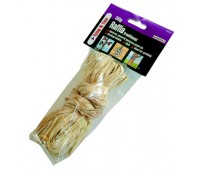
Raffia- natural product useful for slender stems and a ‘natural’ look- found it a bit fiddly to use myself.

Plastic rings (wire versions also) for linking plant stems to a cane- good room for stem growth & movement, but can chafe the stems? Plastic- will eventually degrade/snap?

Suede plant ties- stronger and more durable than jute/cotton, and as soft. Only one length though?
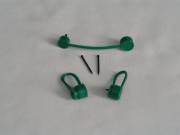
Plastic stem supports- fix stems to trellises, fences etc..No experience of these..

Good old fashioned jute twine- different thicknesses and easy to cut and tie stems in- but will only last a season- biodegradeable.

Individual stems held to wall/fence with nail- I’ve found these difficult to fix into my walls and also degrade/crack after cold weather.

Velcro – easy to cut off the length you need and you can expand the space as the plant stem grows. How well do they last? Some come with a reel cutter that can be fixed to your waist belt, and also come in packs of pre cut lengths.

Biodegradeable cotton- needs a knot, and will rot fairly quickly? At least no plastics into landfill..

Cable ties- strong plastic, of varying lengths/thicknesses – good for tying canes or other structures together- not good for securing plant stems -can’t be adjusted

Soft tie- rubber/plastic covered wire which can be cut and bent to shape. Soft covering good for cushioning stem, but probably best used on harder stems where a more permanent fix is required- eg roses against trellis.
Quizzicals- two more cryptic clues for you:
- Hello Miss Black
- A punch up in the water
Old School Gardener
If you’ve enjoyed reading this post and others on this blog, why not comment and also join some other people and sign up for automatic updates via email (see side bar, above right ) or through an RSS feed (see top of page)?

‘Whenever I want to escape the hustle and bustle of Lisbon, and don’t want to travel far, I retreat to the gardens of the Calouste Gulbenkian Museum.
Covering roughly 17 acres, this beautifully landscaped garden contains a wide variety of well-established tropical as well as indigenous plants and trees that shelter subtly-appointed benches and seats. In the last few months a network of new, flat, winding paths has been opened through the garden.
There are picnic tables situated next to a lake where you can sit on bright winter days and soak up the sun, or watch the ducks with their fleets of ducklings enjoying the water in spring. At the weekends the gardens come alive with the sound of kids playing in the sunshine.
In the summer months, it is nice to disappear into this garden down one of the maze-like paths that snake through the shrubbery and to feel as if you are the only person in the world, surrounded only by birds scurrying around in the undergrowth or flitting in the trees. Somehow, the vast tree canopies manage to dull the sound of Lisbon traffic to the point you forget it is there and will also shelter you from the heat of the day.
The garden contains an open-air amphitheater where, during the summer, a programme of films or music events takes place in the evenings.
Whether on a hot, sultry summer evening or a bright, sunny winter day this garden is the perfect place to be and feel completely relaxed.’
Old School Gardener
 An old Workhouse Yard has been turned into a showcase cottage garden of the 1930’s at Gressenhall Farm and Workhouse Museum, Norfolk.
What is a cottage garden?
‘The words ‘cottage garden’ conjure up an idyllic image involving roses round the door of a picturesque thatch cottage with towering hollyhocks and delphiniums (or something similar) either side of a brick path that leads to a picket gate. It’s all very romantic, always spring or summer – and always sunny.’ (The Enduring Gardener)
Historically, cottage gardens date from medieval times and were where labourers living in tied cottages grew a lot of their own food to bolster their poor wages. Vegetables were grown – not only to feed the family but also to perhaps to feed a household pig and a few chickens. Fruit was grown – apples and pears for example – with wild strawberries being gathered from the hedgerows. Flowering plants would have been collected from the wild and it is possible that flowers like violets, primroses, cowslips, dog rose and wild honey suckle featured in some cottage gardens.
Monasteries grew herbs for medicinal purposes and vegetables for the monks’ food. Their knowledge was much sought after and this filtered through to the poorer classes.
The 18th and 19th centuries brought many changes – the Enclosure Acts meant that wealthy landowners could remove the peasants’ right to graze animals on common land. This forced many to grow food in their gardens to feed themselves. Gradually living conditions for the poor improved – they were able to use their gardens not just to grow vegetables for food but flowers too. Gardeners exchanged ideas and plants and soon flowers and shrubs that were only ever seen in ‘the big house’ appeared in cottage gardens. The Victorian period also saw many new varieties of bright colourful annuals used as bedding plants.In the late 19th and early 20th centuries Gertrude Jekyll developed the cottage garden style on a grand scale.
The First and Second World Wars brought food shortages and so vegetables and fruit took priority over ornamental planting in every available garden space. Once food rationing finished after the 2nd WW, people could look to their gardens to provide visual interest and not just food, so flowers and shrubs were planted once more.
Today the cottage garden retains its popularity. One approach is the traditional, smaller scale artisan style – creating the garden as you go along, often dividing, collecting seed and gratefully receiving gifts of cuttings or plants from neighbours or friends. Others prefer the more designed approach, with carefully planned borders and precisely laid paths, perhaps in a larger scale setting.
Cherry Tree Cottage Garden
The Museum’s records show that Cherry Tree Cottage and its adjacent open space were created in the 1850’s, probably to house elderly couples (‘no longer of child-bearing age’) from the main Workhouse. It seems that it may have actually housed three couples with a shared kitchen/dining room. The open space was probably just a yard used for sitting or exercise and there is no evidence of it being planted with flowers or vegetables. In 1932, the cottage housed Workhouse staff and it is during this period that possibly a garden was introduced.
The current garden was created in the 1980’s by a team of volunteer gardeners, some of whom are still volunteering today! Mary Manning created the original design to demonstrate a typical cottage garden of the 1900’s, and this was based on extensive research, including the local Women’s Institute. Their members’ memories were used in the garden to reflect the Cottage, which had been set out to resemble a 1912 interior. Later changes in the cottage were also reflected in the garden and today it aims to show how a typical 1930’s rural cottage garden would have looked and been gardened. It includes:
Flower borders – traditional cottage garden plants such as lupins, asters, rambling roses and Buddleja. The snowdrops (Galanthus plicatus) derive from bulbs brought back from the Crimean War in the 1850’s by a Captain Aldington who was from near Swaffham. His mother gave some to a friend in Warham where it is said the local rector, Charles Digby, grew them in the Church yard – they became known as the Warham Snowdrop. This variety is still available today. More recently some heritage daffodils from the 1800’s have been planted in the garden.

Cherry Tree Cottage and some of the vegetable growing area (left)
Vegetable Crops – the early vegetable plots grew a wide range of crops and some old seed varieties of pea (‘Simpsons Special’) and broad beans (‘Big Penny’) ‘were acquired from celebrity gardener Percy Thrower and a local retired gardener respectively. The museum ha some old seed catalogues from two local seed merchants – Daniels and Taylors – and these have been used to research the varieties that might have been grown in the 1930’s. Many of the varieties of fruit and vegetables that were grown in the 1930’s can be seen in the garden today. Garden Organic and The Heritage Seed Library have donated many of the seeds.
Herbs – a range of well known herbs are grown in the garden today. Herbs were used both for flavouring food and medicinal uses – for example a paste made from Comfrey leaves would be used to aid the healing of broken bones hence its common name of ‘Country Knit Joint’!
The garden also houses a chicken run, as it was common for many cottagers to keep chickens , which gave them a good supply of eggs. The chicken manure was also used as a fertiliser on the vegetable plot.
The garden paths were originally grass edged with flint. These were gradually replaced with bricks, local tiles (‘pamments’) and cinder; traditional methods used in cottage gardens. Todays paths are a mix of brick, pamments and gravel – the latter is easier to maintain and is more accessible for wheelchair users.

The Potato Clamp and Scarecrow at Cherry Tree Cottage Garden
Whilst the gardening volunteers are trying to follow gardening practices typical of the 1930’s, sometimes these have to be avoided (e.g avoiding the use of dangerous pesticides). But some interesting examples of old techniques have been demonstrated – for example the creation of a ‘Potato clamp’ which was a method for storing potatoes during the winter months before indoor storage space became more readily available.
Acknowledgement: I am grateful to Kay Davis, Heritage Gardening Trainee 2011-12, for permission to use her article on Cherry Tree Cottage for most of the material used in this post.
Sources and further information:
Plantax 3: Sweet Peas- cottage garden favourite
Unique heritage gardens at Norfolk museum
Old Workhouse Garden a wildlife oasis at Norfolk Museum
Quizzicals:
answers to the two in previous post Transfer Window- 7 tips for successful seedlings –
- Set fire to Ms Allen – Torch lily
- Mythical creature that enjoys a game of cards – Snapdragon
Here are a couple of gardening ditties….
Snowdrops keep falling on my head
Theme tune from The Lone Hydrangea
(with thanks to Les Palmer)
Old School Gardener
If you’ve enjoyed reading this post and others on this blog, why not comment and also join some other people and sign up for automatic updates via email (see side bar, above right ) or through an RSS feed (see top of page)?

On the outskirts of Harlow, Essex there is a garden full of beauty, peace and tranquillity – The Gibberd Garden. It is a wonderful place to stroll and be inspired. Every turn reveals another aspect or a work of art, for this garden was created by Sir Frederick Gibberd, the planner of Harlow New Town, who designed the garden and filled the grounds with sculptures, ceramic pots and architectural salvage from 1972 till his death in 1984.
The garden has many aspects – formal lawns, flower beds, a brookside walk with a waterfall, a wild garden with a tangle of paths where children love to hide, a gazebo with a formal pond, an island fort to defend with a drawbridge onto it, an arboretum of young trees, and, at the end of a fascinating and memorable tour, a tearoom with mouth-watering cakes, ice creams and refreshments.
Old School Gardener

So how is your playground- bland or what….?

Anyone know where this is?


from:http://en.wikipedia.org/wiki/Pistia
A plant is said to be a hyperaccumulator if it can concentrate the pollutants in a minimum percentage which varies according to the pollutant involved (for example: more than 1000 mg/kg of dry weight for nickel, copper, cobalt, chromium or lead; or more than 10,000 mg/kg for zinc or manganese).[10] This capacity for accumulation is due to hypertolerance, or phytotolerance: the result of adaptative evolution from the plants to hostile environments through many generations. A number of interactions may be affected by metal hyperaccumulation, including protection, interferences with neighbour plants of different species, mutualism (includingmycorrhizae, pollen and seed dispersal), commensalism, and biofilm.
from:http://en.wikipedia.org/wiki/Phytoremediation
| Cd–Cadmium | T- | Pistia stratiotes | Water lettuce | Cu(T), Hg(H), Cr(H) | Pantropical, Origin South U.S.A.; aquatic herb |
from:http://en.wikipedia.org/wiki/Hyperaccumulators_table_%E2%80%93_3
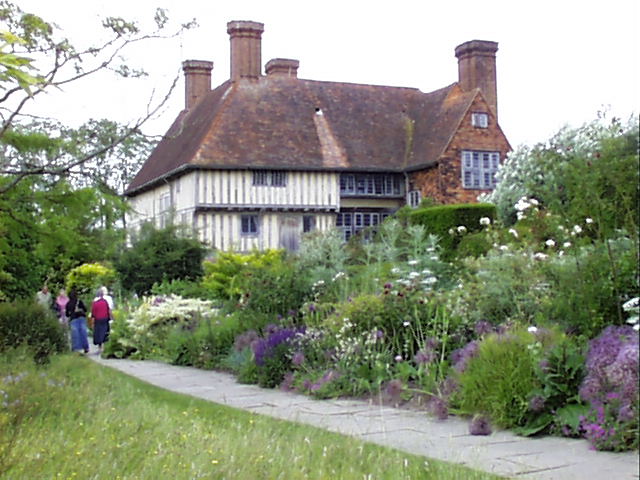
Great Dixter, East Sussex was the family home of gardener and gardening writer Christopher Lloyd – it was the focus of his energy and enthusiasm and fuelled over 40 years of books and articles. Now under the stewardship of Fergus Garrett and the Great Dixter Charitable Trust, Great Dixter is a historic house, a garden, a centre of education, and a place of pilgrimage for horticulturists from across the world.





 Old School Garden