
Lupins are useful green manures in light acid soils
I’ve written a couple of articles about green manures and today I thought I’d set out a handy guide to some of the commonest types and their pros and cons.
When choosing a green manure it’s important to check:
- Your soil – some green manures prefer heavy soil, and others lighter soil, some alkaline, some need more acidic conditions.
- Hardiness of the green manure – not all green manures are winter hardy.
- Growing period– choose a green manure that will fit in with what you want to grow next. it must be able to germinate and mature to fit in with your growing plans.
- Crop rotation– choose a green manure that is compatible with your crop rotation. For example Mustard is a Brassica so should be moved around in rotation with that sort of crop. Most of the others listed below are Legumes (peas/beans), but Buckwheat, Phacelia and Hungarian Grazing Rye can be used more flexibly as they aren’t members of one of the main vegetable groups.
- Sowing time– success depends on sowing the green manure at the right time.
- Following crop – some green manures, once turned into the soil, can inhibit seed germination for following crops. Avoid growing green manures in areas where you’ll be sowing crops with small seeds like carrots.
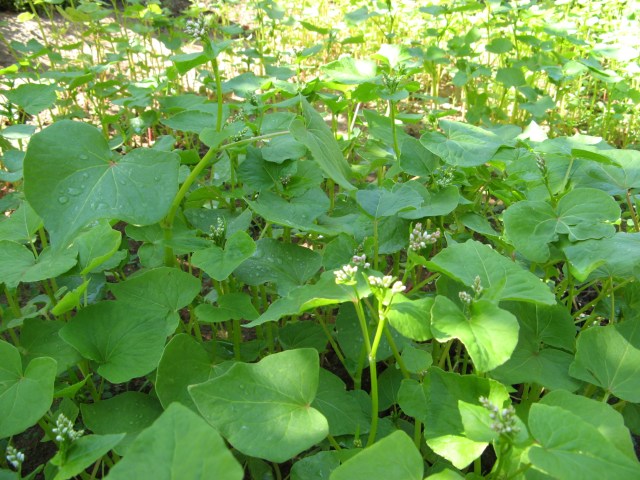
Buckwheat has flowers that are attractive to beneficial insects
Sow green manures from spring to autumn depending on the variety, and sow broadcast if they are small, or in rows if larger. Rake the ground to a fine level tilth – prepare a good seed bed as you would for other crops. Leave the green manure to grow until three or four weeks before you want the ground for something else, or until the green manure approaches maturity, whichever comes sooner. Green manures vary in their time to reach maturity; e.g. Mustard goes over rapidly as it flowers, so it’s best dug in once the first flower buds show. Other annuals can be dug in at or just before flowering. Clovers and other perennials can be cut down after six months or so to encourage re – growth.
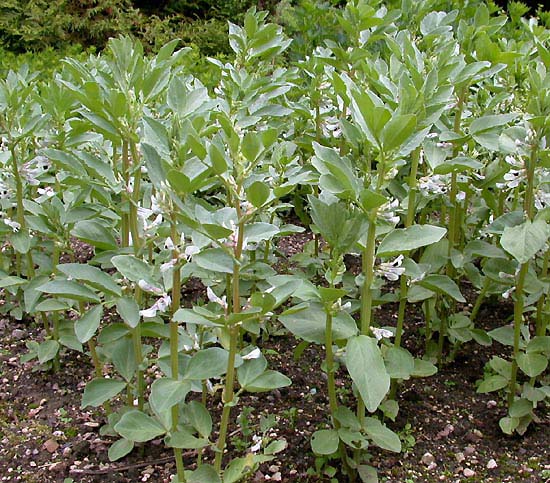
Field Beans prefer heavy soils and can be over wintered
What to plant?
Alfalfa – Sow April – July. Grows 1 year plus. Avoid acid and wet soils. Nitrogen fixer*. Deep rooting and can be grown for several years, using cut foliage as a mulch.
Buckwheat – Sow April – August. Grows 1-3 months. Thrives on poor soils. Not a nitrogen fixer. Attractive pink flowers attractive to beneficial insects.
Crimson Clover – Sow March- August. Grows for 2-3 months, may over winter. Prefers lighter soils. Nitrogen fixer. Dramatic crimson flowers, attractive to bees.
Essex Red Clover – Sow April – August. Grows 3 – 18 months. Sow in good loam. Nitrogen fixer.
Fenugreek – Sow March – August. Grows 2-3 months. Well drained soil. Unlikely to fix Nitrogen in the Uk due to lack of suitable bacteria.
Field Beans – Sow September – November. Grows over winter. Prefers heavy soil. Nitrogen fixer. Sow alternate rows with grazing rye to improve weed control.
Hungarian Grazing Rye – Sow August – November. Grows over winter. Likes most soils. Not a Nitrogen fixer. The best for soil improvement, especially on clay soils – but will inhibit small seed germination after digging in.
Lupin – Sow March – June. Grows 2-4 months. Light, acid soils. nitrogen fixer.
Mustard – Sow March – mid September. Grows 1-2 months. Prefers fertile soil. Not a Nitrogen fixer.
Phacelia – Sow March – mid September. Grows 1-3 months, may over winter. Most soil types. Not a Nitrogen fixer. Scented lavender flowers attract bees and beneficial insects.
Winter Tares – Sow either March – May or July – September. Grows 2-3 months, over winter. Avoid acid and dry soils. Nitrogen fixer, and this is quickly available to new plants after digging in.
Trefoil – Sow March – August. Grows 3 months+ . Will stand light dry soils, preferably not acid. Nitrogen fixer. Good for under sowing, e.g. with Sweet Corn.
*Some plants have the ability to gather Nitrogen from the air and ‘fix’ this in nodules on their roots- this supply of Nitrogen is very beneficial to the plants following on.

Mustard is a Brassica and grows very fast, but doesn’t do well in very dry weather
My final ‘Green Gold’ article will give some tips on making the most of these valuable plants.
Source: ‘Green Manures’- Garden Organic Guide. September 2010
Other articles in this series:
Green Gold- 7 reasons to use green manures
Green Gold: Where and when to use Green Manures
Old School Gardener
If you’ve enjoyed reading this post and others on this blog, why not comment and join others by signing up for automatic updates via email (see side bar, above right ) or through an RSS feed (see top of page)?

 Since sharing pictures and ideas for making garden things from pallets or other recycled wood, I’ve come across a super Facebook site ‘1001 pallets’ – take a look and you won’t be disappointed! For now here are a few more cunning ideas for projects from pallets – just click on the images for links to tutorials or instructions.


 BBC Radio 4







 Old School Garden