
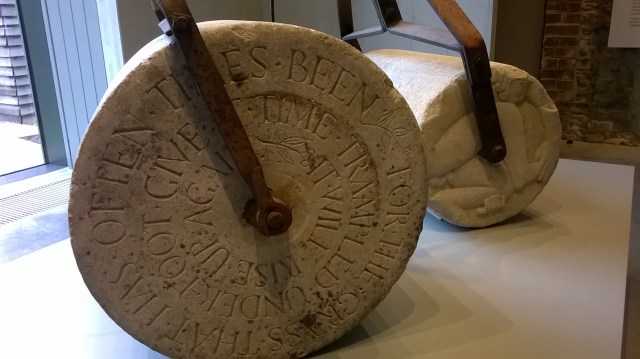
Carved lawn rollers by sculptor Eric Gill, at Ditchling Arts and Crafts Museum, Sussex
Carved lawn rollers by sculptor Eric Gill, at Ditchling Arts and Crafts Museum, Sussex
 Our final garden visit whilst travelling home from the Lake District last week, was to Southwell workhouse, Nottinghamshire.


 Sources and further information:
Stoke Poges Memorial Gardens
 Weeding-

Picture by Jo Snowden
 Our second visit whilst travelling to the Lake District last week, was to Biddulph Grange, in Staffordshire.
‘Biddulph Grange was developed by James Bateman (1811–1897), the accomplished horticulturist and landowner; he inherited money from his father, who had become rich from coal and steel businesses. He moved to Biddulph Grange around 1840, from nearby Knypersley Hall. He created the gardens with the aid of his friend and painter of seascapes Edward William Cooke. The gardens were meant to display specimens from Bateman’s extensive and wide-ranging collection of plants….
Bateman was president of the North Staffordshire Field Society, and served on the Royal Horticultural Society‘s Plant Exploration Committee….“ He especially loved Rhododendrons and Azaleas. Bateman was “a collector and scholar on orchids,” …
His gardens are a rare survival of the interim period between the Capability Brown landscape garden and the High Victorian style. The gardens are compartmentalised and divided into themes: Egypt, China, etc.
In 1861 Bateman and his sons, who had used up their savings, gave up the house and gardens, and Bateman moved to Kensington in London. Robert Heath bought Biddulph Grange in 1871. After the house burnt down in 1896, architect Thomas Bower rebuilt it.
The post-1896 house served as a children’s hospital from 1923 until the 1960s; known first as the “North Staffordshire Cripples’ Hospital” and later as the “Biddulph Grange Orthopaedic Hospital” (though it took patients with non-orthopaedic conditions as well…. The 15 acre (61,000 m²) garden became badly run-down and neglected during this period, and the deeply dug-out terraced area near the house around Dahlia Walk was filled in level to make a big lawn for patients to be wheeled out on in summertime. The Bateman property was (and still is) divided: the hospital got the house and its gardens, and the uncultivated remainder of Biddulph Grange’s land became the Biddulph Grange Country Park…’

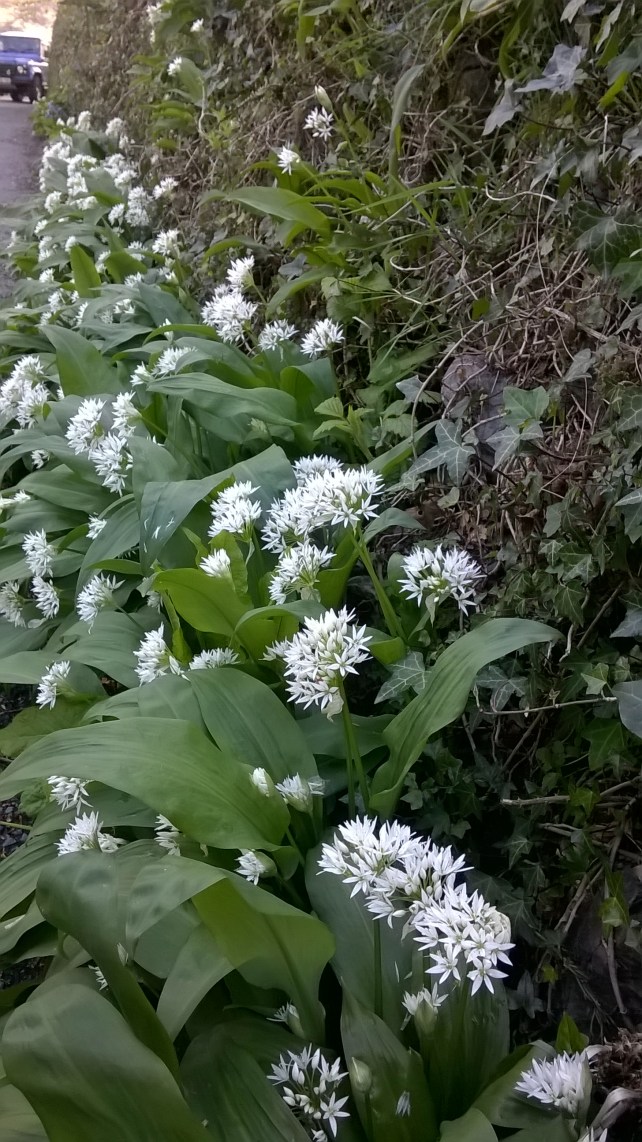
Wild Garlic at the foot of a Devon Hedge, Whitchurch
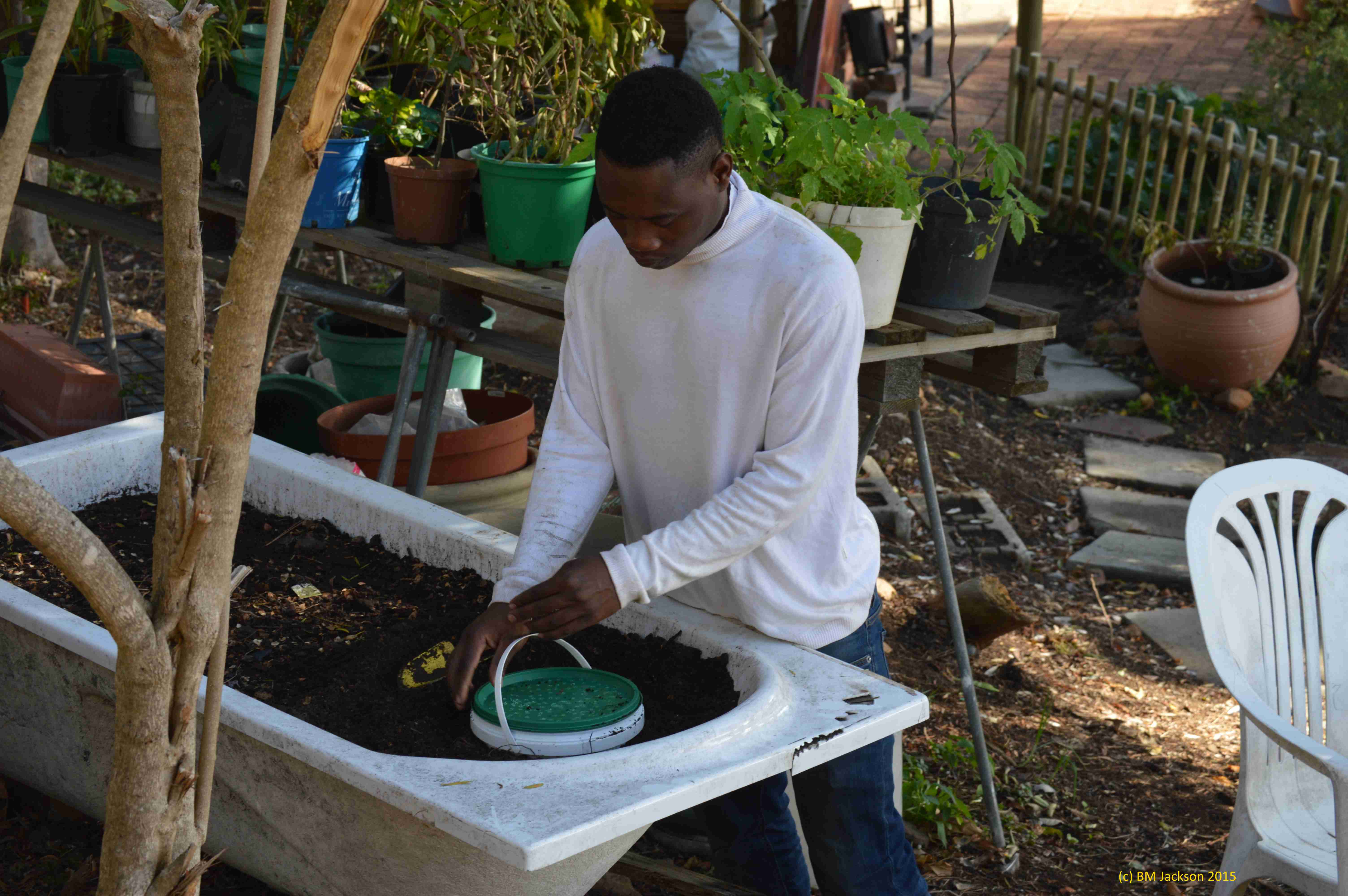 3 baths, one plastic and the other 2 cast iron were relocated from the old garden. We have decided to grow vegetables in them, as a preventative measure against the porcupines devouring all the vegetables. Here we have Happy installing a mini worm farm.
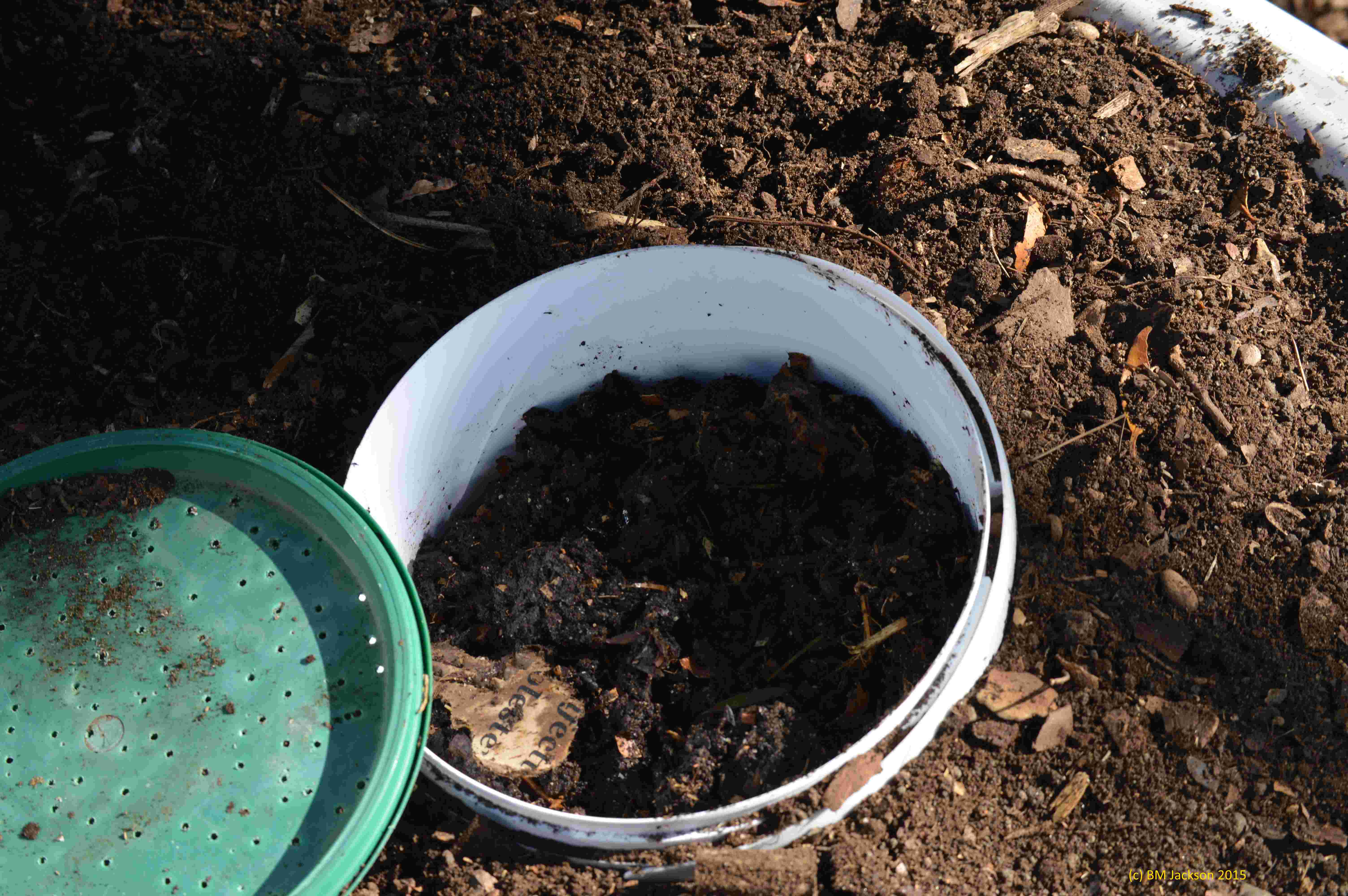 Holes were punched out the bottom of the bucket as well as the lid
 Installation complete, ready for planting.
RELATED ARTICLES : A new twist to a keyhole/ circle garden
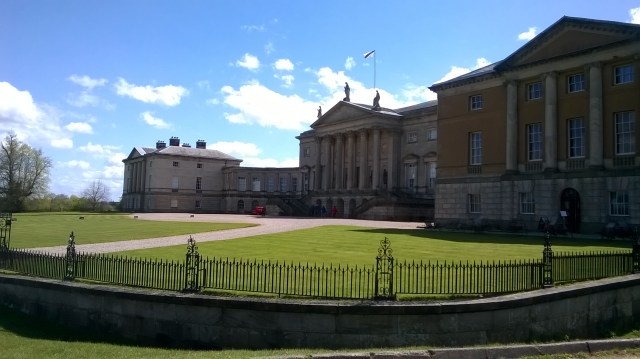
 We thought the front of the house reminiscent of Norfolk’s Holkham Hall, and indeed in the very helpful introductory talk we learned it had been designed by the same architects in Palladian style. However, the similarities started to dilute once we were inside, as the then Lord Curzon decided to follow the emerging design fashion of Neo Classical, so the house is an interesting- and successful – blend of the two styles.


‘The gardens and grounds, as they appear today, are largely the concept of Robert Adam. Adam was asked by Nathaniel Curzon in 1758 to “take in hand the deer park and pleasure grounds”. The landscape gardener William Emes had begun work at Kedleston in 1756, and he continued in Curzon’s employ until 1760; however, it was Adam who was the guiding influence. It was during this period that the former gardens designed by Charles Bridgeman were swept away in favour of a more natural-looking landscape. Bridgeman’s canals and geometric ponds were metamorphosed into serpentine lakes.


Adam designed numerous temples and follies, many of which were never built. Those that were include the North lodge (which takes the form of a triumphal arch), the entrance lodges in the village, a bridge, cascade and the Fishing Room. The Fishing Room is one of the most noticeable of the park’s buildings. In the neoclassical style it is sited on the edge of the upper lake and contains a cold bath and boat house below. Some of Adam’s unexecuted design for follies in the park rivalled in grandeur the house itself. A “View Tower” designed in 1760 – 84 feet high and 50 feet wide on five floors, surmounted by a saucer dome flanked by the smaller domes of flanking towers — would have been a small neoclassical palace itself. Adam planned to transform even mundane utilitarian buildings into architectural wonders. A design for a pheasant house (a platform to provide a vantage point for the game shooting) became a domed temple, the roofs of its classical porticos providing the necessary platforms; this plan too was never completed. Amongst the statuary in the grounds is a Medici lion sculpture carved by Joseph Wilton on a pedestal designed by Samuel Wyatt, from around 1760-1770.
In the 1770s George Richardson designed the hexagonal summerhouse, and in 1800 the orangery. The Long Walk was laid out in 1760 and planted with flowering shrubs and ornamental trees. In 1763 it was reported that Lord Scarsdale had given his gardener a seed from rare and scarce Italian shrub, the “Rodo Dendrone” (sic).
The gardens and grounds today, over two hundred years later, remain mostly unaltered. Parts of the estate are designated as a Site of Special Scientific Interest, primarily because of the “rich and diverse deadwood invertebrate fauna” inhabiting its ancient trees.’


Delightful planting in a Devon Wall, Mohuns Close, Whitchurch
Nigel Boldero aka 'Old School Gardener'
 | Nigel Boldero on Fighting to Reduce Climate Cha… |
 | Anonymous on Fighting to Reduce Climate Cha… |
| Anonymous on PicPost: Carrot, my foot! |
| 18 Surprising Hydran… on Plantax 16: Hydrangea the wate… | |
| Nigel Boldero on Poppyland: A Victorian romance… |
| Anonymous on Poppyland: A Victorian romance… |
| Anonymous on Plants to die for… |
 | Isabella Childress on PicPost: Forest, but not as we… |
 | Happiness Factor on Is child-friendly planning a l… |
 | zidane on Top Tip: On a Pedestal- make m… |




Nature Connectedness Research Blog by Prof. Miles Richardson
Connecting People with Nature
A daily selection of the best content published on WordPress, collected for you by humans who love to read.
Celebrating gardens, photography and a creative life
Writing, photography and more by Daniel Greenwood
Lydia Rae Bush Poetry
Australian Pub Project, Established 2013
The Journey from Finnish Rintamamiestalo to Arboretum & Gardens
Because even in chaos, there’s always gin and a good story …
RANDOM BITS & MORE TIDBITS
.....and nurturing my soul
Cultural Heritage and the Digital Economy
Sense of place, purpose, rejuvenation and joy
Notes from the Gardeners...
Connecting People to Nature, Empowering People to Live Sustainably
A girl and her garden :)


 Old School Garden