Archive for December, 2014


Jardin's avatarJardin

Julius Caesar probably strolled in villa gardens filled with it. Henry VIII may well have wooed one, (or more), of his wives behind hedges of it. Louis XIV made it into a stunning art form. The Dutch excelled at it.
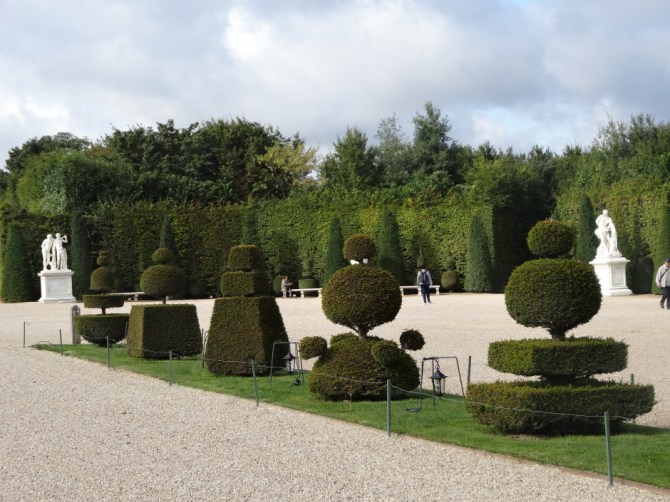
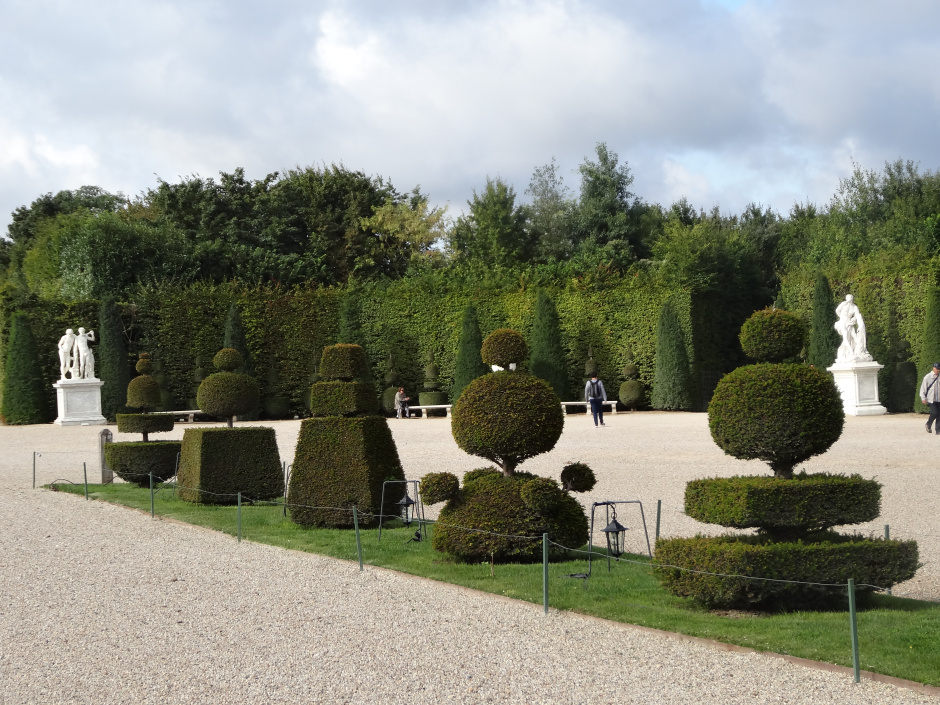
Topiary at Versailles Topiary at Versailles

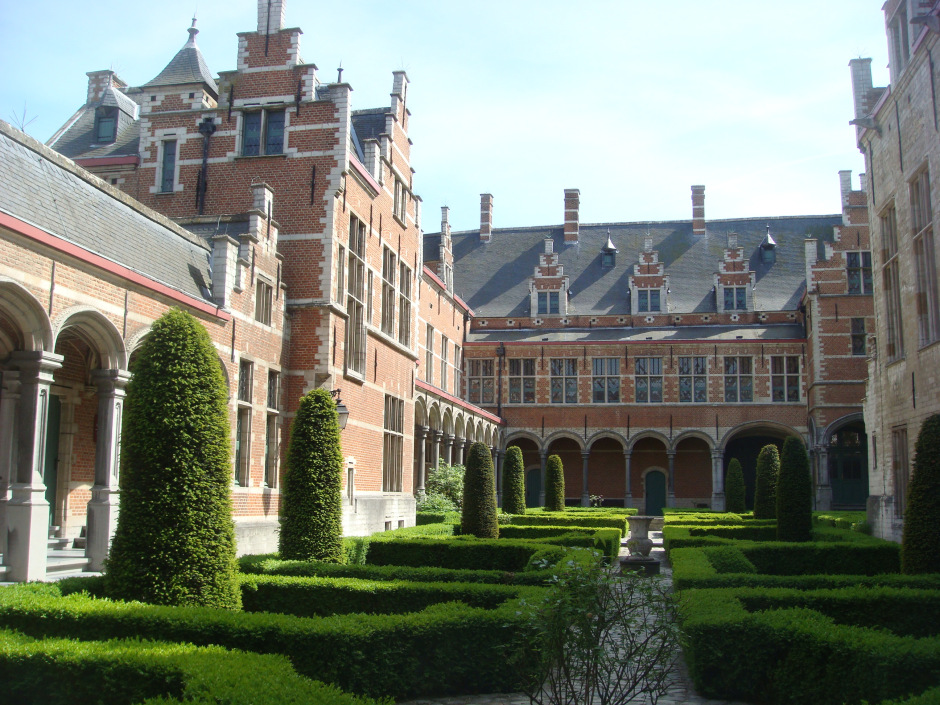
Topiary : the art of trimming and training plants to create geometric or natural shapes , often called ” the art of living sculptures”.

Topiary in a Flemish garden in Mechelen. Topiary in a Flemish garden in Mechelen.

Cultivation : For year round structure, yew (Taxus baccata) and box (Buxus sempervirens) are the usual evergreens used, although other species such as privet and holly can be  suitable too. If you are establishing a box-hedged garden, keep an eye out for any bare or brown patches which might be the result of a fungal disease, box blight (Cylindrocladium buxicola), and destroy affected plants. Pruning in northern hemispheres is generally done in early June…

View original post 233 more words

liquidambar-1440-900Liquidambar is a genus of four species of flowering trees; L. alcalycina; L. formosana; L. orientalis; and L. styraciflua.

Common name:  Common names of all of the species include ‘Sweet Gum’, with additions according to their native regions. Other names include ‘Chang’s Sweetgum’ (L. alcalycina),’Redgum’, ‘Satin Walnut’ and ‘American Storax’. Both the scientific and common names refer to the sweet resinous sap (liquid amber) exuded by the trunk when cut.

Native areas: L. alcalycina is native to central and southern China; L. formosana to China and other parts of S.E. Asia; L. orientalis to south-west Turkey, Greece and Rhodes; L. styraciflua to the eastern USA, Mexico and Honduras.

Historical notes: The genus was much more widespread in the Tertiary age, but has disappeared from Europe due to extensive glaciation in the north and the east-west orientated Alps and Pyrenees, which have served as a blockade against southward migration. It has also disappeared from western North America due to climate change, and also from the unglaciated (but nowadays too cold) Russian far east. L. styraciflua is the most common species used in the U.K. and was introduced from its native USA in the 17th century. It was awarded the RHS ‘Award of Garden Merit’ in 1975.

Features: All Liquidambar are large, deciduous trees, most 25–40 metres (82–131 ft) tall, with palmately 3- to 7-lobed leaves arranged spirally on the stems and length of 12.5 to 20 centimetres (4.9 to 7.9 in), having a pleasant aroma when crushed. Mature bark is grayish and vertically grooved. The flowers are small, produced in a dense globular inflorescence around 1-2 centimetres diameter. The fruit is a woody multiple capsule 2–4 centimetres (0.79–1.57 in) in diameter (popularly called a “gumball”), containing numerous seeds and covered in numerous prickly, woody armatures, possibly to attach to fur of animals. In more northerly climates, sweetgum is among the last of trees to leaf out in the spring, and also among the last of trees to drop its leaves in autumn, turning multiple colors. It is sometimes confused with Maple on account of its similar leaves.

Uses: All of the species provide incredible autumn colour. In the U.K. they are predominately used as specimens – against a fresh green lawn, their foliage colour really stands out – and as woodland trees. L. styraciflua makes a large tree with a pyramidal crown if its central leader is retained. Its attractive, corky bark is a feature at all times of the year, but it is at its most magnificent in the autumn, when it seems to burn with crimson and gold. Suitable for streets, avenues, parks and largish domestic gardens

There are now several cultivars of  L. styraciflua available:

‘Lane Roberts’– reliable in Britain, this is a medium-sized tree (10-15 metres mature height), with a tighter conical habit and larger leaves than the species. Good in groups for mass effect.

‘Manon Variegata’ – a must for those that like variegated trees, the foliage is best in summer, providing excellent contrast against darker leaved, evergreen backgrounds. Medium height (15- 20 metres mature height), it has regular pyramidal form with horizontal lateral branches.

‘Stella’ – with deeply cut, star-like leaves it is of medium height (10-15 metres) and has glorious autumn colour. best in larger gardens.

‘Thea’ – a broad -leaved and late to colour variety, ‘Thea’ grows conically to 15-20 metres tall. Similar to ‘Lane Roberts’ but taller. Distinctive purple foliage in the autumn.

‘Worplesden’ – unlike most other clones, this variety will often bear fruit in the U.K. This is the variety most often favoured for its autumn colour and form, growing to a mature height of 20 metres plus. It has deeply lobed leaves which turn yellow in September and then turn to orange before falling, but the outermost leaves gradually turn to magnificent claret red. The choice for large gardens.

Growing conditions:  L. styraciflua does best in fertile, well-drained soils, and is the hardiest species, tolerating down to -15 degrees C.  The other species can all be grown in the U.K. but vary in hardiness; down to -5 degs C. There are also hardy forms such as the L. formosana Monticola Group, which could be considered for colder areas. Liquidambar should be planted in full sun in neutral to acid soil that is moist but well-drained- it does not thrive in chalky soils. The genus resents transplanting, but if this is unavoidable, prepare by root-pruning a year in advance.

Further information:

Wikipedia- Liquidambar

RHS- Liquidambar styraciflua

Horticulture Week- Liquidambar

Gardener’s World- Liquidambar

Barcham Trees Directory- Liquidambar styraciflua ‘Worplesden’

Old School Gardener

withered tree dementia

‘Not a twig or a leaf on the old tree,

Wind and frost harm it no more,

A man could pass through the hole in its belly,

Ants crawl searching under its peeling bark.

Its only lodger, the toadstool which dies in a morning,

The birds no longer visit in the twilight.

But its wood can still spark tinder.

It does not care yet to be only the void at its heart.’

Han Yu (translated by A.C. Graham)

greenbenchramblings's avatargreenbenchramblings

Saltaire is a place with a special atmosphere and a special place in British history, but also a place which very few people have ever heard of. We visited last year but then because of time and terribly wet weather we did not have time to look around the village itself. At that time we spent the day exploring the Salts gallery, where you can see so many pieces of art work from David Hockney, as well as galleries of furniture and beautiful craftwork.

Saltaire is a World Heritage Site and is recognised for the part it played in the development of the society we live in today. When you visit it is hard to believe it was the creation of one man, Titus Salt, a true visionary. He began as a successful business man, indeed one of England’s most eminent Victorian industrialists. He began by building a mill where he…

View original post 643 more words

cooking_with_childrenHere’s my fourth extract from the book ‘Noah’s Children’ by Sara Stein. Here she reflects on how we seem to have increasingly excluded children from working alongside adults, and by cossetting or trying to protect them from harm, can delay (prevent?) their passage into adulthood:

‘In our and other cultures, formal education begins at age six. During the following six years, roughly corresponding to elementary school, sons and daughters were traditionally expected to learn not only what in the environment was there to be used, but also how to use it. At the age of twelve, they were expected to be ready to pass from childhood to membership in the adult culture. Although we still mark that passage ritually in ceremonies of bar mitzvah and confirmation, I say these are empty passages now, and I am being very serious:

Children who can’t obtain, produce, nourish, maintain, earn, or in any other way be of use to their family remain juvenile compared to their peers in other cultures and in former times. They don’t deserve to be kept useless, and they don’t like it, and they show by their behaviour toward their elders that they blame us for swaddling them in childish ignorance.

Dessert can wait. It comes at the end of the day, and there is work to do.’

I’d love to hear your thoughts on this and the wider issues raised…

Old School Gardener

Beech Leaves

autumn-beech-leaves-fallen

‘In  autumn down the beechwood path

The leaves lie thick upon the ground.

It’s there I love to kick my way

And hear the crisp and crashing sound.

I am a giant, and my steps

Echo and thunder to the sky.

How the small creatures of the woods

Must quake and cower as I go by!’

James Reeves


Specifier Review's avatarArchitecture, Design & Innovation

Many cities throughout the world are looking for ways in which to cope with population growth, whilst curbing energy consumption and environmental impact.  And the unlikely focus of international interest currently is the historic city of Heidelberg, in south-west Germany.   Residentially it is very popular and commercially it is very successful, but Heidelberg has an expansion problem.  There is barely any property to be had in the city’s picturesque old town, or along the banks of the River Neckar, and if anything does become available, the prices are on a par with those of Munich, in the region of €5,000 or more per square metre.

The spectacular solution is to build a completely new district – the Bahnstadt – on a 286 acre area that was once home to Heidelberg’s now defunct rail freight and marshalling yards.  The €2 billion initiative is claimed to be the largest single passivhaus development…

View original post 819 more words

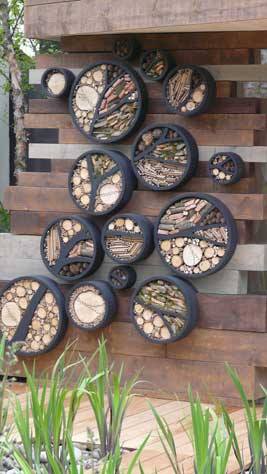
ornamental bug hotels

I love these ornamental bug hotels!

Old School Gardener

Finding Nature

Nature Connectedness Research Blog by Prof. Miles Richardson

Norfolk Green Care Network

Connecting People with Nature

Discover WordPress

A daily selection of the best content published on WordPress, collected for you by humans who love to read.

Susan Rushton

Celebrating gardens, photography and a creative life

Unlocking Landscapes

Writing, photography and more by Daniel Greenwood

Alphabet Ravine

Lydia Rae Bush Poetry

TIME GENTS

Australian Pub Project, Established 2013

Vanha Talo Suomi

The Journey from Finnish Rintamamiestalo to Arboretum & Gardens

Marigolds and Gin

Because even in chaos, there’s always gin and a good story …

Bits & Tidbits

RANDOM BITS & MORE TIDBITS

Rambling in the Garden

.....and nurturing my soul

The Interpretation Game

Cultural Heritage and the Digital Economy

pbmGarden

Sense of place, purpose, rejuvenation and joy

SISSINGHURST GARDEN

Notes from the Gardeners...

Deep Green Permaculture

Connecting People to Nature, Empowering People to Live Sustainably

BloominBootiful

A girl and her garden :)