Archive for March, 2014


Spring has sprung

Met Office Press Office's avatarOfficial blog of the Met Office news team

Warmer, drier weather is on the way for parts of the country.  As we move through the week a north–south divide develops across the UK with Scotland, Northern Ireland, northern England and parts of Wales being changeable and windy. However in the south high pressure will dominate  bringing dry weather for the weekend, with the best of the weather in the Southeast.

Temperatures are expected to reach mid to high teens in the South this weekend (8th – 9th March), while northwest England and Scotland are likely to see spells of strong winds and rain and there is a risk of overnight frosts.

This is in sharp contrast to the record breaking winter we have just experienced.  It was the wettest winter for the UK, England, Wales and Scotland, and the second wettest winter for Northern Ireland in the record series dating from 1910. It was the stormiest…

View original post 138 more words

Municipal Dreams's avatarMunicipal Dreams

In 1978 the chair of Manchester City Council’s Housing Committee described the Hulme Crescents development as an ‘absolute disaster – it shouldn’t have been planned, it shouldn’t have been built’. (1)   By that time, the estate was already a byword for the failure – worse, the inhumanity – of sixties’ mass public housing. That reputation has lingered long after the demolition of the Crescents in 1994.

This won’t be a revisionist piece but let’s at least look a little more closely at what went wrong.

The Crescents The Crescents

As we saw when we looked at the city’s early municipal housing in Ancoats, Manchester was the ‘shock city’ of the Industrial Revolution.  Hulme was also the home of many of those first industrial workers.  In 1914, a Special Committee of the City Council reported a population of 63,177 living there in just 13,137 homes, 11,506 of which lacked baths or any laundry…

View original post 1,315 more words

gressenhallfw's avatarGressenhall Farm and Workhouse

As I’m coming to the end of my traineeship this will be my final blog entry! Over the past 17 months I have had such a fantastic time here at Gressenhall Farm and Workhouse and I can’t put a figure on the amount of brilliant moments and opportunities that I have been part of. Everything that I have done and all the wonderful people that I have met will always stay with me.

Out of all of the experiences and projects I have been part of the one that I am most proud of is the Centenary Wood Rejuvenation Project. The woodland, located behind the main building at Gressenhall Farm and Workhouse, was planted in 1989 to celebrate the Centenary of the County Council. But since then not much has been done to it in terms of management, and so it was far too linear and close together to be…

View original post 671 more words

Picpost: Hang On

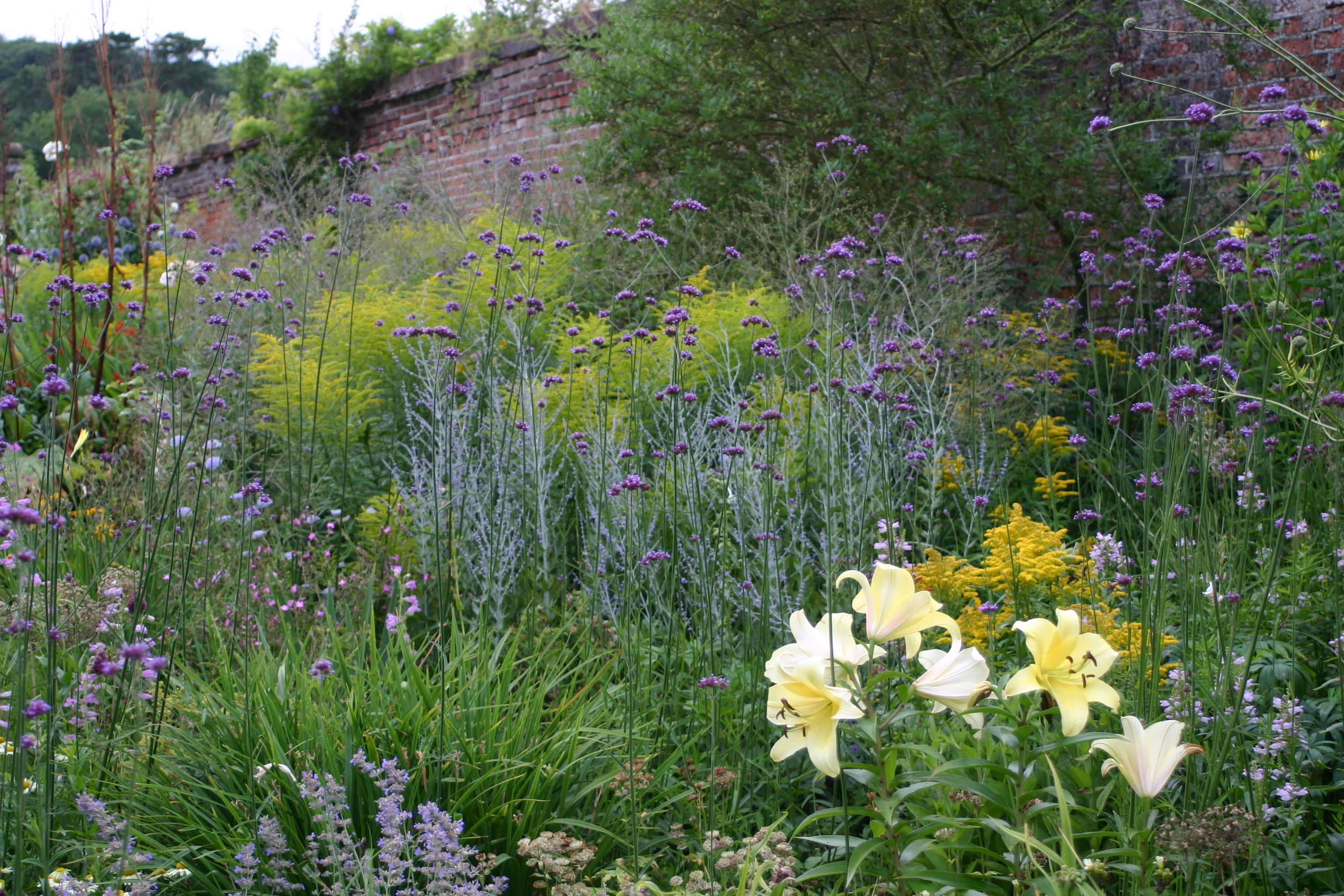
Herbaceous borders at Peckover House, Wisbech

Now’s the time to set about creating new borders in your garden and I’m grateful to Hyde N. Seik from Plymouth who asks:

‘I’ve seen some wonderful borders at a National Trust property near me. I enquired about these and was told that they are ‘herbaceous borders’. Can you tell me what this means and how to go about creating one, please?’

Hyde, there’s perhaps nothing as quintessentially English as an Herbaceous border (it became especially popular in the late 19th and early 20th century garden), and many of those associated with our great historic houses are some of the best examples around. This is usually a rectangular border (or twin borders with a lawn or other path running between them), traditionally at least 3 metres wide and about 12 metres long, usually backed by an evergreen hedge. The lengths and widths do vary, but the usual dimensions maintain a ratio of 4:1 (length to depth). The border is planted entirely with herbaceous perennials (plants that grow for more than one year and die back above ground after flowering). The border is designed to be of interest when viewed from the front or along its length and looks its best from late spring to late summer.

These days the amount of work needed to maintain such borders – staking of taller plants to provide support, pruning back dead stems and foliage, feeding and dividing the plants every few years- might be too much for many gardeners and so herbaceous borders can be rather smaller and more irregular in shape, or alternatively have a mixture of planting (including evergreen shrubs, grasses, and annuals) to reduce the workload and provide more structural interest during the winter.

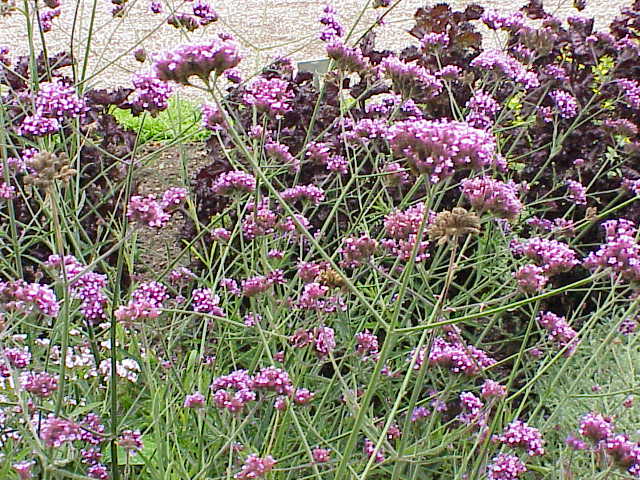
Herbaceous borders are usually planted with clusters of each type of plant, in odd numbered groups of 3, 5 or 7 plants- the tallest are usually at the back of the border and the shortest at the front. However, in recent times this approach has been challenged as borders can look more interesting if some taller plants are placed nearer the front of the border; especially if they add height but are not too dominant, such as Verbena bonariensis and many grasses.

The airy stems of Verbena bonariensis

As your plants are likely to be in the same place for some time, it pays to prepare the soil thoroughly. Remove all weeds, especially the perennial types with deep roots, by digging, hoeing (or you could use a suitable weedkiller such as Glyphosate in the growing season). Then fork the soil to a depth of at least 150mm adding organic matter such as compost or manure, rotted bark, or other manures such as those from hops or mushroom growing. Lime might also be needed if the soil is very acid (peaty) or in generally very poor condition.

This should be applied in autumn or spring, one month before planting or adding organic material, and at least 2-3 months before adding manure (lime and manure should never be applied at the same time). Incidentally, nearly all herbaceous perennials grow well in most soil types, provided they are neither very acidic or alkaline- by manuring and liming regularly, the soil can be kept at a fairly neutral pH, and regular mulching with organic matter will keep the soil nutrient levels up, avoiding the need for artificial fertilisers or feeds.

If possible, leave the freshly dug soil for a couple of months to allow it to settle, then rake over the surface to produce a reasonably fine, crumbly surface.

Whilst you’re waiting for the soil to be readied it’s worth planning the border planting in some detail. Using a sheet of graph paper, draw on it (to scale) the shape of the border (you could of course have begun with an outline plan on paper for this and then scaled this up to create the new border). Then select your plants from a catalogue, book or online information resource which not only describes the plants but gives their height and ultimate spread/width. Think about the different flower shapes, leaf textures as well as colours in composing your border planting plan and also when the plants flower or have other interest (e.g. leaf colour, berries or other fruit) – to ensure a balanced spread of flowering or other interest throughout the seasons.

Allow for the plants to be grouped in clumps of 3’s or 5’s (odd numbers tend to create informal looking groups whereas even numbers tend to lead to a more formal, regimented layout). These groups can be drawn on your plan with a circle guide or compasses and then a line enclosing the group drawn around them. If you use a set of colour pencils or crayons to draw these groups according to their flower/leaf colour it will help give you an idea of the colour scheme you are creating. Other information – height, flowering time etc.- can be written on your plan and help to check the overall design and ensure that there is no period in the year without interest of some sort (this can extend to winter interest created from strong shapes such as evergreens and grasses as well as some herbaceous plants that hold on to their dead flower heads or foliage).

The best time to plant your herbaceous border is in the autumn or spring, although plants grown in containers can be planted at any time, provided they are kept well watered and the ground is not frozen or flooded. If you buy by mail order, the nursery will send you plants at the right time for planting, although the roots will probably have little or no soil on them (‘bare rooted’). If you can’t get them planted on arrival, store them in a cool place in damp, sandy soil or put them in a trench in the garden (so called ‘heeling in’). However, do try to plant them out as quickly as possible provided the ground is workable.

If the plants seem dry on arrival, soak the roots in water for 24 hours; if any are damaged in transit, let the nursery know as soon as possible, so that they can be replaced.

Herbaceous border at Copped Hall, Essex

Planting is best done with a trowel. Set the plants out in the planting positions on the soil surface and then move them around to make sure they are in line with your plan which should suit their final growing widths. Dig holes under each plants big enough to accommodate the roots of the plant without cramping them. Work from the back of the border (or centre if it is an island bed). Always plant to the same depth as the soil mark on the stems of the plants.

Hoe carefully to remove footmarks, and water in the plants with a thorough but gentle sprinkling. Don’t forget to label each group of plants, as once they die down you may forget where they were – though your reference plan should help with this. Most herbaceous perennials will spread outwards, gradually dying off from the original centre, so every few years these plants will need dividing, repositioning and mulching. And some of the taller ones will need staking to support them, at least in the early years before those around them provide some mutual support.

Old School Gardener

PicPost: Garden Wrap

Disguise your ugly garden structures with vertical planting!

Bio Solar Panels

Bio-Based Solar Panels That Could Run On Dirt And Plants

‘An inspiring design aims to get rid of the expensive and toxic materials used to make solar panels today, and replace it with something a lot more natural.

What if solar panels could be dirt, plants, and batteries rather than the expensive and often toxic chemicals and heavy metals used today?

That’s the aim of this ambitious design from architecture students at a Spanish university. It uses bacteria in soil to make mini fuel cells to power devices. Plants growing in the soil keep the bacteria alive as a product of photosynthesis, and water keeps everything running. The whole structure could be simple to build….’

Click on the title for the full article

Old School Gardener

Finding Nature

Nature Connectedness Research Blog by Prof. Miles Richardson

Norfolk Green Care Network

Connecting People with Nature

Discover WordPress

A daily selection of the best content published on WordPress, collected for you by humans who love to read.

Susan Rushton

Celebrating gardens, photography and a creative life

Unlocking Landscapes

Writing, photography and more by Daniel Greenwood

Alphabet Ravine

Lydia Rae Bush Poetry

TIME GENTS

Australian Pub Project, Established 2013

Vanha Talo Suomi

The Journey from Finnish Rintamamiestalo to Arboretum & Gardens

Marigolds and Gin

Because even in chaos, there’s always gin and a good story …

Bits & Tidbits

RANDOM BITS & MORE TIDBITS

Rambling in the Garden

.....and nurturing my soul

The Interpretation Game

Cultural Heritage and the Digital Economy

pbmGarden

Sense of place, purpose, rejuvenation and joy

SISSINGHURST GARDEN

Notes from the Gardeners...

Deep Green Permaculture

Connecting People to Nature, Empowering People to Live Sustainably

BloominBootiful

A girl and her garden :)