Archive for December, 2013


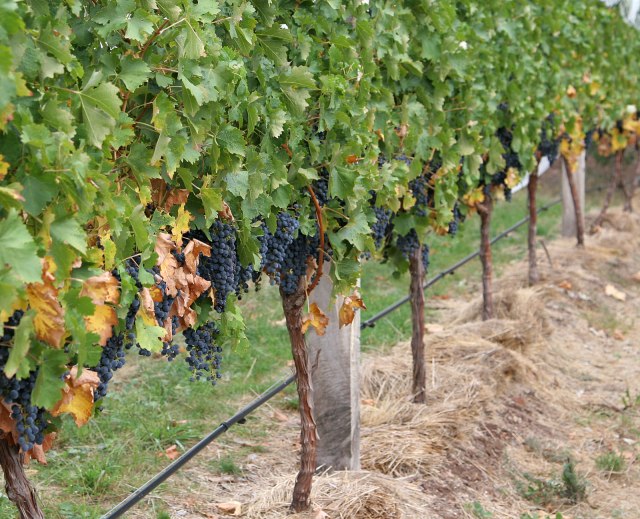
grapevineHere’s another profile of a food plant produced by one of the participants in the ‘Grow your Own’ course I ran at Foulsham, Norfolk.

Grape (Vitis vinifera)

Guest article by Kay Elvin

Black Hamburg  is a popular, outside, late grape that can be used for desserts or wine making.

Planting- Dig a large hole, adding plenty of farmyard manure and water well. Plant bareroot vines in winter, but containerised specimens can be planted at any season.

Location- Vines like to grow on a sunny, south or west wall. Support the vines with horizontal wires held in place by vine eyes, about 12”- 16” apart.

Grape_vinesGrowing – Allow about three stems to grow vertically during the first year. Pinch out shoots that grow from the side to one leaf. The next year in spring aim to have a shoot every 6”. When fruits appear thin out to one bunch every 12”. Remove some of the foliage to improve air flow.

 Feed with high potash. Vines can be affected by scale insects, vine weevil, downy mildew and mould. When harvesting avoid touching the fruits, cut each bunch with a ‘handle’ (2” of stem).

Beware – Do not park your car under a grape arbour- they damage the paintwork! Grapes are also poisonous to dogs.

Grapevine_leaf_-_SyrahRecipe- Grape Jam

Ingredients:

4lb ripe grapes

1 box powdered fruit pectin

3.25 lbs sugar

 Method:

Slip skins from grapes and set aside

Add 1 cup of water to pulp, bring to boil cover and simmer for 5 mins.

Press through a sieve to remove seeds.

Chop or grind skins, add to pulp.

Measure 6 cups into a very large saucepan.

Then make jam, add powdered pectin to the fruit in pan and mix well.

Bring to hard boil over high heat, stirring constantly. At once stir in the sugar.

Bring to a full rolling boil and boil for 1 minute, stirring all the time.

Remove from heat and skim off foam with a metal spoon, then alternately stir and skim for 5 mins..

Cool slightly, ladle into jars, cover jam at once.

 Makes 6 half pound jars.

 For spicier jam add 1 teaspoon each of cinnamon, ginger and allspice to the grapes before simmering.

Old School Gardener

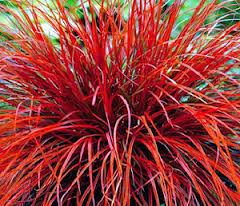
Uncinia rubra 'Firedance'

Uncinia rubra ‘Firedance’

Uncinia is a showy addition to any border or garden with its shiny red-bronze foliage.

Uncinia is a genus of about 35-45 species of tufted,evergreen perennials, known as hook-sedges (or hook grasses or bastard grasses in New Zealand. The plants develop hooks, which are used to attach it’s fruit to passing animals, especially birds. The name derives from the latin word uncinus, which means a hook or barb. Uncinia is a “satellite genus” of the very large genus Carex.  Most species are found in Australia, New Zealand and South America.

Uncinia flower
Uncinia flower

Some species are rhizomatous and most are native to damp, tussocky grassland, moist woodland or swamps. Grown for their colourful leaves, Uncinia are suitable for the front of borders, or gravel plantings. Though they are frost hardy to about -10 degrees C for short periods, longer term exposure to frost is best avoided for some species and so these should be grown in cool greenhouses. They prefer moderately fertile, humus-rich, moist but well-drained soil in full sun or light dappled shade. They are not troubled by any pests or diseases.

The most common Uncinia used in gardens are U. rubra (around 30 cms high, with greenish red to rich reddish brown stems and foliage and with dark brown to black flowers) and U. uncinata (25cms tall and with pale brown to red-brown leaves and dark brown flowers). Both bear flowers in mid to late summer. Foliage colour is best in late spring.

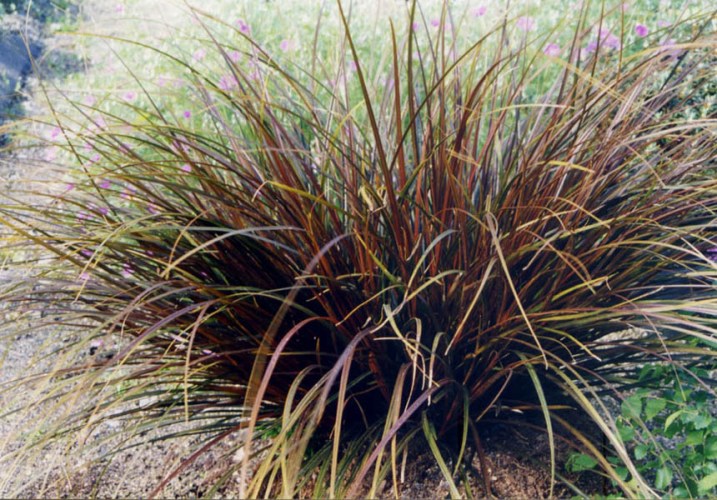
Uncinia ucinata 'Red'
Uncinia uncinata ‘Red’

The plants gradually form dense clumps of short, arching, grassy, evergreen foliage.  Slow growing, Uncinia look at their best in groups as leafy ground cover at the front of a sunny border. They can be combined with other perennial grasses that enjoy similar conditions; e.g.

  • Carex oshimensis ‘Evergold’

  • Phormium ‘Alison Blackman’

  • Ophiopogon planiscapus.

It will do well in soggy areas and around water features and ponds. U. rubra ‘Firedance’ will add a highlight to the rock garden as well as the mixed border, and it also looks great in containers. It’s advisable to avoid planting them next to vigorous plants that would smother them, as they need lots of sun to do well. Comb or rake off any old, tired or dead leaves and flowers in spring. If necessary they can be cut back (by up to half) at almost any time from April to July, but should not be cut back in autumn or winter.

Uncinia uncinata
Uncinia uncinata

You can raise Uncinia seeds in a cold frame for protection and hardiness. Seeds can be started in the late winter or early spring and should be sown in good quality, well-draining seed compost, pressing the seeds into the soil. Lower temperatures of less than 41°F are very effective. Constant moisture must be maintained and trays should not be left in direct sunlight. Once seedlings are large enough to handle, move them into a pot to grow on. Transplanting can be done in spring or summer after all frost danger has passed.

Old School Gardener

IMG_7887

Thanks for reading this, my 1000th post on Old School Garden. I’ll do a fuller review of my blogging experience on my first anniversary on 17th December. But for now I hope that you enjoy my review of an interesting garden in Portugal.

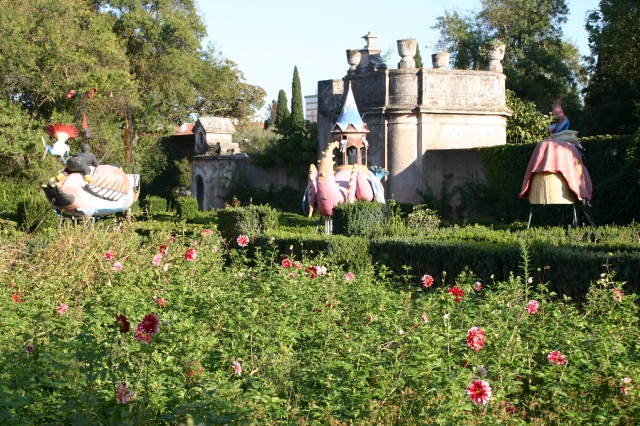
A little off the beaten track in one of Lisbon’s northern suburbs (Lumiar), sit the Gardens of Monteiro Mor (this translates as ‘the High Huntsman of the Royal House’ refering to one of the former grand residents).They come with not one, but two bonuses – small, but fascinating museums, one focusing on Portuguese Theatre and the other Costume.

The surrounding gardens are a very engaging mix of formal, botanical display and wilder woodland walks – all very pleasant on a warm autumn day. And there are a number of curious sculptures to see en route too, along meandering paths and steps which take you to a variety of water features and through glades of mixed, mature trees and shrubs.

Interestingly, a communal food growing area seems to have been created on the edge of the parkland, and we also were lucky enough to see a wide range of flowers on display when we visited.

The museums, housed in two former grand houses a few paces from each other, are very well laid out. The Theatre Museum comes stocked with a huge array of printed and pictorial material along with theatre models, sculpture and theatrical props (including some lovely puppets and larger costume displays).

No need for much in the way of interpretation here as the visual richness speaks for itself!

The Costume Museum is an altogether more restrained affair, with displays of clothes and accessories from different periods set off wonderfully in the elegantly decorated rooms of the former palace. Varied lighting levels and effects and a nicely uncluttered feel all contributed to a beautiful wander though time.

This became especially interesting when we reached the 1960’s and more recent displays, which brought back some long-lost memories!

This was a visit well worth the subway ride from central Lisbon, the ‘one for all’ ticket being very good value.

Old School Gardener

Depending on the shade amd soil conditions many plants can be grown under trees

This week’s question is one that affects many gardens- the impact of trees on other planting. Jenny Bough from Gateshead asks;

‘Part of my garden is in shade for most of the day because of trees in a neighbour’s garden. Since I cannot remove the trees, what can I do to improve the conditions for my plants? And what plants will grow well?’

If the trees grow close to your garden the shade will probably be dense, and the soil may well be permanently moist from overhead drip. If so, you can improve the drainage by adding coarse grit to the soil under the tree and plant moisture- and shade- loving plants such as hardy Ferns, Primula species, Violets and Periwinkles. If you have lighter or more dappled shade then there are plants which like these conditions: Lilies, hostas, Azaleas, Rhododendrons and Blue Poppy (Mecanopsis) for example.

Epimedium- a good choice for dry shade

If the tree is close to your boundary, or indeed within your garden, and its roots make the immediate area very dry and shady, then plants such as dwarf Cyclamen (C. hederifolium), small-leaved Ivies and Epimedium should do well. You could also try to dig out a few pockets where bulbs can be planted. If you can mix plenty of compost or other organic matter  into the soil then many more options are open to you as the soil will be relatively nutritious and will retain moisture better. The London Orchard Project have added a helpful piece of advice:

‘Wait until the tree has established before any underplanting is carried out. Then be sure to plant perennials,  as (these), including trees, prefer a fungally dominated soil, whereas annuals prefer bacterial domination. Also, disturbing the shallow feeder roots of the tree can be minimised by not having to replant/remove annuals.’

Some trees produce roots close to or above the soil surface, which then send up new shoots or ‘suckers’; e.g Poplars. If you want to grow grass over these root runs, once again the best approach is to ensure a good depth of topsoil above the roots and so give the grass a good layer of soil to grow on and reduce the chances of suckers appearing. Another approach- and one I’ve used in Old School Garden under a large Black Poplar tree- is to cover the immediate surrounds of the tree with landscaping fabric and then use a decorative aggregate or other material as a covering (I’ve used purple slate). This has reduced, but not entirely removed the problem of suckers appearing. Alternatively, there’s nothing else for it but to keep pruning/mowing off the shoots as they come up. This is best done in early summer after the tree has put on its initial growth spurt- doing it in the dormant season will only encourage more suckers to appear in the new season.

Some trees (in this case a Maple) will send out shallow or surface level roots from which new shoots or 'suckers' will grow
Some trees (in this case a Maple) will send out shallow or surface level roots from which new shoots or ‘suckers’ will grow

Further information: a useful guide to tree care

Old School Gardener

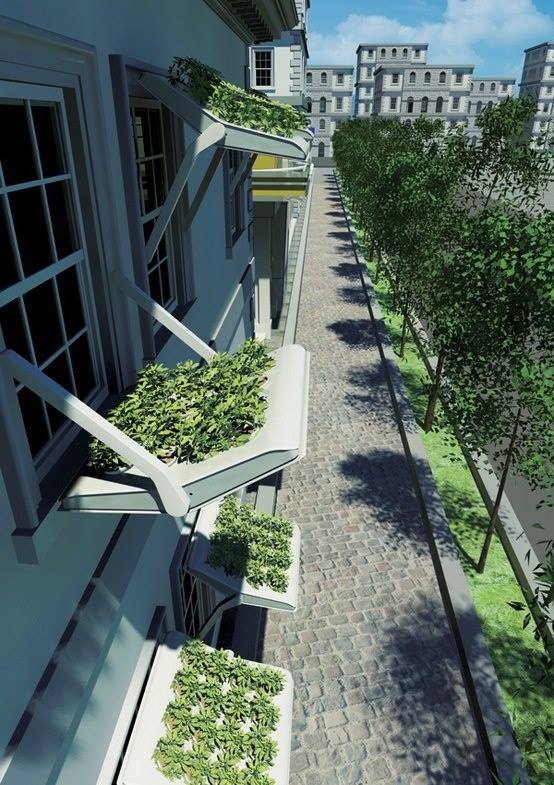
Neat idea for growing food and other plants outside your window- especially useful for urban areas where apartments have no outside space.food growing shelves via grow veg

Old School Gardener

shinealightproject's avatarShine A Light

By Dayna Woolbright

The Georgian period spans 123 years, 1714-1837, and marks the period when England was ruled by the Hanoverian Kings, George I, George II, George III, George IV, William IV.The Georgian period saw much change; in politics, industry and literature. In social terms it saw the gap between rich and poor widen and the emergence of the libertarian ‘middle class.’ This era helped shape Britain as we know it today and there are far too many important historical events to consolidate into one blog, for this reason I will concentrate on the social history and the developments that can be represented through objects in the Norfolk Museums and Archaeology service’s collection.

Architecture

The Georgian period saw the emergence of imperial based wealth through the import/export of various goods which were sold around the world. This created a new larger, wealthy middle class who liked to illustrate their wealth…

View original post 2,766 more words

raspberriesAnother guest article by one of the participants in the ‘Grow Your Own Food’ course I ran recently in Foulsham, Norfolk.

Raspberries – A superfood that tastes better than spinach-what’s not to like?!

by Chris Richmond

Health

Antioxidant and anti-inflammatory phytonutrients in Raspberries may have anti-cancer benefits and assist in the management of obesity, though possibly not if eaten with oodles of cream.

However, raspberries are among a small number of foods that contain measurable amounts of oxalates. When oxalates become too concentrated in body fluids, they can crystallize and cause health problems. For this reason, individuals with already existing and untreated kidney or gallbladder problems may want to avoid eating raspberries.

So…everything in moderation, even raspberries- unfortunately.

Varieties

There are two types of raspberry available to the kitchen gardener. Summer-fruiting varieties will crop at any time from the beginning of July to early August on stems of last season’s growth; autumn-fruiters bear their berries over a longer period – from mid-August to the first frosts – on the current season’s growth. Both are similarly easy to care for but require slightly different pruning techniques. As long as you know how to wield your secateurs around them there is little mystery to growing these accommodating fruits and their length of service – up to 12 years – means they give a lot back in return.

‘Glen Ample’ AGM – Delicious, large fruit produced in mid-summer on this extremely heavy-yielding summer cultivar with vigorous, upright, spine-free canes. The berries are produced on long, upright stems, making picking easy.

‘Glen Moy’ AGM – This early summer raspberry bears heavy crops of medium to large berries, which have a good flavour. It may also produce a small crop on the new canes, in autumn. The spine-free canes are compact.

‘Leo’ AGM – This cultivar is one of the latest summer raspberries to ripen, producing large, firm fruits with an excellent flavour. The stems are very long, so harvesting is easy. Site in a sheltered position.

‘Malling Admiral’ – A summer raspberry bearing good yields in mid- to late summer on strong-growing, tall canes, which are best sited in a sheltered spot. The flavour is excellent, and the large berries ripen to deep red.

‘Autumn Bliss’ AGM – The short, sturdy canes of this popular autumn cultivar produce high yields from late summer to mid-autumn. The fruit is large and deep red with a firm texture and excellent flavour.

‘Polka’ – This new autumn cultivar ripens two weeks earlier than ‘Autumn Bliss’, bridging the gap between summer and autumn. It produces very high yields of large, well-flavoured fruit.

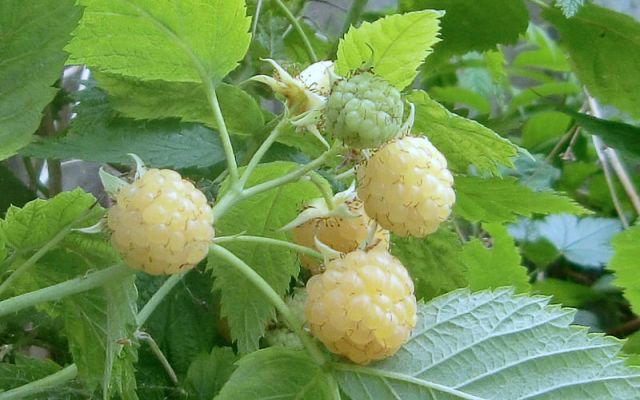
A Golden Raspberry Variety

Preparation

Like most edible crops, raspberries produce a better yield when grown in full sun. However, thanks to their woodland origins, they can be grown in a degree of shade too, as long as they receive at least a few hours of direct sunshine each day. They prefer slightly acidic soils, which is great news for gardeners who struggle to grow plants in these conditions. They like it to be moist as well, so be prepared to water the plants as they establish – but beware of waterlogged winter ground.

Be prepared to put in a bit of effort to get soil conditions just right before planting: thoroughly dig down to a spade’s depth along a row 90cm wide. Turn it over and remove any weeds, especially perennial types (such as bindweed and horsetail) and their roots.

Raspberries are shallow rooted, which means there won’t be much of an opportunity to weed as meticulously once the plants are in place, for fear of damaging their root system. They are also heavy feeders, so for every plant you intend to grow incorporate a bucketful of well-rotted manure or compost while digging, turning it all into the soil. Ideally soil preparation should be complete a month before planting; at the very least you should allow two weeks to give the earth time to settle.

They might play second fiddle to their Wimbledon-associated cousins on shop shelves but on the plot there should be no such bias – raspberry plants crop reliably year-after-year and ask for little in return. They even thrive in partially-shaded areas where few fruit or vegetables would grow. And such is their hardiness that they will produce a bumper crop of their sweet, mildly acidic fruits even in disappointing summers – a valuable trait given the last few we’ve experienced. They’re a great choice for those gardening in cooler, northern climates – as they flower late in the spring there is little danger of them being damaged by unexpected late frosts.

Planting

With a well-prepared growing area in place, planting shouldn’t present any difficulties. Buy in certified disease-free, one-year-old plants (usually called canes) from a reputable nursery or mail-order catalogue. They are usually acquired bare rooted, packaged up into bundles ready for planting. The best to time to plant them is in the autumn, from October through to early December, as the soil still retains a degree of warmth which will help the roots to grow and quickly settle the new introductions into place. If this isn’t possible they can, however, be planted any time up to March.

Position each cane into a shallow hole about 22cm wide and 7cm deep, spreading the roots evenly across the bottom. Backfill and firm in around them as you go, making sure that the soil mark on the canes is at least level with the surface and up to an inch beneath it – this will encourage extra root growth and quickly anchor the plants into place. Space them 45cm apart within the row, leaving 1.8m between further rows to allow room for the roots to spread sufficiently and enough space for picking.

The tall, gangly canes will need to be supported, so set up a suitable support system at planting time. The best system is a simple post-and-wire set-up – hammer in two sturdy, 2.4m-high posts at either end of the row, 60cm into the ground and 3m apart. Stretch three galvanised wires horizontally in-between them at heights of 75cm, 1m and 1.5m.

The top wire can be omitted if you’re growing an autumn-fruiting variety as they are much sturdier and require less support.

Grow your own tip- If you only intend to grow a few plants you can do away with a complete post and wire system and simply position up to two plants at the base of a single post for support. As the stems grow upwards, tie them loosely to the post using garden string.

Growing

Immediately after planting your canes, cut each one just above a bud so that they’re 30cm in height. By spring, new shoots will appear from the base of the old cane and these will need to be tied into the wires as they reach them. The original cane can be cut right down to about 3cm above ground level at this point, again just above a bud. Remove any weak shoots in this first summer and any appearing more than 20cm from the row. Be disciplined and remove any flowers that develop in the initial season too – the object of the first year is to establish a good base and allowing plants to channel energy into setting fruit will compromise this effort. In the following years pruning is simple, although it’s important to use the correct method depending on whether you’ve opted for summer- or autumn-fruiting varieties. The former should be cut right back to ground level as soon as they have finished cropping.

At this stage there will already be plenty of new growth at the base of the plant and these will be the fruiting stems for next year. Tie them into your support system using garden string, so that each stem is spaced around 10cm from the last. Cut down any spindly stems or those growing away from the row. Towards the end of the growing season, loop over and tie in place any really tall stems to prevent them falling over in the wind over winter. In early spring, before growth commences, cut them back to a bud about 15cm above the top wire so that they are uncluttered and in a good position when they start fruiting.

Pruning autumn-fruiters is much more straightforward – just cut back all of last year’s canes to ground level before growth starts in February. New shoots will appear from the base by spring and these should all produce fruit on the upper stem sections.

Crop care

Feeding and watering are pivotal to the success of a raspberry crop. Keep your canes moist and well-fed and, coupled with the correct pruning regime, you should be carrying away punnets full of berries. Watering is particularly important at flowering time, as the fruits swell, and during any dry spells.

Applying a thick layer of organic matter as a mulch in early spring will help to lock-in moisture (make sure the soil is moist beforehand) as well as feed the canes. Be generous – make it at least 5cm deep and more if you can spare it. Any well-rotted organic matter such as compost or manure will do but avoid mushroom compost – it is alkaline and therefore unsuited to the acid-loving plants. Mulches will also help to naturally nourish the soil and stifle weed growth. As raspberry roots are very shallow and can easily be damaged by hoeing, any weeds that make it through the mulch will need to be removed by hand.

New shoots that appear away from the main row or post are called suckers. It will be difficult to tie them in to the support system – instead, you should remove them by lifting them out of the soil, then use secateurs to sever them from the parent plant below ground level.

Raspberry curd quark dessert- one of many delicious sweets using raspberries

Raspberry curd quark dessert- one of many delicious sweets using raspberries

Stolen without permission from various websites including:

www.rhs.org.uk

www.growfruitandveg.co.uk

You might recall that a month or two back one of my blog followers, Elena, asked what to do with a couple of Amaryllis bulbs she’d bought. I gave her (or rather a useful video did) the tried and tested advice of potting them up and putting them somewhere warm and dark until there were signs of growth aboove ground. I’m pleased to say that her two bulbs are coming on well- here’s the latest evidence, courtesy of Elena, who’s living in Bergamo, Italy.

Old School Gardener

IMG_7828 After a stroll through Estrela Gardens in Lisbon we found  our way to somewhere new to us – the English Cemetery just over the road. What a discovery- a quiet, green and fascinating space where a wide range of graves and monuments records the long association of the English with Portugal. The website of the Anglican Church in Lisbon describes it’s past:

‘Part of the Treaty of 1654 negotiated between Cromwell and King João IV of Portugal stipulated that English subjects living in Portugal should have a plot allotted to them “fit for the burial of their dead” in the Lisbon area. Due to opposition from the Inquisition, nothing was done about this until the early eighteenth century and it was only in 1717 that Consul Poyntz was able to report back to London that he had leased a suitable plot near the City “for the burial of our dead”. It became known as St. George’s Cemetery. From those early beginnings until the present day non- Roman Catholic British Nationals have had a traditional privilege of burial at St. George’s; practising Roman Catholics are now also admitted.  

It is an historic site for many reasons and an interesting one too. Probably the most famous British person buried there is the novelist Henry Fielding; he came to Lisbon to try and recover from health problems but actually died on 8th October 1754. No-one knows exactly where he was buried, but a monument to him in the form of a raised tomb was erected by public subscription in 1830. Later on in the Peninsular War Portuguese soldiers acting under orders from Marshal Beresford forced open the door in order to inter the remains of Brigadier General Coleman; legend has it that many other British soldiers were buried there during this period but have no marked graves. From the twentieth century there are rows of Commonwealth War Graves, commemorating servicemen who happened to die in the Lisbon area during World War II. These are but three examples, a wander round confirms that the remains of many interesting people from all walks of life and different nationalities have been interred at St. George’s for almost three hundred years.

In the second half of the nineteenth century many trees and shrubs were planted in the cemetery, some of which survive to this day. It makes it a peaceful, verdant spot, a walled oasis covering several acres in the middle of Portugal’s busy capital.’

Here is my record of our visit in late October 2013.


Old School Gardener

PicPost: Blickling at Christmas

We’ve just returned from a seasonal trip to our local ‘stately home’ – Blickling Hall. The gardens are all wrapped up for the winter, but the Jacobean house and immediate grounds were magical- Christmas trees alight, beautiful flower arrangements, volunteers in period costume, crafts for sale and bands playing carols. December it is and the Christmas mood begins….

Old School Gardener

Finding Nature

Nature Connectedness Research Blog by Prof. Miles Richardson

Norfolk Green Care Network

Connecting People with Nature

Discover WordPress

A daily selection of the best content published on WordPress, collected for you by humans who love to read.

Susan Rushton

Celebrating gardens, photography and a creative life

Unlocking Landscapes

Writing, photography and more by Daniel Greenwood

Alphabet Ravine

Lydia Rae Bush Poetry

TIME GENTS

Australian Pub Project, Established 2013

Vanha Talo Suomi

The Journey from Finnish Rintamamiestalo to Arboretum & Gardens

Marigolds and Gin

Because even in chaos, there’s always gin and a good story …

Bits & Tidbits

RANDOM BITS & MORE TIDBITS

Rambling in the Garden

.....and nurturing my soul

The Interpretation Game

Cultural Heritage and the Digital Economy

pbmGarden

Sense of place, purpose, rejuvenation and joy

SISSINGHURST GARDEN

Notes from the Gardeners...

Deep Green Permaculture

Connecting People to Nature, Empowering People to Live Sustainably

BloominBootiful

A girl and her garden :)